



Gitogenin (Standard)
Gitogenin (Standard) is the analytical standard of Gitogenin. This product is intended for research and analytical applications. Gitogenin is a natural steroid isolated from the whole plant of Tribulus longipetalus. Gitogenin is a selective inhibitor of UDP-glucuronosyltransferase 1A4 (UGT1A4) and enzyme α-glucosidase with IC50 values of 0.69 μM (use trifluoperazine as a substrate) and 37.2 μM, respectively, and does not inhibit the activities of major human cytochrome P450 isoforms.
Nos produits utilisent uniquement pour la recherche. Nous ne vendons pas aux patients.
- CAS No.: 511-96-6
- Formule: C27H44O4
- Masse moléculaire:432.64
-
Stockage:
Please store the product under the recommended conditions in the Certificate of Analysis.


To place orders, for customer services and technical support, please contact: MedChemExpress USA
Tel: 609-228-6898 E-mail: [email protected] [email protected]


-
 Product Information
-
Chemical Information
- Pureté et documentation
-
 Help & FAQs


-
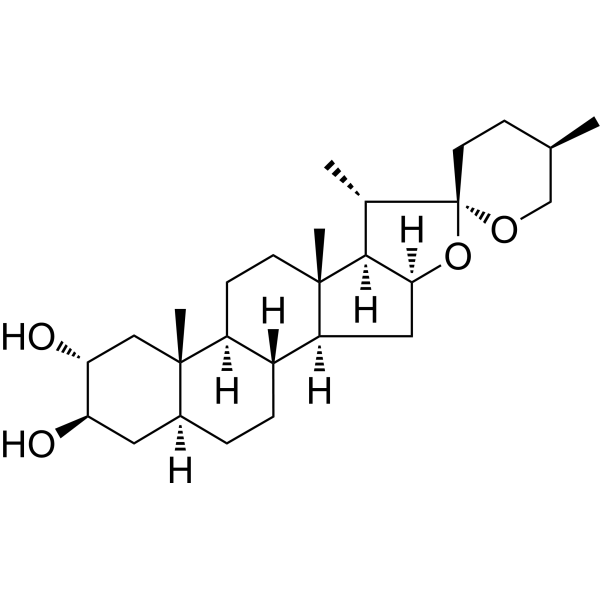
HY-N2574
GitogeninGlucosidase Inhibitor -
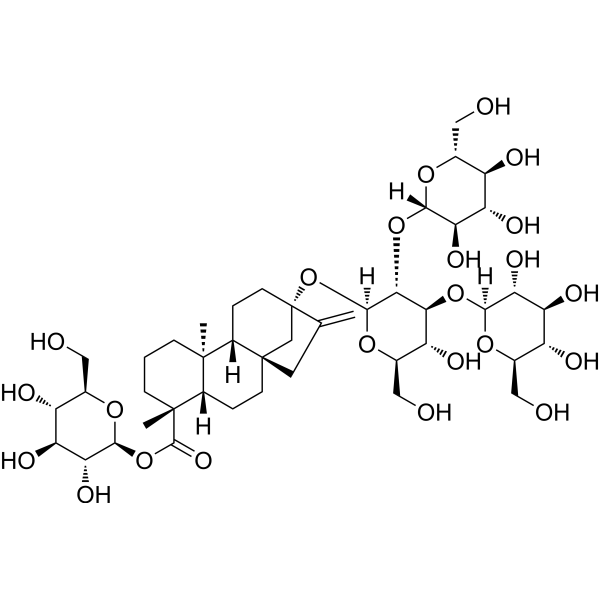
HY-N0466
Rebaudioside Aα-Glucosidase Inhibitor -
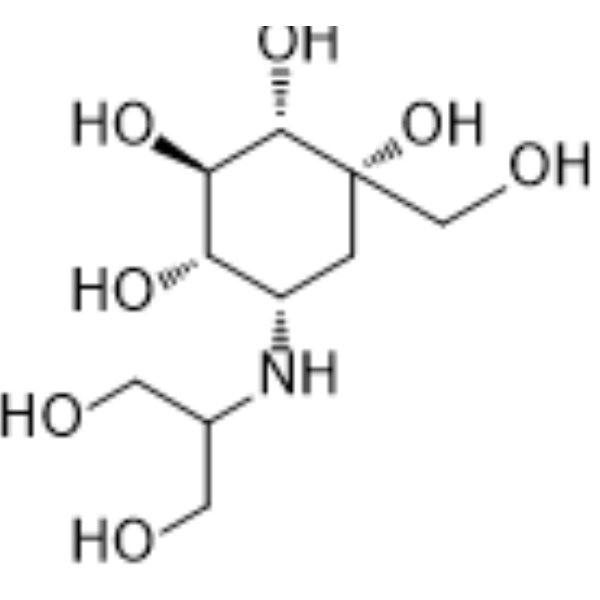
HY-B0025
VogliboseGlucosidase Inhibitor -
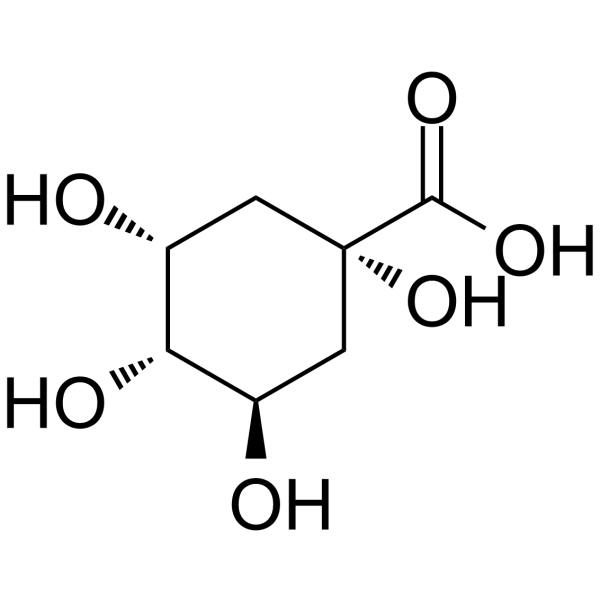
HY-N0464
D-(-)-Quinic acidEndogenous Metabolite -
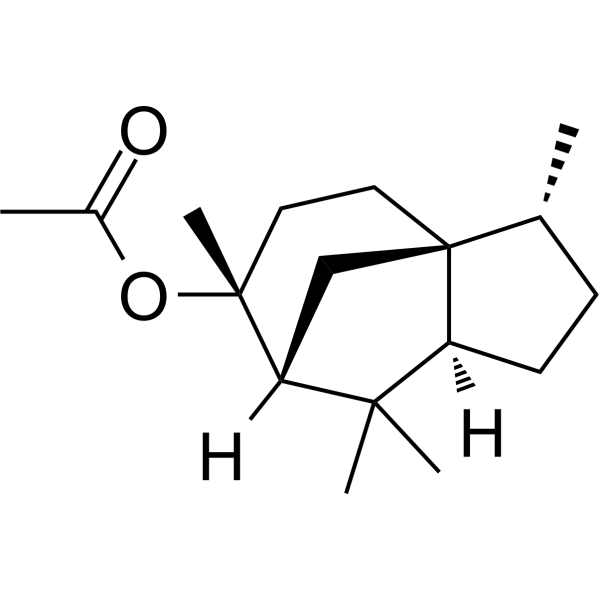
HY-W009417
Cedryl acetateα-glucosidase Inhibitor -
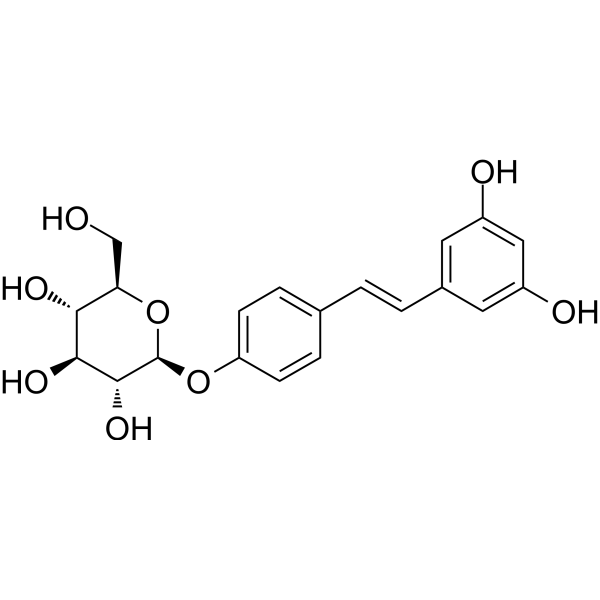
HY-N4195
Resveratrolosideα-Glucosidase Inhibitior -

HY-W005598
2-Hydroxyquinolineα-Glucosidase/α-Amylase Inhibitor -
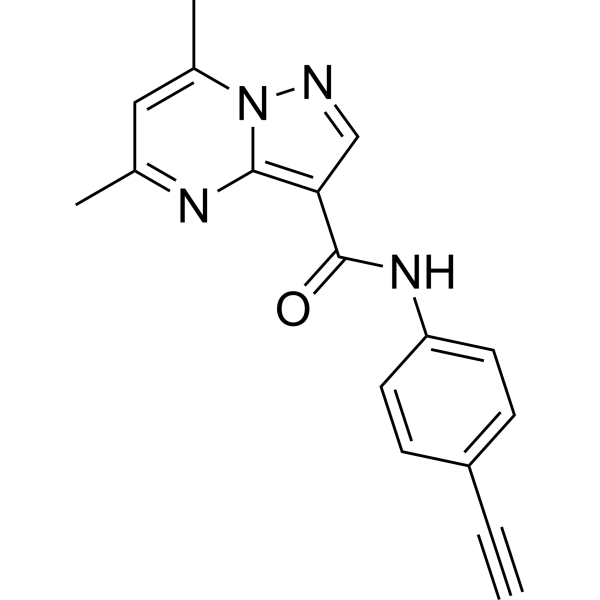
HY-117861
ML198GCase Modulator -
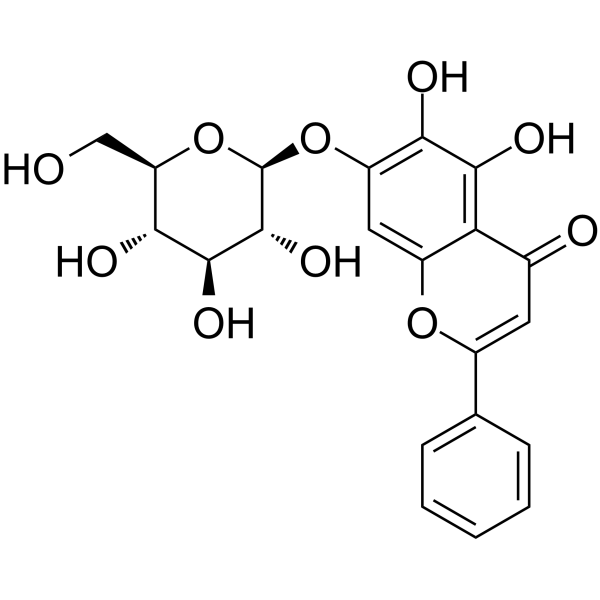
HY-N2025
Oroxin APartial PPARγ Agonist -
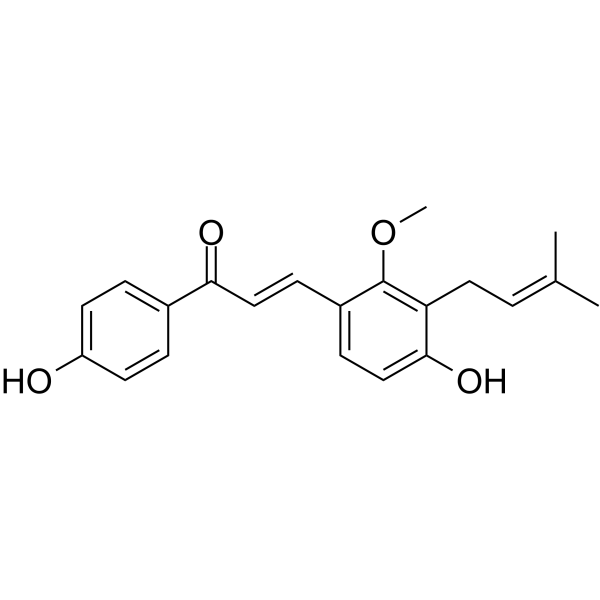
HY-N0374
Licochalcone Cα-Glucosidase Inhibitor -
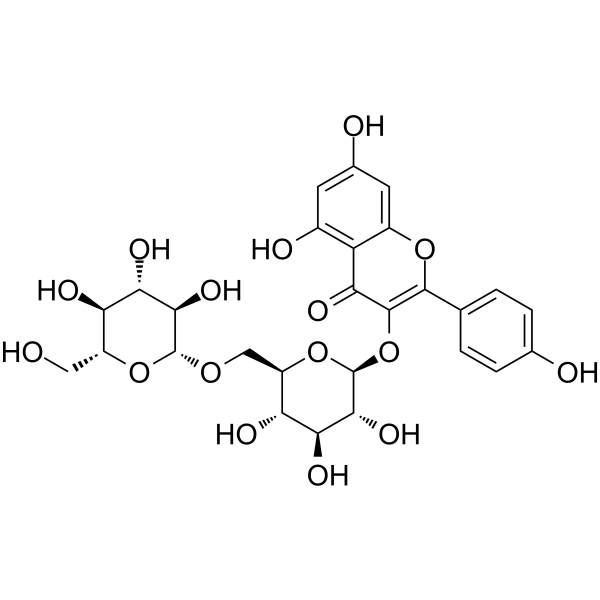
HY-N1510
Kaempferol 3-O-gentiobiosideFlavonoid


Product Information
Information
Application
The compound is the grade of analytical standard, which is the reference standard supplied assay. It is commonly used in qualitative, quantitative and methodological research experiments in HPLC, GC and MS.


Chemical Information
-
CAS No. 511-96-6
-
Masse moléculaire 432.64
-
Formule C27H44O4
-
SMILES
C[C@@H]1[C@@]2(CC[C@@H](C)CO2)O[C@]3([H])[C@@]1([H])[C@@]4([C@@]([C@@]5([H])[C@]([C@@]6([C@@](C[C@@H](O)[C@H](O)C6)([H])CC5)C)([H])CC4)([H])C3)C
-
Structure Classification
-
Initial Source
-
Livraison
Room temperature in continental US; may vary elsewhere.
-
Stockage
Please store the product under the recommended conditions in the Certificate of Analysis.


Pureté et documentation
Références
[1]. Xu M, et al. Drug interaction study of natural steroids from herbs specifically toward human UDP-glucuronosyltransferase (UGT) 1A4 and their quantitative structure activity relationship (QSAR) analysis for prediction. Pharmacol Res. 2016 Aug;110:139-150. [Content Brief]
[3]. Naveed MA, et al. Longipetalosides A-C, new steroidal saponins from Tribulus longipetalus. Steroids. 2014 May;83:45-51. [Content Brief]
[4]. Shim SH, et al. Rat growth-hormone release stimulators from fenugreek seeds. Chem Biodivers. 2008 Sep;5(9):1753-61. [Content Brief]

Calculators
Concentration (start) × Volume (start) = Concentration (final) × Volume (final)


Gitogenin (Standard) Related Classifications
HY-N2574R Related Classifications
 Powered by Bioz