



PIT

Based on 1 Customer Validation
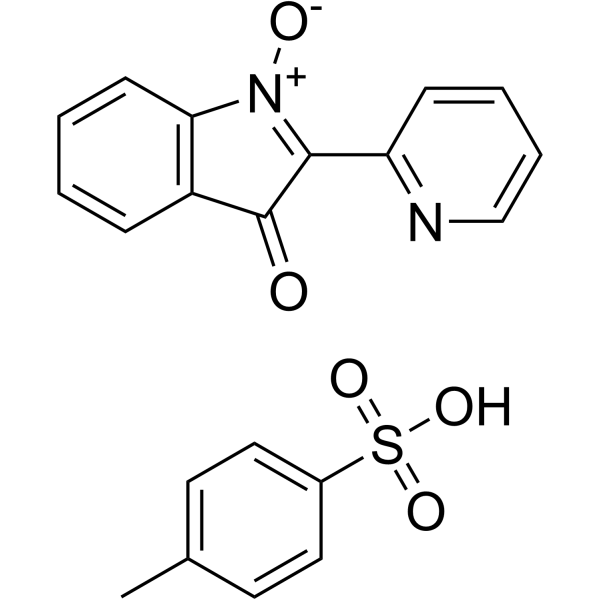
PIT (2,2'-Pyridylisatogen tosylate) is a selective and non-competitive antagonist of P2Y1 receptor with an IC50 value of 0.14 μM for human P2Y1 receptor. PIT antagonizes P2Y1 receptor signaling without affecting nucleotide binding. PIT is an irreversible antagonist of responses to ATP at metabotropic purinoceptors (of the P2Y family) in some smooth muscles. PIT can be used for the research of chronic bronchitis and asthma.
Nos produits utilisent uniquement pour la recherche. Nous ne vendons pas aux patients.
- Pureté : 99.07%
- CAS No.: 56583-49-4
- Formule: C20H16N2O5S
- Masse moléculaire:396.42
-
Stockage:
-20°C, sealed storage, away from moisture
* In solvent : -80°C, 6 months; -20°C, 1 month (sealed storage, away from moisture)

To place orders, for customer services and technical support, please contact: MedChemExpress USA
Tel: 609-228-6898 E-mail: [email protected] [email protected]


-
 Activité biologique
-
Chemical Information
-
Solvant et solubilité
- Pureté et documentation
- Références
-
 Help & FAQs


-
HY-110126
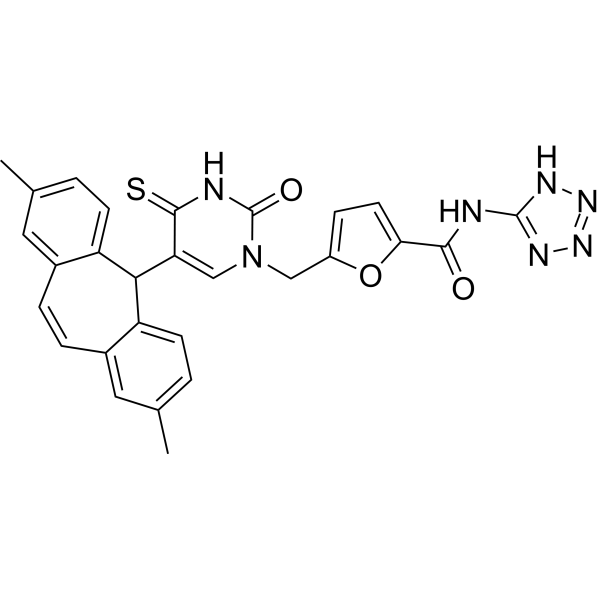
AR-C118925XXP2Y2 Receptor Antagonist -
HY-10064
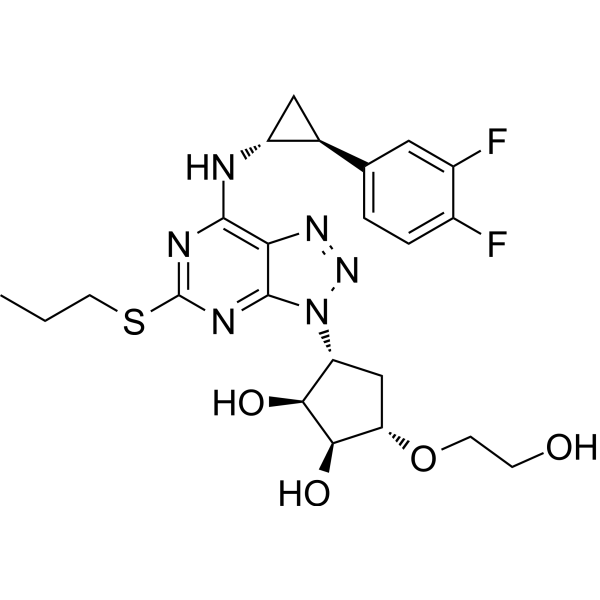
TicagrelorP2Y12 Antagonist -
HY-B0606
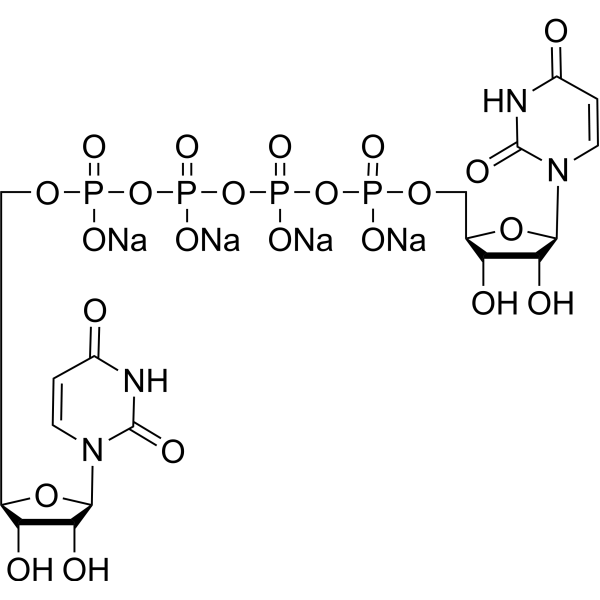
Diquafosol tetrasodiumP2Y2 Receptor Agonist -
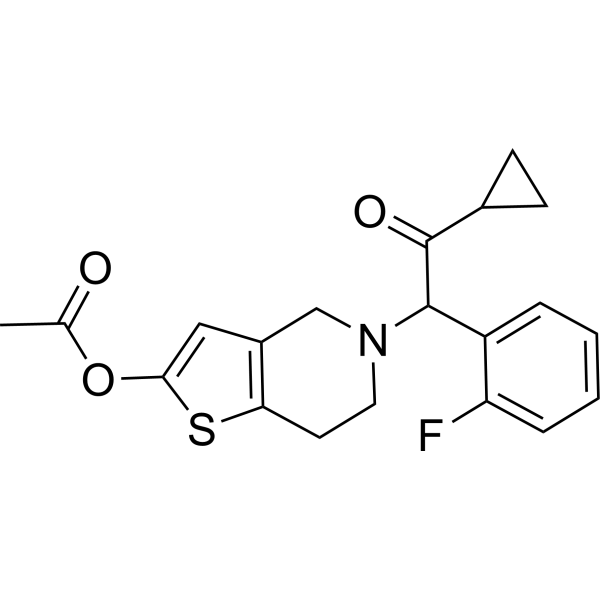
HY-15284
PrasugrelP2Y12 Receptor Antagonist -
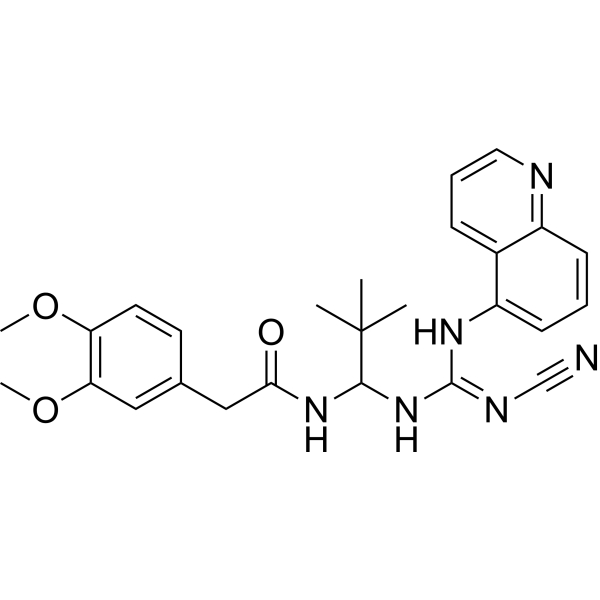
HY-50697
A-740003P2X Receptor Antagonist -
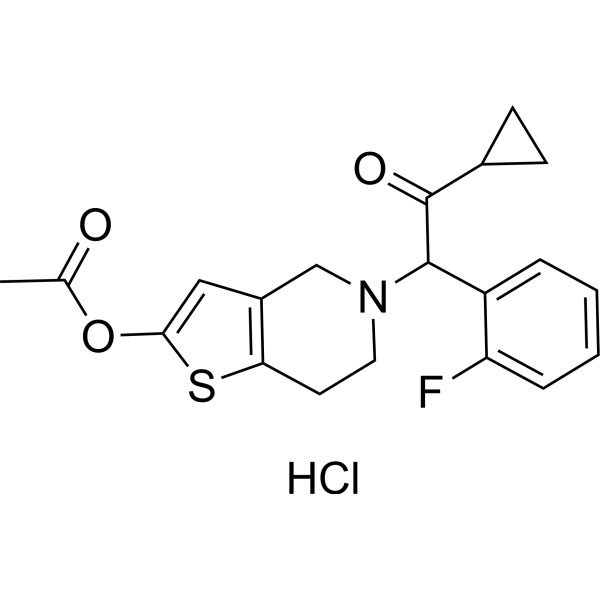
HY-15284A
Prasugrel hydrochlorideP2Y12 Receptor Antagonist -
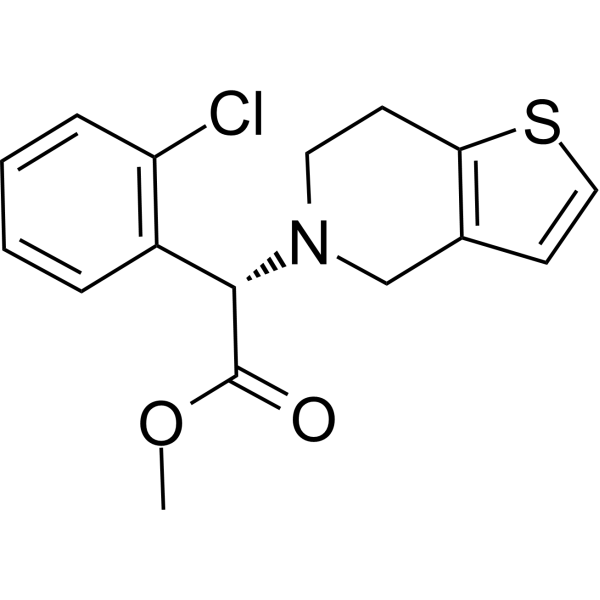
HY-15283
ClopidogrelAntiplatelet Agent -
HY-108648
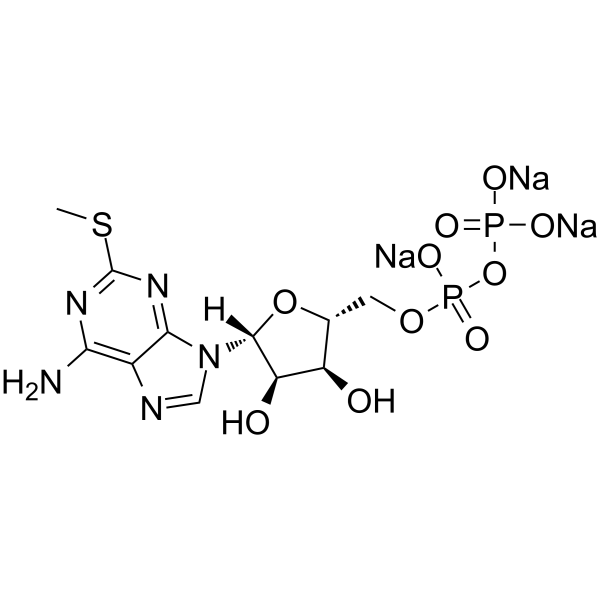
2-MeS-ADP trisodiumP2Y Receptor Agonist -
HY-111557
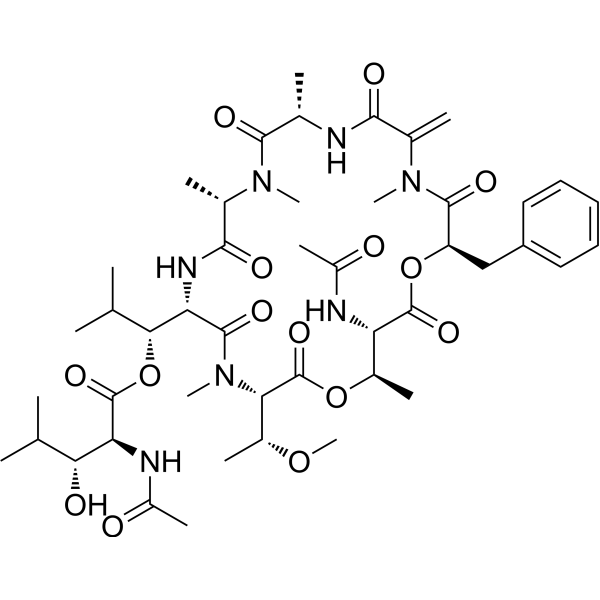
YM-254890Gαq/11 Selective Inhibitor -
HY-108658
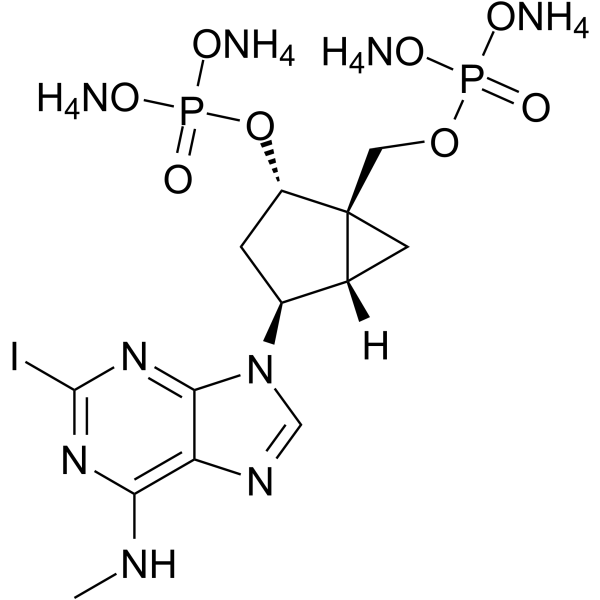
MRS2500 tetraammoniumP2Y1 Receptor Antagonist -
HY-108660
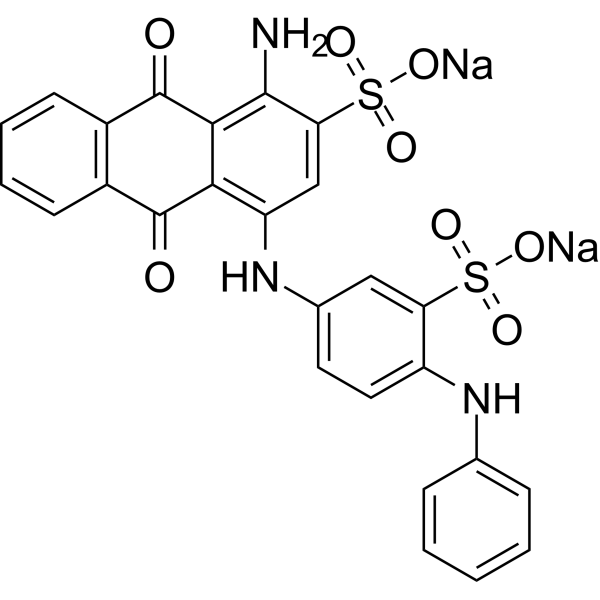
PSB-0739P2Y12 Receptor Antagonist -

HY-108662R
PIT (Standard)Reference Standard
Voir tous les produits spécifiques à Isoform P2Y Receptor
More

Activité biologique
Description
IC50 & Target
|
P2Y1 Receptor 0.14 μM μM (IC50) |
In Vitro
PIT (0.1-10 μM) non-competitively and dose-dependently diminishs human P2Y1 receptor signaling with an IC50 value of 0.14 μM[1]. PIT (0.1-10 μM) completely blocks the agonist activity of 2-MeSADP[1]. PIT (1 nM-10 μM) dose-dependently inhibits the accumulation of inositol phosphates induced by the agonist 2-MeSADP[1]. PIT (1 nM-10 μM) dose-dependently blocks the P2Y1 receptor signaling induced by the endogenous agonist ADP[1]. PIT (0.1-3 μM) increases ATP-responses 2-5 fold, while higher concentrations (3-100 μM) inhibits ATP-mediated inward current with an IC50 value of 13.2 μM[2]. PIT shows a low affinity for a range of membrane receptors, including: α1, α2-adrenoceptors, 5-HT1A, 5-HT1B, 5-HT2, 5-HT3, D1, D2, muscarinic, central benzodiazepine, H1, μ-opioid, dihydropyridine and batrachotoxin receptors with pKi values of <5[2]. PIT shows affinity to an adenosine (A1) receptor with a pKi value of 5.3[2]. PIT (12.5-50 μM) irreversibly antagonizes relaxations of ATP in guinea-pig isolated taenia caeca[2].
MedChemExpress (MCE) has not independently confirmed the accuracy of these methods. They are for reference only.
In Vivo
MedChemExpress (MCE) has not independently confirmed the accuracy of these methods. They are for reference only.
Essai clinique
| NCT Number | Sponsor | Condition | Start Date |
Phase

|
|---|---|---|---|---|
| NCT01329991 | 2011-05 | PHASE1 |


Chemical Information
-
CAS No. 56583-49-4
-
Appearance Solid
-
Masse moléculaire 396.42
-
Formule C20H16N2O5S
-
Color Brown to reddish brown
-
SMILES
O=C1C(C2=NC=CC=C2)=[N+]([O-])C3=C1C=CC=C3.O=S(C4=CC=C(C)C=C4)(O)=O
-
Synonyms
2,2'-Pyridylisatogen tosylate
-
Livraison
Room temperature in continental US; may vary elsewhere.
-
Stockage
-20°C, sealed storage, away from moisture
* In solvent : -80°C, 6 months; -20°C, 1 month (sealed storage, away from moisture)


Solvant et solubilité
In Vitro:
DMSO : 83.33 mg/mL (210.21 mM; ultrasonic and warming and heat to 70°C; Hygroscopic DMSO has a significant impact on the solubility of product, please use newly opened DMSO)
Please refer to the solubility information to select the appropriate solvent. Once prepared, please aliquot and store the solution to prevent product inactivation from repeated freeze-thaw cycles.
Storage method and period of stock solution: -80°C, 6 months; -20°C, 1 month (sealed storage, away from moisture). When stored at -80°C, please use it within 6 months. When stored at -20°C, please use it within 1 month.
Please refer to the solubility information to select the appropriate solvent. Once prepared, please aliquot and store the solution to prevent product inactivation from repeated freeze-thaw cycles.
Storage method and period of stock solution: -80°C, 6 months; -20°C, 1 month (sealed storage, away from moisture). When stored at -80°C, please use it within 6 months. When stored at -20°C, please use it within 1 month.
Concentration (start) × Volume (start) = Concentration (final) × Volume (final)
In Vivo:
Select the appropriate dissolution method based on your experimental animal and administration route.
- For the following dissolution methods, please ensure to first prepare a clear stock solution using an In Vitro approach and then sequentially add co-solvents:
- To ensure reliable experimental results, the clarified stock solution can be appropriately stored based on storage conditions. As for the working solution for In Vivo experiments, it is recommended to prepare freshly and use it on the same day.
- The percentages shown for the solvents indicate their volumetric ratio in the final prepared solution. If precipitation or phase separation occurs during preparation, heat and/or sonication can be used to aid dissolution.
Add each solvent one by one: 10% DMSO 90% (20% SBE-β-CD in Saline)
Solubility: ≥ 2.08 mg/mL (5.25 mM); Clear solution
This protocol yields a clear solution of ≥ 2.08 mg/mL (saturation unknown).
Taking 1 mL working solution as an example, add 100 μL DMSO stock solution (20.8 mg/mL) to 900 μL 20% SBE-β-CD in Saline, and mix evenly.
Preparation of 20% SBE-β-CD in Saline (4°C, storage for one week): 2 g SBE-β-CD powder is dissolved in 10 mL Saline, completely dissolve until clear.
In Vivo Dissolution Calculator
Please enter the basic information of animal experiments:
-
-
-
-
Recommended: Prepare an additional quantity of animals to account for potential losses during experiments.
Please enter your animal formula composition:
-
%DMSO +
Recommended: Keep the proportion of DMSO in working solution below 2% if your animal is weak.
-
%+
-
+%Tween-80 + +
-
%Saline +
The co-solvents required include: DMSO, . All of co-solvents are available by MedChemExpress (MCE). , Tween 80. All of co-solvents are available by MedChemExpress (MCE).
Working solution concentration: 0.22 mg/mL
Method for preparing stock solution: mg drug dissolved in μL DMSO. Stock solution concentration: mg/mL. * In solvent : -80°C, 6 months; -20°C, 1 month (sealed storage, away from moisture)
1. Take μL DMSO stock solution;
2. Add μL .
μL , mix evenly;
3. Then add μL Tween 80, mix evenly;
4. Then add μL
Please ensure that the stock solution in the first step is dissolved to a clear state, and add co-solvents in sequence. You can use ultrasonic heating (ultrasonic cleaner, recommended frequency 20-40 kHz), vortexing, etc. to assist dissolution.


Pureté et documentation
-
Fiche technique (281 KB)
-
SDS (252 KB)
- English - EN (252 KB)
- Français - FR (252 KB)
- Deutsch - DE (252 KB)
- Norwegian - NO (252 KB)
- Español - ES (252 KB)
- Swedish - SV (252 KB)
- Italian - IT (252 KB)
- Korean - KR (252 KB)
- Portuguese - PT (252 KB)
-
Instruction de manipulation (2659 KB)
Références
[1]. Gao ZG, et al. 2,2'-Pyridylisatogen tosylate antagonizes P2Y1 receptor signaling without affecting nucleotide binding. Biochem Pharmacol. 2004 Jul 15;68(2):231-7. [Content Brief]
[2]. King BF, et al. Potentiation by 2,2'-pyridylisatogen tosylate of ATP-responses at a recombinant P2Y1 purinoceptor. Br J Pharmacol. 1996 Mar;117(6):1111-8. [Content Brief]
[3]. Menton K, et al. Role of spin trapping and P2Y receptor antagonism in the neuroprotective effects of 2,2'-pyridylisatogen tosylate and related compounds. Eur J Pharmacol. 2002 May 24;444(1-2):53-60. [Content Brief]


Complete Stock Solution Preparation Table
Please refer to the solubility information to select the appropriate solvent. Once prepared, please aliquot and store the solution to prevent product inactivation from repeated freeze-thaw cycles.
Storage method and period of stock solution: -80°C, 6 months; -20°C, 1 month (sealed storage, away from moisture). When stored at -80°C, please use it within 6 months. When stored at -20°C, please use it within 1 month.
| Optional Solvent | Concentration Solvent Mass | 1 mg | 5 mg | 10 mg | 25 mg |
|---|---|---|---|---|---|
| DMSO | 1 mM | 2.5226 mL | 12.6129 mL | 25.2258 mL | 63.0644 mL |
| 5 mM | 0.5045 mL | 2.5226 mL | 5.0452 mL | 12.6129 mL | |
| 10 mM | 0.2523 mL | 1.2613 mL | 2.5226 mL | 6.3064 mL | |
| 15 mM | 0.1682 mL | 0.8409 mL | 1.6817 mL | 4.2043 mL | |
| 20 mM | 0.1261 mL | 0.6306 mL | 1.2613 mL | 3.1532 mL | |
| 25 mM | 0.1009 mL | 0.5045 mL | 1.0090 mL | 2.5226 mL | |
| 30 mM | 0.0841 mL | 0.4204 mL | 0.8409 mL | 2.1021 mL | |
| 40 mM | 0.0631 mL | 0.3153 mL | 0.6306 mL | 1.5766 mL | |
| 50 mM | 0.0505 mL | 0.2523 mL | 0.5045 mL | 1.2613 mL | |
| 60 mM | 0.0420 mL | 0.2102 mL | 0.4204 mL | 1.0511 mL | |
| 80 mM | 0.0315 mL | 0.1577 mL | 0.3153 mL | 0.7883 mL | |
| 100 mM | 0.0252 mL | 0.1261 mL | 0.2523 mL | 0.6306 mL |


PIT Related Classifications
HY-108662 Related Classifications
 Powered by Bioz