



CP-775146

Based on 1 Customer Validation
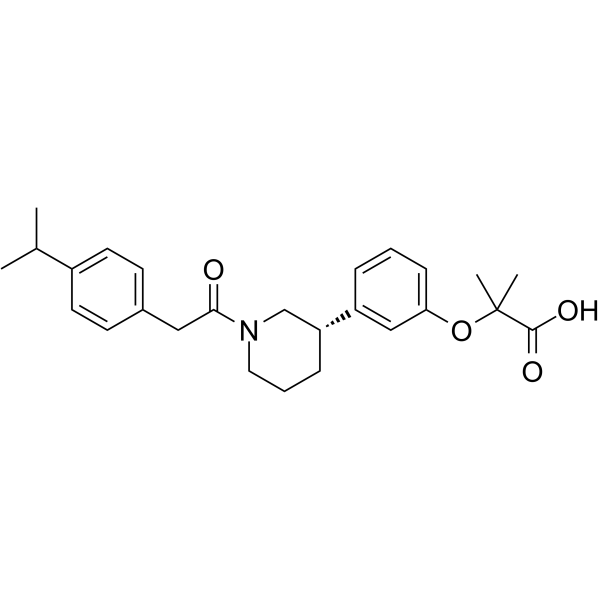
CP-775146 is a selective PPARα agonist (Ki of 24.5 nM) that binds strongly to the PPARα ligand. CP-775146 has no observable affinity for PPARβ and PPARγ.CP-775146 shows hypolipidemic activity. CP-775146 efficiently alleviates obesity-induced liver damage, prevents lipid accumulation by activating the liver fatty acid β-oxidation pathway.
For research use only. We do not sell to patients.
- Purity : 98.7%
- CAS No.: 702680-17-9
- Formula: C26H33NO4
- Molecular Weight:423.54
-
Storage:Powder -20°C, 3 years , 4°C, 2 years ; In solvent -80°C, 6 months , -20°C, 1 month

To place orders, for customer services and technical support, please contact: MedChemExpress USA
Tel: 609-228-6898 E-mail: [email protected] [email protected]


-
 Biological Activity
-
Chemical Information
-
Solvent & Solubility
- Protocols
- Purity & Documentation
- References
-
 Help & FAQs


-
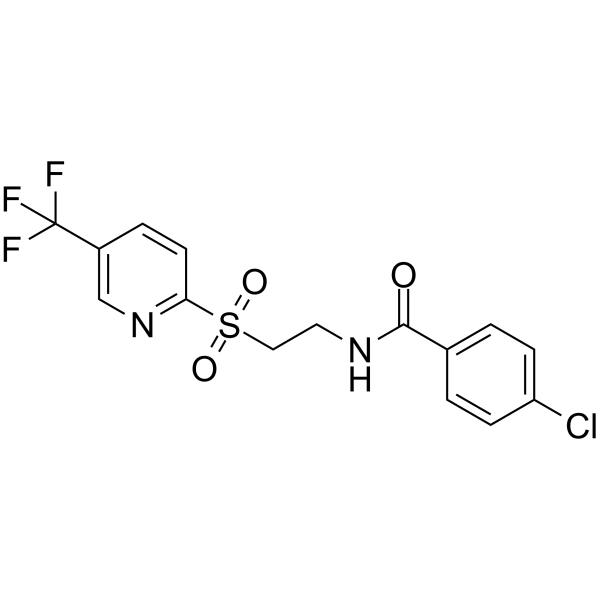
HY-15577
GSK3787PPARδ Antagonist -
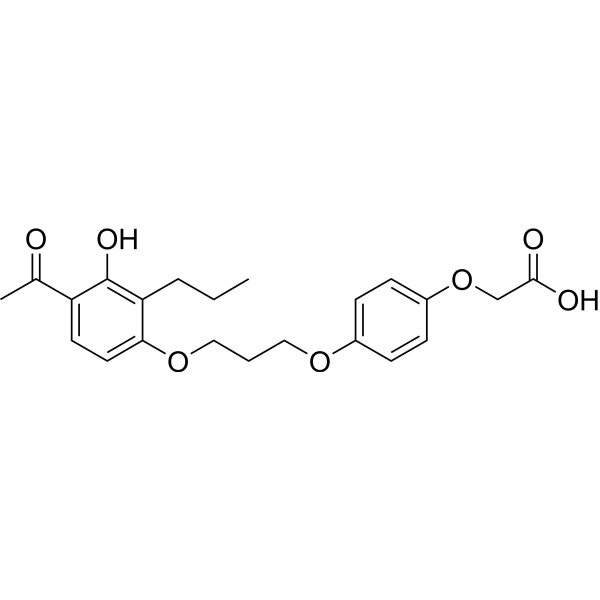
HY-20019
L-165041PPAR Agonist -
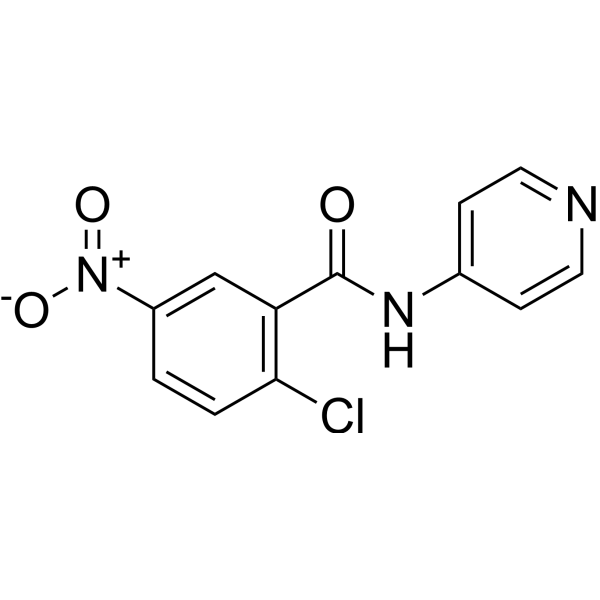
HY-13202
T0070907PPARγ Antagonist -
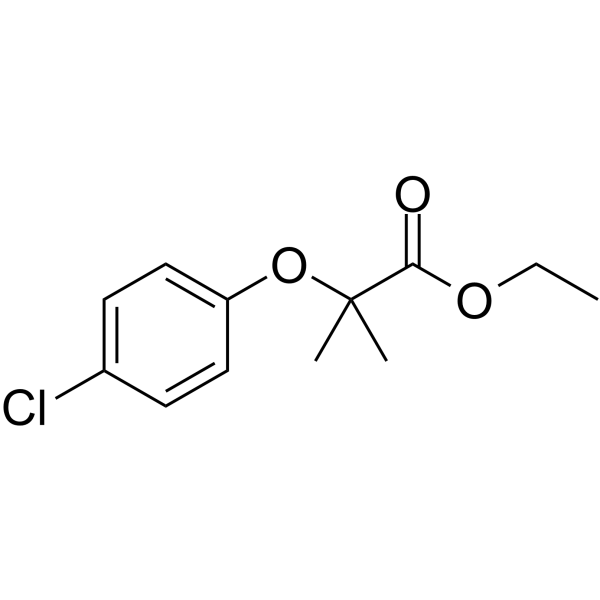
HY-B0287
ClofibratePPAR Agonist -
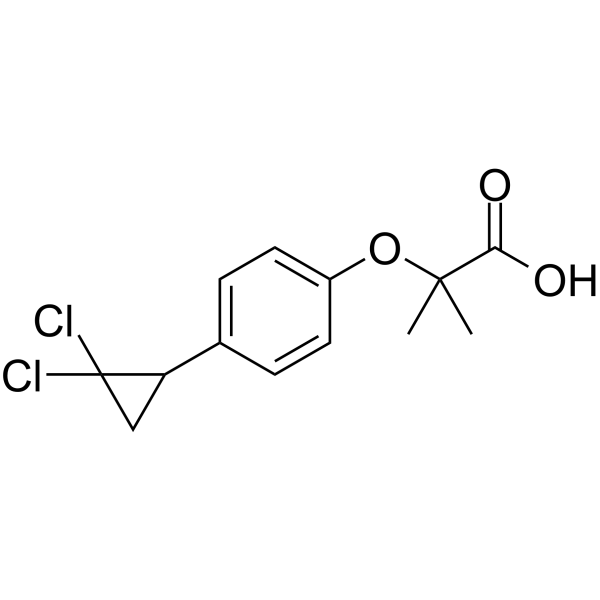
HY-B0664
CiprofibratePeroxisome Proliferator -
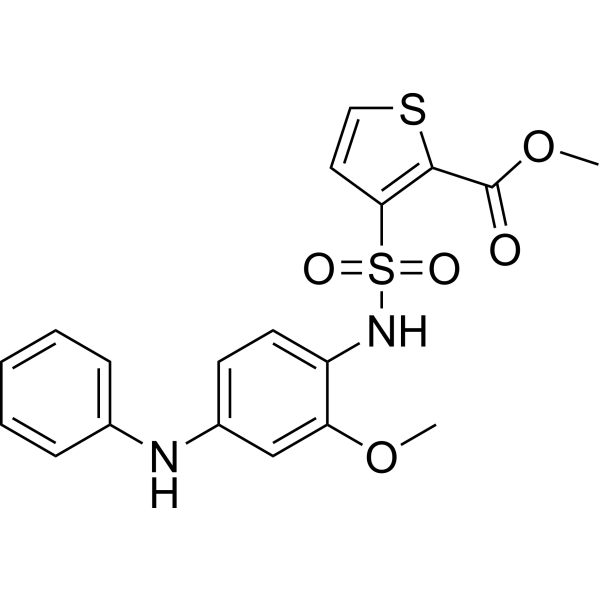
HY-12377
GSK0660PPAR Antagonist -
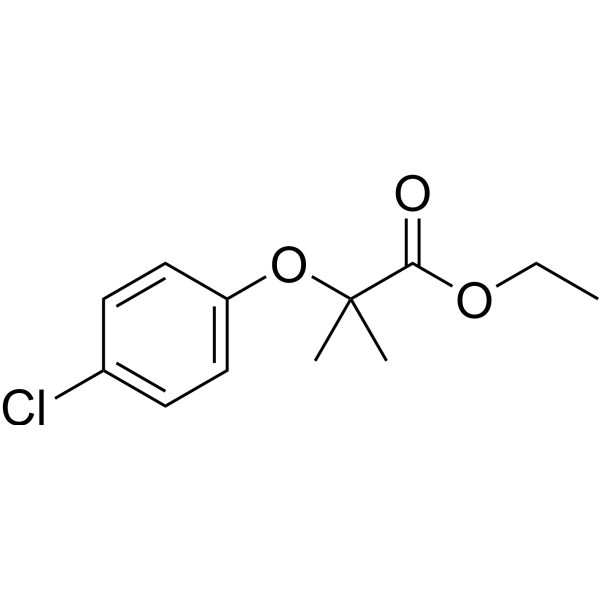
HY-B0287R
Clofibrate (Standard) -
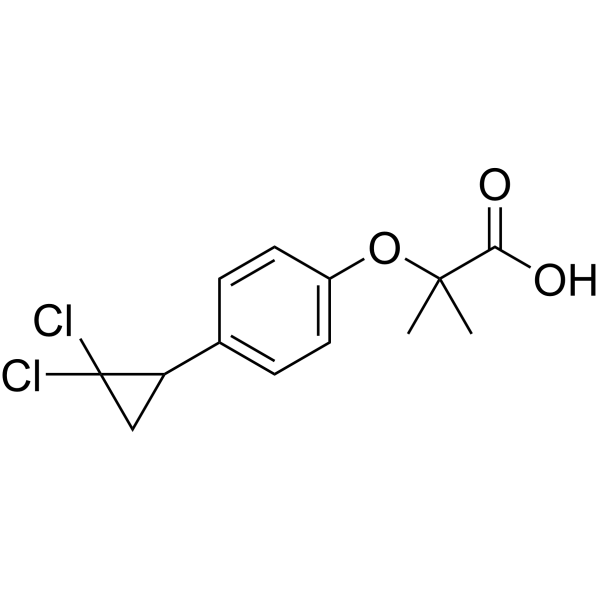
HY-B0664R
Ciprofibrate (Standard) -
HY-13956
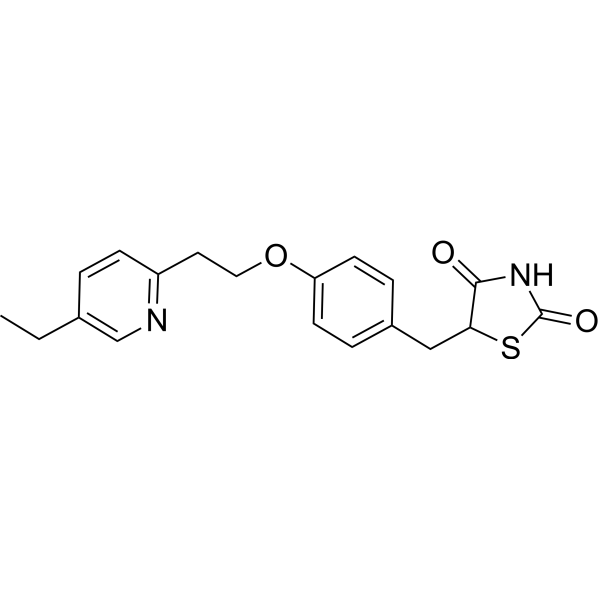
PioglitazonePPARγ Agonist -
HY-17356
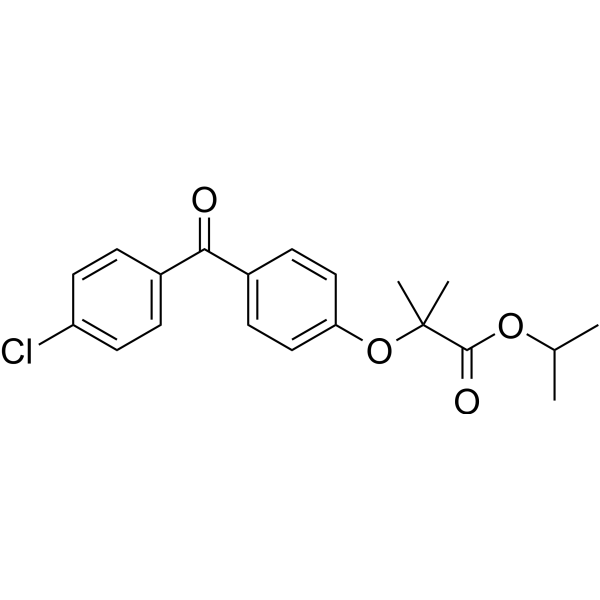
Fenofibrate -
HY-16578
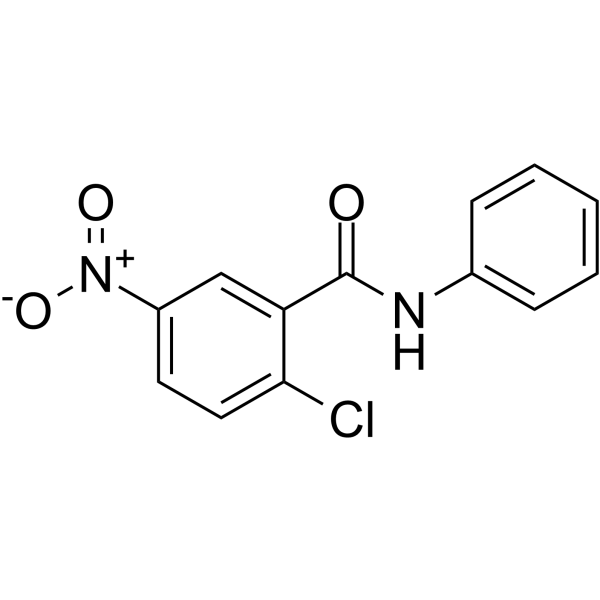
GW9662PPARγ Antagonist -
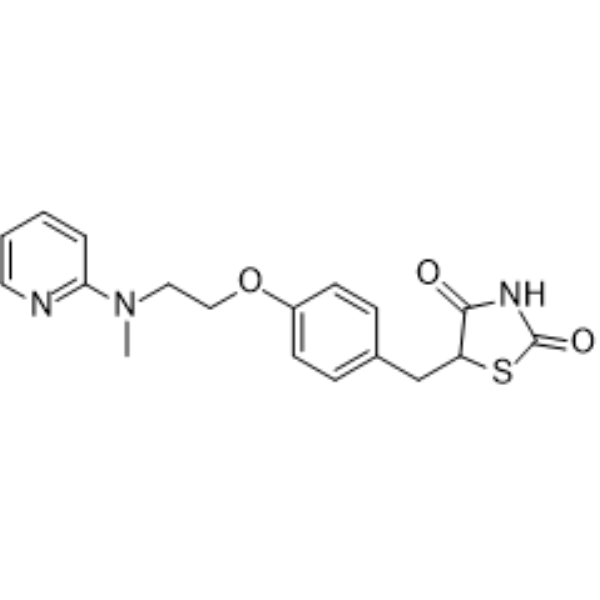
HY-17386
RosiglitazonePPARγ Agonist


Biological Activity
Description
In Vitro
In Vivo
MedChemExpress (MCE) has not independently confirmed the accuracy of these methods. They are for reference only.
-
Animal Model:Male C57BL/6 mice (4-week-old) with a high-fat diet (HFD)[2]
-
Dosage:0.1 mg/kg, 0.3 mg/kg
-
Administration:Intraperitoneal injection (i.p.); daily; for 3 days
-
Result:Reduced the serum levels of liver enzymes, such as ALT and AST and lipid metabolism-related biomarkers, including TGs and LDL-c, non-HDL-c, and hepatic TG content, at a dosage of 0.1 mg/kg.
HFD-induced pathological liver changes improved.
The expression of genes involved in liver fatty acid oxidation (Acadl, Acox-1, CPT-1, and Ehhadh) was upregulated.
Induced the expression of thermogenesis genes (Cidea, Ucp1) and lipolysis genes (Hsl, Atgl).


Chemical Information
-
CAS No. 702680-17-9
-
Appearance Solid
-
Molecular Weight 423.54
-
Formula C26H33NO4
-
Color White to off-white
-
SMILES
CC(OC1=CC=CC([C@H]2CN(C(CC3=CC=C(C(C)C)C=C3)=O)CCC2)=C1)(C)C(O)=O
-
Shipping
Room temperature in continental US; may vary elsewhere.
-
Storage
Powder -20°C 3 years 4°C 2 years In solvent -80°C 6 months -20°C 1 month


Solvent & Solubility
In Vitro:
DMSO : 42 mg/mL (99.16 mM; Need ultrasonic and warming; Hygroscopic DMSO has a significant impact on the solubility of product, please use newly opened DMSO)
Please refer to the solubility information to select the appropriate solvent. Once prepared, please aliquot and store the solution to prevent product inactivation from repeated freeze-thaw cycles.
Storage method and period of stock solution: -80°C, 6 months; -20°C, 1 month. When stored at -80°C, please use it within 6 months. When stored at -20°C, please use it within 1 month.
Please refer to the solubility information to select the appropriate solvent. Once prepared, please aliquot and store the solution to prevent product inactivation from repeated freeze-thaw cycles.
Storage method and period of stock solution: -80°C, 6 months; -20°C, 1 month. When stored at -80°C, please use it within 6 months. When stored at -20°C, please use it within 1 month.
Concentration (start) × Volume (start) = Concentration (final) × Volume (final)


Purity & Documentation
-
Data Sheet (271 KB)
-
SDS (459 KB)
- English - EN (459 KB)
- Français - FR (459 KB)
- Deutsch - DE (459 KB)
- Norwegian - NO (459 KB)
- Español - ES (459 KB)
- Swedish - SV (459 KB)
- Italian - IT (459 KB)
- Korean - KR (459 KB)
- Portuguese - PT (459 KB)
-
Handling Instructions (2659 KB)
References
[1]. Kane CD, et al. Molecular characterization of novel and selective peroxisome proliferator-activated receptor alpha agonists with robust hypolipidemic activity in vivo. Mol Pharmacol. 2009 Feb;75(2):296-306. [Content Brief]
[2]. Shengjie Tang, et al. The Effects of New Selective PPAR α Agonist CP775146 on Systematic Lipid Metabolism in Obese Mice and Its Potential Mechanism. J Diabetes Res. 2020 May 4;2020:4179852. [Content Brief]


Complete Stock Solution Preparation Table
Please refer to the solubility information to select the appropriate solvent. Once prepared, please aliquot and store the solution to prevent product inactivation from repeated freeze-thaw cycles.
Storage method and period of stock solution: -80°C, 6 months; -20°C, 1 month. When stored at -80°C, please use it within 6 months. When stored at -20°C, please use it within 1 month.
| Optional Solvent | Concentration Solvent Mass | 1 mg | 5 mg | 10 mg | 25 mg |
|---|---|---|---|---|---|
| DMSO | 1 mM | 2.3611 mL | 11.8053 mL | 23.6105 mL | 59.0263 mL |
| 5 mM | 0.4722 mL | 2.3611 mL | 4.7221 mL | 11.8053 mL | |
| 10 mM | 0.2361 mL | 1.1805 mL | 2.3611 mL | 5.9026 mL | |
| 15 mM | 0.1574 mL | 0.7870 mL | 1.5740 mL | 3.9351 mL | |
| 20 mM | 0.1181 mL | 0.5903 mL | 1.1805 mL | 2.9513 mL | |
| 25 mM | 0.0944 mL | 0.4722 mL | 0.9444 mL | 2.3611 mL | |
| 30 mM | 0.0787 mL | 0.3935 mL | 0.7870 mL | 1.9675 mL | |
| 40 mM | 0.0590 mL | 0.2951 mL | 0.5903 mL | 1.4757 mL | |
| 50 mM | 0.0472 mL | 0.2361 mL | 0.4722 mL | 1.1805 mL | |
| 60 mM | 0.0394 mL | 0.1968 mL | 0.3935 mL | 0.9838 mL | |
| 80 mM | 0.0295 mL | 0.1476 mL | 0.2951 mL | 0.7378 mL |


CP-775146 Related Classifications
HY-108571 Related Classifications
 Powered by Bioz