



CRT0044876
Based on 2 publication(s) in Google Scholar
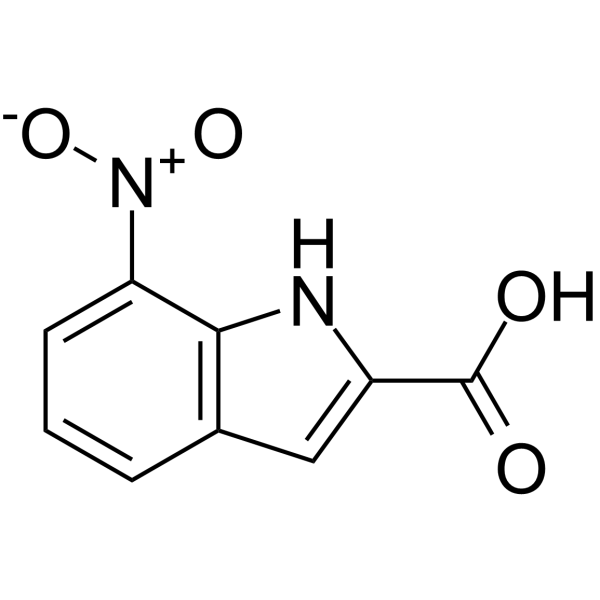
CRT0044876 is a potent and selective apurinic/apyrimidinic endonuclease 1 (APE1) inhibitor (IC50=~3 μM). CRT0044876 inhibits the AP endonuclease, 3′-phosphodiesterase and 3′-phosphatase activities of APE1, and is a specific inhibitor of the exonuclease III family of enzymes to which APE1 belongs. CRT0044876 potentiates the cytotoxicity of several DNA base-targeting compounds.
For research use only. We do not sell to patients.
- Purity : 98.44%
- CAS No.: 6960-45-8
- Formula: C9H6N2O4
- Molecular Weight:206.16
-
Storage:Powder -20°C, 3 years , 4°C, 2 years ; In solvent -80°C, 2 years , -20°C, 1 year

To place orders, for customer services and technical support, please contact: MedChemExpress USA
Tel: 609-228-6898 E-mail: [email protected] [email protected]


-
 Biological Activity
-
Chemical Information
-
Solvent & Solubility
- Protocols
- Purity & Documentation
- References
-
 Help & FAQs


-
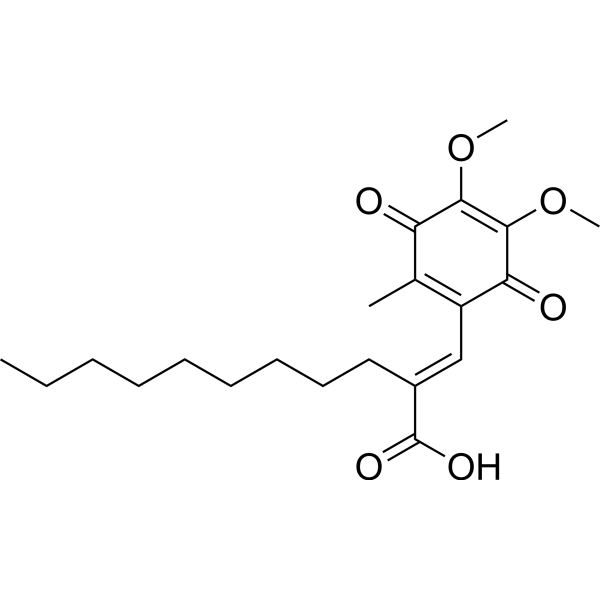
HY-19357
ErenapurstatApe-1/Ref-1 Inhibitor -
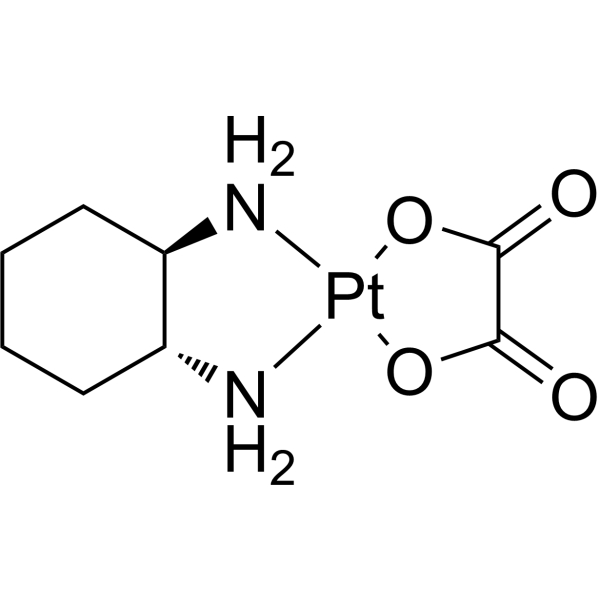
HY-17371
OxaliplatinDNA Synthesis Inhibitor -
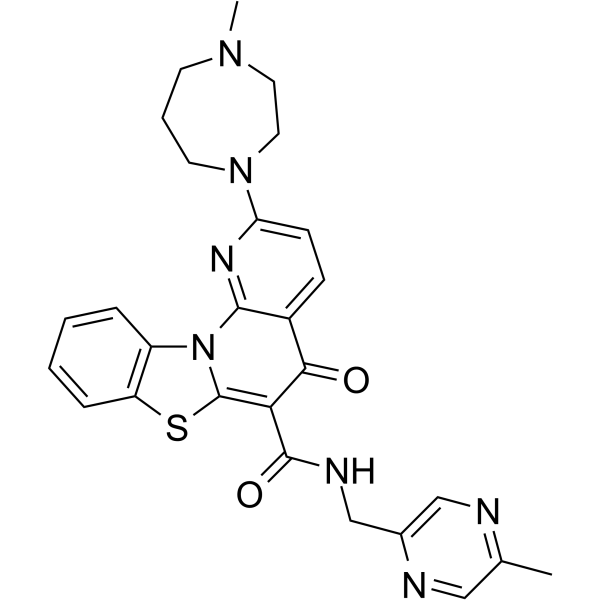
HY-13323
CX-5461RNA Polymerase I Inhibitor -
HY-136731
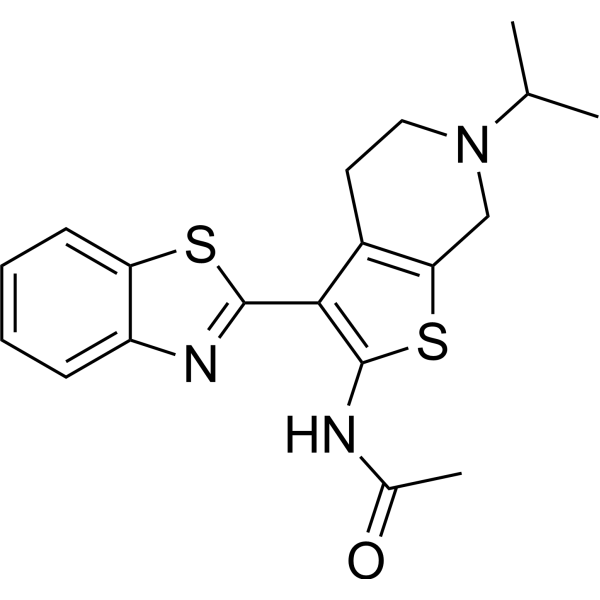
APE1-IN-1APE1 Inhibitor -
HY-10162
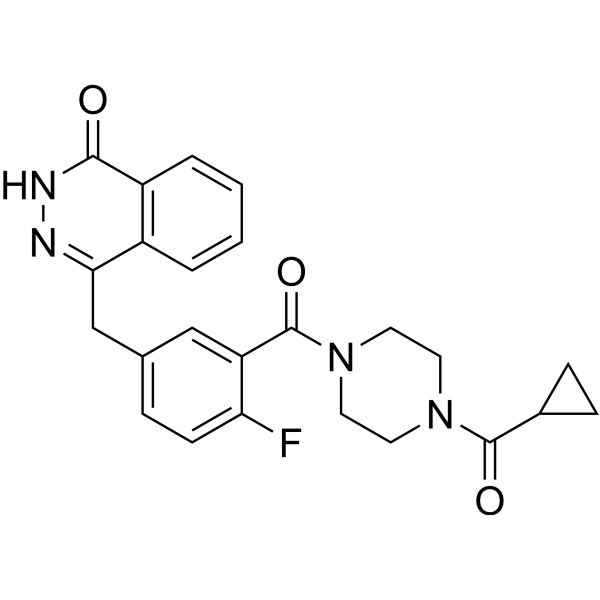
OlaparibPARP Inhibitor -
HY-12484
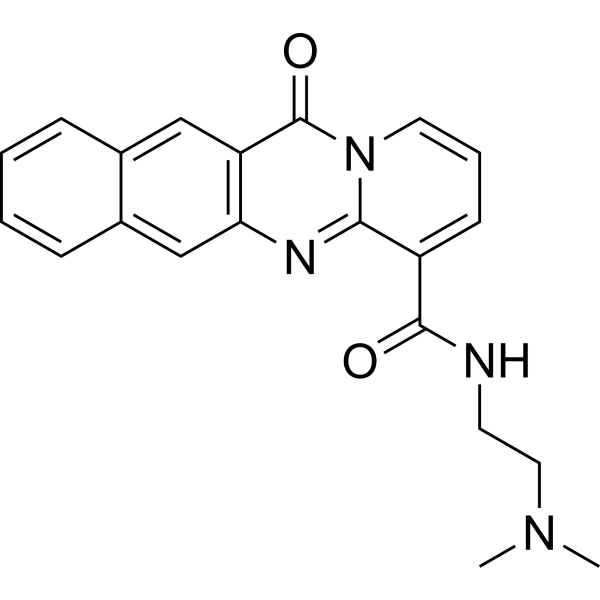
BMH-21DNA Intercalator/Pol I Elongation Inhibitor -
HY-15371
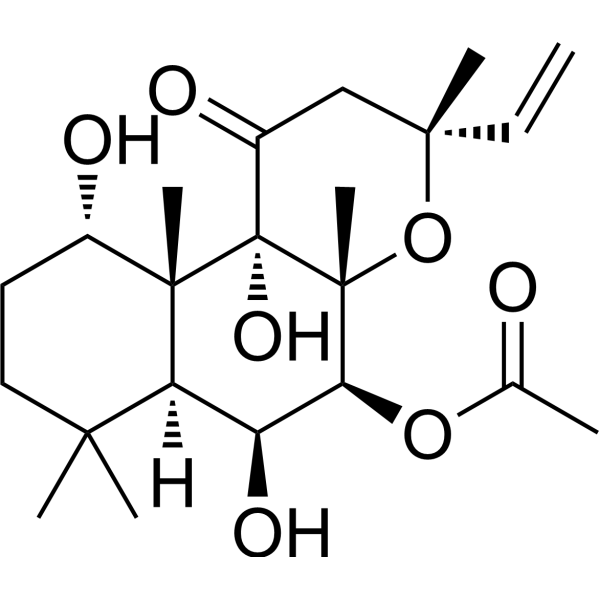
ForskolinAdenylate Cyclase Activator -
HY-B0256
AzathioprineAutoimmunity Inhibitor -
HY-Y0873
PEG300Neutral Polymer -

HY-Y1891
Tween 80 -

HY-B0256R
Azathioprine (Standard)Autoimmunity Inhibitor -
HY-124329
BS3 CrosslinkerNHS Ester Crosslinker
Publications Citing Use of MedChemExpress (MCE) CRT0044876
MoreAll DNA/RNA Synthesis Isoforms
More

Biological Activity
Description
In Vitro
A key step in BER is the processing of an apurinic/apyrimidinic (AP) site intermediate by an AP endonuclease. CRT0044876 has an IC50 for inhibition of APE1 of ~3 μM and not only inhibits AP site cleavage catalyzed by purified APE1, but also cleavage directed by APE1 in a HeLa whole cell extract. CRT0044876 inhibits the 3′-phosphoglycolate diesterase activity of APE1 with an IC50 of ~5 μM[1].
CRT0044876 inhibits both the exonuclease and AP endonuclease activities of exonuclease III, but shows no inhibitory activity towards endonuclease IV. CRT0044876 has minimal effects on BamHI restriction endonuclease or topoisomerase I even at CRT0044876 concentrations of 100 μM[1].
At non-toxic concentrations, CRT0044876 potentiates the cytotoxicity of several DNA damaging agents, which generate damage that is repaired in the BER pathway, including some currently-used anticancer drugs. The combination of MMS and CRT0044876 leads to a synergistic increase in the level of AP sites. Consistent with CRT0044876 being a specific BER inhibitor, a strong potentiation of hmdUrd cytotoxicity is seen in CRT0044876-treated cells (HT1080 cells)[1].
MedChemExpress (MCE) has not independently confirmed the accuracy of these methods. They are for reference only. Further protocols information, click here.


Chemical Information
-
CAS No. 6960-45-8
-
Appearance Solid
-
Molecular Weight 206.16
-
Formula C9H6N2O4
-
Color Brown to dark brown
-
SMILES
O=C(C(N1)=CC2=C1C([N+]([O-])=O)=CC=C2)O
-
Shipping
Room temperature in continental US; may vary elsewhere.
-
Storage
Powder -20°C 3 years 4°C 2 years In solvent -80°C 2 years -20°C 1 year


Publications (2)
-
Journal Impact Factor
-
Most Recent
-
Nat Commun
Imaging-guided companion diagnostics in radiotherapy by monitoring APE1 activity with afterglow and MRI imaging. [Abstract]2024 Jul 28;15(1):6349. PMID: 39068156 -
Int Immunopharmacol
Inhibitors of APE1 redox and ATM synergistically sensitize osteosarcoma cells to ionizing radiation by inducing ferroptosis. [Abstract]2024 Sep 30:139:112672. PMID: 39032469


Solvent & Solubility
In Vitro:
DMSO : 50 mg/mL (242.53 mM; Need ultrasonic; Hygroscopic DMSO has a significant impact on the solubility of product, please use newly opened DMSO)
H2O : < 0.1 mg/mL (insoluble)
Please refer to the solubility information to select the appropriate solvent. Once prepared, please aliquot and store the solution to prevent product inactivation from repeated freeze-thaw cycles.
Storage method and period of stock solution: -80°C, 2 years; -20°C, 1 year. When stored at -80°C, please use it within 2 years. When stored at -20°C, please use it within 1 year.
Please refer to the solubility information to select the appropriate solvent. Once prepared, please aliquot and store the solution to prevent product inactivation from repeated freeze-thaw cycles.
Storage method and period of stock solution: -80°C, 2 years; -20°C, 1 year. When stored at -80°C, please use it within 2 years. When stored at -20°C, please use it within 1 year.
Concentration (start) × Volume (start) = Concentration (final) × Volume (final)
In Vivo:
Select the appropriate dissolution method based on your experimental animal and administration route.
- For the following dissolution methods, please ensure to first prepare a clear stock solution using an In Vitro approach and then sequentially add co-solvents:
- To ensure reliable experimental results, the clarified stock solution can be appropriately stored based on storage conditions. As for the working solution for In Vivo experiments, it is recommended to prepare freshly and use it on the same day.
- The percentages shown for the solvents indicate their volumetric ratio in the final prepared solution. If precipitation or phase separation occurs during preparation, heat and/or sonication can be used to aid dissolution.
Add each solvent one by one: 10% DMSO 40% PEG300 5% Tween-80 45% Saline
Solubility: 2.5 mg/mL (12.13 mM); Clear solution; Need ultrasonic
This protocol yields a clear solution of 2.5 mg/mL.
Taking 1 mL working solution as an example, add 100 μL DMSO stock solution (25.0 mg/mL) to 400 μL PEG300, and mix evenly; then add 50 μL Tween-80 and mix evenly; then add 450 μL Saline to adjust the volume to 1 mL.
Preparation of Saline: Dissolve 0.9 g sodium chloride in ddH₂O and dilute to 100 mL to obtain a clear Saline solution.
In Vivo Dissolution Calculator
Please enter the basic information of animal experiments:
-
-
-
-
Recommended: Prepare an additional quantity of animals to account for potential losses during experiments.
Please enter your animal formula composition:
-
%DMSO +
Recommended: Keep the proportion of DMSO in working solution below 2% if your animal is weak.
-
%+
-
+%Tween-80 + +
-
%Saline +
The co-solvents required include: DMSO, . All of co-solvents are available by MedChemExpress (MCE). , Tween 80. All of co-solvents are available by MedChemExpress (MCE).
Working solution concentration: 0.22 mg/mL
Method for preparing stock solution: mg drug dissolved in μL DMSO. Stock solution concentration: mg/mL.
1. Take μL DMSO stock solution;
2. Add μL .
μL , mix evenly;
3. Then add μL Tween 80, mix evenly;
4. Then add μL
Please ensure that the stock solution in the first step is dissolved to a clear state, and add co-solvents in sequence. You can use ultrasonic heating (ultrasonic cleaner, recommended frequency 20-40 kHz), vortexing, etc. to assist dissolution.

Protocols
-
Cell Cytotoxicity Assay
Cytotoxicity assays are usually based on the assessment of cell membrane damage, which can also be indirectly detected by measuring cell viability. Detection methods include MTT assay, CKK-8 assay, LDH assay and ATP assay, etc.
-
Mammalian live/dead viability and cytotoxicity staining
Live/dead viability and cytotoxicity staining assays are based on the simultaneous detection of intracellular esterase activity in metabolically active (viable) cells and membrane integrity loss in non-viable cells. In commonly used dual-staining approaches, membrane-permeant fluorogenic substrates are converted by intracellular esterases into fluorescent products in live cells, while impermeant DNA-binding dyes selectively enter cells with compromised plasma membranes and label nucleic acids in dead or dying cells, enabling discrimination between viable and non-viable populations by fluorescence microscopy or flow cytometry.
-
Cell Viability Determination by MTT Colorimetric Assay
The following protocol uses the MTT colorimetric assay as a classic literature-established method for assessing cell viability/metabolic activity in cultured mammalian cells. MTT[3-(4,5-dimethylthiazol-2-yl)-2,5-diphenyltetrazolium bromide] is reduced by metabolically active cells to a colored formazan product; the amount of formazan is quantified spectrophotometrically and provides an indirect measure of metabolically active viable cells. Importantly, MTT reduction reflects cellular oxidoreductase/metabolic activity rather than an absolute direct count of living cells, so changes in cellular metabolism can alter the signal independently of cell number.


Purity & Documentation
-
Data Sheet (277 KB)
-
SDS (418 KB)
- English - EN (418 KB)
- Français - FR (418 KB)
- Deutsch - DE (418 KB)
- Norwegian - NO (418 KB)
- Español - ES (418 KB)
- Swedish - SV (418 KB)
- Italian - IT (418 KB)
- Korean - KR (418 KB)
- Portuguese - PT (418 KB)
-
Handling Instructions (2659 KB)
References


Complete Stock Solution Preparation Table
Please refer to the solubility information to select the appropriate solvent. Once prepared, please aliquot and store the solution to prevent product inactivation from repeated freeze-thaw cycles.
Storage method and period of stock solution: -80°C, 2 years; -20°C, 1 year. When stored at -80°C, please use it within 2 years. When stored at -20°C, please use it within 1 year.
| Optional Solvent | Concentration Solvent Mass | 1 mg | 5 mg | 10 mg | 25 mg |
|---|---|---|---|---|---|
| DMSO | 1 mM | 4.8506 mL | 24.2530 mL | 48.5060 mL | 121.2650 mL |
| 5 mM | 0.9701 mL | 4.8506 mL | 9.7012 mL | 24.2530 mL | |
| 10 mM | 0.4851 mL | 2.4253 mL | 4.8506 mL | 12.1265 mL | |
| 15 mM | 0.3234 mL | 1.6169 mL | 3.2337 mL | 8.0843 mL | |
| 20 mM | 0.2425 mL | 1.2127 mL | 2.4253 mL | 6.0633 mL | |
| 25 mM | 0.1940 mL | 0.9701 mL | 1.9402 mL | 4.8506 mL | |
| 30 mM | 0.1617 mL | 0.8084 mL | 1.6169 mL | 4.0422 mL | |
| 40 mM | 0.1213 mL | 0.6063 mL | 1.2127 mL | 3.0316 mL | |
| 50 mM | 0.0970 mL | 0.4851 mL | 0.9701 mL | 2.4253 mL | |
| 60 mM | 0.0808 mL | 0.4042 mL | 0.8084 mL | 2.0211 mL | |
| 80 mM | 0.0606 mL | 0.3032 mL | 0.6063 mL | 1.5158 mL | |
| 100 mM | 0.0485 mL | 0.2425 mL | 0.4851 mL | 1.2127 mL |


CRT0044876 Related Classifications
HY-W014622 Related Classifications
 Powered by Bioz