



CYM-5478

Based on 1 Customer Validation
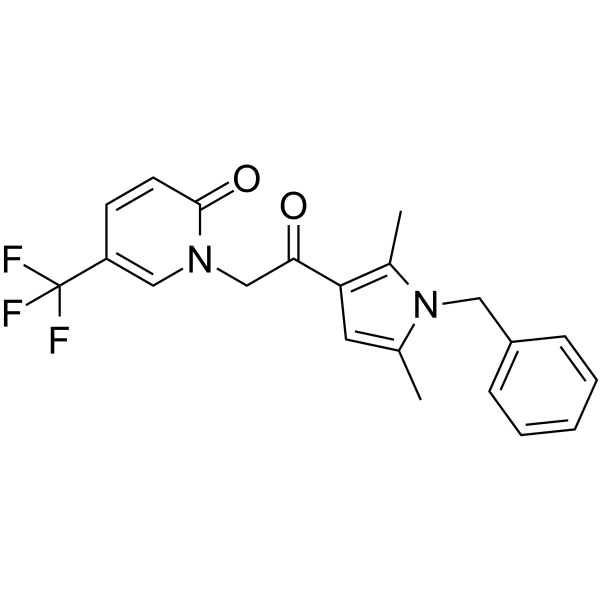
CYM-5478 is a potent and highly selective S1P2 agonist with an EC50 of 119 nM in a TGFα-shedding assay. CYM-5478 protects neural-derived cell lines against Cisplatin toxicity.
For research use only. We do not sell to patients.
- Purity : 99.44%
- CAS No.: 870762-83-7
- Formula: C21H19F3N2O2
- Molecular Weight:388.38
-
Storage:Powder -20°C, 3 years ; In solvent -80°C, 6 months , -20°C, 1 month

To place orders, for customer services and technical support, please contact: MedChemExpress USA
Tel: 609-228-6898 E-mail: [email protected] [email protected]


-
 Biological Activity
-
Chemical Information
-
Solvent & Solubility
- Purity & Documentation
- References
-
 Help & FAQs


-
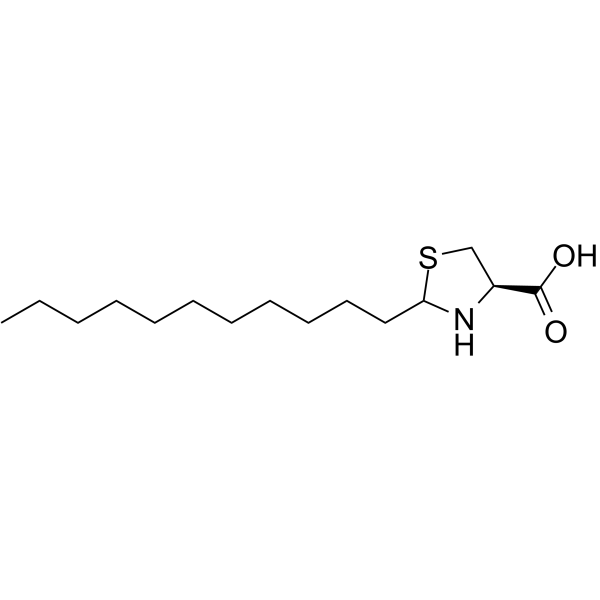
HY-119401
CAY10444S1P3 Antagonist -
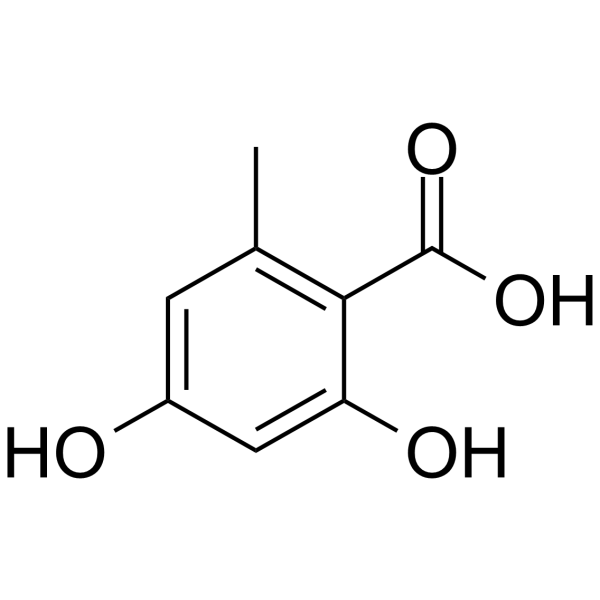
HY-N3126
Orsellinic acidBenzoic Acid Derivative -
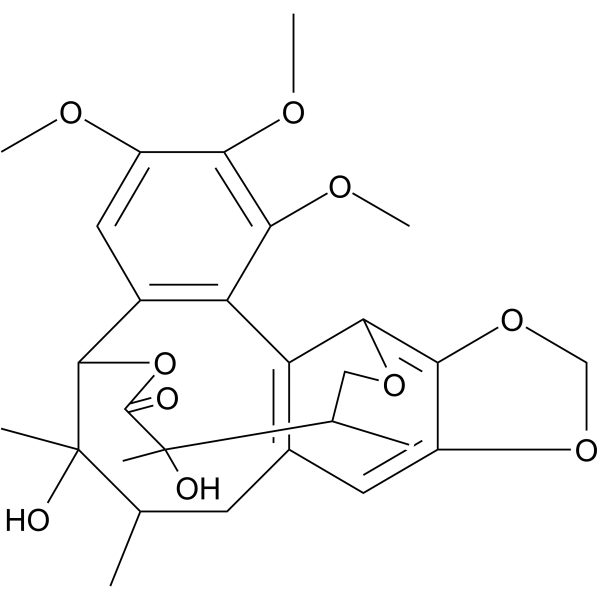
HY-N2413
Gomisin DLignan -
HY-W040045
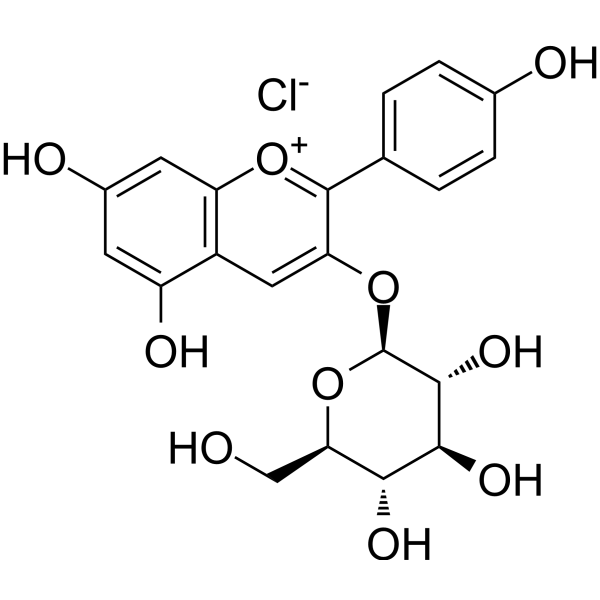
Callistephin chlorideROS/iNOS/TNF-α/COX-2 Inhibitor -
HY-124042
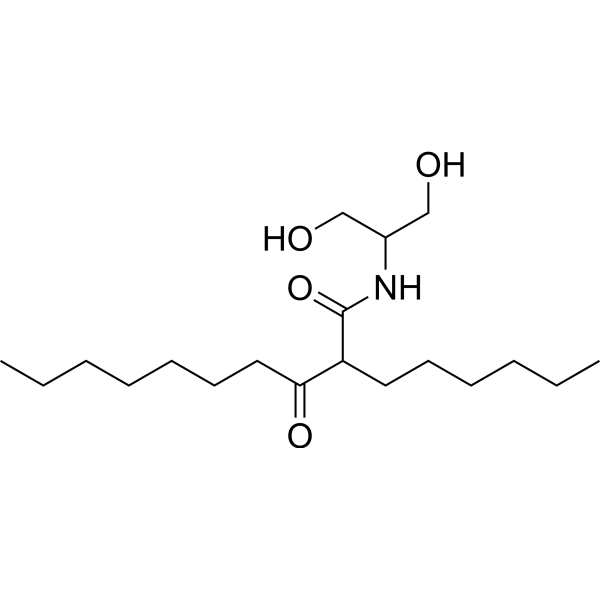
K6PC-5SPHK1 Activator -
HY-W015210
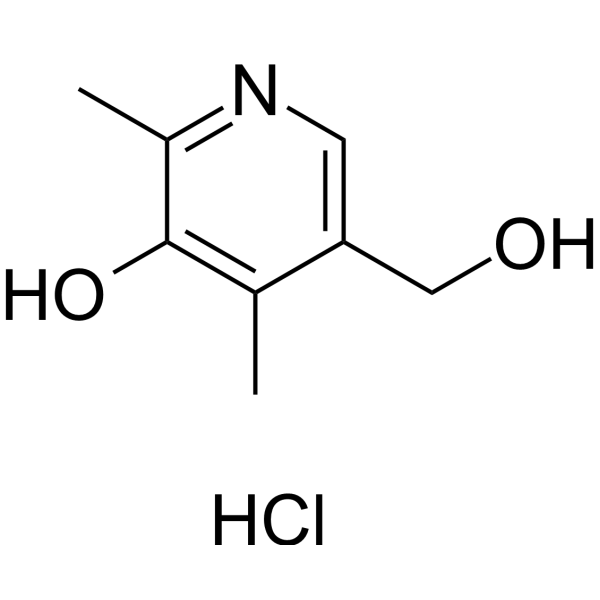
4-Deoxypyridoxine hydrochlorideBiochemical Assay Reagent -
HY-B0316S
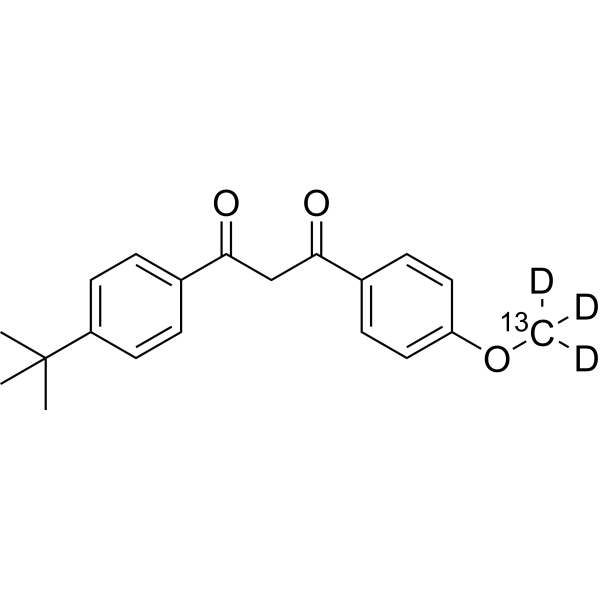
Avobenzone-13C,d3Stable Isotope -
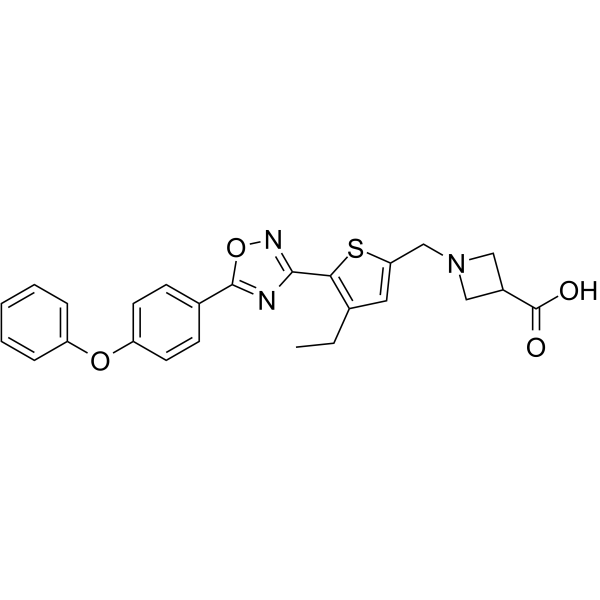
HY-108493
CS-2100S1P1 Agonist -
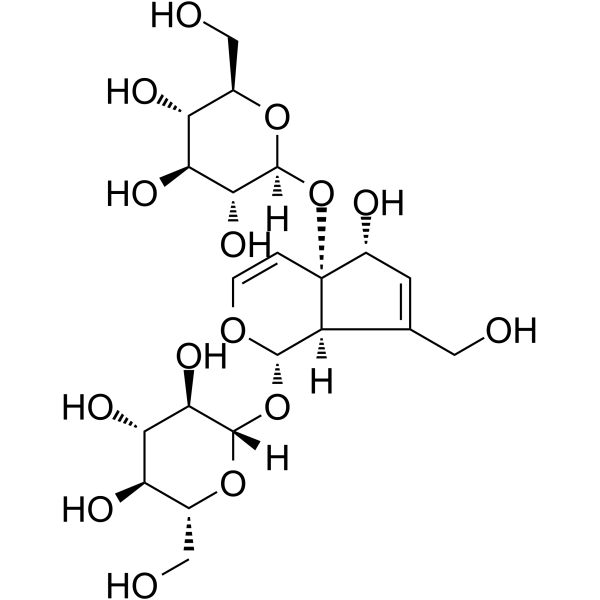
HY-N0915
MelittosideNatural Product -

HY-N3126R
Orsellinic acid (Standard)Standard Of Orsellinic Acid -

HY-W040045R
Callistephin chloride (Standard)Stanard of Callistephin chloride -

HY-N0915R
Melittoside (Standard)Natural Product


Biological Activity
Description
IC50 & Target
[1]|
S1PR2 119 nM (EC50) |
S1PR1 1690 nM (EC50) |
S1PR3 1950 nM (EC50) |
S1PR4 >10 μM (EC50) |
S1PR5 >10 μM (IC50) |
In Vitro
CYM-5478 activates S1P2 with an EC50 of 119 nM, has less than 25% efficacy and shows 10-fold lower potency against the other S1P receptor subtypes (EC50 of 1690 nM, 1950 nM, >10 μM, >10 μM for S1P1, S1P3, S1P4, S1P5, respectively)[1].
CYM-5478 (1, 10, 100, 1000, 10000 nM) induces a statistically significant increase in the viability of C6 cells in a dose dependent manner at concentrations above 100 nM under nutrient-deprivation stress produced by serum-starvation. This effect was absent in the presence of 10% fetal bovine serum[1].
CYM-5478 (10 μM) causes a statistically significant, 3-fold increase in the EC50 of Cisplatin-mediated reduction in the viability of C6 glioma cells. CYM-5478 also attenuated Cisplatin-induced caspase 3/7 activity[1].
CYM-5478 (10 μM) causes significantly attenuated the increase of ROS in C6 cells exposed to Cisplatin (20 μM; for 24 hours)[1].
CYM-5478 (20 μM) protects neural cells but not breast cancer cells against Cisplatin toxicity (C6 glioma cells: EC50=4.54 μM; GT1-7: EC50=17 μM; SK-N-BE2: EC50=7.44 μM; CLU188: EC50=5.54 μM)[2].
MedChemExpress (MCE) has not independently confirmed the accuracy of these methods. They are for reference only.
In Vivo
CYM-5478 (20 μM) treatment results in near-complete protection from cisplatin-mediated loss of neuromast viability. CYM-5478 protects against loss of hair cell viability in a zebrafish model for ototoxicity[2].
MedChemExpress (MCE) has not independently confirmed the accuracy of these methods. They are for reference only.


Chemical Information
-
CAS No. 870762-83-7
-
Appearance Solid
-
Molecular Weight 388.38
-
Formula C21H19F3N2O2
-
Color White to off-white
-
SMILES
O=C1C=CC(C(F)(F)F)=CN1CC(C2=C(C)N(CC3=CC=CC=C3)C(C)=C2)=O
-
Shipping
Room temperature in continental US; may vary elsewhere.
-
Storage
Powder -20°C 3 years In solvent -80°C 6 months -20°C 1 month


Solvent & Solubility
In Vitro:
DMSO : 100 mg/mL (257.48 mM; Need ultrasonic; Hygroscopic DMSO has a significant impact on the solubility of product, please use newly opened DMSO)
Please refer to the solubility information to select the appropriate solvent. Once prepared, please aliquot and store the solution to prevent product inactivation from repeated freeze-thaw cycles.
Storage method and period of stock solution: -80°C, 6 months; -20°C, 1 month. When stored at -80°C, please use it within 6 months. When stored at -20°C, please use it within 1 month.
Please refer to the solubility information to select the appropriate solvent. Once prepared, please aliquot and store the solution to prevent product inactivation from repeated freeze-thaw cycles.
Storage method and period of stock solution: -80°C, 6 months; -20°C, 1 month. When stored at -80°C, please use it within 6 months. When stored at -20°C, please use it within 1 month.
Concentration (start) × Volume (start) = Concentration (final) × Volume (final)
In Vivo:
Select the appropriate dissolution method based on your experimental animal and administration route.
- For the following dissolution methods, please ensure to first prepare a clear stock solution using an In Vitro approach and then sequentially add co-solvents:
- To ensure reliable experimental results, the clarified stock solution can be appropriately stored based on storage conditions. As for the working solution for In Vivo experiments, it is recommended to prepare freshly and use it on the same day.
- The percentages shown for the solvents indicate their volumetric ratio in the final prepared solution. If precipitation or phase separation occurs during preparation, heat and/or sonication can be used to aid dissolution.
Add each solvent one by one: 10% DMSO 40% PEG300 5% Tween-80 45% Saline
Solubility: ≥ 2.5 mg/mL (6.44 mM); Clear solution
This protocol yields a clear solution of ≥ 2.5 mg/mL (saturation unknown).
Taking 1 mL working solution as an example, add 100 μL DMSO stock solution (25.0 mg/mL) to 400 μL PEG300, and mix evenly; then add 50 μL Tween-80 and mix evenly; then add 450 μL Saline to adjust the volume to 1 mL.
Preparation of Saline: Dissolve 0.9 g sodium chloride in ddH₂O and dilute to 100 mL to obtain a clear Saline solution.
In Vivo Dissolution Calculator
Please enter the basic information of animal experiments:
-
-
-
-
Recommended: Prepare an additional quantity of animals to account for potential losses during experiments.
Please enter your animal formula composition:
-
%DMSO +
Recommended: Keep the proportion of DMSO in working solution below 2% if your animal is weak.
-
%+
-
+%Tween-80 + +
-
%Saline +
The co-solvents required include: DMSO, . All of co-solvents are available by MedChemExpress (MCE). , Tween 80. All of co-solvents are available by MedChemExpress (MCE).
Working solution concentration: 0.22 mg/mL
Method for preparing stock solution: mg drug dissolved in μL DMSO. Stock solution concentration: mg/mL.
1. Take μL DMSO stock solution;
2. Add μL .
μL , mix evenly;
3. Then add μL Tween 80, mix evenly;
4. Then add μL
Please ensure that the stock solution in the first step is dissolved to a clear state, and add co-solvents in sequence. You can use ultrasonic heating (ultrasonic cleaner, recommended frequency 20-40 kHz), vortexing, etc. to assist dissolution.


Purity & Documentation
-
Data Sheet (274 KB)
-
SDS (393 KB)
- English - EN (393 KB)
- Français - FR (393 KB)
- Deutsch - DE (393 KB)
- Norwegian - NO (393 KB)
- Español - ES (393 KB)
- Swedish - SV (393 KB)
- Italian - IT (393 KB)
- Korean - KR (393 KB)
- Portuguese - PT (393 KB)
-
Handling Instructions (2659 KB)
References
[1]. Deron R Herr, et al. Sphingosine 1-phosphate receptor 2 (S1P2) attenuates reactive oxygen species formation and inhibits cell death: implications for otoprotective therapy. Sci Rep. 2016 Apr 15;6:24541. [Content Brief]
[2]. Wei Wang, et al. Sphingosine 1-Phosphate Receptor 2 Induces Otoprotective Responses to Cisplatin Treatment. Cancers (Basel). 2020 Jan 15;12(1):211. [Content Brief]


Complete Stock Solution Preparation Table
Please refer to the solubility information to select the appropriate solvent. Once prepared, please aliquot and store the solution to prevent product inactivation from repeated freeze-thaw cycles.
Storage method and period of stock solution: -80°C, 6 months; -20°C, 1 month. When stored at -80°C, please use it within 6 months. When stored at -20°C, please use it within 1 month.
| Optional Solvent | Concentration Solvent Mass | 1 mg | 5 mg | 10 mg | 25 mg |
|---|---|---|---|---|---|
| DMSO | 1 mM | 2.5748 mL | 12.8740 mL | 25.7480 mL | 64.3699 mL |
| 5 mM | 0.5150 mL | 2.5748 mL | 5.1496 mL | 12.8740 mL | |
| 10 mM | 0.2575 mL | 1.2874 mL | 2.5748 mL | 6.4370 mL | |
| 15 mM | 0.1717 mL | 0.8583 mL | 1.7165 mL | 4.2913 mL | |
| 20 mM | 0.1287 mL | 0.6437 mL | 1.2874 mL | 3.2185 mL | |
| 25 mM | 0.1030 mL | 0.5150 mL | 1.0299 mL | 2.5748 mL | |
| 30 mM | 0.0858 mL | 0.4291 mL | 0.8583 mL | 2.1457 mL | |
| 40 mM | 0.0644 mL | 0.3218 mL | 0.6437 mL | 1.6092 mL | |
| 50 mM | 0.0515 mL | 0.2575 mL | 0.5150 mL | 1.2874 mL | |
| 60 mM | 0.0429 mL | 0.2146 mL | 0.4291 mL | 1.0728 mL | |
| 80 mM | 0.0322 mL | 0.1609 mL | 0.3218 mL | 0.8046 mL | |
| 100 mM | 0.0257 mL | 0.1287 mL | 0.2575 mL | 0.6437 mL |


CYM-5478 Related Classifications
HY-111253 Related Classifications
 Powered by Bioz