



KY-226
Based on 2 publication(s) in Google Scholar
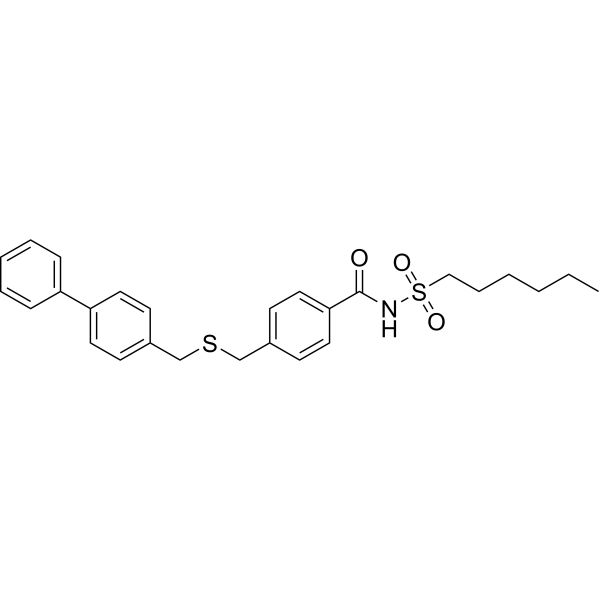
KY-226 is a potent, selective, orally active and allosteric protein tyrosine phosphatase 1B (PTP1B) inhibitor with an IC50 of 0.25 μM, and without PPARγ agonist activity. KY-226 exerts anti-diabetic and anti-obesity effects by enhancing insulin and leptin signaling, respectively. KY-226 also protects neurons from cerebral ischemic injury.
For research use only. We do not sell to patients.
- Purity : 98.42%
- CAS No.: 1621673-53-7
- Formula: C27H31NO3S2
- Molecular Weight:481.67
-
Storage:Powder -20°C, 3 years , 4°C, 2 years ; In solvent -80°C, 2 years , -20°C, 1 year

To place orders, for customer services and technical support, please contact: MedChemExpress USA
Tel: 609-228-6898 E-mail: [email protected] [email protected]


-
 Biological Activity
-
Chemical Information
-
Solvent & Solubility
- Protocols
- Purity & Documentation
- References
-
 Help & FAQs


-
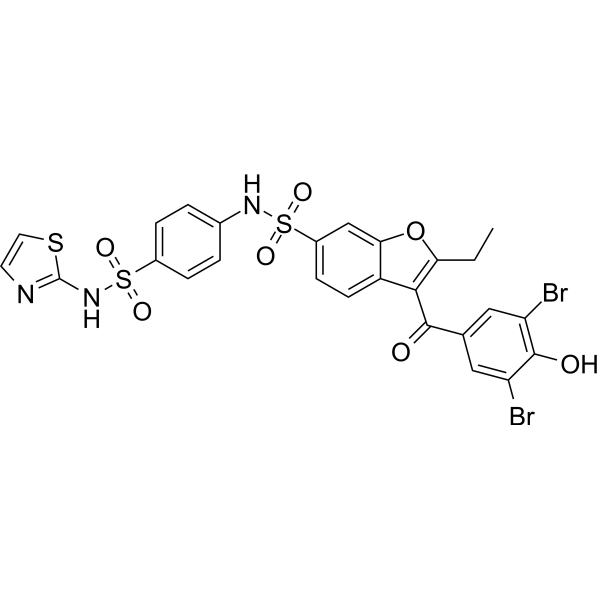
HY-15756
PTP1B-IN-4PTP1B Inhibitor -
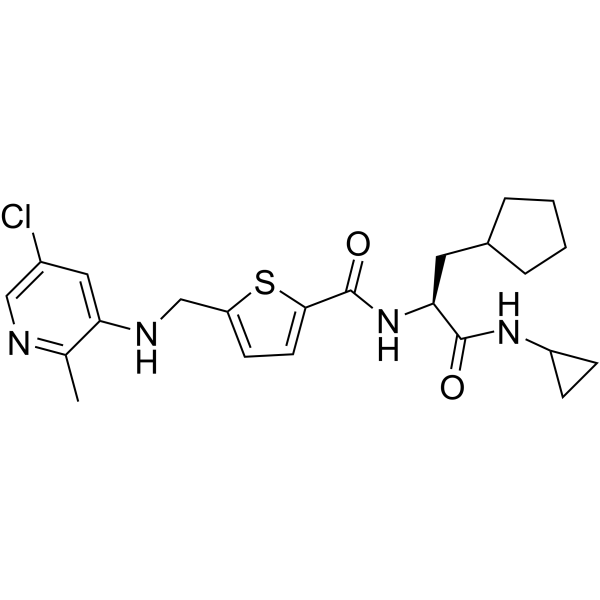
HY-15832
GSK 2830371Wip1 Phosphatase Inhibitor -
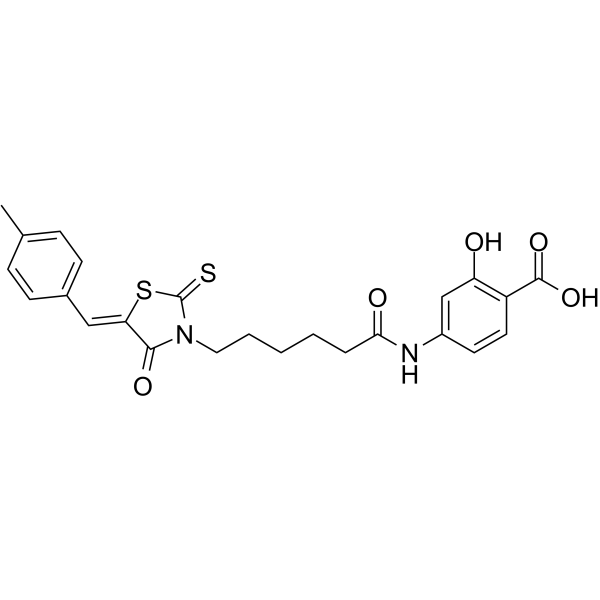
HY-101510
F1063-0967DUSP26 Inhibitor -
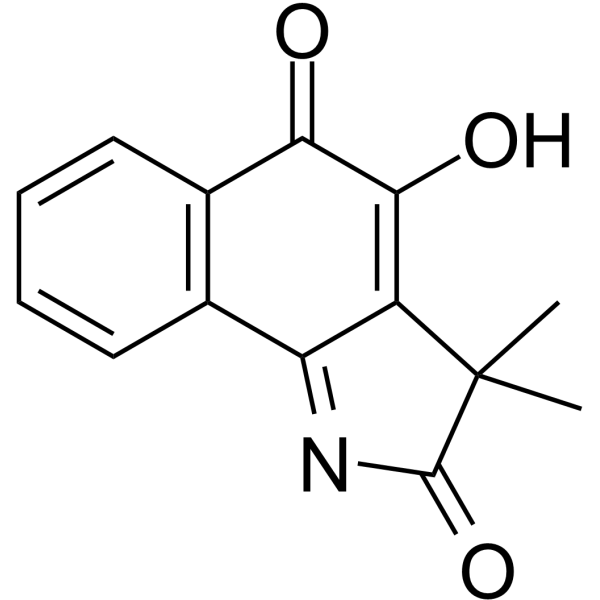
HY-100625
BVT948PTP Inhibitor -
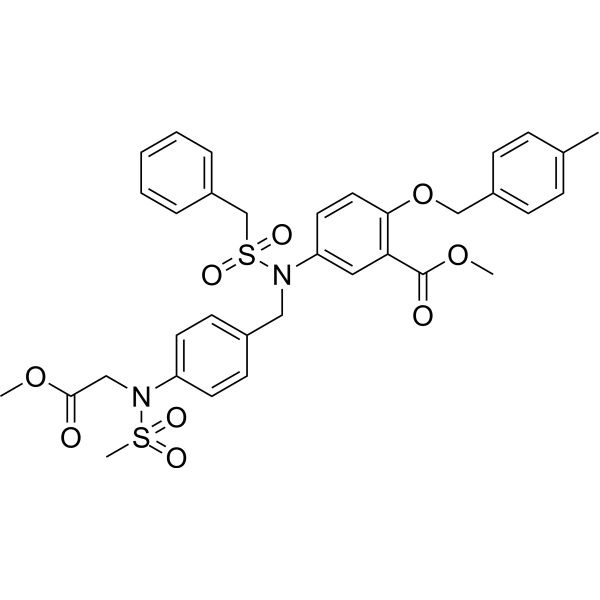
HY-100462
PTP1B-IN-2PTP1B Inhibitor -
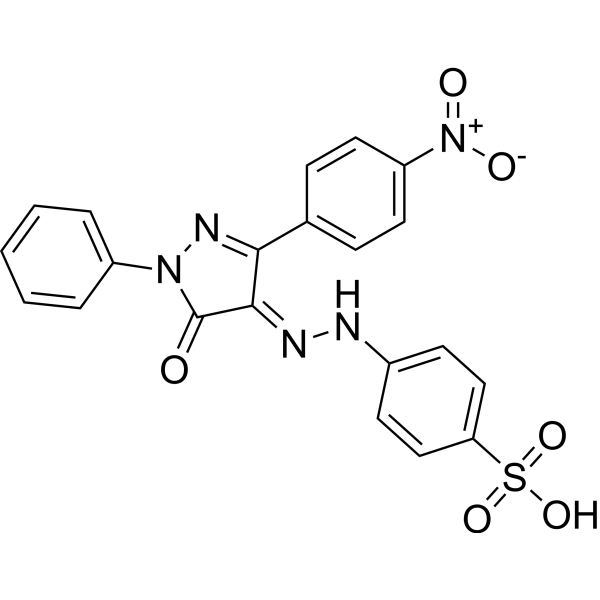
HY-112368
PHPS1Shp2 Inhibitor -
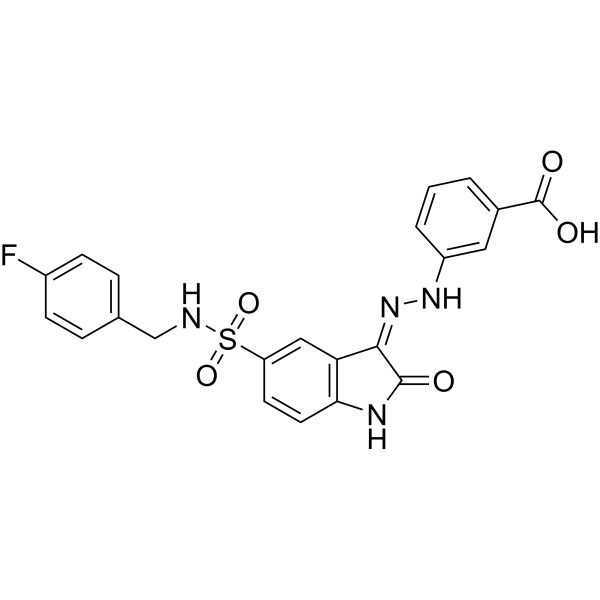
HY-101964
SPI-112SHP2 Inhibitor -
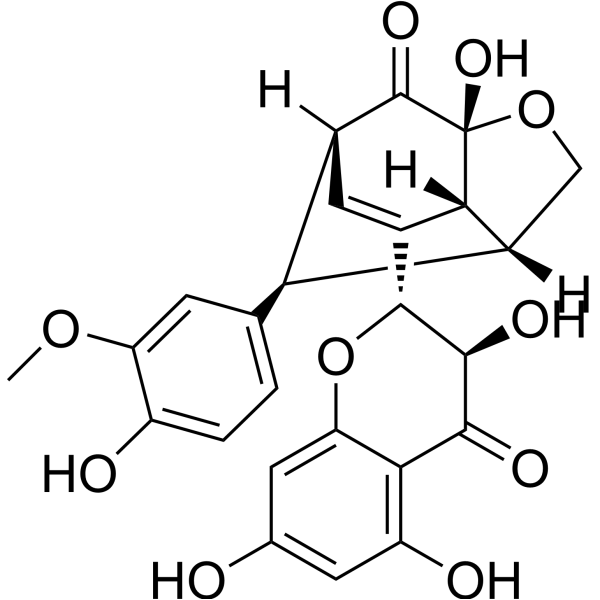
HY-N0646
SilydianinEndogenous Metabolite -
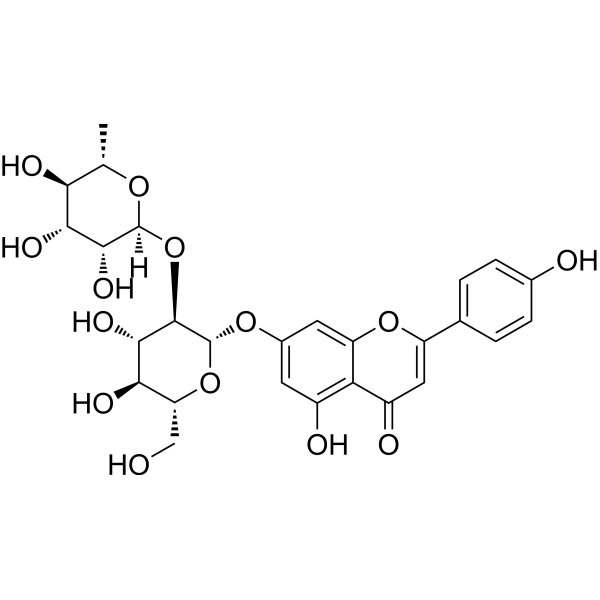
HY-N0755
RhoifolinFlavone Glycoside -
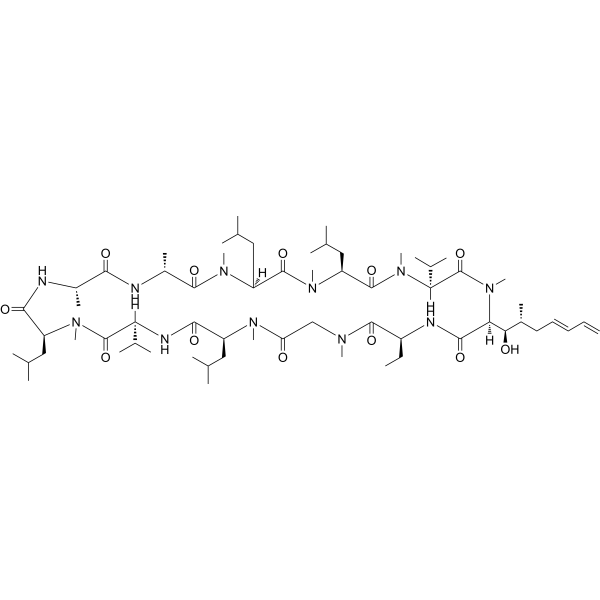
HY-106638
VoclosporinPP2B Inhibitor -
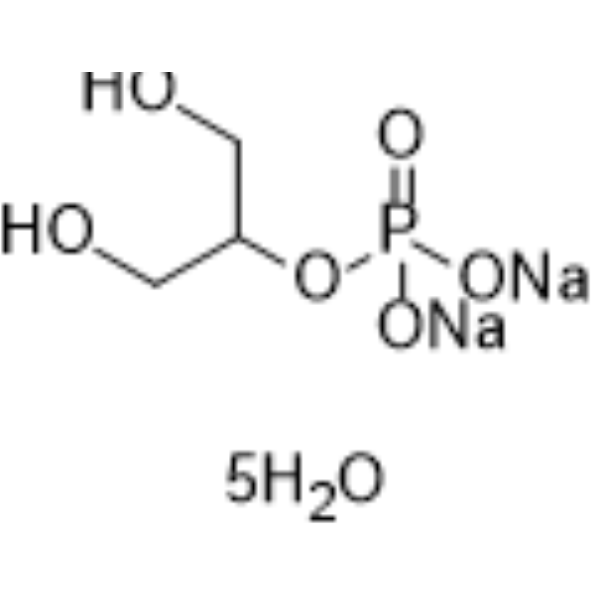
HY-D0886
β-Glycerophosphate disodium salt pentahydratePhosphatase Inhibitor -

HY-101510R
F1063-0967 (Standard)DUSP26 Inhibitor
Publications Citing Use of MedChemExpress (MCE) KY-226
More

Biological Activity
Description
IC50 & Target
IC50: 0.25 μM (Protein tyrosine phosphatase 1B (PTP1B))[2]
In Vitro
In human hepatoma-derived cells (HepG2), KY-226 (0.3-10 μM) increases the phosphorylated insulin receptor (pIR) produced by insulin[1].
KY-226 (1 μM; 24 hours; bEnd.3 cells) treatment rescues lipopolysaccharide-induced reduction of mRNA and protein levels of ZO-1. KY-226 treatment restores phosphorylation of pAkt (T308) and its downstream target forkhead box protein O1 (FoxO1) (S256) in bEnd.3 cells[2].
MedChemExpress (MCE) has not independently confirmed the accuracy of these methods. They are for reference only.
-
Cell Line:bEnd.3 cells stimulated with LPS
-
Concentration:1 μM
-
Incubation Time:24 hours
-
Result:Rescued lipopolysaccharide-induced reduction of mRNA and protein levels of ZO-1.
In Vivo
KY-226 attenuates plasma glucose elevations in the oral glucose tolerance test. KY-226 also increases pIR and phosphorylated Akt in the liver and femoral muscle[1].
MedChemExpress (MCE) has not independently confirmed the accuracy of these methods. They are for reference only.
-
Animal Model:Male db/db mice (8-11 weeks old)[1]
-
Dosage:10 mg/kg and 30 mg/kg
-
Administration:Oral administration; daily; for 4 weeks
-
Result:Significantly reduced plasma glucose and triglyceride levels as well as hemoglobin A1c values without increasing body weight gain.


Chemical Information
-
CAS No. 1621673-53-7
-
Appearance Solid
-
Molecular Weight 481.67
-
Formula C27H31NO3S2
-
Color White to off-white
-
SMILES
O=C(NS(=O)(CCCCCC)=O)C1=CC=C(CSCC2=CC=C(C3=CC=CC=C3)C=C2)C=C1
-
Shipping
Room temperature in continental US; may vary elsewhere.
-
Storage
Powder -20°C 3 years 4°C 2 years In solvent -80°C 2 years -20°C 1 year


Publications (2)
-
Journal Impact Factor
-
Most Recent
-
CNS Neurosci Ther
PTP1B Modulates Carotid Plaque Vulnerability in Atherosclerosis Through Rab5-PDGFRβ-Mediated Endocytosis Disruption and Apoptosis. [Abstract]2024 Nov;30(11):e70071. PMID: 39517122 -


Solvent & Solubility
In Vitro:
DMSO : 250 mg/mL (519.03 mM; Need ultrasonic; Hygroscopic DMSO has a significant impact on the solubility of product, please use newly opened DMSO)
Please refer to the solubility information to select the appropriate solvent. Once prepared, please aliquot and store the solution to prevent product inactivation from repeated freeze-thaw cycles.
Storage method and period of stock solution: -80°C, 2 years; -20°C, 1 year. When stored at -80°C, please use it within 2 years. When stored at -20°C, please use it within 1 year.
Please refer to the solubility information to select the appropriate solvent. Once prepared, please aliquot and store the solution to prevent product inactivation from repeated freeze-thaw cycles.
Storage method and period of stock solution: -80°C, 2 years; -20°C, 1 year. When stored at -80°C, please use it within 2 years. When stored at -20°C, please use it within 1 year.
Concentration (start) × Volume (start) = Concentration (final) × Volume (final)
In Vivo:
Select the appropriate dissolution method based on your experimental animal and administration route.
- For the following dissolution methods, please ensure to first prepare a clear stock solution using an In Vitro approach and then sequentially add co-solvents:
- To ensure reliable experimental results, the clarified stock solution can be appropriately stored based on storage conditions. As for the working solution for In Vivo experiments, it is recommended to prepare freshly and use it on the same day.
- The percentages shown for the solvents indicate their volumetric ratio in the final prepared solution. If precipitation or phase separation occurs during preparation, heat and/or sonication can be used to aid dissolution.
Add each solvent one by one: 10% DMSO 40% PEG300 5% Tween-80 45% Saline
Solubility: ≥ 2.08 mg/mL (4.32 mM); Clear solution
This protocol yields a clear solution of ≥ 2.08 mg/mL (saturation unknown).
Taking 1 mL working solution as an example, add 100 μL DMSO stock solution (20.8 mg/mL) to 400 μL PEG300, and mix evenly; then add 50 μL Tween-80 and mix evenly; then add 450 μL Saline to adjust the volume to 1 mL.
Preparation of Saline: Dissolve 0.9 g sodium chloride in ddH₂O and dilute to 100 mL to obtain a clear Saline solution.
Add each solvent one by one: 10% DMSO 90% (20% SBE-β-CD in Saline)
Solubility: ≥ 2.08 mg/mL (4.32 mM); Clear solution
This protocol yields a clear solution of ≥ 2.08 mg/mL (saturation unknown).
Taking 1 mL working solution as an example, add 100 μL DMSO stock solution (20.8 mg/mL) to 900 μL 20% SBE-β-CD in Saline, and mix evenly.
Preparation of 20% SBE-β-CD in Saline (4°C, storage for one week): 2 g SBE-β-CD powder is dissolved in 10 mL Saline, completely dissolve until clear.
In Vivo Dissolution Calculator
Please enter the basic information of animal experiments:
-
-
-
-
Recommended: Prepare an additional quantity of animals to account for potential losses during experiments.
Please enter your animal formula composition:
-
%DMSO +
Recommended: Keep the proportion of DMSO in working solution below 2% if your animal is weak.
-
%+
-
+%Tween-80 + +
-
%Saline +
The co-solvents required include: DMSO, . All of co-solvents are available by MedChemExpress (MCE). , Tween 80. All of co-solvents are available by MedChemExpress (MCE).
Working solution concentration: 0.22 mg/mL
Method for preparing stock solution: mg drug dissolved in μL DMSO. Stock solution concentration: mg/mL.
1. Take μL DMSO stock solution;
2. Add μL .
μL , mix evenly;
3. Then add μL Tween 80, mix evenly;
4. Then add μL
Please ensure that the stock solution in the first step is dissolved to a clear state, and add co-solvents in sequence. You can use ultrasonic heating (ultrasonic cleaner, recommended frequency 20-40 kHz), vortexing, etc. to assist dissolution.


Purity & Documentation
-
Data Sheet (272 KB)
-
SDS (393 KB)
- English - EN (393 KB)
- Français - FR (393 KB)
- Deutsch - DE (393 KB)
- Norwegian - NO (393 KB)
- Español - ES (393 KB)
- Swedish - SV (393 KB)
- Italian - IT (393 KB)
- Korean - KR (393 KB)
- Portuguese - PT (393 KB)
-
Handling Instructions (2659 KB)
References
[1]. Ito Y, et al. Therapeutic effects of the allosteric protein tyrosine phosphatase 1B inhibitor KY-226 on experimental diabetes and obesity via enhancements in insulin and leptin signaling in mice. J Pharmacol Sci. 2018 May;137(1):38-46. [Content Brief]
[2]. Sun M, et al. KY-226 Protects Blood-brain Barrier Function Through the Akt/FoxO1 Signaling Pathway in Brain Ischemia. Neuroscience. 2019 Feb 10;399:89-102. [Content Brief]


Complete Stock Solution Preparation Table
Please refer to the solubility information to select the appropriate solvent. Once prepared, please aliquot and store the solution to prevent product inactivation from repeated freeze-thaw cycles.
Storage method and period of stock solution: -80°C, 2 years; -20°C, 1 year. When stored at -80°C, please use it within 2 years. When stored at -20°C, please use it within 1 year.
| Optional Solvent | Concentration Solvent Mass | 1 mg | 5 mg | 10 mg | 25 mg |
|---|---|---|---|---|---|
| DMSO | 1 mM | 2.0761 mL | 10.3806 mL | 20.7611 mL | 51.9028 mL |
| 5 mM | 0.4152 mL | 2.0761 mL | 4.1522 mL | 10.3806 mL | |
| 10 mM | 0.2076 mL | 1.0381 mL | 2.0761 mL | 5.1903 mL | |
| 15 mM | 0.1384 mL | 0.6920 mL | 1.3841 mL | 3.4602 mL | |
| 20 mM | 0.1038 mL | 0.5190 mL | 1.0381 mL | 2.5951 mL | |
| 25 mM | 0.0830 mL | 0.4152 mL | 0.8304 mL | 2.0761 mL | |
| 30 mM | 0.0692 mL | 0.3460 mL | 0.6920 mL | 1.7301 mL | |
| 40 mM | 0.0519 mL | 0.2595 mL | 0.5190 mL | 1.2976 mL | |
| 50 mM | 0.0415 mL | 0.2076 mL | 0.4152 mL | 1.0381 mL | |
| 60 mM | 0.0346 mL | 0.1730 mL | 0.3460 mL | 0.8650 mL | |
| 80 mM | 0.0260 mL | 0.1298 mL | 0.2595 mL | 0.6488 mL | |
| 100 mM | 0.0208 mL | 0.1038 mL | 0.2076 mL | 0.5190 mL |


KY-226 Related Classifications
HY-120327 Related Classifications
 Powered by Bioz