



trans-AUCB
Based on 2 publication(s) in Google Scholar
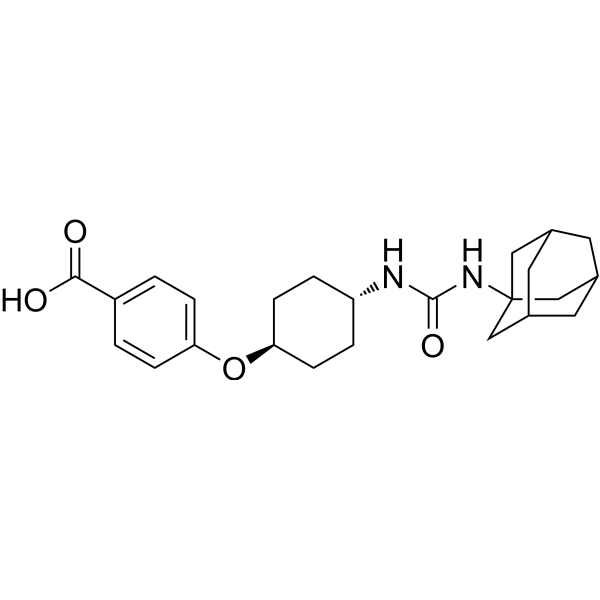
trans-AUCB (t-AUCB) is a potent, orally active and selective soluble epoxide hydrolase (sEH) inhibitor with IC50s of 1.3 nM, 8 nM, 8 nM for hsEH, mouse sEH and rat sEH, respectively. trans-AUCB has anti-glioma activity.
For research use only. We do not sell to patients.
- Purity : 99.89%
- CAS No.: 885012-33-9
- Formula: C24H32N2O4
- Molecular Weight:412.52
-
Storage:Powder -20°C, 3 years , 4°C, 2 years ; In solvent -80°C, 6 months , -20°C, 1 month

To place orders, for customer services and technical support, please contact: MedChemExpress USA
Tel: 609-228-6898 E-mail: [email protected] [email protected]


-
 Biological Activity
-
Chemical Information
-
Solvent & Solubility
- Purity & Documentation
- References
-
 Help & FAQs


-
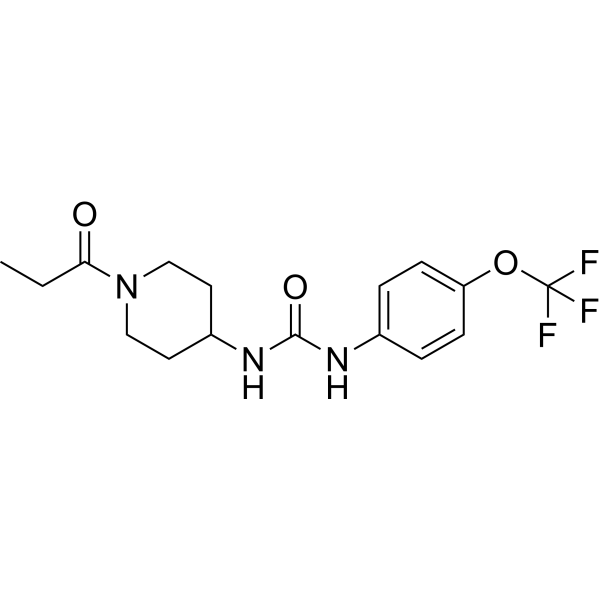
HY-101294
TPPUsEH Inhibitor -
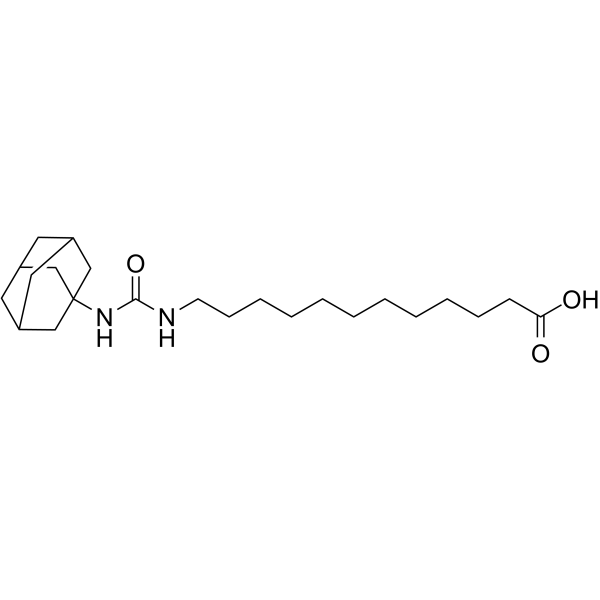
HY-108570
AUDAsEH Inhibitor -
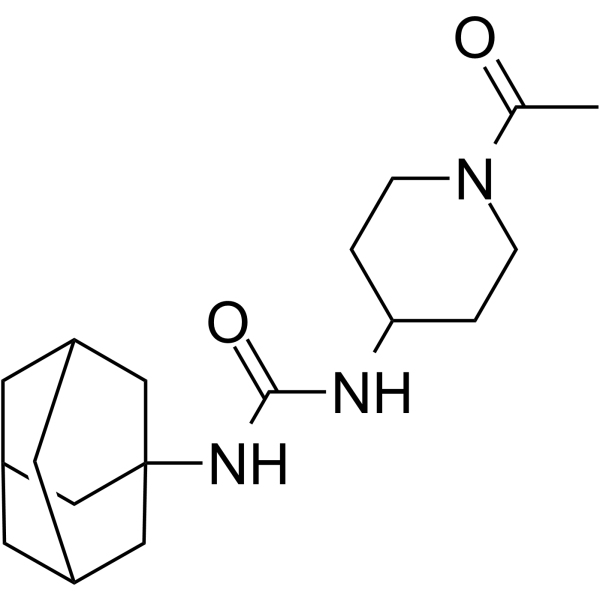
HY-111151
AR-9281s-EH Inhibitor -
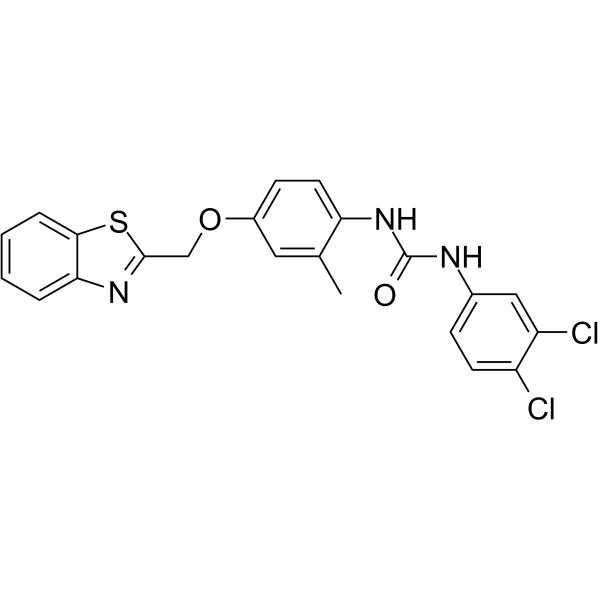
HY-128171
DiflapolinFLAP/sEH Inhibitor -
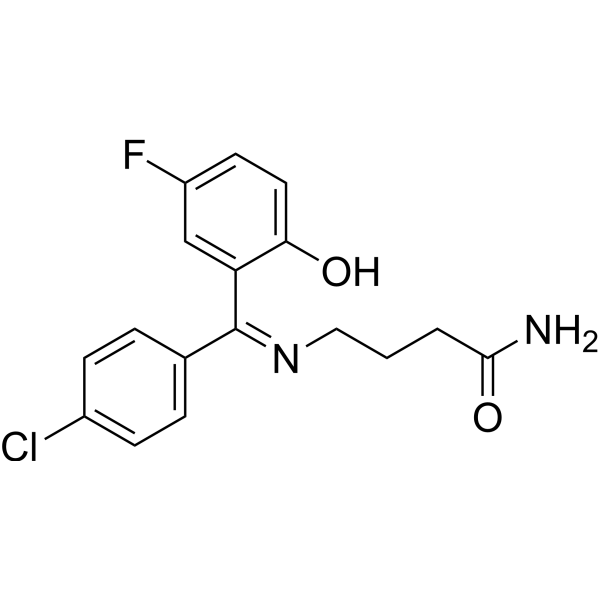
HY-A0173
ProgabideGABA Receptor Agonist -

HY-101294R
TPPU (Standard)sEH Inhibitor -
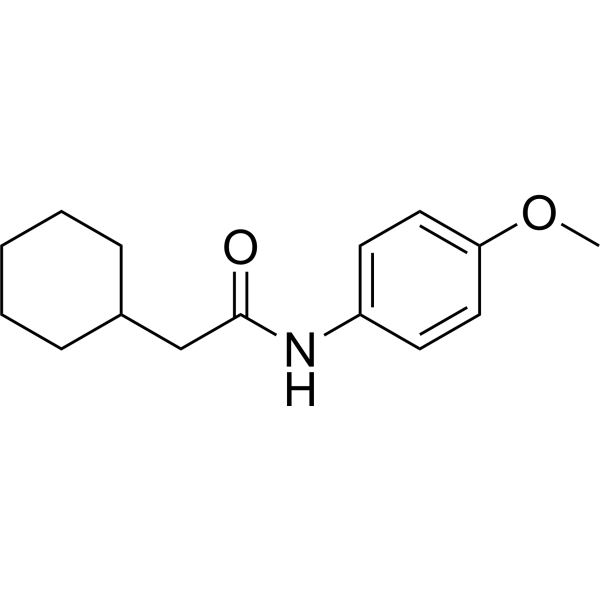
HY-148136
sEH inhibitor-7sEH Inhibitor -
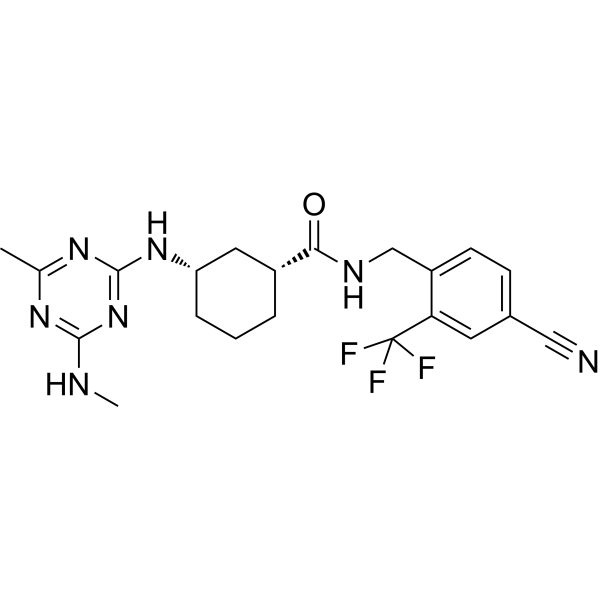
HY-19644
GSK2256294AsEH Inhibitor -
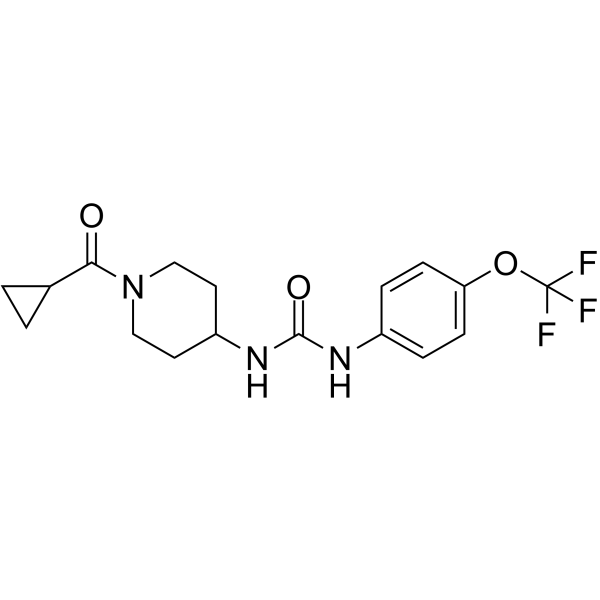
HY-120494
sEH inhibitor-1sEH Inhibitor -
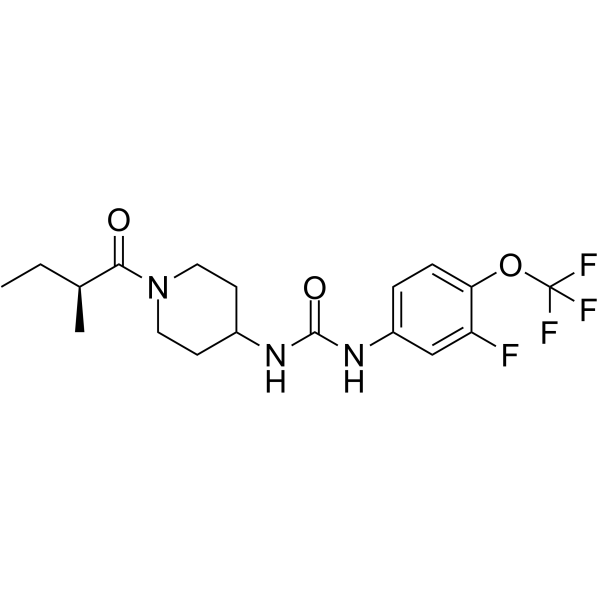
HY-135653
EC5026sEH Inhibitor -
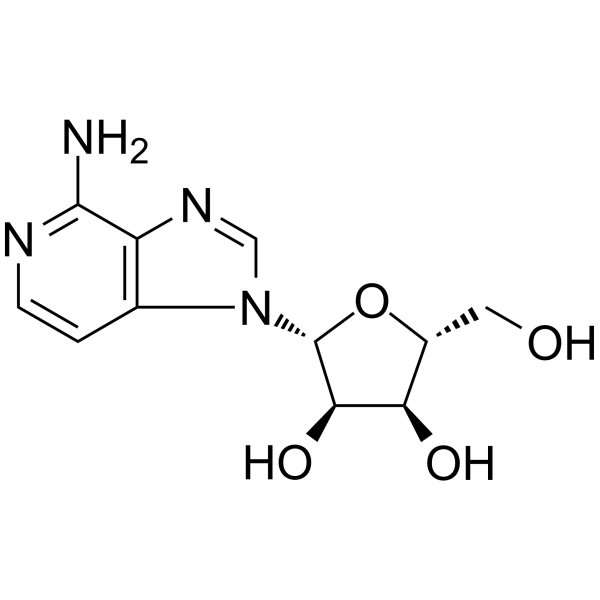
HY-W013332
3-DeazaadenosineSAHH Inhibitor -
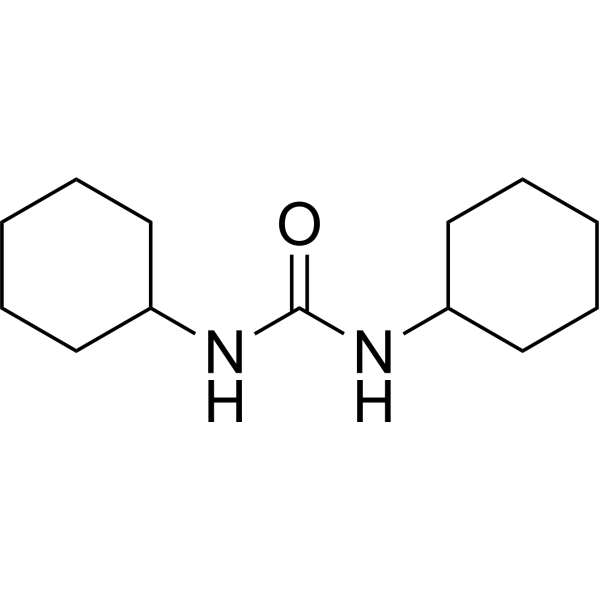
HY-W013989R
1,3-Dicyclohexylurea (Standard)sEH Inhibitor
Publications Citing Use of MedChemExpress (MCE) trans-AUCB
More

Biological Activity
Description
IC50 & Target
IC50: 1.3 nM (hsEH), 8 nM (mouse sEH) and 8 nM (rat sEH)[2]
Cellular Effect
|
Cell Line

|
Type | Value | Description | References |
|---|---|---|---|---|
| HepG2 | GI50 |
>25 μM
Compound: 11, t-AUCB
|
Cytotoxicity against human HepG2 cells by MTT assay
Cytotoxicity against human HepG2 cells by MTT assay
|
[PMID: 23726028] |
| Huh-7 | GI50 |
>25 μM
Compound: 11, t-AUCB
|
Cytotoxicity against human HuH7 cells by MTT assay
Cytotoxicity against human HuH7 cells by MTT assay
|
[PMID: 23726028] |
| HUVEC | GI50 |
>25 μM
Compound: 11, t-AUCB
|
Antiproliferative activity against HUVEC after 72 hrs by MTT assay
Antiproliferative activity against HUVEC after 72 hrs by MTT assay
|
[PMID: 23726028] |
| Sf21 | IC50 |
0.5 nM
Compound: t-AUCB
|
Inhibition of recombinant human liver soluble epoxide hydrolase expressed in baculovirus infected Sf21 cells using NEPC as substrate by fluorescence based assay
Inhibition of recombinant human liver soluble epoxide hydrolase expressed in baculovirus infected Sf21 cells using NEPC as substrate by fluorescence based assay
|
[PMID: 31488357] |
In Vitro
trans-AUCB (t-AUCB; 25-300 μM; 48 hours) suppresses U251 and U87 cell growth in a dose-dependent manner[1].
trans-AUCB (200 μM; 48 or 96 hours) induces cell-cycle G0/G1 phase arrest in U251 and U87 cells[1].
trans-AUCB (200 μM; 10 min-4 hours) can increase the phosphorylation levels of p65 after 10 min, reaching to peak after 30 min and lasting for at least 2 hours[1].
trans-AUCB (200 μM; 48 hours) suppresses U251 and U87 cell growth by activating NF-jB-p65[1].
trans-AUCB (10 μM; 30 min) efficiently inhibits sEH activities in human glioblastoma cell lines (U251, U87) and human hepatocellular carcinoma cell line (HepG2 cells)[1].
MedChemExpress (MCE) has not independently confirmed the accuracy of these methods. They are for reference only. .
-
Cell Line:U251, U87 cells
-
Concentration:25, 50, 100, 200, or 300 μM
-
Incubation Time:48 hours
-
Result:Suppressed U251 and U87 cell growth in a dose-dependent manner.
-
Cell Line:U251, U87 cells
-
Concentration:200 μM
-
Incubation Time:48 or 96 hours
-
Result:Induced cell-cycle G0/G1 phase arrest in U251 and U87 cells.
-
Cell Line:U251, U87 cells
-
Concentration:200 μM
-
Incubation Time:10 min, 30 min, 1 hour, 2 hours, or 4 hours
-
Result:Increased the phosphorylation levels of p65 after 10 min, reached to peak after 30 min and lasted for at least 2 hours.
In Vivo
trans-AUCB (p.o.; 0.1, 0.5, 1 mg/kg) has t1/2 values of 20, 30, 15 min and Cmax values of 30, 100, 150 nmol/L for p.o. of 0.1, 0.5, 1 mg/kg[2].
trans-AUCB (s.c.; 1, 3, 10 mg/kg) has t1/2 values of 60, 85, 75 min and Cmax values of 245, 2700, 3600 nmol/L for s.c. of 1, 3, 10 mg/kg[2].
trans-AUCB (i.v.; 0.1 mg/kg) has t1/2 values of 70 min and 10 hours for distribution (α) and elimination (β) phases. trans-AUCB has a CL of 0.7 L/h kg and a Vdss was 17 L/kg[2].
MedChemExpress (MCE) has not independently confirmed the accuracy of these methods. They are for reference only.
-
Animal Model:Mice (male CFW strain, 7 weeks old, 24-30 g; and male C57BL/6 strain, 8 weeks old, 22-25 g) [2]
-
Dosage:0.1, 0.5, 1 mg/kg
-
Administration:PO
-
Result:Ameliorated the LPS-induced hypotension in a dose-dependent manner.
-
Animal Model:Mice (male CFW strain, 7 weeks old, 24-30 g; and male C57BL/6 strain, 8 weeks old, 22-25 g) [2]
-
Dosage:0.1, 0.5, 1 mg/kg (Pharmacokinetic Analysis)
-
Administration:PO
-
Result:Had t1/2 values of 20, 30, 15 min and Cmax values of 30, 100, 150 nmol/L for p.o. of 0.1, 0.5, 1 mg/kg, respectively.


Chemical Information
-
CAS No. 885012-33-9
-
Appearance Solid
-
Molecular Weight 412.52
-
Formula C24H32N2O4
-
Color White to off-white
-
SMILES
OC(C(C=C1)=CC=C1O[C@@H](CC2)CC[C@H]2NC(NC34C[C@H](C5)C[C@H](C[C@H]5C4)C3)=O)=O
-
Synonyms
t-AUCB
-
Shipping
Room temperature in continental US; may vary elsewhere.
-
Storage
Powder -20°C 3 years 4°C 2 years In solvent -80°C 6 months -20°C 1 month


Publications (2)
-
Journal Impact Factor
-
Most Recent
-
Redox Biol
Endogenous acrolein accumulation in akr7a3 mutants causes microvascular dysfunction due to increased arachidonic acid metabolism. [Abstract]2025 Jun:83:103639. PMID: 40258306 -
Mol Metab
CES2 sustains HNF4α expression to promote pancreatic adenocarcinoma progression through an epoxide hydrolase-dependent regulatory loop. [Abstract]2022 Feb:56:101426. PMID: 34971802


Solvent & Solubility
In Vitro:
DMSO : 100 mg/mL (242.41 mM; Need ultrasonic; Hygroscopic DMSO has a significant impact on the solubility of product, please use newly opened DMSO)
Please refer to the solubility information to select the appropriate solvent. Once prepared, please aliquot and store the solution to prevent product inactivation from repeated freeze-thaw cycles.
Storage method and period of stock solution: -80°C, 6 months; -20°C, 1 month. When stored at -80°C, please use it within 6 months. When stored at -20°C, please use it within 1 month.
Please refer to the solubility information to select the appropriate solvent. Once prepared, please aliquot and store the solution to prevent product inactivation from repeated freeze-thaw cycles.
Storage method and period of stock solution: -80°C, 6 months; -20°C, 1 month. When stored at -80°C, please use it within 6 months. When stored at -20°C, please use it within 1 month.
Concentration (start) × Volume (start) = Concentration (final) × Volume (final)
In Vivo:
Select the appropriate dissolution method based on your experimental animal and administration route.
- For the following dissolution methods, please ensure to first prepare a clear stock solution using an In Vitro approach and then sequentially add co-solvents:
- To ensure reliable experimental results, the clarified stock solution can be appropriately stored based on storage conditions. As for the working solution for In Vivo experiments, it is recommended to prepare freshly and use it on the same day.
- The percentages shown for the solvents indicate their volumetric ratio in the final prepared solution. If precipitation or phase separation occurs during preparation, heat and/or sonication can be used to aid dissolution.
Add each solvent one by one: 10% DMSO 40% PEG300 5% Tween-80 45% Saline
Solubility: ≥ 2.08 mg/mL (5.04 mM); Clear solution
This protocol yields a clear solution of ≥ 2.08 mg/mL (saturation unknown).
Taking 1 mL working solution as an example, add 100 μL DMSO stock solution (20.8 mg/mL) to 400 μL PEG300, and mix evenly; then add 50 μL Tween-80 and mix evenly; then add 450 μL Saline to adjust the volume to 1 mL.
Preparation of Saline: Dissolve 0.9 g sodium chloride in ddH₂O and dilute to 100 mL to obtain a clear Saline solution.
Add each solvent one by one: 10% DMSO 90% (20% SBE-β-CD in Saline)
Solubility: ≥ 2.08 mg/mL (5.04 mM); Clear solution
This protocol yields a clear solution of ≥ 2.08 mg/mL (saturation unknown).
Taking 1 mL working solution as an example, add 100 μL DMSO stock solution (20.8 mg/mL) to 900 μL 20% SBE-β-CD in Saline, and mix evenly.
Preparation of 20% SBE-β-CD in Saline (4°C, storage for one week): 2 g SBE-β-CD powder is dissolved in 10 mL Saline, completely dissolve until clear.
In Vivo Dissolution Calculator
Please enter the basic information of animal experiments:
-
-
-
-
Recommended: Prepare an additional quantity of animals to account for potential losses during experiments.
Please enter your animal formula composition:
-
%DMSO +
Recommended: Keep the proportion of DMSO in working solution below 2% if your animal is weak.
-
%+
-
+%Tween-80 + +
-
%Saline +
The co-solvents required include: DMSO, . All of co-solvents are available by MedChemExpress (MCE). , Tween 80. All of co-solvents are available by MedChemExpress (MCE).
Working solution concentration: 0.22 mg/mL
Method for preparing stock solution: mg drug dissolved in μL DMSO. Stock solution concentration: mg/mL.
1. Take μL DMSO stock solution;
2. Add μL .
μL , mix evenly;
3. Then add μL Tween 80, mix evenly;
4. Then add μL
Please ensure that the stock solution in the first step is dissolved to a clear state, and add co-solvents in sequence. You can use ultrasonic heating (ultrasonic cleaner, recommended frequency 20-40 kHz), vortexing, etc. to assist dissolution.


Purity & Documentation
-
Data Sheet (277 KB)
-
SDS (254 KB)
- English - EN (254 KB)
- Français - FR (254 KB)
- Deutsch - DE (254 KB)
- Norwegian - NO (254 KB)
- Español - ES (254 KB)
- Swedish - SV (254 KB)
- Italian - IT (254 KB)
- Korean - KR (254 KB)
- Portuguese - PT (254 KB)
-
Handling Instructions (2659 KB)
References
[1]. Li J, et al. t-AUCB, an improved sEH inhibitor, suppresses human glioblastoma cell growth by activatingNF-κB-p65. J Neurooncol. 2012 Jul;108(3):385-93. [Content Brief]
[2]. Liu JY, et al. Pharmacokinetic optimization of four soluble epoxide hydrolase inhibitors for use in a murinemodel of inflammation. Br J Pharmacol. 2009 Jan;156(2):284-96. [Content Brief]


Complete Stock Solution Preparation Table
Please refer to the solubility information to select the appropriate solvent. Once prepared, please aliquot and store the solution to prevent product inactivation from repeated freeze-thaw cycles.
Storage method and period of stock solution: -80°C, 6 months; -20°C, 1 month. When stored at -80°C, please use it within 6 months. When stored at -20°C, please use it within 1 month.
| Optional Solvent | Concentration Solvent Mass | 1 mg | 5 mg | 10 mg | 25 mg |
|---|---|---|---|---|---|
| DMSO | 1 mM | 2.4241 mL | 12.1206 mL | 24.2412 mL | 60.6031 mL |
| 5 mM | 0.4848 mL | 2.4241 mL | 4.8482 mL | 12.1206 mL | |
| 10 mM | 0.2424 mL | 1.2121 mL | 2.4241 mL | 6.0603 mL | |
| 15 mM | 0.1616 mL | 0.8080 mL | 1.6161 mL | 4.0402 mL | |
| 20 mM | 0.1212 mL | 0.6060 mL | 1.2121 mL | 3.0302 mL | |
| 25 mM | 0.0970 mL | 0.4848 mL | 0.9696 mL | 2.4241 mL | |
| 30 mM | 0.0808 mL | 0.4040 mL | 0.8080 mL | 2.0201 mL | |
| 40 mM | 0.0606 mL | 0.3030 mL | 0.6060 mL | 1.5151 mL | |
| 50 mM | 0.0485 mL | 0.2424 mL | 0.4848 mL | 1.2121 mL | |
| 60 mM | 0.0404 mL | 0.2020 mL | 0.4040 mL | 1.0101 mL | |
| 80 mM | 0.0303 mL | 0.1515 mL | 0.3030 mL | 0.7575 mL | |
| 100 mM | 0.0242 mL | 0.1212 mL | 0.2424 mL | 0.6060 mL |


trans-AUCB Related Classifications
HY-113974 Related Classifications
 Powered by Bioz