



Dextran sulfate sodium salt (MW 5000)
Based on 5 publication(s) in Google Scholar
Dextran sulfate sodium salt (DSS) (MW 5000) is a polymer of dehydrated glucose with a molecular weight of approximately 5000. Dextran sulfate sodium salt (DSS) with different molecular weights exhibits different biological activities. Dextran sulfate sodium salt (MW 5000) is an inhibitor of complement and coagulation pathways, and belongs to the glycosaminoglycans (GAG) family. Dextran sulfate sodium salt (MW 5000) acts as an anticoagulant, antiviral, and anti-lipemic agent. Dextran sulfate sodium salt (DSS) stops HIV-1 virus adsorption to host cells. Dextran sulfate sodium salt (MW 5000) prevents NK cell-mediated cytotoxicity. Dextran sulfate sodium salt (MW 5000) inhibits instant blood-mediated inflammatory reaction (IBMIR).
For research use only. We do not sell to patients.
- Assay : 99.20%
- CAS No.: 9011-18-1
- Molecular Weight:5000(Average)
-
Storage:
Store at room temperature, keep dry and cool.
In solvent -80°C, 1 year , -20°C, 6 months

To place orders, for customer services and technical support, please contact: MedChemExpress USA
Tel: 609-228-6898 E-mail: [email protected] [email protected]


-
 Biological Activity
-
Chemical Information
-
Solvent & Solubility
- Protocols
- Purity & Documentation
- References
-
 Help & FAQs


-
HY-116282C
Dextran sulfate sodium salt (MW 35000-45000)Colitis Inducer -

HY-116282B
Dextran sulfate sodium salt (MW 16000-24000)Dextran -
HY-116282D
Dextran sulfate sodium salt (MW 450000-550000)Antiviral Agent -

HY-116282I
Dextran sulfate sodium salt (MW>500000)Sulfated Polysaccharide -
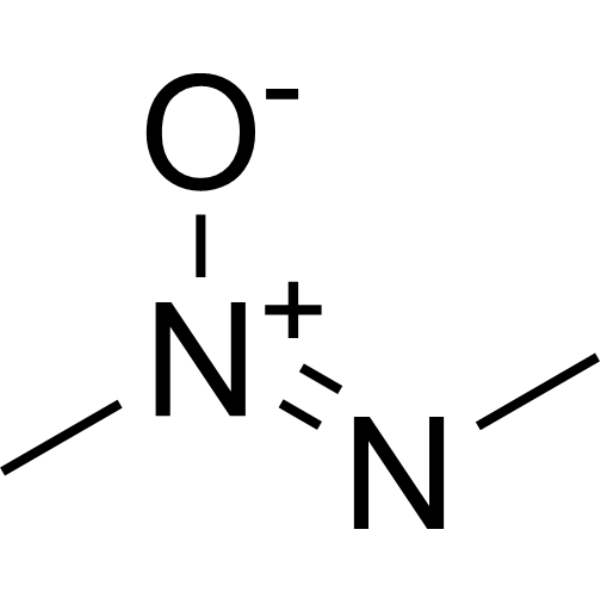
HY-111375
AzoxymethaneGenotoxic Carcinogen -
HY-116282A
Dextran sulfate sodium salt (MW 4500-5500)Complement Inhibtior -
HY-17567A
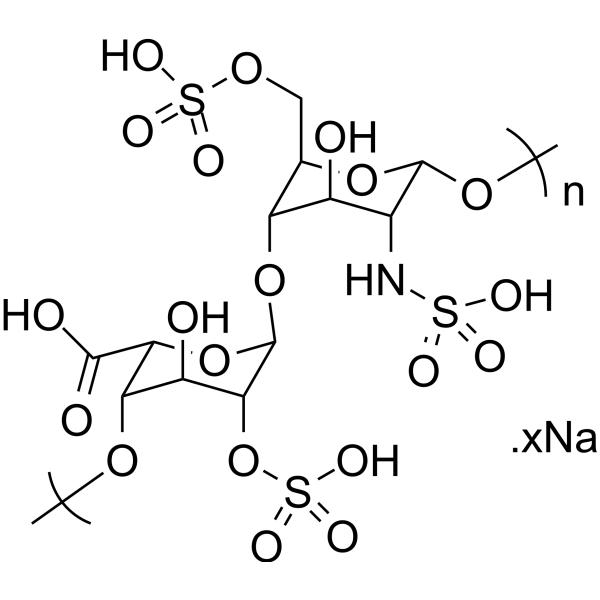
Heparin sodium saltAnticoagulant -

HY-116282M
Dextran sulfate, low sulfate (MW 40000)Sulfated Polysaccharide -
HY-15371
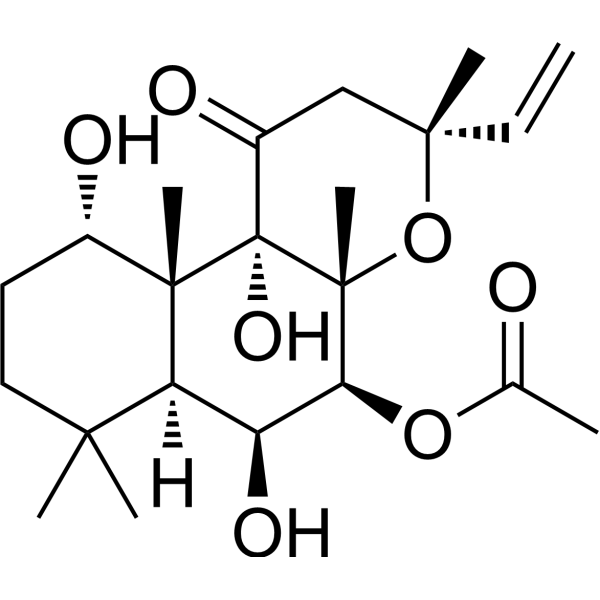
ForskolinAdenylate Cyclase Activator -
HY-N0583
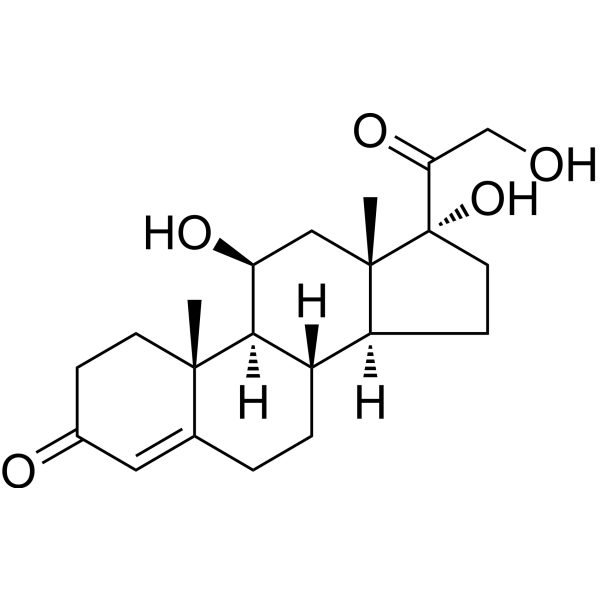
HydrocortisoneGlucocorticoid Receptor Agonist -

HY-112624K
Dextran T5 (MW 5,000)Anti-apoptotic/Autophagic Agent
Publications Citing Use of MedChemExpress (MCE) Dextran sulfate sodium salt (MW 5000)
More

Biological Activity
Description
In Vitro
Coagulation activity:
Dextran sulfate sodium salt (MW 5000) enhances C1 inhibitor's effect on FXIa, accelerates thrombin inhibition by Antithrombin and heparin cofactor II.
Dextran sulfate sodium salt (MW 5000) (0.01-1 mg/mL) inhibits macroscopic clotting, abrogates platelet consumption and completely blocks the generation of C3a, FXIa-Antithrombin and thrombin-antithrombin when human islets came in contact with ABO-compatible blood[1].
Antiviral activity:
Dextran sulfate sodium salt (MW 5000) (25 μg/mL; 24 h) completely protected MT-4 cells from HIV-1-induced cytopathogenicity[2].
Others:
Dextran sulfate sodium salt (MW 5000) can be labeled with 2-aminopyridine (yielding pyridylamino-DSS or PA-DSS) and be used to examine its metabolism in Caco-2 cells. PA-DSS (MW 5000) (3%; 24 h) rapidly inhibits the energy metabolism of Caco-2 cells[3].
Dextran sulfate sodium salt (MW 5000) (0-25 mg/mL, 6 h) protects human myoblasts from NK cell mediated killing[4].
MedChemExpress (MCE) has not independently confirmed the accuracy of these methods. They are for reference only. Further protocols information, click here.
In Vivo
MedChemExpress (MCE) has not independently confirmed the accuracy of these methods. They are for reference only.


Chemical Information
-
CAS No. 9011-18-1
-
Appearance Solid
-
Molecular Weight 5000(Average)
-
Color Off-white to light yellow
-
Synonyms
DSS (MW 5000); DXS (MW 5000)
-
Shipping
Room temperature in continental US; may vary elsewhere.
-
Storage
Store at room temperature, keep dry and cool
In solvent -80°C 1 year -20°C 6 months


Publications (5)
-
Journal Impact Factor
-
Most Recent
-
Mol Cancer
Tumour-infiltrating microplastics disrupt the JAK-STAT-microbiota axis to promote immunotherapy resistance in colorectal cancer. [Abstract]2026 Feb 10;25(1):73. PMID: 41664174 -
Cancer Commun (Lond)
RNA m1A methyltransferase TRMT61A promotes colorectal tumorigenesis by enhancing ONECUT2 mRNA stability and is a potential therapeutic target. [Abstract]2025 Oct 16. PMID: 41103012 -
Int J Biol Macromol
Thermosensitive and mucoadhesive poloxamer 407/sodium alginate hydrogel loaded with spermidine for targeted autophagy activation and mucosal repair in ulcerative colitis. [Abstract]2026 Jan;335(Pt 1):149255. PMID: 41297803 -
Int Immunopharmacol
Human antigen R -mediated autophagy-related gene 3 methylation enhances autophagy-driven ferroptosis in Crohn's disease colitis. [Abstract]2025 May 8:154:114565. PMID: 40174340 -
Sci Total Environ
Water pollutant cadmium-induced intestinal inflammation in Eriocheir sinensis and potential therapeutic drugs. [Abstract]2024 Dec 10:955:177132. PMID: 39442721


Solvent & Solubility
In Vitro:
H2O : 50 mg/mL (Need ultrasonic)

Protocols
-
Research Protocol for Infectious Diseases
Infectious-disease experiments test how pathogens interact with host barriers, innate immune receptors, inflammatory signaling, pathogen replication, and tissue injury; pattern-recognition receptors such as TLRs, RIG-I-like receptors, NOD-like receptors, and inflammasomes detect microbial molecules and activate NF-κB, interferon, and cytokine responses. The central hypothesis is that infection severity reflects the balance between pathogen burden and host response: protective inflammation restricts pathogen growth, whereas excessive or mislocalized inflammation contributes to tissue damage and disease phenotype. Unresolved questions include which host pathways are protective versus pathogenic, why some infection models fail to translate to human disease, and which combined readouts best predict clinically relevant infection outcomes.
-
Cell Cytotoxicity Assay
Cytotoxicity assays are usually based on the assessment of cell membrane damage, which can also be indirectly detected by measuring cell viability. Detection methods include MTT assay, CKK-8 assay, LDH assay and ATP assay, etc.
-
Mammalian live/dead viability and cytotoxicity staining
Live/dead viability and cytotoxicity staining assays are based on the simultaneous detection of intracellular esterase activity in metabolically active (viable) cells and membrane integrity loss in non-viable cells. In commonly used dual-staining approaches, membrane-permeant fluorogenic substrates are converted by intracellular esterases into fluorescent products in live cells, while impermeant DNA-binding dyes selectively enter cells with compromised plasma membranes and label nucleic acids in dead or dying cells, enabling discrimination between viable and non-viable populations by fluorescence microscopy or flow cytometry.
-
Cell Viability Determination by MTT Colorimetric Assay
The following protocol uses the MTT colorimetric assay as a classic literature-established method for assessing cell viability/metabolic activity in cultured mammalian cells. MTT[3-(4,5-dimethylthiazol-2-yl)-2,5-diphenyltetrazolium bromide] is reduced by metabolically active cells to a colored formazan product; the amount of formazan is quantified spectrophotometrically and provides an indirect measure of metabolically active viable cells. Importantly, MTT reduction reflects cellular oxidoreductase/metabolic activity rather than an absolute direct count of living cells, so changes in cellular metabolism can alter the signal independently of cell number.


Purity & Documentation
-
Data Sheet (278 KB)
-
SDS (393 KB)
- English - EN (393 KB)
- Français - FR (393 KB)
- Deutsch - DE (393 KB)
- Norwegian - NO (393 KB)
- Español - ES (393 KB)
- Swedish - SV (393 KB)
- Italian - IT (393 KB)
- Korean - KR (393 KB)
- Portuguese - PT (393 KB)
-
Handling Instructions (2659 KB)
References
[1]. Johansson H, et al. Low molecular weight dextran sulfate: a strong candidate drug to block IBMIR in clinical islet transplantation. Am J Transplant. 2006 Feb;6(2):305-12. [Content Brief]
[2]. Baba M, et al. Mechanism of inhibitory effect of dextran sulfate and heparin on replication of human immunodeficiency virus in vitro. Proc Natl Acad Sci U S A. 1988 Aug;85(16):6132-6. [Content Brief]
[3]. Araki Y, et al. Dextran sulfate sodium administered orally is depolymerized in the stomach and induces cell cycle arrest plus apoptosis in the colon in early mouse colitis. Oncol Rep. 2012 Nov;28(5):1597-605. [Content Brief]
[4]. Laumonier T,et al. Low molecular weight dextran sulfate binds to human myoblasts and improves their survival after transplantation in mice. Cell Transplant. 2013;22(7):1213-26. [Content Brief]
[5]. Banz Y, et al. Dextran sulfate modulates MAP kinase signaling and reduces endothelial injury in a rat aortic clamping model. J Vasc Surg. 2009 Jul;50(1):161-70. [Content Brief]

Calculators
Concentration (start) × Volume (start) = Concentration (final) × Volume (final)


Dextran sulfate sodium salt (MW 5000) Related Classifications
HY-116282 Related Classifications
 Powered by Bioz