



DPPC
Based on 11 publication(s) in Google Scholar
DPPC (129Y83) is a phosphoglyceride that can be used to prepare lipid monolayers, bilayers, and liposomes. DPPC is the main lipid component of pulmonary surfactant. Dppc-liposome can be effectively used as a delivery vector to induce an immune response against GSL antigen in mice.
For research use only. We do not sell to patients.
- Purity : 99.95%
- CAS No.: 63-89-8
- Formula: C40H80NO8P
- Molecular Weight:734.04
-
Storage:
-20°C, sealed storage, away from moisture
* In solvent : -80°C, 6 months; -20°C, 1 month (sealed storage, away from moisture)

To place orders, for customer services and technical support, please contact: MedChemExpress USA
Tel: 609-228-6898 E-mail: [email protected] [email protected]


-
 Biological Activity
-
Chemical Information
-
Solvent & Solubility
- Purity & Documentation
- References
-
 Help & FAQs


-
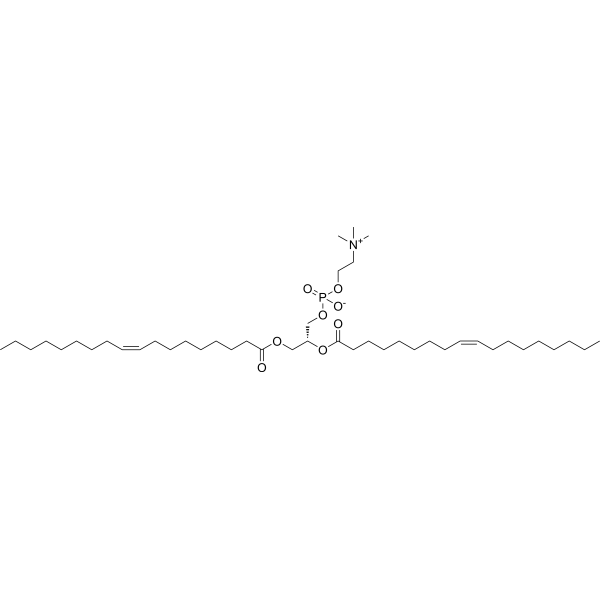
HY-113424A
1,2-Dioleoyl-sn-glycero-3-phosphocholinePhospholipid -
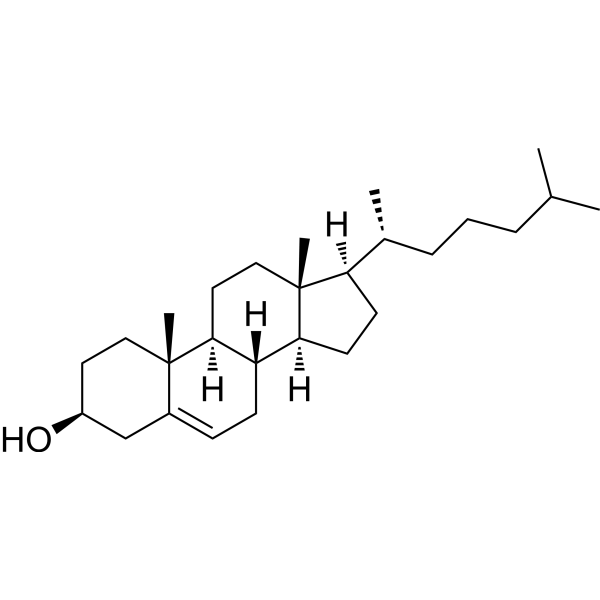
HY-N0322
Cholesterol (from animal)ERRα Agonist -
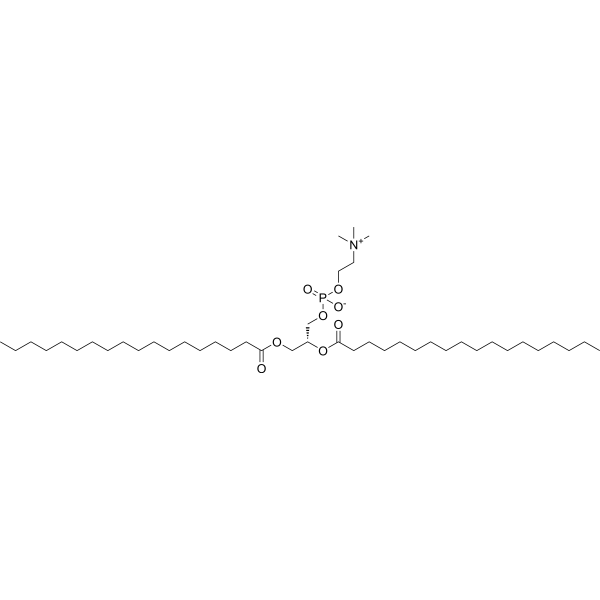
HY-W040193
DSPCLiposome Compound -
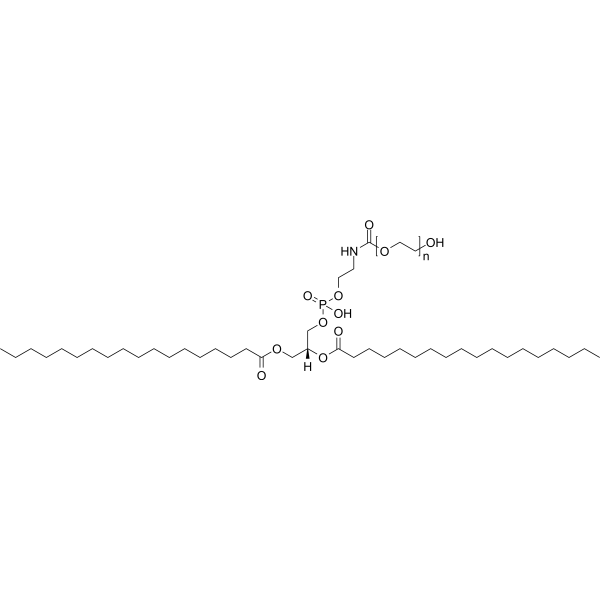
HY-142979
DSPE-PEG 2000PEG Lipid -
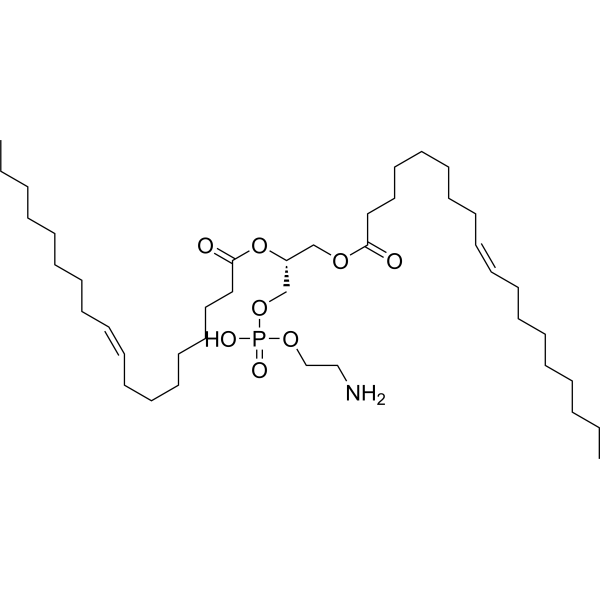
HY-112005
DOPEFerroptosis Inhibitor -
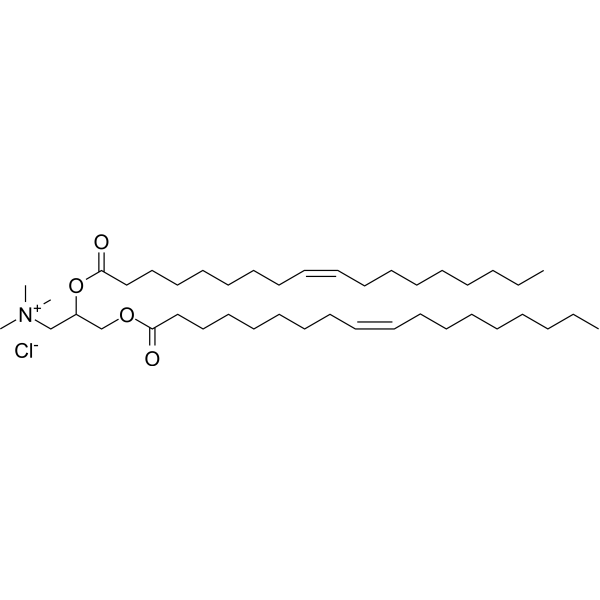
HY-112754A
DOTAP chlorideCationic Lipid -
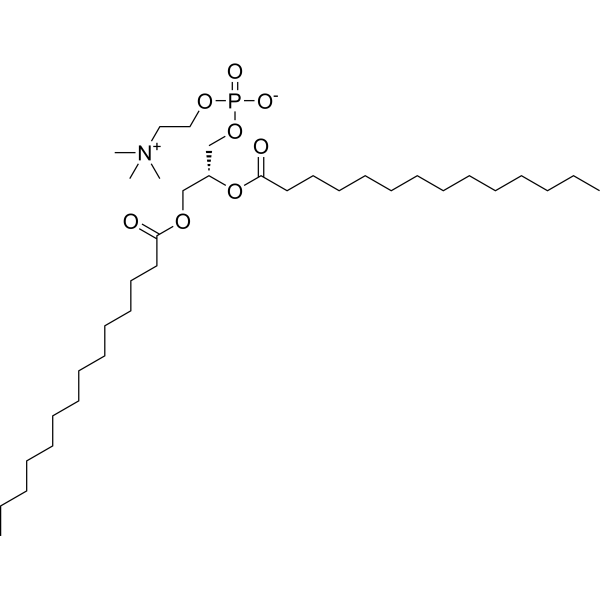
HY-109541
Colfosceril miristatePhospholipid Compound -
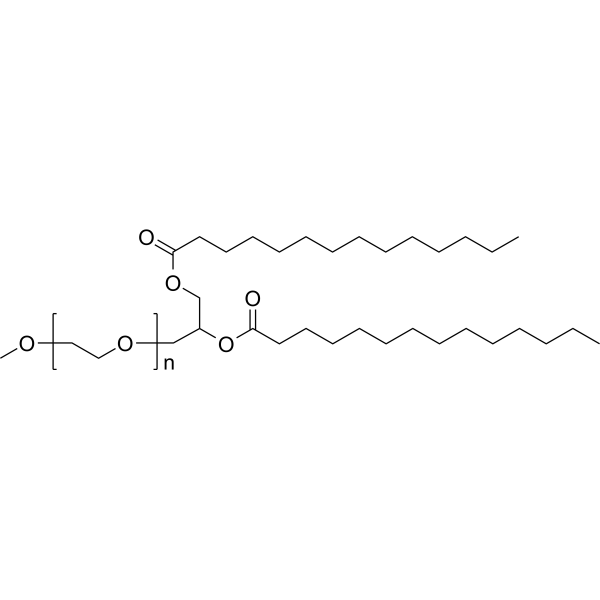
HY-112764
mPEG2000-DMGLiposome -

HY-109506R
DPPC (Standard)Endogenous Metabolite -
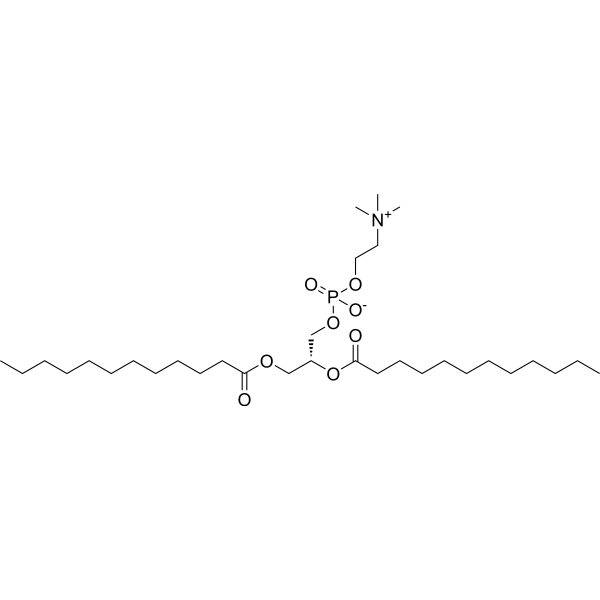
HY-107737
1,2-DLPCLRH-1 Agonist Ligand -
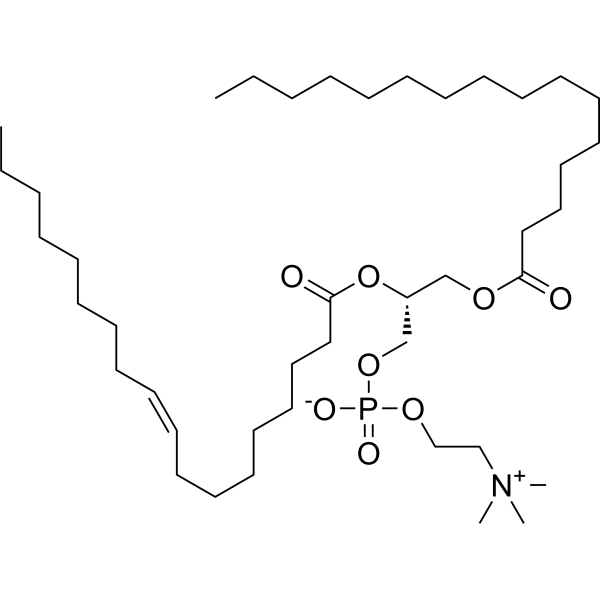
HY-130462
1-Palmitoyl-2-oleoyl-sn-glycero-3-PCSaturated Monobasic Alcohol -
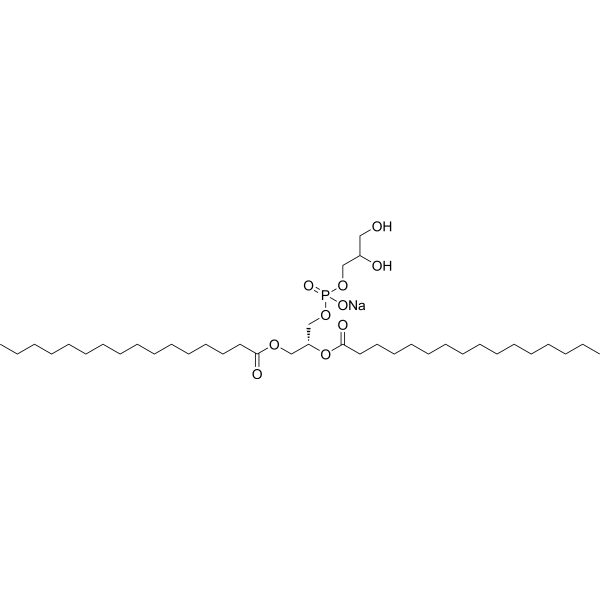
HY-125940
DPPGBiological Reagent
Publications Citing Use of MedChemExpress (MCE) DPPC
More- J Nanobiotechnology. 2026 Aug 17.
- Adv Sci (Weinh). 2024 Oct;11(38):e2402329. [Abstract]
- Asian J Pharm Sci. 2026 Apr;21(2):101150. [Abstract]
- Chem Eng J. 2025 Sep 9.
- Nano Today. 2021, 101151.
- J Agric Food Chem. 2024 May 1;72(17):9828-9841. [Abstract]
- Biol Direct. 2023 Oct 24;18(1):67. [Abstract]
- Molecules. 2026 Jun 4;31(11):1952. [Abstract]
- Spectrochim Acta A Mol Biomol Spectrosc. 2024 Jun 5:314:124172. [Abstract]
- Traditional Medicine Research. 2025;10(4):20.
- Cancer Adv. 2024;7:e24021.
 Customer Validation & Images

-
WB
All Endogenous Metabolite Isoforms
More

Biological Activity
Description
IC50 & Target
|
Human Endogenous Metabolite |
Microbial Metabolite |
In Vitro
DPPC (2-10 mg/ml) monolayer can be inserted by Aβ40, but the amount of insertion is smaller than that of DPPG or DPTAP. The behavior of Aβ40 inserted into the DPPC monolayer is affected by surface pressure, solvent (water or PBS), and salt concentration[3]. DPPC can mix with DPPE to form DPPC/DPPE lipid bilayer systems. As DPPE concentration rises, the average area per headgroup diminishes (0.65 to 0.52 nm²), enhancing membrane compactness. Meanwhile, membrane thickness slightly increases (3.43 to 4.00 nm), reflecting lipid tail ordering. [5].
MedChemExpress (MCE) has not independently confirmed the accuracy of these methods. They are for reference only.
In Vivo
MedChemExpress (MCE) has not independently confirmed the accuracy of these methods. They are for reference only.
-
Animal Model:Female BALB/c mice (6-week-old)
-
Dosage:0.05 μmol
-
Administration:Intraperitoneally immunized
-
Result:DPPC-liposome would serve effectively as a delivery vehicle for inducing immune responses against GSL antigen. DPPC-liposome combined with GSL antigens was more effective than GSLs reconstituted in either DMPC- or DSPC-liposome [2].


Chemical Information
-
CAS No. 63-89-8
-
Appearance Solid
-
Molecular Weight 734.04
-
Formula C40H80NO8P
-
Color White to off-white
-
SMILES
CCCCCCCCCCCCCCCC(O[C@H](COC(CCCCCCCCCCCCCCC)=O)COP(OCC[N+](C)(C)C)([O-])=O)=O
-
Synonyms
129Y83
-
Shipping
Room temperature in continental US; may vary elsewhere.
-
Storage
-20°C, sealed storage, away from moisture
* In solvent : -80°C, 6 months; -20°C, 1 month (sealed storage, away from moisture)


Publications (11)
-
Journal Impact Factor
-
Most Recent
-
-
Adv Sci (Weinh)
CircUGP2 Suppresses Intrahepatic Cholangiocarcinoma Progression via p53 Signaling Through Interacting With PURB to Regulate ADGRB1 Transcription and Sponging miR-3191-5p. [Abstract]2024 Oct;11(38):e2402329. PMID: 39120980 -
Asian J Pharm Sci
A programmable nanoreactor for photothermal immunotherapy via NIR-II triggered enzyme-catalyzed immunogenic tumor microenvironment remodeling. [Abstract]2026 Apr;21(2):101150. PMID: 42023164 -
-
-
J Agric Food Chem
Understanding the Transepithelial Transport and Transbilayer Diffusion of the Antihypertensive Peptide Asn-Cys-Trp: Insights from Caco-2 Cell Monolayers and the DPPC Model Membrane. [Abstract]2024 May 1;72(17):9828-9841. PMID: 38639269 -
Biol Direct
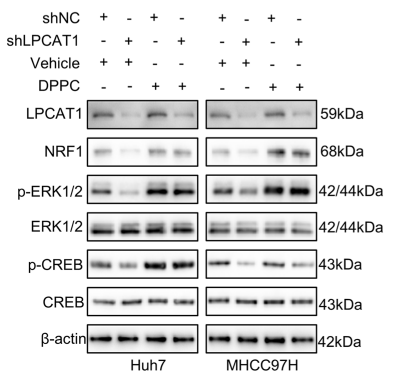
Nuclear respiratory factor 1 drives hepatocellular carcinoma progression by activating LPCAT1-ERK1/2-CREB axis. [Abstract]2023 Oct 24;18(1):67. PMID: 37875967
DPPC purchased from MedChemExpress. Usage Cited in: Biol Direct. 2023 Oct 24;18(1):67. [Abstract]
The activation of ERK1/2-CREB pathway and NRF1 protein levels after LPCAT1 knockdown and DPPC (10 μM) supplementation were analysed by Western blot.
-
Molecules
Mixed Monolayer Characteristics of Tangeretin with Stearic Acid and Dipalmitoyl Phosphatidyl Choline at the Air/Water Interface. [Abstract]2026 Jun 4;31(11):1952. PMID: 42280254 -
Spectrochim Acta A Mol Biomol Spectrosc
2024 Jun 5:314:124172. PMID: 38513316 -
-


Solvent & Solubility
In Vitro:
Ethanol : 25 mg/mL (34.06 mM; Need ultrasonic)
DMSO : < 1 mg/mL (insoluble or slightly soluble)
H2O : < 0.1 mg/mL (insoluble)
Please refer to the solubility information to select the appropriate solvent. Once prepared, please aliquot and store the solution to prevent product inactivation from repeated freeze-thaw cycles.
Storage method and period of stock solution: -80°C, 6 months; -20°C, 1 month (sealed storage, away from moisture). When stored at -80°C, please use it within 6 months. When stored at -20°C, please use it within 1 month.
Please refer to the solubility information to select the appropriate solvent. Once prepared, please aliquot and store the solution to prevent product inactivation from repeated freeze-thaw cycles.
Storage method and period of stock solution: -80°C, 6 months; -20°C, 1 month (sealed storage, away from moisture). When stored at -80°C, please use it within 6 months. When stored at -20°C, please use it within 1 month.
Concentration (start) × Volume (start) = Concentration (final) × Volume (final)
In Vivo:
Select the appropriate dissolution method based on your experimental animal and administration route.
- For the following dissolution methods, please ensure to first prepare a clear stock solution using an In Vitro approach and then sequentially add co-solvents:
- To ensure reliable experimental results, the clarified stock solution can be appropriately stored based on storage conditions. As for the working solution for In Vivo experiments, it is recommended to prepare freshly and use it on the same day.
- The percentages shown for the solvents indicate their volumetric ratio in the final prepared solution. If precipitation or phase separation occurs during preparation, heat and/or sonication can be used to aid dissolution.
Add each solvent one by one: 10% EtOH 40% PEG300 5% Tween-80 45% Saline
Solubility: 2.5 mg/mL (3.41 mM); Suspended solution; Need ultrasonic
This protocol yields a suspended solution of 2.5 mg/mL. Suspended solution can be used for oral and intraperitoneal injection.
Taking 1 mL working solution as an example, add 100 μL EtOH stock solution (25.0 mg/mL) to 400 μL PEG300, and mix evenly; then add 50 μL Tween-80 and mix evenly; then add 450 μL Saline to adjust the volume to 1 mL.
Preparation of Saline: Dissolve 0.9 g sodium chloride in ddH₂O and dilute to 100 mL to obtain a clear Saline solution.
Add each solvent one by one: 10% EtOH 90% Corn Oil
Solubility: ≥ 2.5 mg/mL (3.41 mM); Clear solution
This protocol yields a clear solution of ≥ 2.5 mg/mL (saturation unknown). If the continuous dosing period exceeds half a month, please choose this protocol carefully.
Taking 1 mL working solution as an example, add 100 μL EtOH stock solution (25.0 mg/mL) to 900 μL Corn oil, and mix evenly.
In Vivo Dissolution Calculator
Please enter the basic information of animal experiments:
-
-
-
-
Recommended: Prepare an additional quantity of animals to account for potential losses during experiments.
Please enter your animal formula composition:
-
%DMSO +
Recommended: Keep the proportion of DMSO in working solution below 2% if your animal is weak.
-
%+
-
+%Tween-80 + +
-
%Saline +
The co-solvents required include: DMSO, . All of co-solvents are available by MedChemExpress (MCE). , Tween 80. All of co-solvents are available by MedChemExpress (MCE).
Working solution concentration: 0.22 mg/mL
Method for preparing stock solution: mg drug dissolved in μL DMSO. Stock solution concentration: mg/mL. * In solvent : -80°C, 6 months; -20°C, 1 month (sealed storage, away from moisture)
1. Take μL DMSO stock solution;
2. Add μL .
μL , mix evenly;
3. Then add μL Tween 80, mix evenly;
4. Then add μL
Please ensure that the stock solution in the first step is dissolved to a clear state, and add co-solvents in sequence. You can use ultrasonic heating (ultrasonic cleaner, recommended frequency 20-40 kHz), vortexing, etc. to assist dissolution.


Purity & Documentation
-
Data Sheet (278 KB)
-
SDS (555 KB)
- English - EN (555 KB)
- Français - FR (555 KB)
- Deutsch - DE (555 KB)
- Norwegian - NO (555 KB)
- Español - ES (555 KB)
- Swedish - SV (555 KB)
- Italian - IT (555 KB)
- Korean - KR (555 KB)
- Portuguese - PT (555 KB)
-
Handling Instructions (2659 KB)
References
[1]. Miller AD. Delivery of RNAi therapeutics: work in progress. Expert Rev Med Devices. 2013 Nov;10(6):781-811. [Content Brief]
[2]. Akiko Uemura, et al. Induction of immune responses against glycosphingolipid antigens: comparison of antibody responses in mice immunized with antigen associated with liposomes prepared from various phospholipids. J Vet Med Sci. 2005 Dec;67(12):1197-201. [Content Brief]
[3]. Ege C, et al. Insertion of Alzheimer's A beta 40 peptide into lipid monolayers. Biophys J. 2004 Sep;87(3):1732-40. [Content Brief]
[4]. Kalra VK, et al. Transport of amino acids in gamma-glutamyl transpeptidase-implanted human erythrocytes. J Biol Chem. 1981 Jun 10;256(11):5567-71. [Content Brief]
[5]. Leekumjorn S, et al. Molecular simulation study of structural and dynamic properties of mixed DPPC/DPPE bilayers. Biophys J. 2006 Jun 1;90(11):3951-65. [Content Brief]


Complete Stock Solution Preparation Table
Please refer to the solubility information to select the appropriate solvent. Once prepared, please aliquot and store the solution to prevent product inactivation from repeated freeze-thaw cycles.
Storage method and period of stock solution: -80°C, 6 months; -20°C, 1 month (sealed storage, away from moisture). When stored at -80°C, please use it within 6 months. When stored at -20°C, please use it within 1 month.
| Optional Solvent | Concentration Solvent Mass | 1 mg | 5 mg | 10 mg | 25 mg |
|---|---|---|---|---|---|
| Ethanol | 1 mM | 1.3623 mL | 6.8116 mL | 13.6232 mL | 34.0581 mL |
| 5 mM | 0.2725 mL | 1.3623 mL | 2.7246 mL | 6.8116 mL | |
| 10 mM | 0.1362 mL | 0.6812 mL | 1.3623 mL | 3.4058 mL | |
| 15 mM | 0.0908 mL | 0.4541 mL | 0.9082 mL | 2.2705 mL | |
| 20 mM | 0.0681 mL | 0.3406 mL | 0.6812 mL | 1.7029 mL | |
| 25 mM | 0.0545 mL | 0.2725 mL | 0.5449 mL | 1.3623 mL | |
| 30 mM | 0.0454 mL | 0.2271 mL | 0.4541 mL | 1.1353 mL |


DPPC Related Classifications
HY-109506 Related Classifications
 Powered by Bioz