



Chlorpropamide
Based on 4 publication(s) in Google Scholar
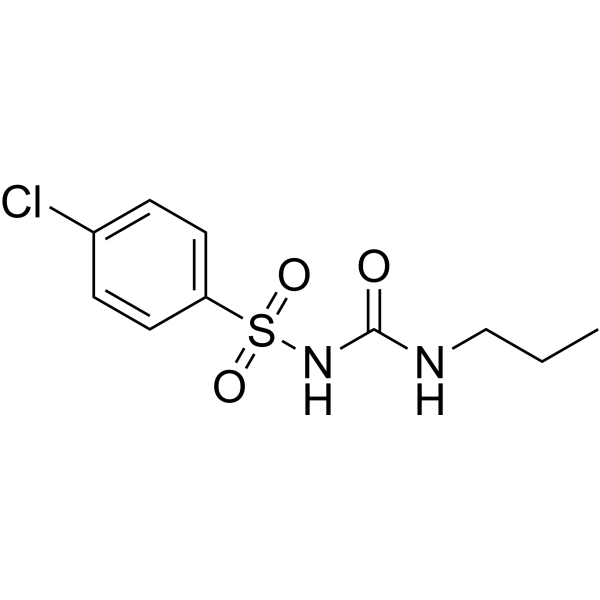
Chlorpropamide is an oral hypoglycemic agent that can influence acetaldehyde metabolism in mice and has a potentiating effect on antidiuretic hormone.
For research use only. We do not sell to patients.
- Purity : 99.79%
- CAS No.: 94-20-2
- Formula: C10H13ClN2O3S
- Molecular Weight:276.74
-
Storage:Powder -20°C, 3 years , 4°C, 2 years ; In solvent -80°C, 2 years , -20°C, 1 year

To place orders, for customer services and technical support, please contact: MedChemExpress USA
Tel: 609-228-6898 E-mail: [email protected] [email protected]


-
 Biological Activity
-
Chemical Information
-
Solvent & Solubility
- Protocols
- Purity & Documentation
- References
-
 Help & FAQs


-
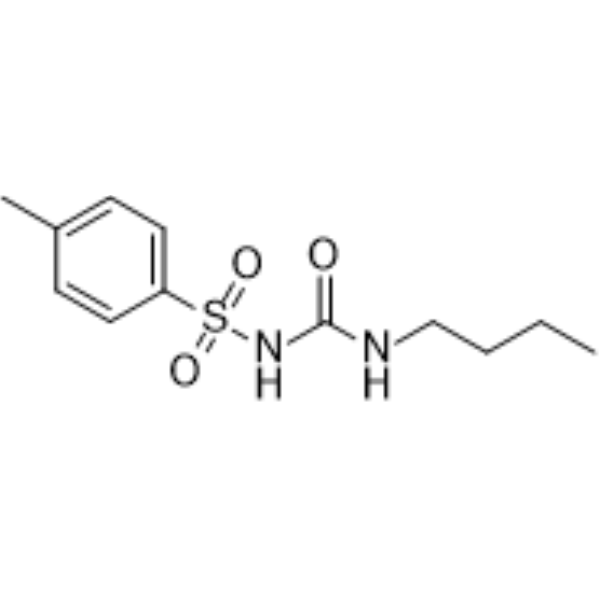
HY-B0401
TolbutamideKATP Inhibitor -
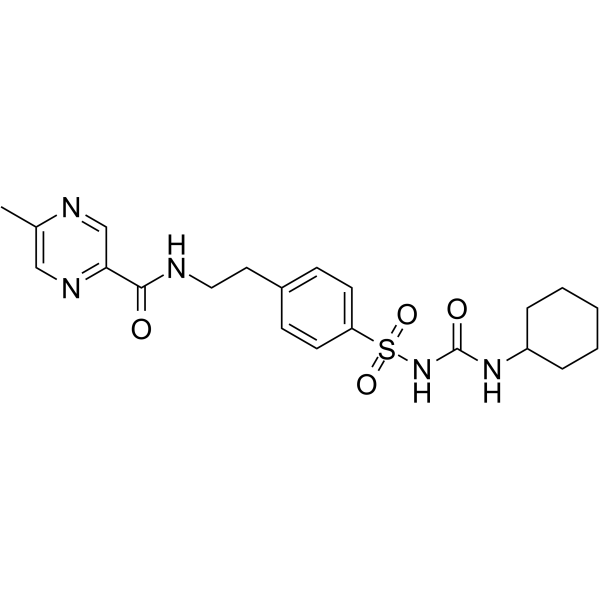
HY-B0254
GlipizideAnti-diabetic Agent -
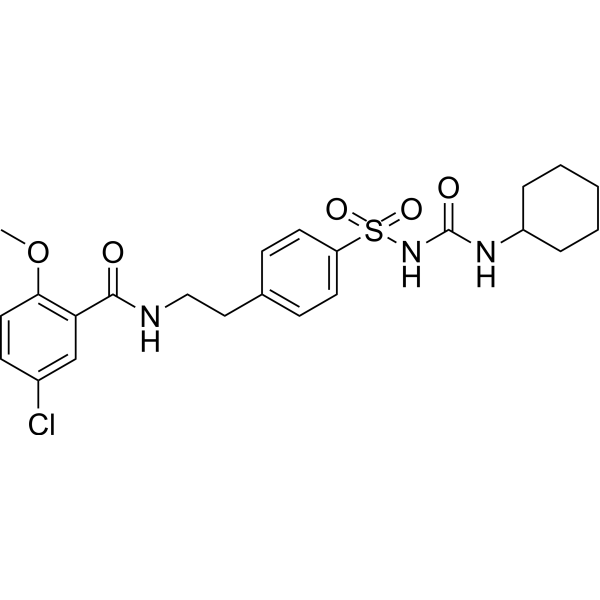
HY-15206
GlibenclamideKATP Inhibitor -

HY-B1429R
Chlorpropamide (Standard)Na+/K+ ATPase Inhibitor -
HY-B0753
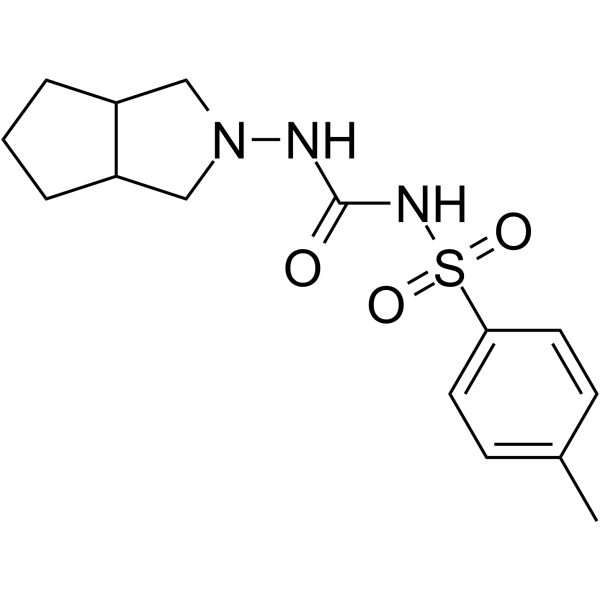
GliclazidePotassium Currents Blocker -
HY-16592
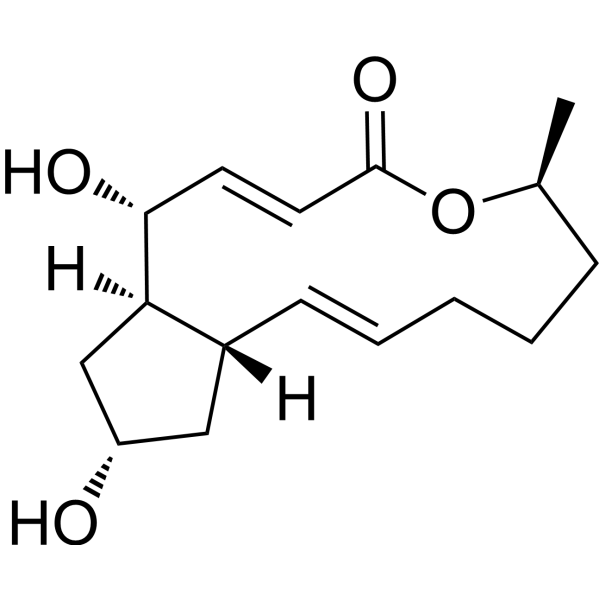
Brefeldin AProtein Transport Inhibitor -
HY-K0010
Protease Inhibitor Cocktail (EDTA-Free, 100× in DMSO) -
HY-B0920
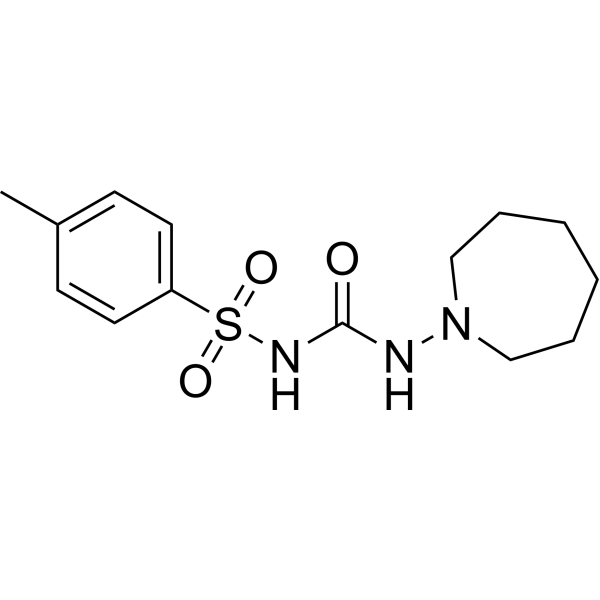
TolazamideBlood Glucose Lowering Agent -
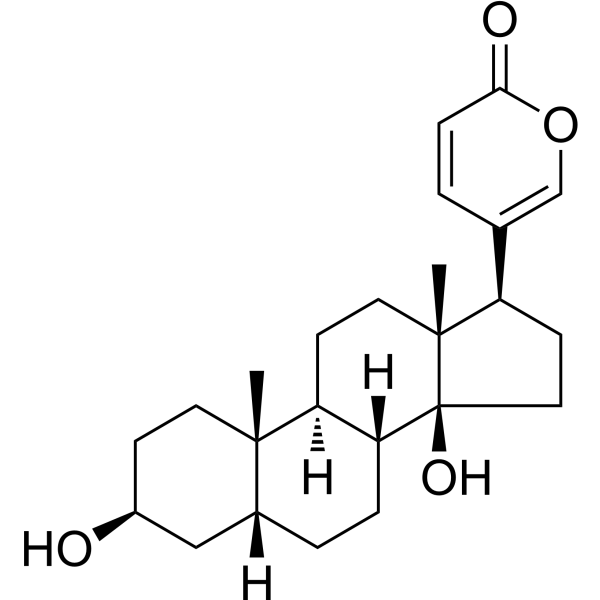
HY-N0877
BufalinNa+/K+ ATPase Inhibitor -
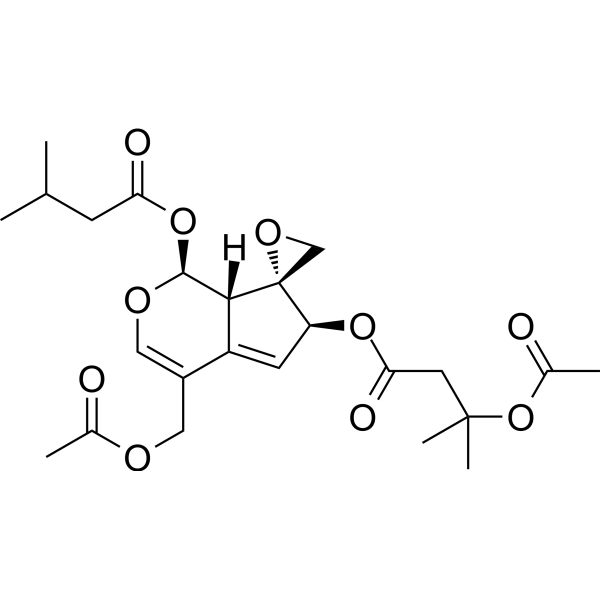
HY-N2070
AcevaltrateNa+/K+ ATPase Inhibitor -
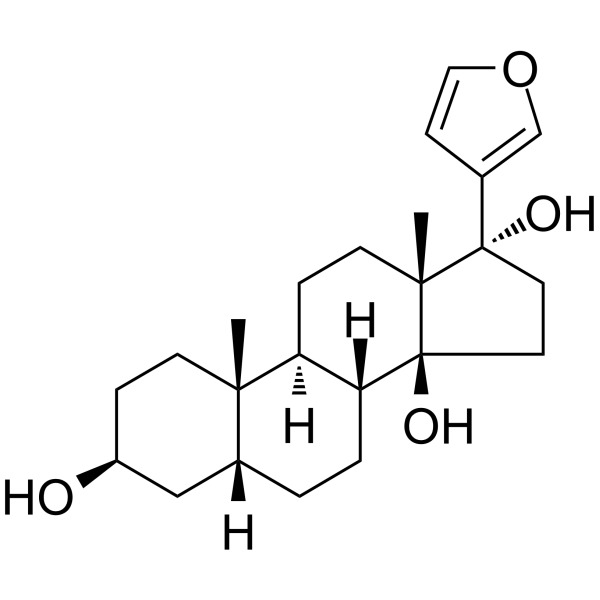
HY-12283
RostafuroxinATP1A1 Antognist
Publications Citing Use of MedChemExpress (MCE) Chlorpropamide
More

Biological Activity
Description
Cellular Effect
|
Cell Line

|
Type | Value | Description | References |
|---|---|---|---|---|
| Sf21 | IC50 |
>1000 μM
Compound: Chlorpropamide
|
Inhibition of human BSEP expressed in plasma membrane vesicles of Sf21 cells assessed as inhibition of ATP-dependent [3H]taurocholate uptake
Inhibition of human BSEP expressed in plasma membrane vesicles of Sf21 cells assessed as inhibition of ATP-dependent [3H]taurocholate uptake
|
[PMID: 21965623] |
| Sf21 | IC50 |
>1000 μM
Compound: Chlorpropamide
|
Inhibition of Sprague-Dawley rat Bsep expressed in plasma membrane vesicles of Sf21 cells assessed as inhibition of ATP-dependent [3H]taurocholate uptake
Inhibition of Sprague-Dawley rat Bsep expressed in plasma membrane vesicles of Sf21 cells assessed as inhibition of ATP-dependent [3H]taurocholate uptake
|
[PMID: 21965623] |
In Vitro
Chlorpropamide (0.1 mM, 90 min) increases the cAMP accumulation in the thick ascending limb of the loop of Henle (MAL)[1].
MedChemExpress (MCE) has not independently confirmed the accuracy of these methods. They are for reference only.
In Vivo
Chlorpropamide (20-200 mg/kg; subcutaneously; once daily; three months) does not significantly affect the structure or function of pancreatic islets in diabetic rats[2].
Chlorpropamide (250 mg/kg; orally; single dose) lowers blood sugar levels in rats[3].
Chlorpropamide (2.5-250 mg/kg; orally; single dose) can affect the metabolism of acetaldehyde in mice, and this is related to the mouse strain[4].
MedChemExpress (MCE) has not independently confirmed the accuracy of these methods. They are for reference only.
-
Animal Model:Hypothalamic diabetes insipidus rat[1]
-
Dosage:2 mg/kg; daily; 7 days
-
Administration:Subcutaneous injection (s.c.)
-
Result:Did not change water intake, urine flow, urine osmolality, urinary excretion of Na+, K+, creatinine, or total solute excretion, but increased the osmotic gradient between urine and papillary tissue.
-
Animal Model:95% partial pancreatectomy diabetic rats[2]
-
Dosage:20, 50, 200 mg/kg; daily; 3 months
-
Administration:Subcutaneous injection (s.c.)
-
Result:Had little effect on fasting blood glucose and pancreatic islet structure, and did not cause changes in the size of the pancreatic endocrine cell area.
-
Animal Model:Sprague-Dawley rat[3]
-
Dosage:250 mg/kg; single dose
-
Administration:Oral
-
Result:Could significantly lower blood sugar levels.
-
Animal Model:C57BL and DBA mice[4]
-
Dosage:2.5, 8, 25, 80, 250 mg/kg; 100 mg/kg; single dose
-
Administration:Oral
-
Result:Increased blood acetaldehyde concentrations without significantly altering high or low Km aldehyde dehydrogenase (ALDH) activity in liver cytochromes.
Clinical Trial
| NCT Number | Sponsor | Condition | Start Date |
Phase
|
|---|---|---|---|---|
| NCT01329991 | 2011-05 | PHASE1 |


Chemical Information
-
CAS No. 94-20-2
-
Appearance Solid
-
Molecular Weight 276.74
-
Formula C10H13ClN2O3S
-
Color White to off-white
-
SMILES
O=S(C1=CC=C(Cl)C=C1)(NC(NCCC)=O)=O
-
Shipping
Room temperature in continental US; may vary elsewhere.
-
Storage
Powder -20°C 3 years 4°C 2 years In solvent -80°C 2 years -20°C 1 year


Publications (4)
-
Journal Impact Factor
-
Most Recent
-
ACS Environ Au
Machine Learning-Assisted Recognition of Environmental Sulfur-Containing Chemicals in Nontargeted Mass Spectrometry Analysis of Inadequate Mass Resolution. [Abstract]2025 Aug 5;5(6):573-582. PMID: 41277996 -
Int J Biol Macromol
Reticuline isomerase AKR1B1 with aldo-keto reductase activity and detoxification function from the insect Blaps rhynchopetera. [Abstract]2026 Mar:352:151224. PMID: 41791543 -
ACS Omega
Identification of New Modulators and Inhibitors of Palmitoyl-Protein Thioesterase 1 for CLN1 Batten Disease and Cancer. [Abstract]2024 Feb 28;9(10):11870-11882. PMID: 38496939 -
ACS Omega
Computational Approaches to Identify Molecules Binding to Mycobacterium tuberculosis KasA. [Abstract]2020 Nov 15;5(46):29935-29942. PMID: 33251429


Solvent & Solubility
In Vitro:
DMSO : ≥ 100 mg/mL (361.35 mM; Hygroscopic DMSO has a significant impact on the solubility of product, please use newly opened DMSO)
H2O : < 0.1 mg/mL (insoluble)
* "≥" means soluble, but saturation unknown.
Please refer to the solubility information to select the appropriate solvent. Once prepared, please aliquot and store the solution to prevent product inactivation from repeated freeze-thaw cycles.
Storage method and period of stock solution: -80°C, 2 years; -20°C, 1 year. When stored at -80°C, please use it within 2 years. When stored at -20°C, please use it within 1 year.
Please refer to the solubility information to select the appropriate solvent. Once prepared, please aliquot and store the solution to prevent product inactivation from repeated freeze-thaw cycles.
Storage method and period of stock solution: -80°C, 2 years; -20°C, 1 year. When stored at -80°C, please use it within 2 years. When stored at -20°C, please use it within 1 year.
Concentration (start) × Volume (start) = Concentration (final) × Volume (final)
In Vivo:
Select the appropriate dissolution method based on your experimental animal and administration route.
- For the following dissolution methods, please ensure to first prepare a clear stock solution using an In Vitro approach and then sequentially add co-solvents:
- To ensure reliable experimental results, the clarified stock solution can be appropriately stored based on storage conditions. As for the working solution for In Vivo experiments, it is recommended to prepare freshly and use it on the same day.
- The percentages shown for the solvents indicate their volumetric ratio in the final prepared solution. If precipitation or phase separation occurs during preparation, heat and/or sonication can be used to aid dissolution.
Add each solvent one by one: 10% DMSO 40% PEG300 5% Tween-80 45% Saline
Solubility: ≥ 2.5 mg/mL (9.03 mM); Clear solution
This protocol yields a clear solution of ≥ 2.5 mg/mL (saturation unknown).
Taking 1 mL working solution as an example, add 100 μL DMSO stock solution (25.0 mg/mL) to 400 μL PEG300, and mix evenly; then add 50 μL Tween-80 and mix evenly; then add 450 μL Saline to adjust the volume to 1 mL.
Preparation of Saline: Dissolve 0.9 g sodium chloride in ddH₂O and dilute to 100 mL to obtain a clear Saline solution.
Add each solvent one by one: 10% DMSO 90% (20% SBE-β-CD in Saline)
Solubility: ≥ 2.5 mg/mL (9.03 mM); Clear solution
This protocol yields a clear solution of ≥ 2.5 mg/mL (saturation unknown).
Taking 1 mL working solution as an example, add 100 μL DMSO stock solution (25.0 mg/mL) to 900 μL 20% SBE-β-CD in Saline, and mix evenly.
Preparation of 20% SBE-β-CD in Saline (4°C, storage for one week): 2 g SBE-β-CD powder is dissolved in 10 mL Saline, completely dissolve until clear.
In Vivo Dissolution Calculator
Please enter the basic information of animal experiments:
-
-
-
-
Recommended: Prepare an additional quantity of animals to account for potential losses during experiments.
Please enter your animal formula composition:
-
%DMSO +
Recommended: Keep the proportion of DMSO in working solution below 2% if your animal is weak.
-
%+
-
+%Tween-80 + +
-
%Saline +
The co-solvents required include: DMSO, . All of co-solvents are available by MedChemExpress (MCE). , Tween 80. All of co-solvents are available by MedChemExpress (MCE).
Working solution concentration: 0.22 mg/mL
Method for preparing stock solution: mg drug dissolved in μL DMSO. Stock solution concentration: mg/mL.
1. Take μL DMSO stock solution;
2. Add μL .
μL , mix evenly;
3. Then add μL Tween 80, mix evenly;
4. Then add μL
Please ensure that the stock solution in the first step is dissolved to a clear state, and add co-solvents in sequence. You can use ultrasonic heating (ultrasonic cleaner, recommended frequency 20-40 kHz), vortexing, etc. to assist dissolution.


Purity & Documentation
-
Data Sheet (277 KB)
-
SDS (557 KB)
- English - EN (557 KB)
- Français - FR (557 KB)
- Deutsch - DE (557 KB)
- Norwegian - NO (557 KB)
- Español - ES (557 KB)
- Swedish - SV (557 KB)
- Italian - IT (557 KB)
- Korean - KR (557 KB)
- Portuguese - PT (557 KB)
-
Handling Instructions (2659 KB)
References
[1]. E Kusano, et al. Chlorpropamide action on renal concentrating mechanism in rats with hypothalamic diabetes insipidus. J Clin Invest. 1983 Oct;72(4):1298-313. [Content Brief]
[2]. A Clark, et al. Islet changes induced by hyperglycemia in rats. Effect of insulin or chlorpropamide therapy. Diabetes. 1982 Apr;31(4 Pt 1):319-25. [Content Brief]
[4]. R G Little, et al. Effect of tolbutamide and chlorpropamide on acetaldehyde metabolism in two inbred strains of mice. Toxicol Appl Pharmacol. 1985 Sep 15;80(2):206-14. [Content Brief]


Complete Stock Solution Preparation Table
Please refer to the solubility information to select the appropriate solvent. Once prepared, please aliquot and store the solution to prevent product inactivation from repeated freeze-thaw cycles.
Storage method and period of stock solution: -80°C, 2 years; -20°C, 1 year. When stored at -80°C, please use it within 2 years. When stored at -20°C, please use it within 1 year.
| Optional Solvent | Concentration Solvent Mass | 1 mg | 5 mg | 10 mg | 25 mg |
|---|---|---|---|---|---|
| DMSO | 1 mM | 3.6135 mL | 18.0675 mL | 36.1350 mL | 90.3375 mL |
| 5 mM | 0.7227 mL | 3.6135 mL | 7.2270 mL | 18.0675 mL | |
| 10 mM | 0.3614 mL | 1.8068 mL | 3.6135 mL | 9.0338 mL | |
| 15 mM | 0.2409 mL | 1.2045 mL | 2.4090 mL | 6.0225 mL | |
| 20 mM | 0.1807 mL | 0.9034 mL | 1.8068 mL | 4.5169 mL | |
| 25 mM | 0.1445 mL | 0.7227 mL | 1.4454 mL | 3.6135 mL | |
| 30 mM | 0.1205 mL | 0.6023 mL | 1.2045 mL | 3.0113 mL | |
| 40 mM | 0.0903 mL | 0.4517 mL | 0.9034 mL | 2.2584 mL | |
| 50 mM | 0.0723 mL | 0.3614 mL | 0.7227 mL | 1.8068 mL | |
| 60 mM | 0.0602 mL | 0.3011 mL | 0.6023 mL | 1.5056 mL | |
| 80 mM | 0.0452 mL | 0.2258 mL | 0.4517 mL | 1.1292 mL | |
| 100 mM | 0.0361 mL | 0.1807 mL | 0.3614 mL | 0.9034 mL |


Chlorpropamide Related Classifications
HY-B1429 Related Classifications
 Powered by Bioz