



Naquotinib
Based on 5 publication(s) in Google Scholar
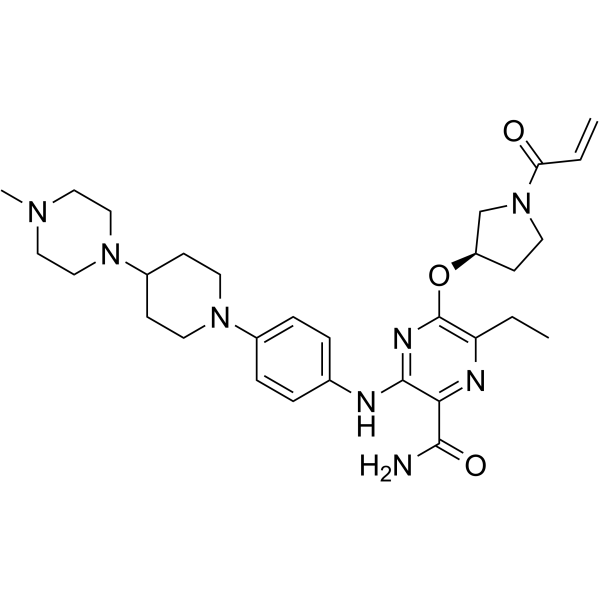
Naquotinib (ASP8273) is an orally available, mutant-selective and irreversible EGFR inhibitor; with IC50s of 8-33 nM toward EGFR mutants and 230 nM for EGFR.
For research use only. We do not sell to patients.
- Purity : 98.10%
- CAS No.: 1448232-80-1
- Formula: C30H42N8O3
- Molecular Weight:562.71
-
Storage:Powder -20°C, 3 years , 4°C, 2 years ; In solvent -80°C, 6 months , -20°C, 1 month

To place orders, for customer services and technical support, please contact: MedChemExpress USA
Tel: 609-228-6898 E-mail: [email protected] [email protected]


-
 Biological Activity
-
Chemical Information
-
Solvent & Solubility
- Purity & Documentation
- References
-
 Help & FAQs


-
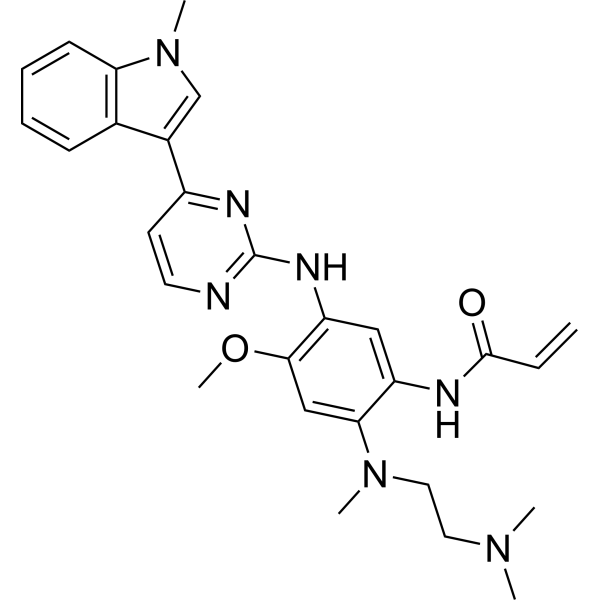
HY-15772
OsimertinibMutant-Selective EGFR Inhibitor -
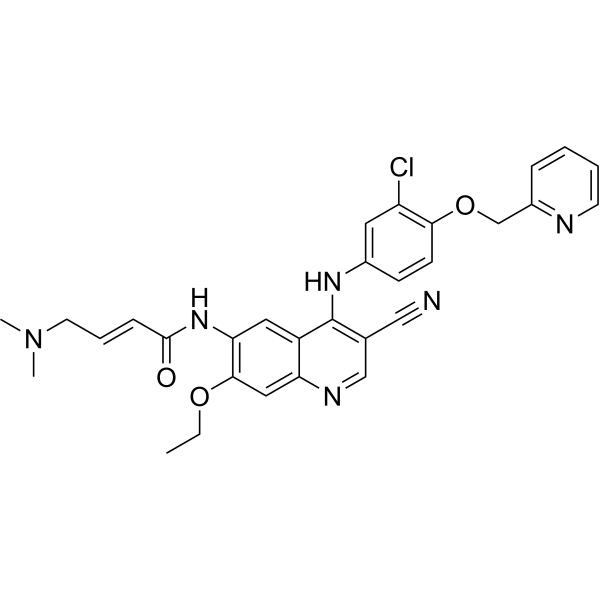
HY-32721
NeratinibHER2/EGFR Inhibitor -
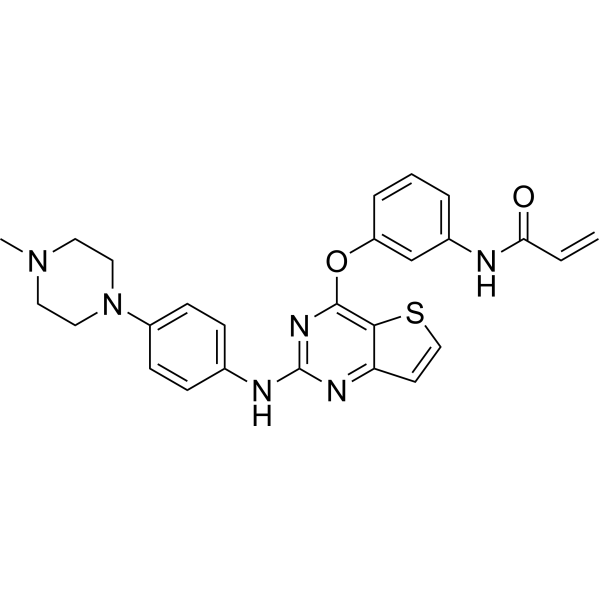
HY-19730
OlmutinibEGFR Tyrosine Kinase Inhibitor -
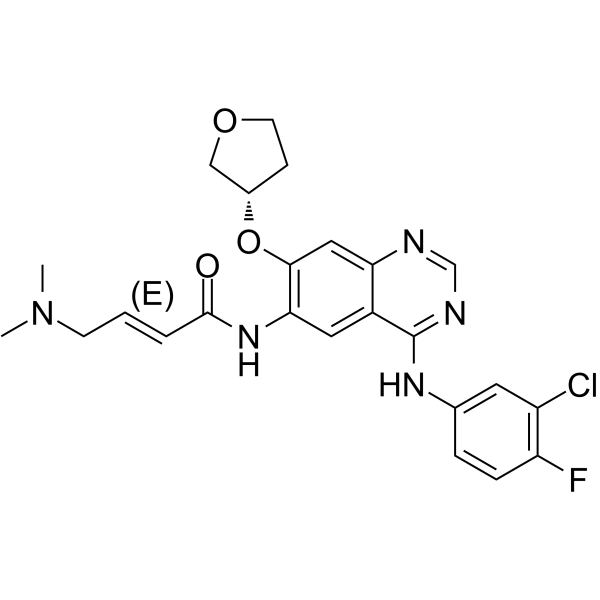
HY-10261
AfatinibEGFR/HER2 Inhibitor -
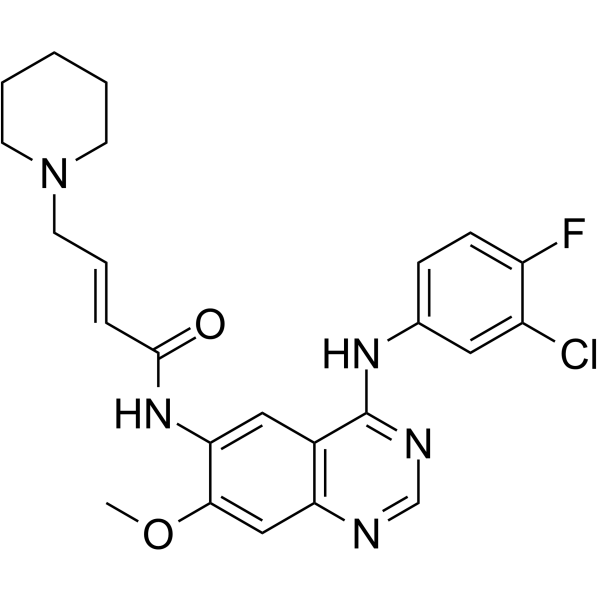
HY-13272
DacomitinibErbB Inhibitor -
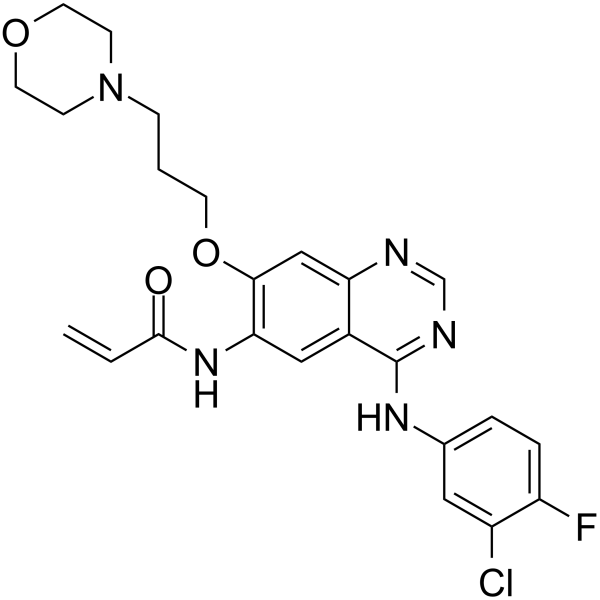
HY-10367
CanertinibEGFR Inhibitor -

HY-15772R
Osimertinib (Standard)Mutant-Selective EGFR Inhibitor -
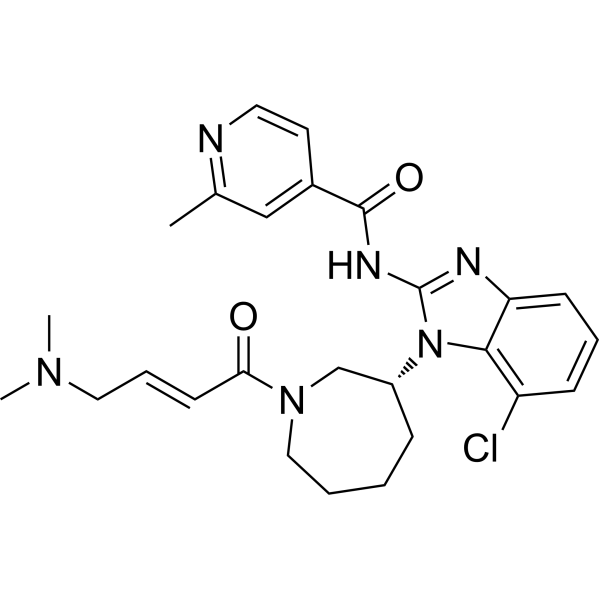
HY-12872
NazartinibEGFR Inhibitor -
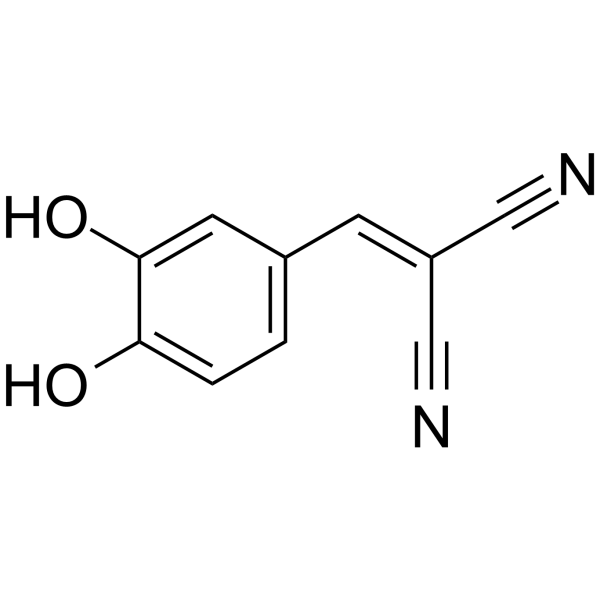
HY-15644
Tyrphostin 23EGFR Inhibitor -
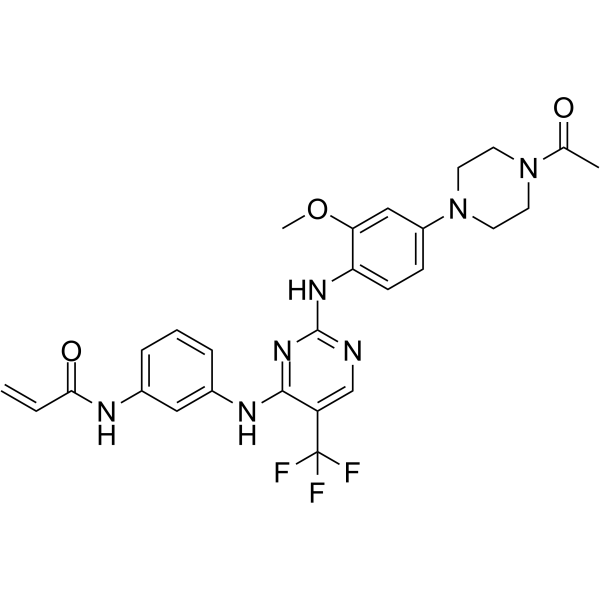
HY-15729
Rociletinib -
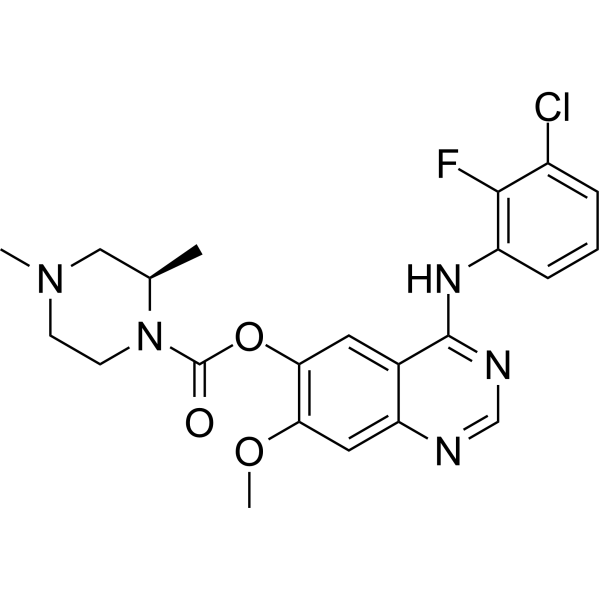
HY-18750
ZorifertinibEGFR Inhibitor -
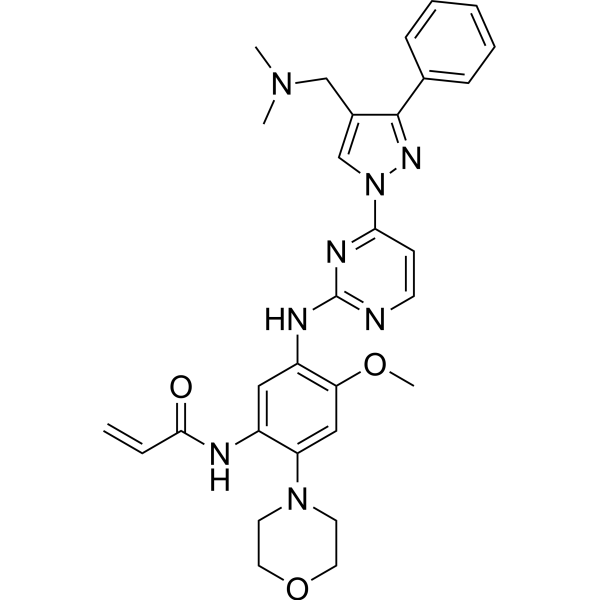
HY-109061
LazertinibEGFR Inhibitor
Publications Citing Use of MedChemExpress (MCE) Naquotinib
MoreAll EGFR Isoforms
More

Biological Activity
Description
IC50 & Target
[1]|
EGFR 230 nM (IC50) |
EGFRT790M |
EGFRL858R/T790M |
EGFRL858R |
EGFRExon 19 deletion/T790M |
Cellular Effect
|
Cell Line

|
Type | Value | Description | References |
|---|---|---|---|---|
| NCI-H1975 | IC50 |
8 nM
Compound: ASP8273
|
Inhibition of EGFR L858R/T790M double mutant in human NCI-H1975 cells assessed as suppression of cell proliferation
Inhibition of EGFR L858R/T790M double mutant in human NCI-H1975 cells assessed as suppression of cell proliferation
|
[PMID: 26968253] |
| PC-9 | IC50 |
8 nM
Compound: ASP8273
|
Inhibition of EGFR Del ex19 mutant in human PC9 cells assessed as suppression of cell proliferation
Inhibition of EGFR Del ex19 mutant in human PC9 cells assessed as suppression of cell proliferation
|
[PMID: 26968253] |
| PC-9 | IC50 |
8 nM
Compound: ASP8273
|
Inhibition of EGFR Del ex19/T790M double mutant in human PC9 cells assessed as suppression of cell proliferation
Inhibition of EGFR Del ex19/T790M double mutant in human PC9 cells assessed as suppression of cell proliferation
|
[PMID: 26968253] |
In Vitro
In assays using endogenously EGFR-dependent cells, Naquotinib inhibits the growth of PC-9(del ex19), HCC827(del ex19), NCI-H1975(del ex19/T790M) and PC-9ER(del ex19/T790M) with IC50s of 8-33 nM[1]. Naquotinib selectively inhibits phosphorylation of EGFR and its down-stream signal pathway, ERK and Akt from 10nM in HCC827 and NCI-H1975 while inhibitory effects are only detected at 1000nM in A431.In NCI-H1650 (del ex19), Naquotinib inhibits cell growth with an IC50 value of 70nM while other EGFR-TKIs are only partially effective[2].
MedChemExpress (MCE) has not independently confirmed the accuracy of these methods. They are for reference only. .
In Vivo
MedChemExpress (MCE) has not independently confirmed the accuracy of these methods. They are for reference only.


Chemical Information
-
CAS No. 1448232-80-1
-
Appearance Solid
-
Molecular Weight 562.71
-
Formula C30H42N8O3
-
Color Light yellow to yellow
-
SMILES
O=C(C1=NC(CC)=C(O[C@H]2CN(C(C=C)=O)CC2)N=C1NC3=CC=C(N4CCC(N5CCN(C)CC5)CC4)C=C3)N
-
Synonyms
ASP8273
-
Shipping
Room temperature in continental US; may vary elsewhere.
-
Storage
Powder -20°C 3 years 4°C 2 years In solvent -80°C 6 months -20°C 1 month


Publications (5)
-
Journal Impact Factor
-
Most Recent
-
Cell Rep
Drug repurposing screens reveal cell-type-specific entry pathways and FDA-approved drugs active against SARS-Cov-2. [Abstract]2021 Apr 6;35(1):108959. PMID: 33811811 -
RSC Adv
Reactive intermediates in naquotinib metabolism identified by liquid chromatography-tandem mass spectrometry: phase I metabolic profiling. [Abstract]2019 Apr 1;9(18):10211-10225. PMID: 35520926 -
RSC Adv
A simple liquid chromatography-tandem mass spectrometry method to accurately determine the novel third-generation EGFR-TKI naquotinib with its applicability to metabolic stability assessment. [Abstract]2019 Feb 7;9(9):4862-4869. PMID: 35514667 -
R Soc Open Sci
A highly sensitive LC-MS/MS method to determine novel Bruton's tyrosine kinase inhibitor spebrutinib: application to metabolic stability evaluation. [Abstract]2019 Jun 5;6(6):190434. PMID: 31312501 -


Solvent & Solubility
In Vitro:
DMSO : 100 mg/mL (177.71 mM; Need ultrasonic; Hygroscopic DMSO has a significant impact on the solubility of product, please use newly opened DMSO)
Please refer to the solubility information to select the appropriate solvent. Once prepared, please aliquot and store the solution to prevent product inactivation from repeated freeze-thaw cycles.
Storage method and period of stock solution: -80°C, 6 months; -20°C, 1 month. When stored at -80°C, please use it within 6 months. When stored at -20°C, please use it within 1 month.
Please refer to the solubility information to select the appropriate solvent. Once prepared, please aliquot and store the solution to prevent product inactivation from repeated freeze-thaw cycles.
Storage method and period of stock solution: -80°C, 6 months; -20°C, 1 month. When stored at -80°C, please use it within 6 months. When stored at -20°C, please use it within 1 month.
Concentration (start) × Volume (start) = Concentration (final) × Volume (final)
In Vivo:
Select the appropriate dissolution method based on your experimental animal and administration route.
- For the following dissolution methods, please ensure to first prepare a clear stock solution using an In Vitro approach and then sequentially add co-solvents:
- To ensure reliable experimental results, the clarified stock solution can be appropriately stored based on storage conditions. As for the working solution for In Vivo experiments, it is recommended to prepare freshly and use it on the same day.
- The percentages shown for the solvents indicate their volumetric ratio in the final prepared solution. If precipitation or phase separation occurs during preparation, heat and/or sonication can be used to aid dissolution.
Add each solvent one by one: 10% DMSO 40% PEG300 5% Tween-80 45% Saline
Solubility: 2.5 mg/mL (4.44 mM); Clear solution; Need ultrasonic
This protocol yields a clear solution of 2.5 mg/mL.
Taking 1 mL working solution as an example, add 100 μL DMSO stock solution (25.0 mg/mL) to 400 μL PEG300, and mix evenly; then add 50 μL Tween-80 and mix evenly; then add 450 μL Saline to adjust the volume to 1 mL.
Preparation of Saline: Dissolve 0.9 g sodium chloride in ddH₂O and dilute to 100 mL to obtain a clear Saline solution.
In Vivo Dissolution Calculator
Please enter the basic information of animal experiments:
-
-
-
-
Recommended: Prepare an additional quantity of animals to account for potential losses during experiments.
Please enter your animal formula composition:
-
%DMSO +
Recommended: Keep the proportion of DMSO in working solution below 2% if your animal is weak.
-
%+
-
+%Tween-80 + +
-
%Saline +
The co-solvents required include: DMSO, . All of co-solvents are available by MedChemExpress (MCE). , Tween 80. All of co-solvents are available by MedChemExpress (MCE).
Working solution concentration: 0.22 mg/mL
Method for preparing stock solution: mg drug dissolved in μL DMSO. Stock solution concentration: mg/mL.
1. Take μL DMSO stock solution;
2. Add μL .
μL , mix evenly;
3. Then add μL Tween 80, mix evenly;
4. Then add μL
Please ensure that the stock solution in the first step is dissolved to a clear state, and add co-solvents in sequence. You can use ultrasonic heating (ultrasonic cleaner, recommended frequency 20-40 kHz), vortexing, etc. to assist dissolution.


Purity & Documentation
-
Data Sheet (275 KB)
-
SDS (393 KB)
- English - EN (393 KB)
- Français - FR (393 KB)
- Deutsch - DE (393 KB)
- Norwegian - NO (393 KB)
- Español - ES (393 KB)
- Swedish - SV (393 KB)
- Italian - IT (393 KB)
- Korean - KR (393 KB)
- Portuguese - PT (393 KB)
-
Handling Instructions (2659 KB)
References


Complete Stock Solution Preparation Table
Please refer to the solubility information to select the appropriate solvent. Once prepared, please aliquot and store the solution to prevent product inactivation from repeated freeze-thaw cycles.
Storage method and period of stock solution: -80°C, 6 months; -20°C, 1 month. When stored at -80°C, please use it within 6 months. When stored at -20°C, please use it within 1 month.
| Optional Solvent | Concentration Solvent Mass | 1 mg | 5 mg | 10 mg | 25 mg |
|---|---|---|---|---|---|
| DMSO | 1 mM | 1.7771 mL | 8.8856 mL | 17.7711 mL | 44.4279 mL |
| 5 mM | 0.3554 mL | 1.7771 mL | 3.5542 mL | 8.8856 mL | |
| 10 mM | 0.1777 mL | 0.8886 mL | 1.7771 mL | 4.4428 mL | |
| 15 mM | 0.1185 mL | 0.5924 mL | 1.1847 mL | 2.9619 mL | |
| 20 mM | 0.0889 mL | 0.4443 mL | 0.8886 mL | 2.2214 mL | |
| 25 mM | 0.0711 mL | 0.3554 mL | 0.7108 mL | 1.7771 mL | |
| 30 mM | 0.0592 mL | 0.2962 mL | 0.5924 mL | 1.4809 mL | |
| 40 mM | 0.0444 mL | 0.2221 mL | 0.4443 mL | 1.1107 mL | |
| 50 mM | 0.0355 mL | 0.1777 mL | 0.3554 mL | 0.8886 mL | |
| 60 mM | 0.0296 mL | 0.1481 mL | 0.2962 mL | 0.7405 mL | |
| 80 mM | 0.0222 mL | 0.1111 mL | 0.2221 mL | 0.5553 mL | |
| 100 mM | 0.0178 mL | 0.0889 mL | 0.1777 mL | 0.4443 mL |


Naquotinib Related Classifications
HY-19729 Related Classifications
 Powered by Bioz