



DO34
Based on 5 publication(s) in Google Scholar
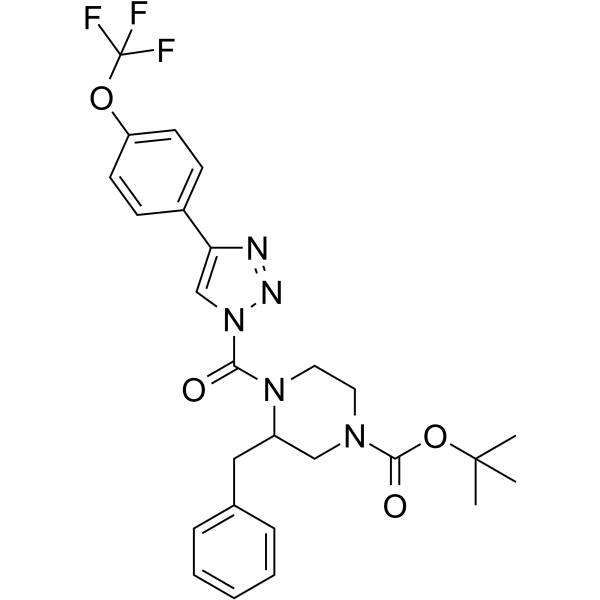
DO34 is a selective DAGL inhibitor, with an IC50 of 6 nM for DAGLα conversion of SAG to 2-AG. DO34 blocks de novo 2-AG synthesis, and suppresses tonic CB1 receptor activation. DO34 blocks depolarization-induced suppression of excitation and inhibition in the cerebellum and hippocampus. DO34 regulates feeding behavior and locomotor activity in mice. DO34 abolishes AM251-mediated enhancement of parallel fiber-evoked excitatory postsynaptic currents in cerebellar slices from MAGL global knockout mice. DO34 can be used for the research of energy balance disorder and neuroinflammation.
For research use only. We do not sell to patients.
- Purity : 99.30%
- CAS No.: 1848233-58-8
- Formula: C26H28F3N5O4
- Molecular Weight:531.53
-
Storage:Powder -20°C, 3 years , 4°C, 2 years ; In solvent -80°C, 2 years , -20°C, 1 year

To place orders, for customer services and technical support, please contact: MedChemExpress USA
Tel: 609-228-6898 E-mail: [email protected] [email protected]


-
 Biological Activity
-
Chemical Information
-
Solvent & Solubility
- Protocols
- Purity & Documentation
- References
-
 Help & FAQs


-
HY-18540
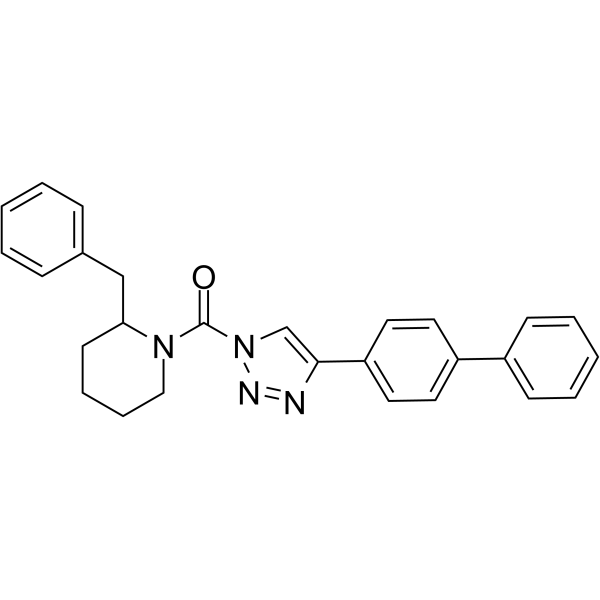
KT109DAGLβ Inhibitor -
HY-15249
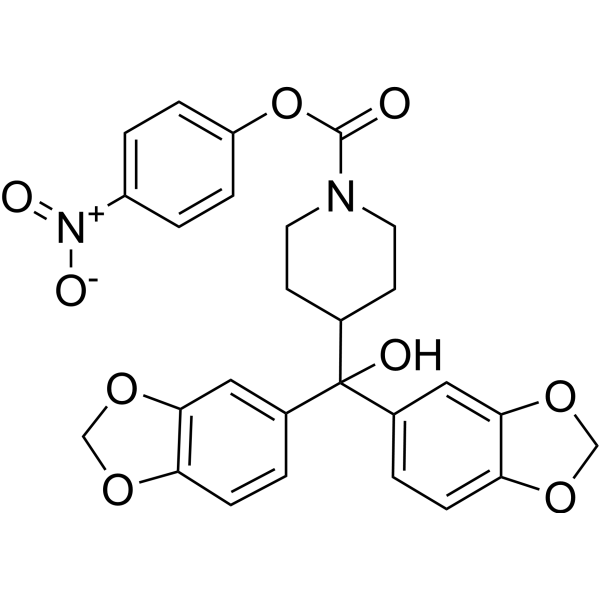
JZL 184MAGL Inhibitor -
HY-131181
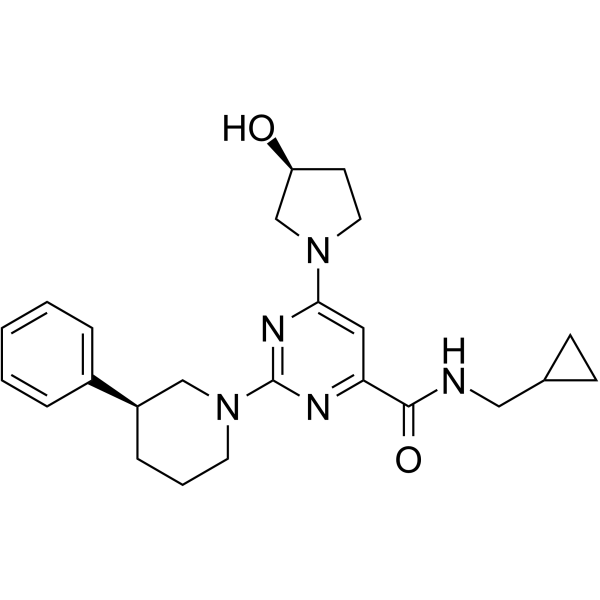
LEI-401NAPE-PLD Inhibitor -
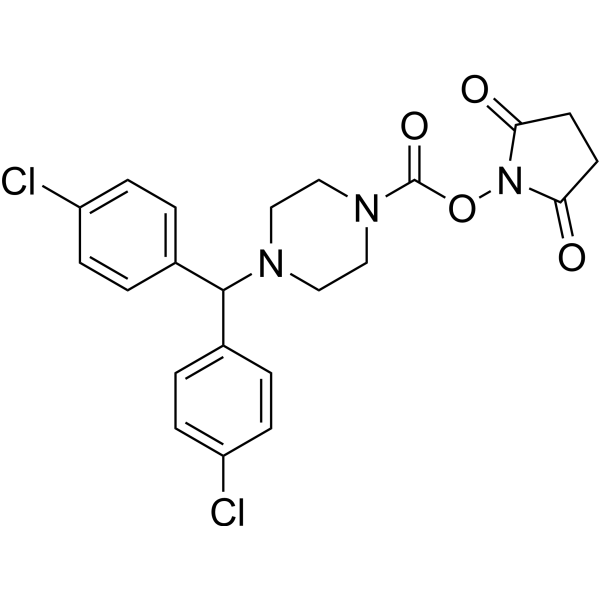
HY-117474
MJN110MAGL Inhibitor -
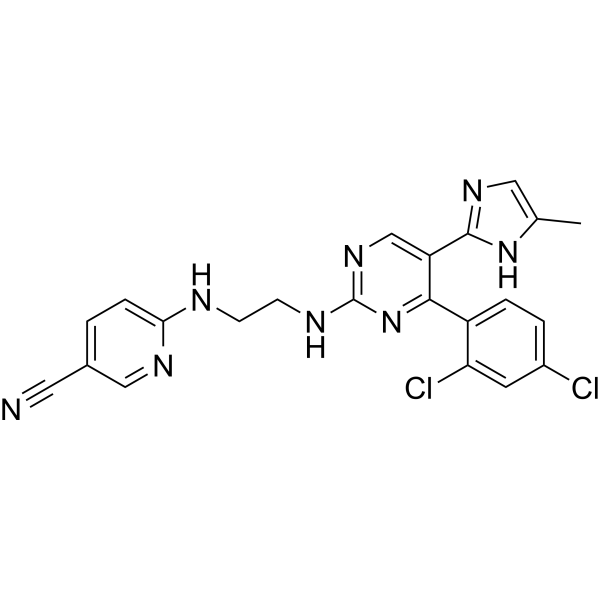
HY-10182
LaduviglusibGSK-3 Inhibitor -
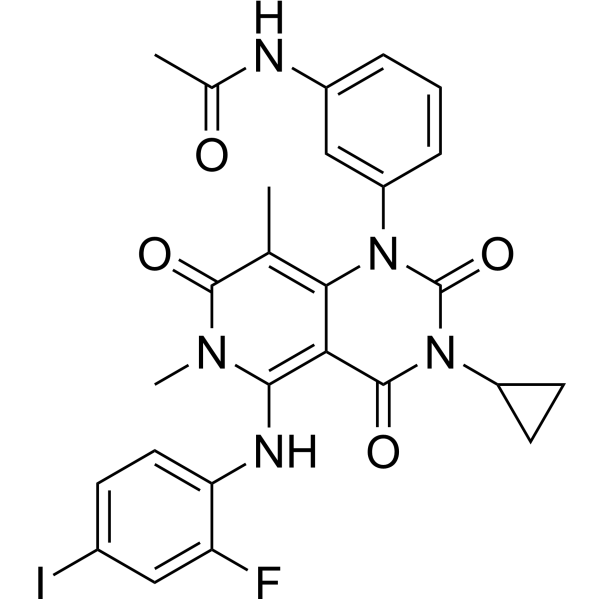
HY-10999
TrametinibMEK Inhibitor -
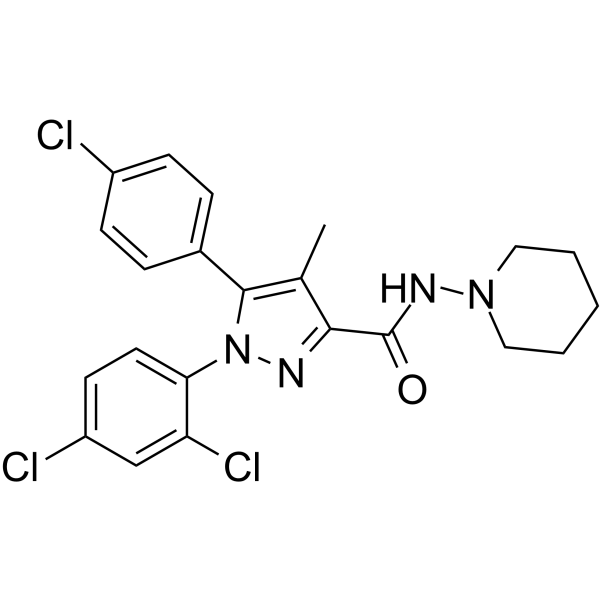
HY-14136
Rimonabant -
HY-10864
URB-597FAAH Inhibitor -
HY-W011051
2-Arachidonoylglycerol -
HY-18541
KT172DAGLβ Inhibitor
Publications Citing Use of MedChemExpress (MCE) DO34
More

Biological Activity
Description
IC50 & Target
[1]|
DAGLα 6 nM (IC50) |
DAGLβ |
In Vitro
DO34 (compound 5) potently inhibits both recombinant human DAGL enzymes in a SAG hydrolysis assay and endogenous DAGL enzymes in the mouse brain membrane proteome via activity-based protein profiling (ABPP) using DH379 or HT-01 probes, with pIC50 values ranging from 8.2 to 9.3 for DAGLα and from 8.1 to 8.6 for DAGLβ[1].
MedChemExpress (MCE) has not independently confirmed the accuracy of these methods. They are for reference only.
In Vivo
DO34 (50 mg/kg; i.p.; single dose) markedly reduces brain 2-AG levels, inhibits tonic CB1 receptor activation, and blocks depolarization-induced suppression of excitation (DSE) and inhibition (DSI) in mice[1][2].
DO34 (compound 5) (50 mg/kg; i.p.; single dose) attenuates LPS-induced neuroinflammation and anapyrexia in mice[3].
MedChemExpress (MCE) has not independently confirmed the accuracy of these methods. They are for reference only.


Chemical Information
-
CAS No. 1848233-58-8
-
Appearance Solid
-
Molecular Weight 531.53
-
Formula C26H28F3N5O4
-
Color White to light yellow
-
SMILES
O=C(N1CC(CC2=CC=CC=C2)N(C(N3N=NC(C4=CC=C(OC(F)(F)F)C=C4)=C3)=O)CC1)OC(C)(C)C
-
Shipping
Room temperature in continental US; may vary elsewhere.
-
Storage
Powder -20°C 3 years 4°C 2 years In solvent -80°C 2 years -20°C 1 year


Publications (5)
-
Journal Impact Factor
-
Most Recent
-
Nat Biotechnol
A fluorescent sensor for spatiotemporally resolved imaging of endocannabinoid dynamics in vivo. [Abstract]2022 May;40(5):787-798. PMID: 34764491 -
Nat Commun
Opposite physiological and pathological mTORC1-mediated roles of the CB1 receptor in regulating renal tubular function. [Abstract]2022 Apr 4;13(1):1783. PMID: 35379807 -
Mol Pharmacol
Corticosterone stimulates synthesis of 2-arachidonoylglycerol via putative membrane-bound glucocorticoid receptors and inhibits GABA release via CB1 cannabinoid receptors in the ventrolateral periaqueductal gray. [Abstract]2025 Aug;107(8):100058. PMID: 40729946 -
-


Solvent & Solubility
In Vitro:
DMSO : ≥ 100 mg/mL (188.14 mM; Hygroscopic DMSO has a significant impact on the solubility of product, please use newly opened DMSO)
* "≥" means soluble, but saturation unknown.
Please refer to the solubility information to select the appropriate solvent. Once prepared, please aliquot and store the solution to prevent product inactivation from repeated freeze-thaw cycles.
Storage method and period of stock solution: -80°C, 2 years; -20°C, 1 year. When stored at -80°C, please use it within 2 years. When stored at -20°C, please use it within 1 year.
Please refer to the solubility information to select the appropriate solvent. Once prepared, please aliquot and store the solution to prevent product inactivation from repeated freeze-thaw cycles.
Storage method and period of stock solution: -80°C, 2 years; -20°C, 1 year. When stored at -80°C, please use it within 2 years. When stored at -20°C, please use it within 1 year.
Concentration (start) × Volume (start) = Concentration (final) × Volume (final)
In Vivo:
Select the appropriate dissolution method based on your experimental animal and administration route.
- For the following dissolution methods, please ensure to first prepare a clear stock solution using an In Vitro approach and then sequentially add co-solvents:
- To ensure reliable experimental results, the clarified stock solution can be appropriately stored based on storage conditions. As for the working solution for In Vivo experiments, it is recommended to prepare freshly and use it on the same day.
- The percentages shown for the solvents indicate their volumetric ratio in the final prepared solution. If precipitation or phase separation occurs during preparation, heat and/or sonication can be used to aid dissolution.
Add each solvent one by one: 10% DMSO 40% PEG300 5% Tween-80 45% Saline
Solubility: ≥ 10 mg/mL (18.81 mM); Clear solution
This protocol yields a clear solution of ≥ 10 mg/mL (saturation unknown).
Taking 1 mL working solution as an example, add 100 μL DMSO stock solution (100.0 mg/mL) to 400 μL PEG300, and mix evenly; then add 50 μL Tween-80 and mix evenly; then add 450 μL Saline to adjust the volume to 1 mL.
Preparation of Saline: Dissolve 0.9 g sodium chloride in ddH₂O and dilute to 100 mL to obtain a clear Saline solution.
Add each solvent one by one: 10% DMSO 90% (20% SBE-β-CD in Saline)
Solubility: ≥ 10 mg/mL (18.81 mM); Clear solution
This protocol yields a clear solution of ≥ 10 mg/mL (saturation unknown).
Taking 1 mL working solution as an example, add 100 μL DMSO stock solution (100.0 mg/mL) to 900 μL 20% SBE-β-CD in Saline, and mix evenly.
Preparation of 20% SBE-β-CD in Saline (4°C, storage for one week): 2 g SBE-β-CD powder is dissolved in 10 mL Saline, completely dissolve until clear.
In Vivo Dissolution Calculator
Please enter the basic information of animal experiments:
-
-
-
-
Recommended: Prepare an additional quantity of animals to account for potential losses during experiments.
Please enter your animal formula composition:
-
%DMSO +
Recommended: Keep the proportion of DMSO in working solution below 2% if your animal is weak.
-
%+
-
+%Tween-80 + +
-
%Saline +
The co-solvents required include: DMSO, . All of co-solvents are available by MedChemExpress (MCE). , Tween 80. All of co-solvents are available by MedChemExpress (MCE).
Working solution concentration: 0.22 mg/mL
Method for preparing stock solution: mg drug dissolved in μL DMSO. Stock solution concentration: mg/mL.
1. Take μL DMSO stock solution;
2. Add μL .
μL , mix evenly;
3. Then add μL Tween 80, mix evenly;
4. Then add μL
Please ensure that the stock solution in the first step is dissolved to a clear state, and add co-solvents in sequence. You can use ultrasonic heating (ultrasonic cleaner, recommended frequency 20-40 kHz), vortexing, etc. to assist dissolution.


Purity & Documentation
-
Data Sheet (279 KB)
-
SDS (254 KB)
- English - EN (254 KB)
- Français - FR (254 KB)
- Deutsch - DE (254 KB)
- Norwegian - NO (254 KB)
- Español - ES (254 KB)
- Swedish - SV (254 KB)
- Italian - IT (254 KB)
- Korean - KR (254 KB)
- Portuguese - PT (254 KB)
-
Handling Instructions (2659 KB)
References
[1]. Deng H, et al. Triazole Ureas Act as Diacylglycerol Lipase Inhibitors and Prevent Fasting-Induced Refeeding. J Med Chem. 2017 Jan 12;60(1):428-440. [Content Brief]
[2]. Liu X, et al. Coordinated regulation of endocannabinoid-mediated retrograde synaptic suppression in the cerebellum by neuronal and astrocytic monoacylglycerol lipase. Sci Rep. 2016 Oct 24;6:35829. [Content Brief]
[3]. Ogasawara D, et al. Rapid and profound rewiring of brain lipid signaling networks by acute diacylglycerol lipase inhibition. Proc Natl Acad Sci U S A. 2016 Jan 5;113(1):26-33. [Content Brief]


Complete Stock Solution Preparation Table
Please refer to the solubility information to select the appropriate solvent. Once prepared, please aliquot and store the solution to prevent product inactivation from repeated freeze-thaw cycles.
Storage method and period of stock solution: -80°C, 2 years; -20°C, 1 year. When stored at -80°C, please use it within 2 years. When stored at -20°C, please use it within 1 year.
| Optional Solvent | Concentration Solvent Mass | 1 mg | 5 mg | 10 mg | 25 mg |
|---|---|---|---|---|---|
| DMSO | 1 mM | 1.8814 mL | 9.4068 mL | 18.8136 mL | 47.0340 mL |
| 5 mM | 0.3763 mL | 1.8814 mL | 3.7627 mL | 9.4068 mL | |
| 10 mM | 0.1881 mL | 0.9407 mL | 1.8814 mL | 4.7034 mL | |
| 15 mM | 0.1254 mL | 0.6271 mL | 1.2542 mL | 3.1356 mL | |
| 20 mM | 0.0941 mL | 0.4703 mL | 0.9407 mL | 2.3517 mL | |
| 25 mM | 0.0753 mL | 0.3763 mL | 0.7525 mL | 1.8814 mL | |
| 30 mM | 0.0627 mL | 0.3136 mL | 0.6271 mL | 1.5678 mL | |
| 40 mM | 0.0470 mL | 0.2352 mL | 0.4703 mL | 1.1759 mL | |
| 50 mM | 0.0376 mL | 0.1881 mL | 0.3763 mL | 0.9407 mL | |
| 60 mM | 0.0314 mL | 0.1568 mL | 0.3136 mL | 0.7839 mL | |
| 80 mM | 0.0235 mL | 0.1176 mL | 0.2352 mL | 0.5879 mL | |
| 100 mM | 0.0188 mL | 0.0941 mL | 0.1881 mL | 0.4703 mL |


DO34 Related Classifications
HY-117771 Related Classifications
 Powered by Bioz