



R121919
Based on 7 publication(s) in Google Scholar
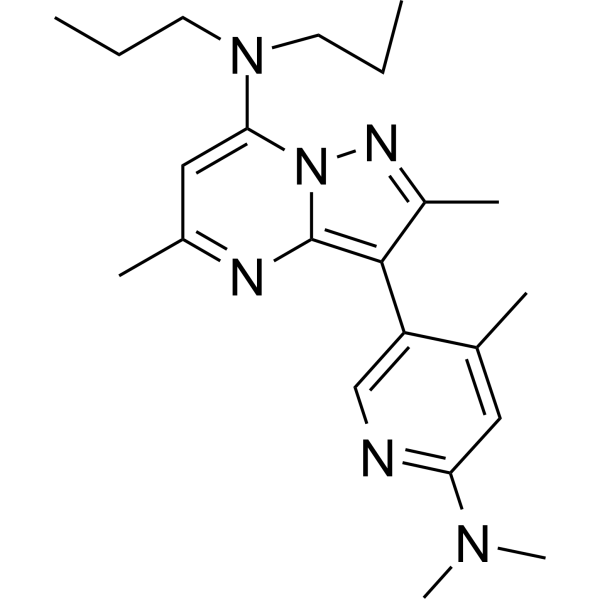
R121919 (NBI30775) is a potent and selective CRF1R antagonist with a Ki of 2 to 5 nM. R121919 has antidepressant and anxiolytic effects. R121919 alleviates defensive withdrawal in rats.
Para uso exclusivo en investigación. No vendemos a pacientes.
- Pureza : 99.66%
- No. CAS: 195055-03-9
- Fòrmula: C22H32N6
- Peso molecular:380.53
-
Almacenamiento:Powder -20°C, 3 years , 4°C, 2 years ; In solvent -80°C, 2 years , -20°C, 1 year

To place orders, for customer services and technical support, please contact: MedChemExpress USA
Tel: 609-228-6898 E-mail: [email protected] [email protected]


-
 Actividad biológica
-
Chemical Information
-
Solvente y solubilidad
- Pureza y Documentación
- Referencias
-
 Help & FAQs


-
HY-14875
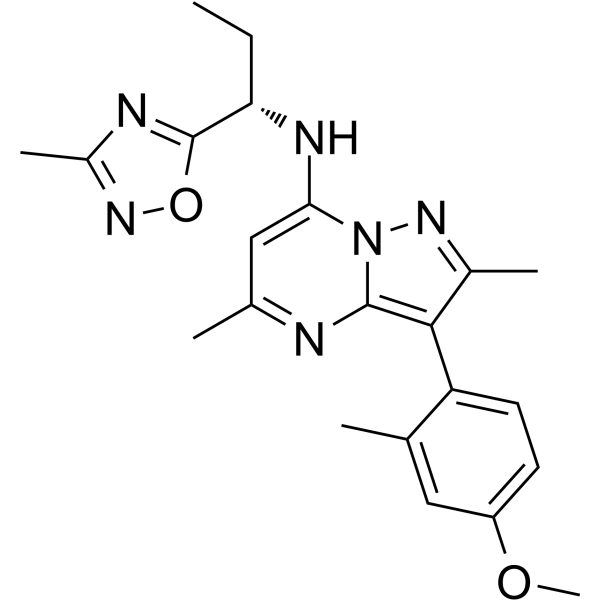
VerucerfontCRFR Antagonist -
HY-103377
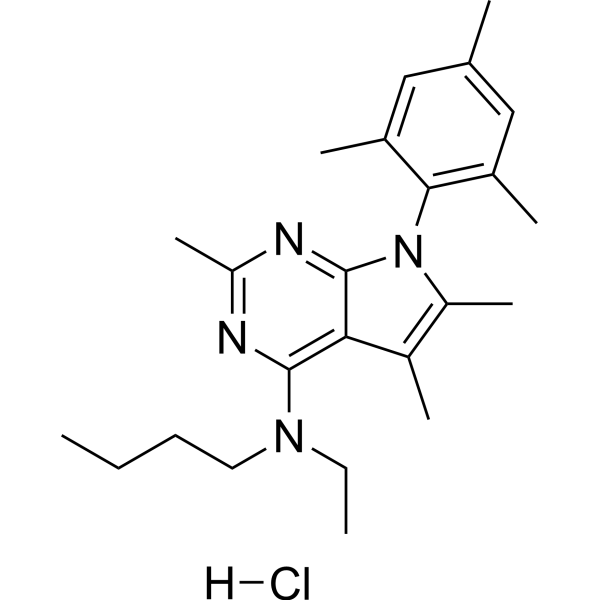
Antalarmin hydrochlorideCRHR1 Antagonist -
HY-113603
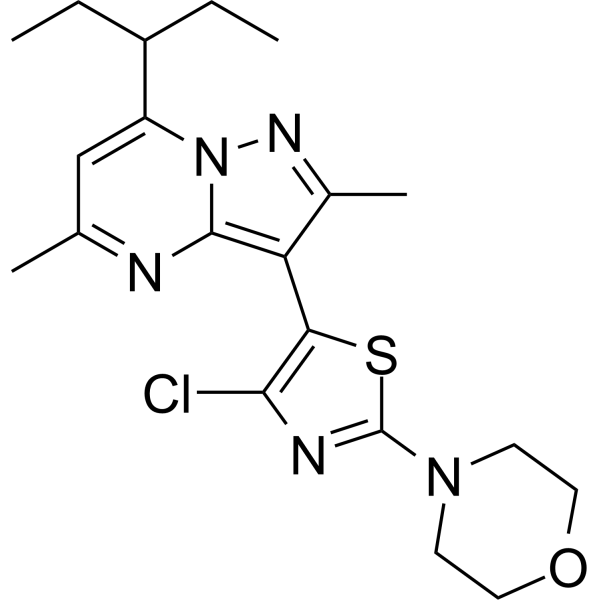
TildacerfontCRF1 Receptor Antagonist -
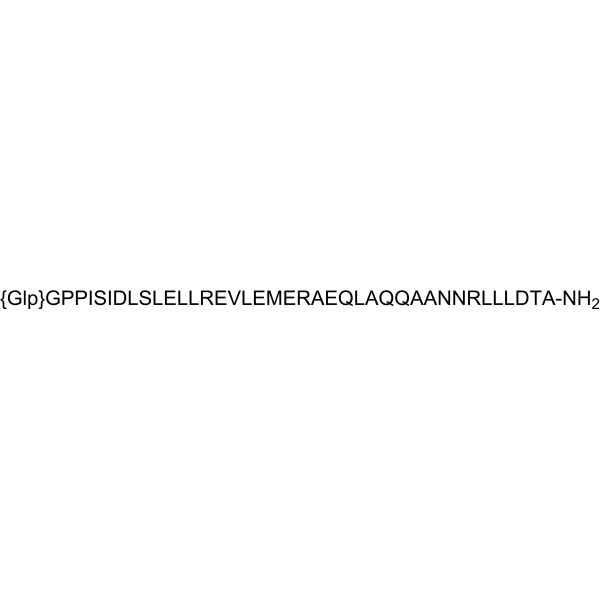
HY-P2287
CortagineCRF1 Agonist -
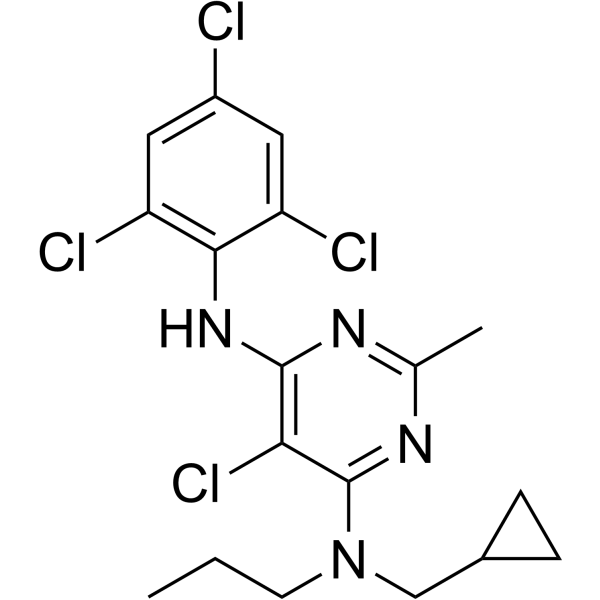
HY-135542
NBI-27914CRFR1 Antagonist -
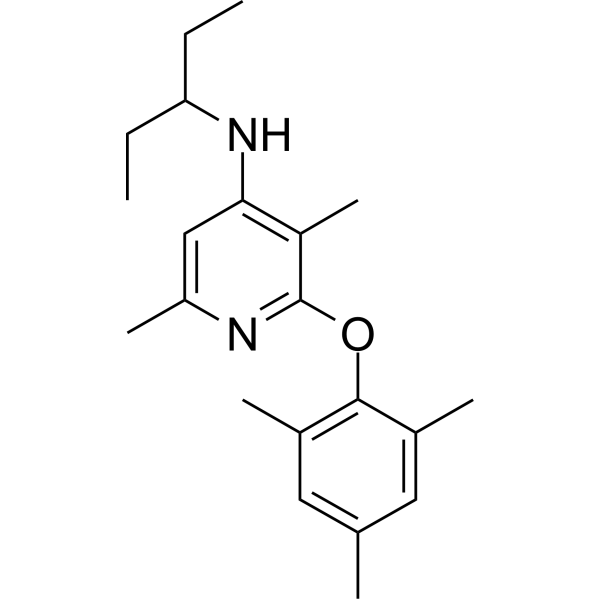
HY-14130
CP 376395CRF1 Receptor Antagonist -
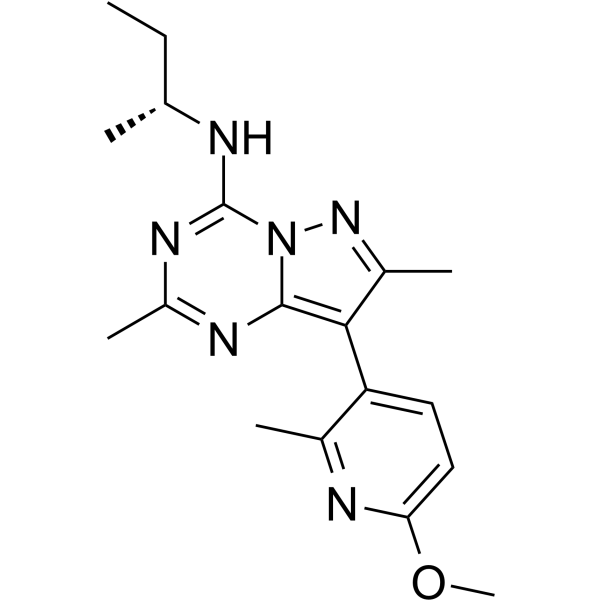
HY-12127
PexacerfontCRFR Antagonist -

HY-14127R
R121919 (Standard)CRF1 Receptor Antagonist -
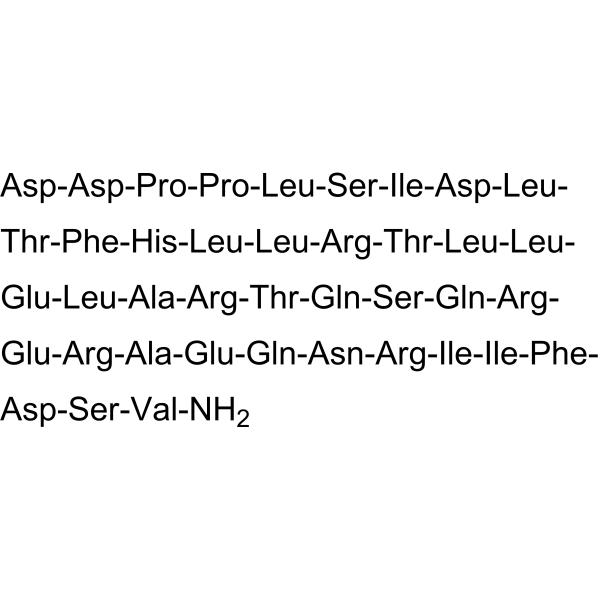
HY-P1296
Urocortin, ratCRFR Agonist -
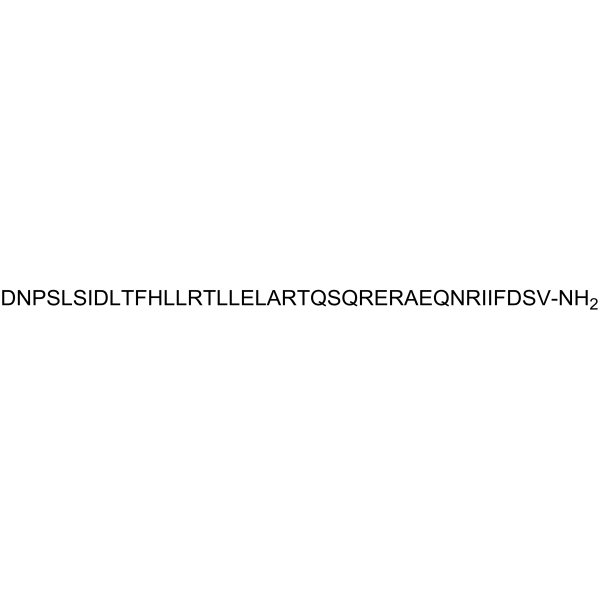
HY-P1295
Urocortin, humanCRF Receptor Agonist -
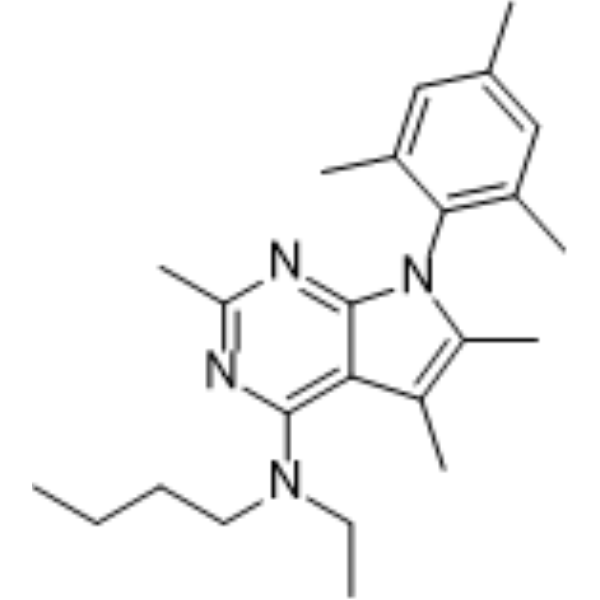
HY-124475
AntalarminCRHR1 Antagonist -
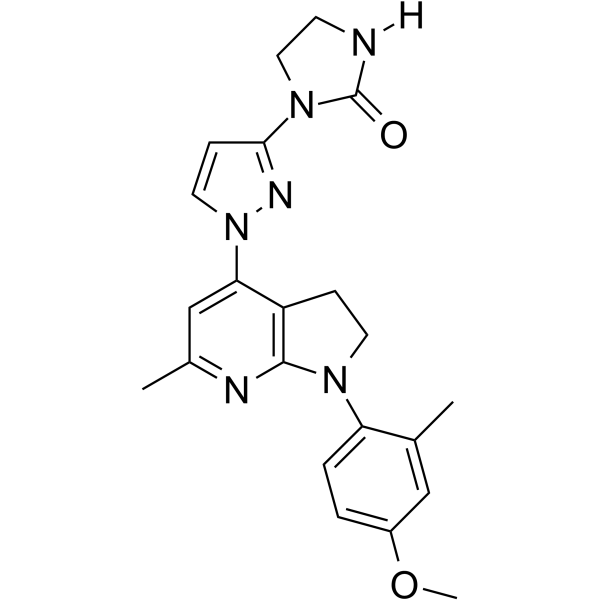
HY-14367
EmicerfontCRFR Antagonist
Publications Citing Use of MedChemExpress (MCE) R121919
More

Actividad biológica
Descripciòn
IC50 & Target
|
CRFR1 2-5 nM (Ki) |
Cellular Effect
|
Cell Line

|
Type | Value | Description | References |
|---|---|---|---|---|
| CHO | IC50 |
50 nM
Compound: 26h
|
Inhibition of [125I]o-CRF binding to CHO cells expressing human CRF1 receptor
Inhibition of [125I]o-CRF binding to CHO cells expressing human CRF1 receptor
|
[PMID: 15341493] |
| CHO | IC50 |
50 nM
Compound: 5
|
Inhibition of CRF stimulated cAMP production in CHO cells expressing CRF1 receptor
Inhibition of CRF stimulated cAMP production in CHO cells expressing CRF1 receptor
|
[PMID: 16078829] |
| CHO | IC50 |
8.5 nM
Compound: 1a; R121919
|
Displacement of [125I]-CRF from human CRF1 receptor expressed in CHO cellular membrane fraction after 1.5 hrs by liquid scintillation counting method
Displacement of [125I]-CRF from human CRF1 receptor expressed in CHO cellular membrane fraction after 1.5 hrs by liquid scintillation counting method
|
[PMID: 26901666] |
| IMR-32 | IC50 |
4 nM
Compound: 2, R121919, NBI 30775
|
Antagonist activity at CRF1 receptor in human IMR32 cells assessed as inhibition of CRF-induced intracellular cAMP accumulation after 30 mins by immunoassay
Antagonist activity at CRF1 receptor in human IMR32 cells assessed as inhibition of CRF-induced intracellular cAMP accumulation after 30 mins by immunoassay
|
[PMID: 22971011] |
In Vitro
R121919 is a potent small-molecule CRF1 receptor antagonistwith high affinity for the CRF1 receptor and over 1000-fold weaker activity at the CRF2 receptor, CRF-binding protein, or 70 other receptor types[1].
MedChemExpress (MCE) has not independently confirmed the accuracy of these methods. They are for reference only. .
In Vivo
R121919 reduces levels of anxiety in mice with a steep dose-response curve[2].
MedChemExpress (MCE) has not independently confirmed the accuracy of these methods. They are for reference only.


Chemical Information
-
No. CAS 195055-03-9
-
Appearance Solid
-
Peso molecular 380.53
-
Fòrmula C22H32N6
-
Color White to off-white
-
SMILES
CCCN(C1=CC(C)=NC2=C(C3=CN=C(N(C)C)C=C3C)C(C)=NN21)CCC
-
Synonyms
NBI30775
-
Envío
Room temperature in continental US; may vary elsewhere.
-
Almacenamiento
Powder -20°C 3 years 4°C 2 years In solvent -80°C 2 years -20°C 1 year


Publications (7)
-
Journal Impact Factor
-
Most Recent
-
Nat Commun
Hypothalamus-sympathetic-liver axis mediates the early phase of stress-induced hyperglycemia in the male mice. [Abstract]2024 Oct 5;15(1):8632. PMID: 39366937 -
Sci Adv
Hyperexcitation of ovBNST CRF neurons during stress contributes to female-biased expression of anxiety-like avoidance behaviors. [Abstract]2024 May 10;10(19):eadk7636. PMID: 38728397 -
Ecotoxicol Environ Saf
Asiaticoside ameliorates pyrimethanil-induced autophagy-dependent liver injury by suppressing CRHR1. [Abstract]2025 Dec:308:119482. PMID: 41338089 -
Neuropharmacology
2024 Nov 1:258:110066. PMID: 38986806 -
-
bioRxiv
Peripubertal antagonism of corticotropin-releasing factor receptor 1 results in sustained, sex-specific changes in behavioral plasticity and the transcriptomic profile of the amygdala. [Abstract]2024 Aug 15:2024.08.14.607957. PMID: 39185241 -


Solvente y solubilidad
In Vitro:
Ethanol : 100 mg/mL (262.79 mM; Need ultrasonic)
DMSO : 6.2 mg/mL (16.29 mM; Need ultrasonic; Hygroscopic DMSO has a significant impact on the solubility of product, please use newly opened DMSO)
Please refer to the solubility information to select the appropriate solvent. Once prepared, please aliquot and store the solution to prevent product inactivation from repeated freeze-thaw cycles.
Storage method and period of stock solution: -80°C, 2 years; -20°C, 1 year. When stored at -80°C, please use it within 2 years. When stored at -20°C, please use it within 1 year.
Please refer to the solubility information to select the appropriate solvent. Once prepared, please aliquot and store the solution to prevent product inactivation from repeated freeze-thaw cycles.
Storage method and period of stock solution: -80°C, 2 years; -20°C, 1 year. When stored at -80°C, please use it within 2 years. When stored at -20°C, please use it within 1 year.
Concentration (start) × Volume (start) = Concentration (final) × Volume (final)
In Vivo:
Select the appropriate dissolution method based on your experimental animal and administration route.
- For the following dissolution methods, please ensure to first prepare a clear stock solution using an In Vitro approach and then sequentially add co-solvents:
- To ensure reliable experimental results, the clarified stock solution can be appropriately stored based on storage conditions. As for the working solution for In Vivo experiments, it is recommended to prepare freshly and use it on the same day.
- The percentages shown for the solvents indicate their volumetric ratio in the final prepared solution. If precipitation or phase separation occurs during preparation, heat and/or sonication can be used to aid dissolution.
Add each solvent one by one: 10% EtOH 40% PEG300 5% Tween-80 45% Saline
Solubility: ≥ 2.5 mg/mL (6.57 mM); Clear solution
This protocol yields a clear solution of ≥ 2.5 mg/mL (saturation unknown).
Taking 1 mL working solution as an example, add 100 μL EtOH stock solution (25.0 mg/mL) to 400 μL PEG300, and mix evenly; then add 50 μL Tween-80 and mix evenly; then add 450 μL Saline to adjust the volume to 1 mL.
Preparation of Saline: Dissolve 0.9 g sodium chloride in ddH₂O and dilute to 100 mL to obtain a clear Saline solution.
Add each solvent one by one: 10% EtOH 90% (20% SBE-β-CD in Saline)
Solubility: 2.5 mg/mL (6.57 mM); Suspended solution; Need ultrasonic
This protocol yields a suspended solution of 2.5 mg/mL. Suspended solution can be used for oral and intraperitoneal injection.
Taking 1 mL working solution as an example, add 100 μL EtOH stock solution (25.0 mg/mL) to 900 μL 20% SBE-β-CD in Saline, and mix evenly.
Preparation of 20% SBE-β-CD in Saline (4°C, storage for one week): 2 g SBE-β-CD powder is dissolved in 10 mL Saline, completely dissolve until clear.
Add each solvent one by one: 10% EtOH 90% Corn Oil
Solubility: ≥ 2.5 mg/mL (6.57 mM); Clear solution
This protocol yields a clear solution of ≥ 2.5 mg/mL (saturation unknown). If the continuous dosing period exceeds half a month, please choose this protocol carefully.
Taking 1 mL working solution as an example, add 100 μL EtOH stock solution (25.0 mg/mL) to 900 μL Corn oil, and mix evenly.
Add each solvent one by one: 10% DMSO 40% PEG300 5% Tween-80 45% Saline
Solubility: ≥ 1.79 mg/mL (4.70 mM); Clear solution
This protocol yields a clear solution of ≥ 1.79 mg/mL (saturation unknown).
Taking 1 mL working solution as an example, add 100 μL DMSO stock solution (17.9 mg/mL) to 400 μL PEG300, and mix evenly; then add 50 μL Tween-80 and mix evenly; then add 450 μL Saline to adjust the volume to 1 mL.
Preparation of Saline: Dissolve 0.9 g sodium chloride in ddH₂O and dilute to 100 mL to obtain a clear Saline solution.
Add each solvent one by one: 10% DMSO 90% (20% SBE-β-CD in Saline)
Solubility: 1.79 mg/mL (4.70 mM); Suspended solution; Need ultrasonic
This protocol yields a suspended solution of 1.79 mg/mL. Suspended solution can be used for oral and intraperitoneal injection.
Taking 1 mL working solution as an example, add 100 μL DMSO stock solution (17.9 mg/mL) to 900 μL 20% SBE-β-CD in Saline, and mix evenly.
Preparation of 20% SBE-β-CD in Saline (4°C, storage for one week): 2 g SBE-β-CD powder is dissolved in 10 mL Saline, completely dissolve until clear.
In Vivo Dissolution Calculator
Please enter the basic information of animal experiments:
-
-
-
-
Recommended: Prepare an additional quantity of animals to account for potential losses during experiments.
Please enter your animal formula composition:
-
%DMSO +
Recommended: Keep the proportion of DMSO in working solution below 2% if your animal is weak.
-
%+
-
+%Tween-80 + +
-
%Saline +
The co-solvents required include: DMSO, . All of co-solvents are available by MedChemExpress (MCE). , Tween 80. All of co-solvents are available by MedChemExpress (MCE).
Working solution concentration: 0.22 mg/mL
Method for preparing stock solution: mg drug dissolved in μL DMSO. Stock solution concentration: mg/mL.
1. Take μL DMSO stock solution;
2. Add μL .
μL , mix evenly;
3. Then add μL Tween 80, mix evenly;
4. Then add μL
Please ensure that the stock solution in the first step is dissolved to a clear state, and add co-solvents in sequence. You can use ultrasonic heating (ultrasonic cleaner, recommended frequency 20-40 kHz), vortexing, etc. to assist dissolution.


Pureza y Documentación
-
Ficha de datos (282 KB)
-
SDS (252 KB)
- English - EN (252 KB)
- Français - FR (252 KB)
- Deutsch - DE (252 KB)
- Norwegian - NO (252 KB)
- Español - ES (252 KB)
- Swedish - SV (252 KB)
- Italian - IT (252 KB)
- Korean - KR (252 KB)
- Portuguese - PT (252 KB)
-
Instrucciones de manejo (2659 KB)
Referencias
[1]. Gutman DA, et al. The corticotropin-releasing factor1 receptor antagonist R121919 attenuates the behavioral and endocrine responses to stress. J Pharmacol Exp Ther. 2003 Feb;304(2):874-80. [Content Brief]
[2]. Post A, et al. Identification of molecules potentially involved in mediating the in vivo actions of the corticotropin-releasing hormone receptor 1 antagonist, NBI30775 (R121919). Psychopharmacology (Berl). 2005 Jun;180(1):150-8. [Content Brief]
[3]. Gutman DA, et al. Behavioral effects of the CRF1 recepator antagonist R121919 in rats selectively bred for high and low activity in the swim test. Psychoneuroendocrinology. 2008 Sep;33(8):1093-101. [Content Brief]


Complete Stock Solution Preparation Table
Please refer to the solubility information to select the appropriate solvent. Once prepared, please aliquot and store the solution to prevent product inactivation from repeated freeze-thaw cycles.
Storage method and period of stock solution: -80°C, 2 years; -20°C, 1 year. When stored at -80°C, please use it within 2 years. When stored at -20°C, please use it within 1 year.
| Optional Solvent | Concentration Solvent Mass | 1 mg | 5 mg | 10 mg | 25 mg |
|---|---|---|---|---|---|
| DMSO / Ethanol | 1 mM | 2.6279 mL | 13.1396 mL | 26.2791 mL | 65.6978 mL |
| 5 mM | 0.5256 mL | 2.6279 mL | 5.2558 mL | 13.1396 mL | |
| 10 mM | 0.2628 mL | 1.3140 mL | 2.6279 mL | 6.5698 mL | |
| 15 mM | 0.1752 mL | 0.8760 mL | 1.7519 mL | 4.3799 mL | |
| Ethanol | 20 mM | 0.1314 mL | 0.6570 mL | 1.3140 mL | 3.2849 mL |
| 25 mM | 0.1051 mL | 0.5256 mL | 1.0512 mL | 2.6279 mL | |
| 30 mM | 0.0876 mL | 0.4380 mL | 0.8760 mL | 2.1899 mL | |
| 40 mM | 0.0657 mL | 0.3285 mL | 0.6570 mL | 1.6424 mL | |
| 50 mM | 0.0526 mL | 0.2628 mL | 0.5256 mL | 1.3140 mL | |
| 60 mM | 0.0438 mL | 0.2190 mL | 0.4380 mL | 1.0950 mL | |
| 80 mM | 0.0328 mL | 0.1642 mL | 0.3285 mL | 0.8212 mL | |
| 100 mM | 0.0263 mL | 0.1314 mL | 0.2628 mL | 0.6570 mL |


R121919 Related Classifications
HY-14127 Related Classifications
 Powered by Bioz