



CTOP
Based on 1 publication(s) in Google Scholar
CTOP is a potent and highly selective μ-opioid receptor antagonist. CTOP antagonizes the acute morphine-induced analgesic effect and hypermotility. CTOP enhances extracellular dopamine levels in the nucleus accumbens. CTOP dose-dependently enhances locomotor activity.
Para uso exclusivo en investigación. No vendemos a pacientes.
- No. CAS: 103429-31-8
- Fòrmula: C50H67N11O11S2
- Peso molecular:1062.26
-
Almacenamiento:
Please store the product under the recommended conditions in the Certificate of Analysis.


To place orders, for customer services and technical support, please contact: MedChemExpress USA
Tel: 609-228-6898 E-mail: [email protected] [email protected]


-
 Actividad biológica
-
Chemical Information
- Protocolo
- Pureza y Documentación
- Referencias
-
 Help & FAQs


-
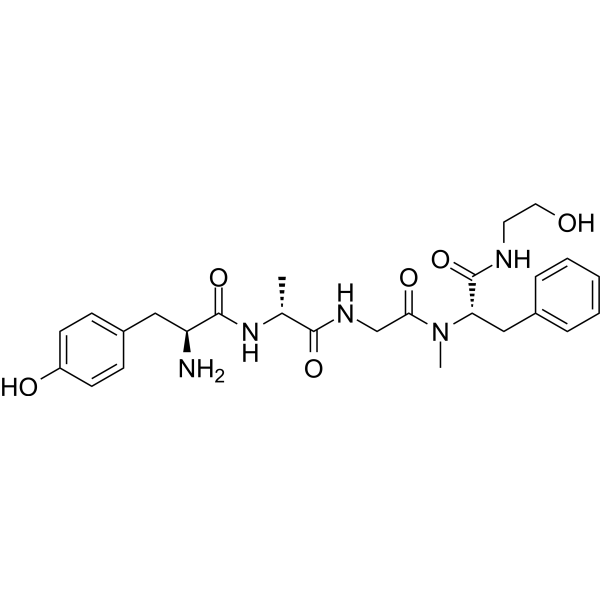
HY-P0210
DAMGOμ-OPR Agonist -
![[Leu5]-Enkephalin](https://file.medchemexpress.com/product_pic/hy-p0288.gif)
HY-P0288
[Leu5]-EnkephalinEndogenous Metabolite -
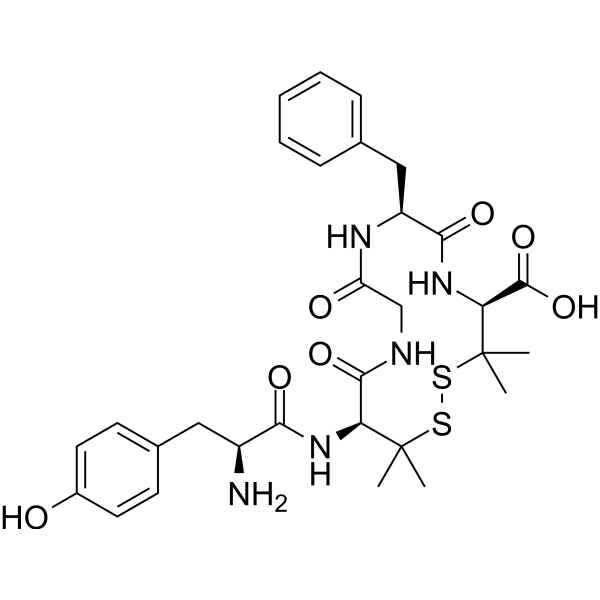
HY-P1334
DPDPEDOR Agonist -
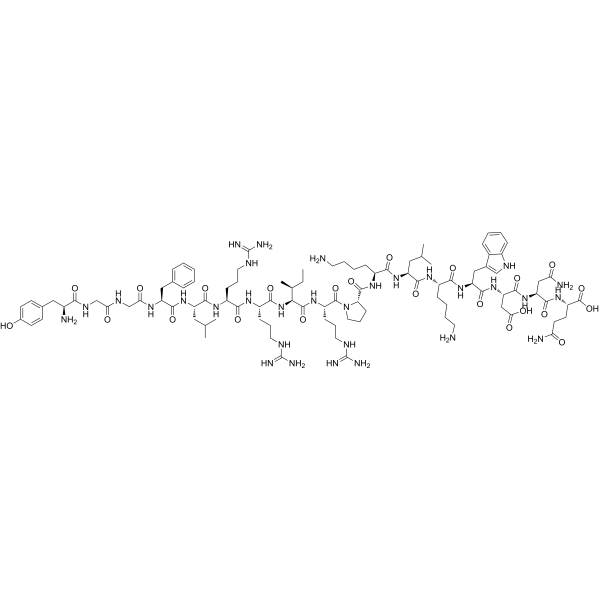
HY-P1333
Dynorphin AKOR Agonist -
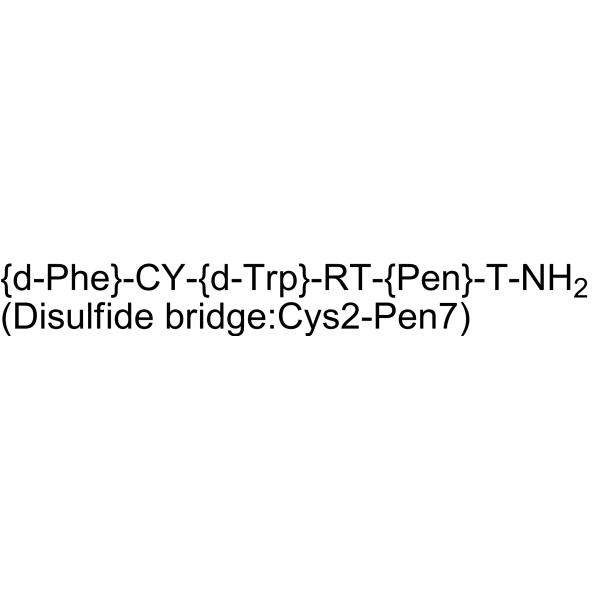
HY-P1335
CTAPμ Opioid Receptor Antagonist -
HY-100903
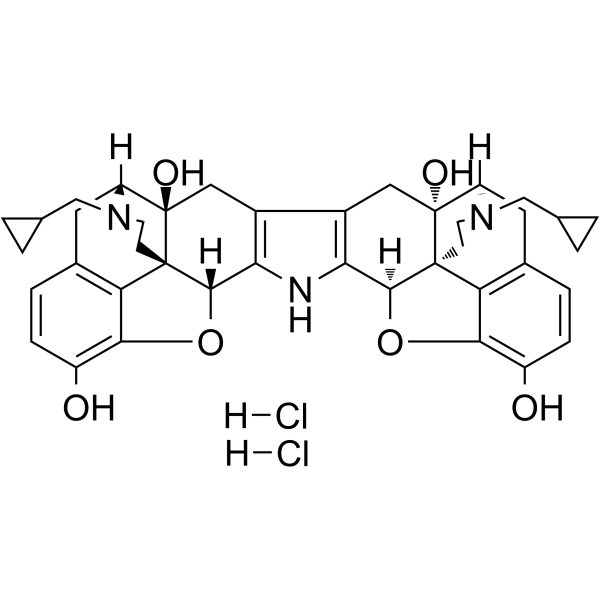
Norbinaltorphimine dihydrochlorideκ-opioid receptor Antagonist -

HY-P1337
Dynorphin B (1-13)Kappa Opioid Receptor Agonist -
HY-13044
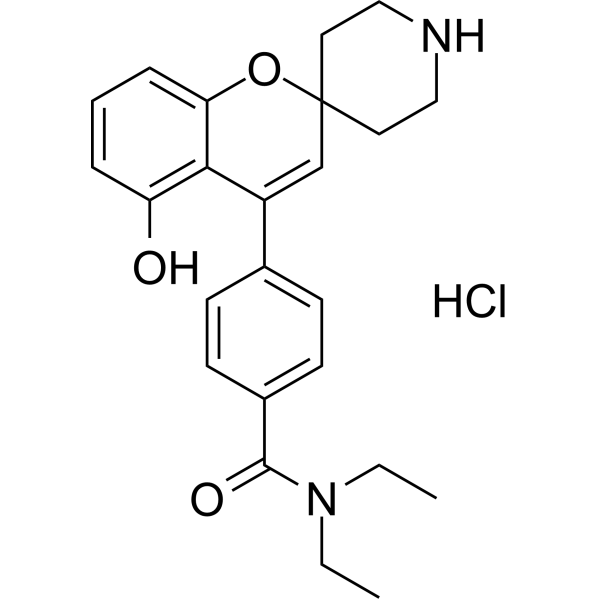
ADL-5859 hydrochlorideOpioid Receptor Agonist -

HY-15997
(-)-U-50488 hydrochlorideKOR Agonist -
HY-10487
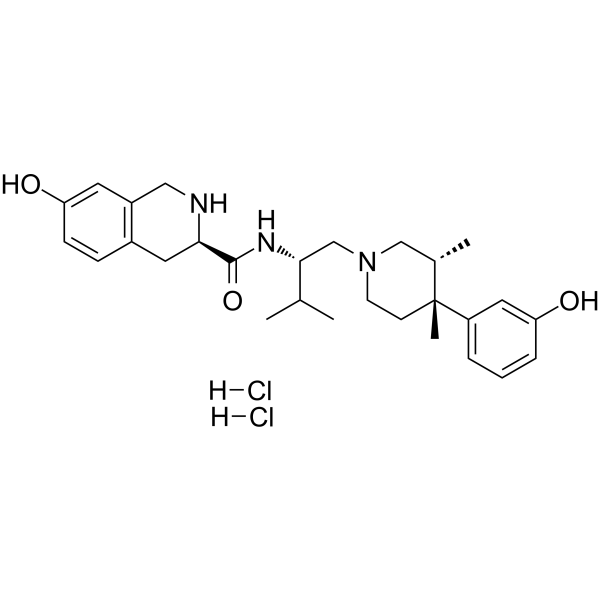
JDTic dihydrochloride -
HY-107741
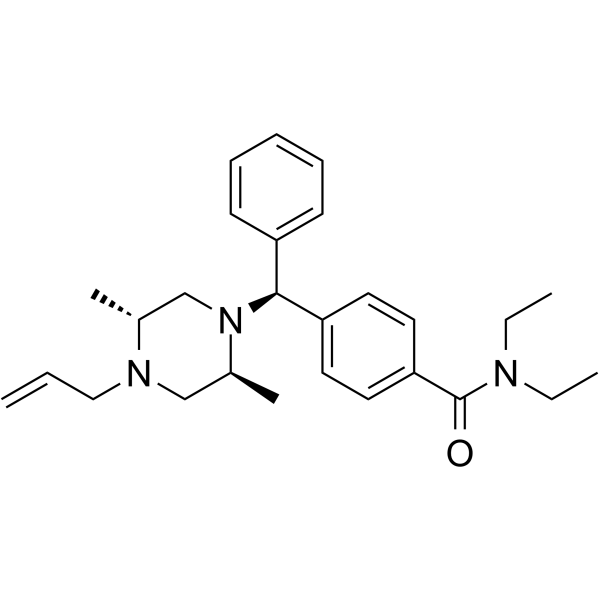
SNC162δ-opioid Receptor Agonist -
HY-107747
GR 89696κ2 Opioid Receptor Agonist
Publications Citing Use of MedChemExpress (MCE) CTOP
MoreVer todos los productos específicos de isoformas Opioid Receptor
More

Actividad biológica
Descripciòn
IC50 & Target
|
μ Opioid Receptor/MOR |
In Vivo
CTOP (0-2 nmol, ICV, once) causes withdrawal hypothermia and a loss of body weight in morphine-dependent animals[1].
CTOP (0-1.5 nmol per side, Intra-VTA injection) enhances extracellular dopamine levels in the nucleus accumbens and dose-dependently enhances locomotor activity[2].
MedChemExpress (MCE) has not independently confirmed the accuracy of these methods. They are for reference only.
-
Animal Model:Male CFLP mice (25-30 g)[1]
-
Dosage:0, 0.001, 0.05, 0.075, 0.1, and 0.5 nmol (made up in artificial cerebrospinal fluid (CSF) and kept in plastic tubes at -25℃ until use)
-
Administration:Intracerebroventricular (i.c.v.) administration, once
-
Result:Antagonized the analgesic effect of morphine in a dose-dependent manner, antagonized the morphine-induced hypermotility in a dose-dependent manner.
-
Animal Model:Male CFLP mice (25-30 g, Acute dependence to morphine was induced by a single dependence-inducing (100 mg/kg) dose of morphine-HC1)[1]
-
Dosage:0, 0.001, 0.05, 0.2, and 2 nmol
-
Administration:Intracerebroventricular (i.c.v.) administration, once
-
Result:Decreased the body temperature in a dose-dependent manner, and caused withdrawal hypothermia and a loss of body weight in morphine-dependent animals.
-
Animal Model:Long-Evans hooded rats (12, male, 350-450 g)[2]
-
Dosage:0, 0.015, 0.15, and 1.5 nmol per side
-
Administration:Intra-VTA (ventral tegmental area) injection
-
Result:Enhanced extracellular dopamine levels in the nucleus accumbens, dose-dependently increased activity, whereas had no effect on feeding and drinking behavior.


Chemical Information
-
No. CAS 103429-31-8
-
Peso molecular 1062.26
-
Fòrmula C50H67N11O11S2
-
Sequence
{D-Phe}-Cys-Tyr-{D-Trp}-{Orn}-Thr-{Pen}-Thr-NH2 (Disulfide bridge:Cys2-Pen7)
-
Sequence Shortening
{D-Phe}-CY-{D-Trp}-{Orn}T{Pen}T-NH2 (Disulfide bridge:Cys2-Pen7)
-
Envío
Room temperature in continental US; may vary elsewhere.
-
Almacenamiento
Please store the product under the recommended conditions in the Certificate of Analysis.


Publications (1)
-
Journal Impact Factor
-
Most Recent
-
J Neurosci
HDAC6 inhibition reverses cisplatin-induced mechanical hypersensitivity via tonic delta opioid receptor signaling. [Abstract]2022 Oct 19;42(42):7862-7874. PMID: 36096670


Pureza y Documentación
Referencias
[1]. Gulya K, et al. Central effects of the potent and highly selective μ opioid antagonist D-Phe-Cys-Tyr-D-Trp-Orn-Thr-Pen-Thr-NH2 (CTOP) in mice. Eur J Pharmacol. 1988 Jun 10;150(3):355-60. [Content Brief]
[2]. Badiani A, et al. Intra-VTA injections of the mu-opioid antagonist CTOP enhance locomotor activity. Brain Res. 1995 Aug 28;690(1):112-6. [Content Brief]

Calculators
Concentration (start) × Volume (start) = Concentration (final) × Volume (final)


CTOP Related Classifications
HY-P1329 Related Classifications
 Powered by Bioz