



Evabosmig

Based on 1 Customer Validation
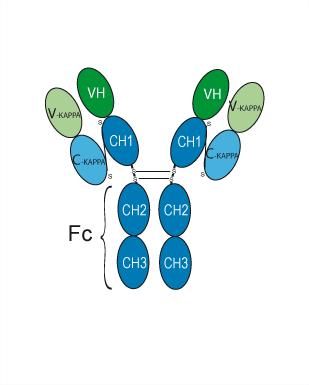
Evabosmig (AGA2118) is a humanized bispecific monoclonal antibody targeting sclerostin (SOST/sclerostin) and DKK1. SOST and DKK1 are two key secreted negative regulators of the intramedullary Wnt/β-catenin pathway. Evabosmig possesses activities to induce bone formation, inhibit bone resorption and increase bone mineral density. Evabosmig is applicable for research related to osteoporosis.
Para uso exclusivo en investigación. No vendemos a pacientes.
- Pureza : 97.91%
- No. CAS: 3061142-96-6
- Peso molecular:145.18 kDa
-
Almacenamiento:
Please store the product under the recommended conditions in the Certificate of Analysis.


To place orders, for customer services and technical support, please contact: MedChemExpress USA
Tel: 609-228-6898 E-mail: [email protected] [email protected]


-
 Actividad biológica
-
Chemical Information
- Protocolo
- Pureza y Documentación
- Referencias
-
 Help & FAQs




Actividad biológica
Descripciòn
Isotype
Human IgG4 kappa
Recommend Isotype Controls
Species Reactivity
Human
In Vivo
MedChemExpress (MCE) has not independently confirmed the accuracy of these methods. They are for reference only.
Gene ID
Accession
Target
SOST/Sclerostin & DKK1
Conjugated
Unconjugated
Reconsititution
The product can be reconstituted/diluted with sterile PBS or saline.
Format
-
IgG4-kappa
Aplicación
ELISA, FACS, Functional assay
Verified Bioactivity
-
 Immobilized SOST Protein, Human (HEK293, HY-P70756) can bind Evabosmig. The ED50 for this effect is 361 ng/mL.
 -
 Loaded Evabosmig on biosensor, can bind DKK-1 Protein, Human (HEK293, HY-P7155A) with an affinity constant of 6.75E-10 M as determined in BLI assay.


Chemical Information
-
No. CAS 3061142-96-6
-
Appearance Liquid
-
Peso molecular 145.18 kDa
-
Color Colorless to light yellow
-
SMILES
[Evabosmig]
-
Synonyms
AGA2118
-
Envío
Shipping with dry ice.
-
Formulation
Please refer to the lot-specific COA for specific buffer information.
-
Almacenamiento
Please store the product under the recommended conditions in the Certificate of Analysis.


Pureza y Documentación
-
Ficha de datos (273 KB)
-
SDS (251 KB)
- English - EN (251 KB)
- Français - FR (251 KB)
- Deutsch - DE (251 KB)
- Norwegian - NO (251 KB)
- Español - ES (251 KB)
- Swedish - SV (251 KB)
- Italian - IT (251 KB)
- Korean - KR (251 KB)
- Portuguese - PT (251 KB)
-
Inhibitory Antibodies User Guide (603 KB)
Referencias

Calculators
Concentration (start) × Volume (start) = Concentration (final) × Volume (final)


Evabosmig Related Classifications
HY-P992113 Related Classifications
 Powered by Bioz