97 Results for "

decrease mitochondrial membrane potential

" in MedChemExpress (MCE) Product Catalog:
Products (97)

97 Results for "decrease mitochondrial membrane potential" in MCE Product Catalog:

Referencia número: HY-155348
Target:  

PARP

Áreas de investigación:  

Cancer

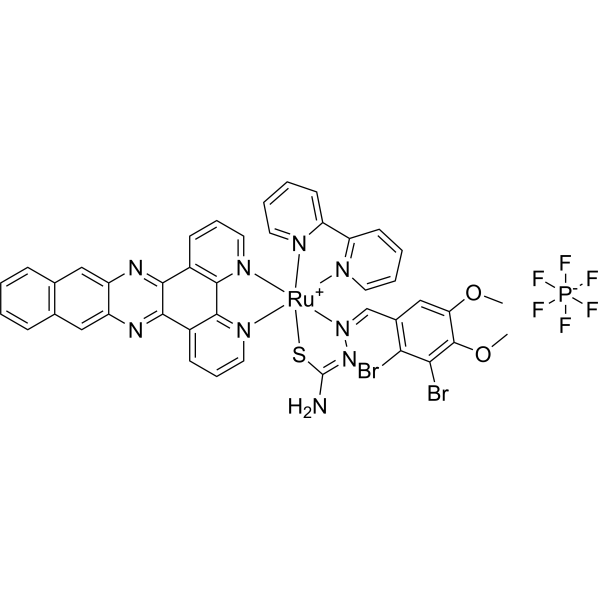
Ru3 is a poly(ADP-ribose) polymerase 1 inhibitor. Ru3 induces apoptosisin MCF-7 cells by multiple modes, inclusive of inducing DNA damage, suppressing DNA damage repair, disturbing cell cycle distribution, decreasing the mitochondrial membrane potential, and increasing the intracellular reactive oxygen species levels .
loading...
    loading...
Referencia número: HY-107855R
No. CAS: 674-26-0
Synonyms: (±)-Mevalonolactone (Standard); Mevalolactone (Standard)
DL-Mevalonolactone (Standard) is the analytical standard of DL-Mevalonolactone. This product is intended for research and analytical applications. DL-Mevalonolactone ((±)-Mevalonolactone;Mevalolactone) is the δ-lactone form of mevalonic acid, a precursor in the mevalonate pathway. DL-Mevalonolactone is orally active against HMGCR mutation and statin caused myopathy . DL-Mevalonolactone induces inflammation and oxidative stress response with decreased mitochondrial membrane potential (MMP) and induces mitochondrial swelling .
loading...
    loading...
Referencia número: HY-147983
No. CAS: 2315320-24-0
Áreas de investigación:  

Cancer

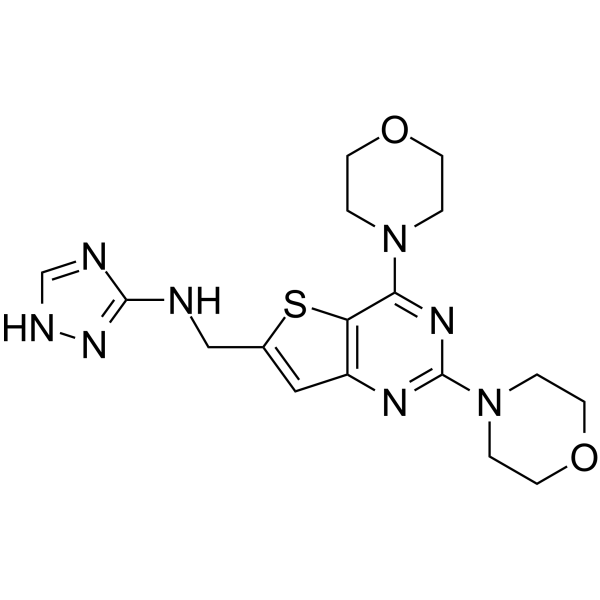
PI3Kα-IN-8 (Compound 9g) is a selective PI3Kα inhibitor with an IC50 of 0.012 μM. PI3Kα-IN-8 increases intracellular reactive oxygen species level, decreases mitochondrial membrane potential and induces apoptosis .
loading...
    loading...
Referencia número: HY-178033
No. CAS: 100611-91-4
Áreas de investigación:  

Infection

Antileishmanial agent-35 (Compound 6) is an antileishmanial agent with an IC50 of 0.29μM for promastigotes of Leishmania amazonensis. Antileishmanial agent-35 significantly decreases the mitochondrial membrane potential and ATP levels, and further increases the production of ROS by a blockage in the electron transport chain, where ubiquinone intervenes. Antileishmanial agent-35 can be used for cutaneous leishmaniases research .
loading...
    loading...
Referencia número: HY-N11648
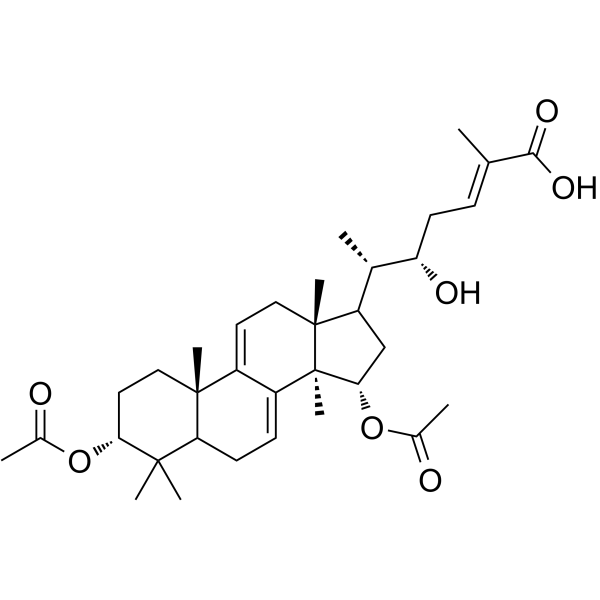
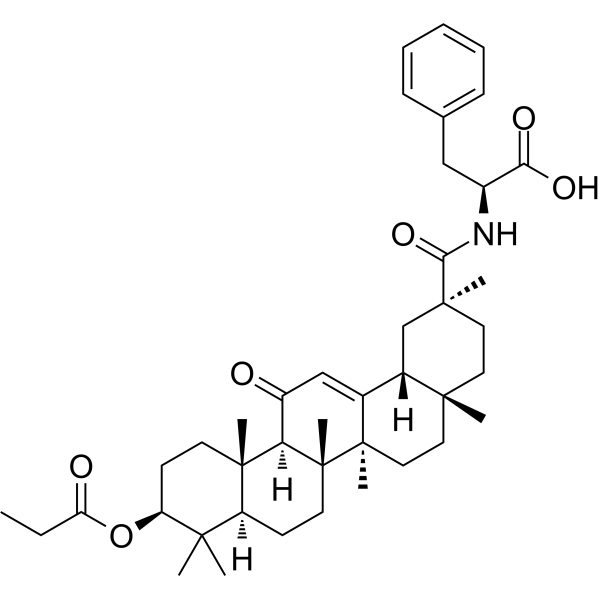
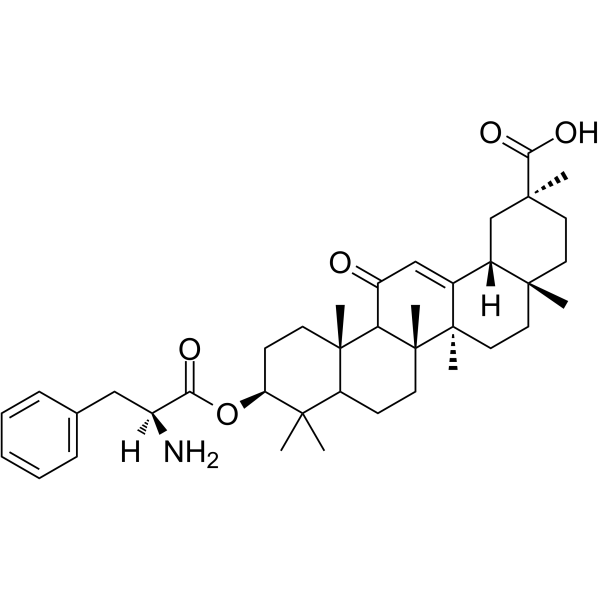
Ganoderic acid T1 is a deacetylated derivative of Ganoderic acid T. Ganoderic acid T1 attenuates antioxidant defense system and induces apoptosis of cancer cells. Ganoderic acid T1 decreases mitochondrial membrane potential and activates caspase-9 and caspase-3, to trigger apoptosis. Ganoderic acid T1 also increases the generation of intracellular ROS to produce pro-oxidant activities and cytotoxicity .
loading...
    loading...
Referencia número: HY-120490
No. CAS: 1252802-38-2
Áreas de investigación:  

Cancer

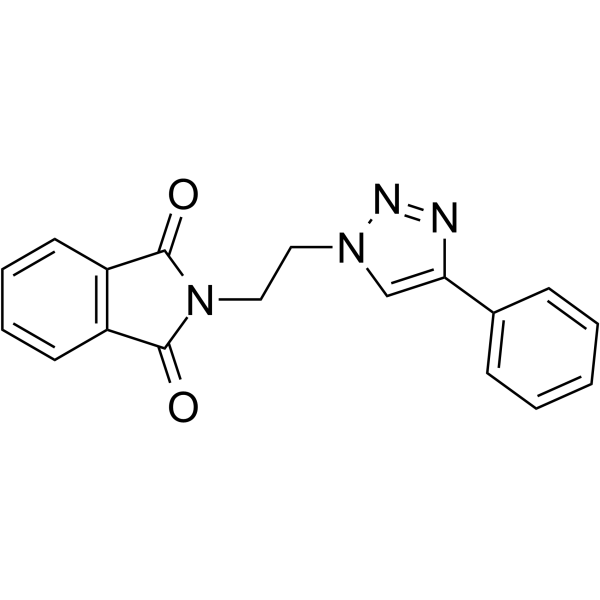
NMK-TD-100 is a modulator for microtubule. NMK-TD-100 binds to tubulin, inhibits the tubulin polymerization with an IC50 of 17.5 µM, inhibits mitosis, and decreases mitochondrial membrane potential (MMP). NMK-TD-100 inhibits the proliferation of HeLa with an IC50 of 1.42 µM, arrests cell cycle at G2/M phase, induces apoptosis in HeLa .
loading...
    loading...
Referencia número: HY-146166
No. CAS: 1280738-47-7
Áreas de investigación:  

Infection Inflammation/Immunology

PT4 is a therapeutic agent against Cutaneous leishmaniasis (CL). PT4 is effective against both species of Leishmania, with IC50s of 125.18 and 233.18 μM for L. amazonensis and L. braziliensis, respectively. PT4 decreases of mitochondrial membrane potential and increases production of reactive oxygen species, which leads to parasite death. PT4 has a potent in vivo anti-inflammatory activity .
loading...
    loading...
Referencia número: HY-149000
No. CAS: 2417098-53-2
Target:  

PI3K Apoptosis

Áreas de investigación:  

Cancer

PI3Kα-IN-7 (Compound A12) is a potent PI3Kα inhibitor. PI3Kα-IN-7 also inhibits PI3Kβ. PI3Kα-IN-7 decreases cancer cells mitochondrial membrane potential and induces apoptosis .
loading...
    loading...
Referencia número: HY-168589
Áreas de investigación:  

Cancer

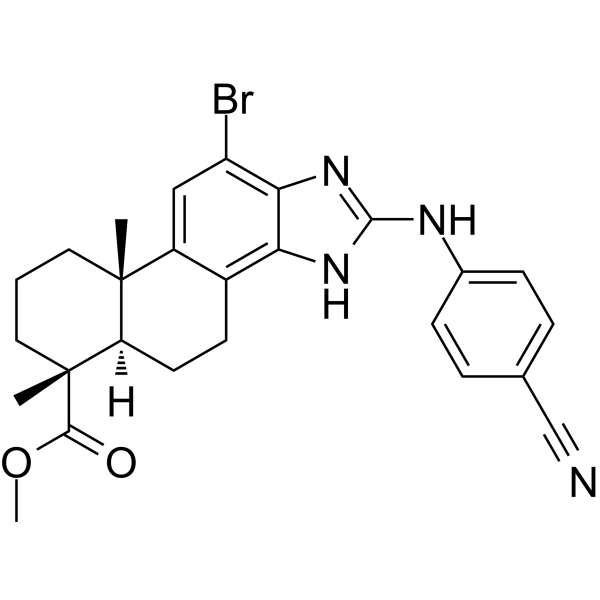
Apoptosis inducer 30 (Compound 15a) is an anticancer agent. Apoptosis inducer 30 induces MCF-7 cells apoptosis through mitochondrial pathway. Apoptosis inducer 30 induces intracellular reactive oxygen species levels and decreases mitochondrial membrane potential, and blocks the cell cycle in the G0/G1 phase. Apoptosis inducer 30 inhibits cell growth, with an IC50 value of 0.32 μM against MCF-7 cells, and inhibits tumor growth in a mouse model of breast cancer .
loading...
    loading...
Referencia número: HY-146462
No. CAS: 2366170-11-6
Target:  

Apoptosis ROS Kinase

Áreas de investigación:  

Cancer

Anticancer agent 59 (compound 11) has inhibitory activity against kinds of cancer cell lines, especially in A549 with IC50 of 0.2 μM. Anticancer agent 59 induces apoptosis and an increase of Ca 2+ and ROS in cancer cells. Anticancer agent 59 significantly decreases mitochondrial membrane potential. Anticancer agent 59 can suppress tumor growth in A549 mouse xenograft model .
loading...
    loading...
Referencia número: HY-172804
Áreas de investigación:  

Infection

SDH-IN-26 (Compound C3) is a succinate dehydrogenase (SDH) inhibitor. SDH-IN-26 exhibits significant inhibitory activity against multiple phytopathogenic fungi, such as Rhizoctonia solani and Botrytis cinerea, with an EC50 value of 0.270 μg/mL against Rhizoctonia solani. SDH-IN-26 damages the integrity of the fungal cell membrane, increases membrane permeability, disrupts cell structure, and reduces the number of mitochondria, thus affecting the normal growth of mycelia. SDH-IN-26 leads to a decrease in mitochondrial membrane potential, and induces cell apoptosis. SDH-IN-26 is promising for research of plant diseases caused by fungi .
loading...
    loading...
Referencia número: HY-159149
Áreas de investigación:  

Cancer

Antitumor agent-182 (Compound 12a) decreases mitochondrial membrane potential (MMP) and enhances ROS levels. Antitumor agent-182 arrests the cell cycle at G0/G1 phase, induces apoptosis in HeLa. Antitumor agent-182 inhibits the proliferation of HeLa, PC-3 and HCT-15 with IC50s of 8.83, 10.07 and 7.84 μM, respectively .
loading...
    loading...
Referencia número: HY-169124
Apoptosis Inducer 28 (Compound X1) is an apoptosis-inducing agent with anticancer activity in vitro. Apoptosis Inducer 28 can arrest the cell cycle at the G1 phase, promote cell death, and induce apoptosis by disrupting mitochondrial membrane potential. Apoptosis inducer 28 can also decrease the production of reactive oxygen species, downregulate the gene expression of BAX, Bcl-xL, and Bcl-2, while upregulating the gene expression of PAR-4 .
loading...
    loading...
Referencia número: HY-W402074
No. CAS: 16275-44-8
Synonyms: Butenolide
5-Acetamide-Butenolide (Butenolide) is a mycotoxin with pro-oxidant activity, which is found in Fusarium. 5-Acetamide-Butenolide disrupts the mitochondrial membrane potential in primary neonatal rat cardiomyocytes. 5-Acetamide-Butenolide also induces the production of thiobarbituric acid reactive substances (TBARS) in isolated rat myocardial mitochondria. 5-Acetamide-Butenolide increases the production of reactive oxygen species (ROS), decreases the levels of GSH and reduces the viability of HepG2 cells .
loading...
    loading...
Referencia número: HY-146461
Áreas de investigación:  

Cancer

Anticancer agent 58 (compound 16) has inhibitory activity against kinds of cancer cell lines, especially in A549 and T24 with IC50s of 0.6 μM and 0.7 μM, respectively. Anticancer agent 58 induces apoptosis by activating caspase 3/8/9 activity, and induces an increase of Ca 2+ and ROS in cancer cells. Anticancer agent 58 significantly decreases mitochondrial membrane potential. Anticancer agent 58 can suppress tumor growth in T24 mouse xenograft model .
loading...
    loading...
Referencia número: HY-127020
No. CAS: 108605-51-2
Target:  

Bacterial

Áreas de investigación:  

Infection

Deoxyenterocin is a bacterial metabolite originally isolated from Streptomyces that has diverse biological activities, including antibiotic, antiviral, and antioxidant properties. It inhibits the growth of S. lutea, S. aureus, K. pneumoniae, and V. percolans in vitro when used at a concentration of 500 μg/mL. Deoxyenterocin (50 μg/mL) inhibits the cytopathic effect of influenza A H1N1 virus by 60.6% in vitro. It also prevents hydrogen peroxide-induced decreases in glutathione (GSH) levels and in the mitochondrial membrane potential in mouse primary cortical neuronal cultures when used at a concentration of 1 μM.
loading...
    loading...
Referencia número: HY-168565
Áreas de investigación:  

Cancer

Tubulin polymerization-IN-70 (compound Q19) is a potent tubulin polymerization inhibitor. Tubulin polymerization-IN-70 shows antiproliferative activity. Tubulin polymerization-IN-70 target the colchicine binding site of tubulin and inhibited tubulin polymerization. Tubulin polymerization-IN-70 induces apoptosis and cell cycle arrest at G2/M phase. Tubulin polymerization-IN-70 induces mitochondrial membrane potential decrease and increases the levels of reactive oxygen species (ROS). Tubulin polymerization-IN-70 shows antiangiogenic and anticancer activity .
loading...
    loading...
Referencia número: HY-175512
Áreas de investigación:  

Cancer

Tubulin-IN-53 is a potent Tubulin inhibitor with an IC50 of 6.06 μM. Tubulin-IN-53 inhibits the polymerization of tubulin by targeting the colchicine binding site of tubulin and destroys the microtubule network. Tubulin-IN-53 induces MCF-7 cell cycle arrest in the G2/M phase and apoptosis, and inhibits cell migration accompanied by the decrease of mitochondrial membrane potential and increase the accumulation of ROS. Tubulin-IN-53 destroys the angiogenesis of human umbilical vein endothelial cells.Tubulin-IN-53 can used for the study of cancers such as breast cancer and lung cancer .
loading...
    loading...
Referencia número: HY-161874
Áreas de investigación:  

Cancer

RPS6-IN-1 (Compound 22o) inhibits cell metastasis, induces cell apoptosis (increases the expression of Bax, p53, cleaved-caspase 3, and cleaved-PARP). RPS6-IN-1 decreases mitochondrial membrane potential. RPS6-IN-1 activates autophagy through the PI3K-Akt-mTOR signaling pathway, damages intracellular mitochondria and lysosomes, and cause ER stress. RPS6-IN-1 inhibits RPS6 phosphorylation. RPS6-IN-1 is an anticancer agent with low systemic toxicity .
loading...
    loading...
Referencia número: HY-130624
No. CAS: 2413849-81-5
Target:  

HSP Apoptosis

Áreas de investigación:  

Cancer

Hsp90-Cdc37-IN-2 (Compound 41) is an inhibitor for the interaction between heat shock protein 90 (Hsp90) and cyclin 37 (Cdc37). Hsp90-Cdc37-IN-2 inhibits the proliferation of cancer cell A549, MCF-7, HOS and HepG2 with IC50 of 0.41-0.94 μM. Hsp90-Cdc37-IN-2 decreases the mitochondrial membrane potential, induces apoptosis, and arrest cell cycle at G0/G1 phase in A549 .
loading...
    loading...

