27 Results for "

54662

" in MedChemExpress (MCE) Product Catalog:
Products (27)

27 Results for "54662" in MCE Product Catalog:

2
2 Cited Publications
Cat. No.: HY-101378
CAS No.: 149184-21-4
Purity:  99.76%
Target:  

GABA Receptor

Research Areas:  

Neurological Disease

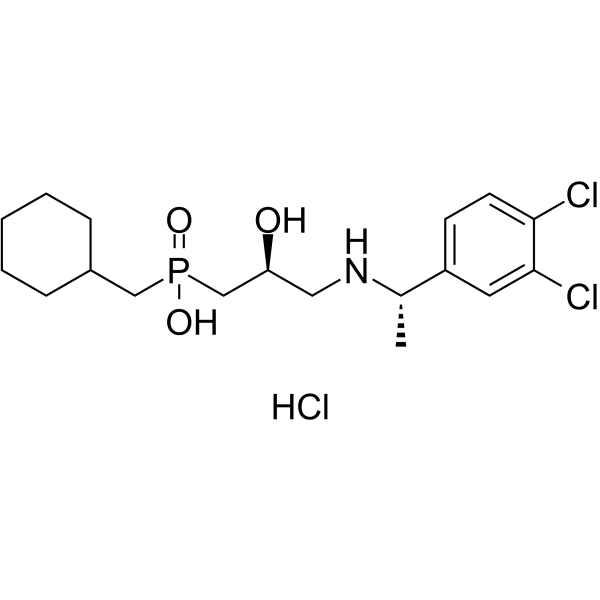
CGP 54626 (hydrochloride) is a selective antagonist of GABAB receptor with an IC50 value of 4 nM. CGP 54626 (hydrochloride) can be used to investigate the role of GABAB receptors in neurological signaling .
loading...
    loading...
1
1 Cited Publications
Cat. No.: HY-148087
CAS No.: 2787501-83-9
Purity:  99.89%
Target:  

RXFP Receptor

Research Areas:  

Cardiovascular Disease

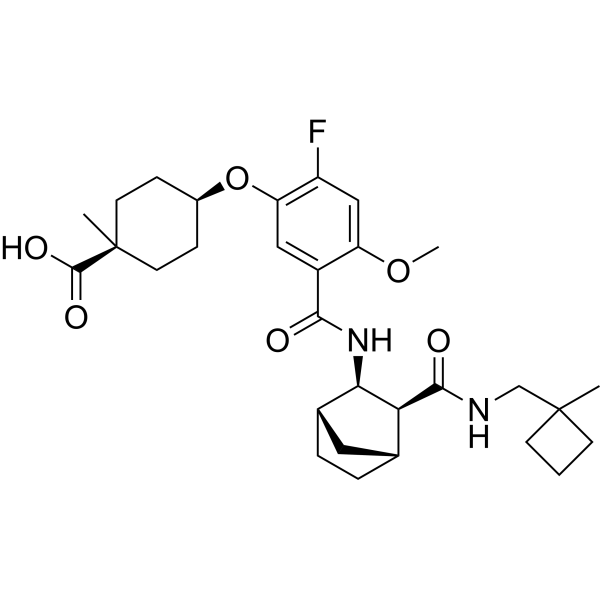
AZD5462 is a RXFP1 modulator, can be used for heart failure research. RXFP1 is the cognate receptor for human relaxin, belongs to GPCR family 1c number with anti-fibrotic and anti-inflammatory properties .
loading...
    loading...
Cat. No.: HY-157786
CAS No.: 2230145-14-7
Target:  

Sodium Channel

Research Areas:  

Neurological Disease

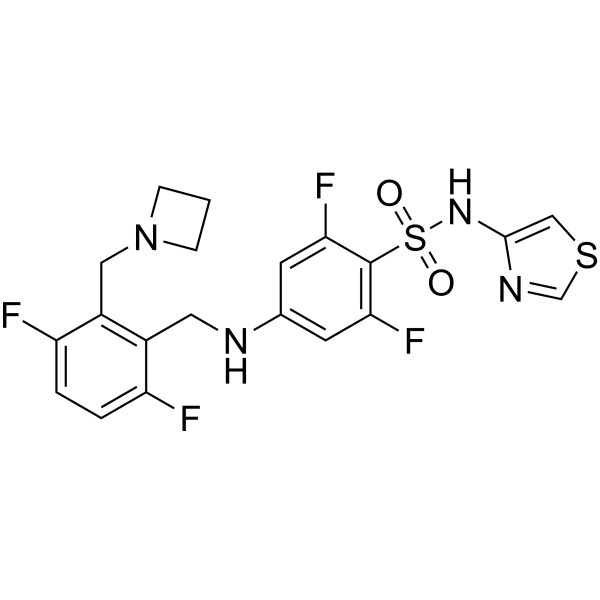
XPC-5462 is a selective NaV1.6/1.2 inhibitor, with an IC50 of 0.0103 μM against hNaV1.6, 0.0137 μM against mNaV1.6, and 0.0109 μM against hNaV1.2. XPC-5462 significantly reduces epileptiform discharges. XPC-5462 is applicable for epilepsy-related research .
loading...
    loading...
Cat. No.: HY-P1855
CAS No.: 160790-21-6
Target:  

EGFR

Research Areas:  

Cancer

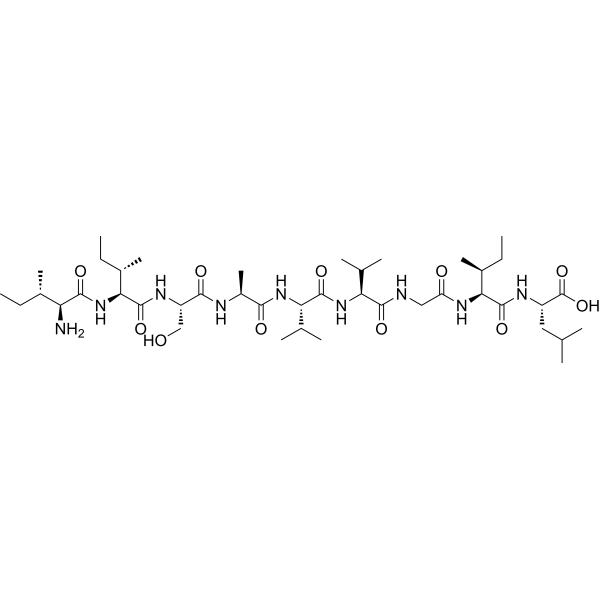
HER2/neu (654-662) GP2 is a nine amino acid peptide derived from the human epidermal growth factor receptor 2 (HER2/nue, 654–662), induces HLA-A2-restricted cytotoxic T lymphocytes (CTL) reactive to various epithelial cancers .
loading...
    loading...
Cat. No.: HY-125641
CAS No.: 210580-75-9
Purity:  99.19%
Research Areas:  

Cardiovascular Disease

AL-34662 is a selective 5-HT2A receptoragonist (IC50: 0.77 nM and 1.5 nM for rat and human 5-HT2 receptor). AL-34662 is also a weak α-1D adrenergic agonist activity (EC50:0.4 μM). AL-34662 is an ocular hypotensive agent .
loading...
    loading...
Cat. No.: HY-130670
CAS No.: 149936-58-3
Target:  

GABA Receptor

Research Areas:  

Neurological Disease

CGP 54626 is a GABAB receptor modulator, which is essential in the central and peripheral nervous systems. It is used as a tool to identify and characterize GABAB receptor agonists and antagonists, which will aid in the development of drugs targeting diseases related to these systems. This discovery involves purified GABAB receptors, receptor proteins and their encoding nucleic acids, facilitating the study of new members of the GABAB receptor family through DNA cloning technology and sequence-derived probes .
loading...
    loading...
Cat. No.: HY-125641A
Target:  

5-HT Receptor

Research Areas:  

Neurological Disease

AL-34662 (formate) is a 5-HT2 receptor agonist (IC50: 0.8-1.5 nM). AL-34662 (formate) stimulates inositol phosphate turnover and Ca 2+ release in human ciliary muscle cells (h-CM) (E50: 289 nM) and human trabecular meshwork cells (h-TM) (E50: 254 nM). AL-34662 (formate) can be used in studies to lower intraocular pressure (IOP) .
loading...
    loading...
Cat. No.: HY-120410
CAS No.: 1674389-55-9
Research Areas:  

Neurological Disease

DL-4662 is a 3,4-dimethoxy derivative that can be identified using techniques such as, GC-EI-MS, LC-tandem mass spectrometry and NMR spectroscopy .
loading...
    loading...
Cat. No.: HY-120410A
Target:  

Drug Derivative

Research Areas:  

Neurological Disease

DL-4662 hydrochloride is a psychoactive substance .
loading...
    loading...
Cat. No.: HY-R01221
Target:  

MicroRNA

Research Areas:  

Cancer

hsa-miR-4662b mimics are small, chemically synthesized double-stranded RNAs that mimic endogenous miRNAs and enable miRNA functional analysis by up-regulation of miRNA activity.
loading...
    loading...
Cat. No.: HY-RI01221
Target:  

MicroRNA

Research Areas:  

Cancer

hsa-miR-4662b inhibitors are chemically-modified oligonucleotides that hybridize with mature miRNAs. The miRNA inhibitors have full-length nucleotide 2'-methoxy modification. The miRNA inhibitors strongly compete with mature miRNAs to prevent the complementary pairing of miRNAs and their target genes, thereby inhibiting miRNAs from functioning.
loading...
    loading...
Cat. No.: HY-R01219
Target:  

MicroRNA

Research Areas:  

Cancer

hsa-miR-4662a-3p mimics are small, chemically synthesized double-stranded RNAs that mimic endogenous miRNAs and enable miRNA functional analysis by up-regulation of miRNA activity.
loading...
    loading...
Cat. No.: HY-R01219A
Target:  

MicroRNA

Research Areas:  

Cancer

hsa-miR-4662a-3p agomirs are chemically-modified double-strand miRNA mimics with modified mature miRNA strand: 2 phosphorothioates at the 5' end, 4 phosphorothioates at the 3' end, 3' end cholesterol group, and full-length nucleotide 2'-methoxy modification. They are designed to mimic endogenous miRNAs and recommended for miRNA functional studies. Compared with miRNA mimics, they exhibits enhanced cellular uptake, stability and regulatory activity in vivo.
loading...
    loading...
Cat. No.: HY-R01220
Target:  

MicroRNA

Research Areas:  

Cancer

hsa-miR-4662a-5p mimics are small, chemically synthesized double-stranded RNAs that mimic endogenous miRNAs and enable miRNA functional analysis by up-regulation of miRNA activity.
loading...
    loading...
Cat. No.: HY-R01220A
Target:  

MicroRNA

Research Areas:  

Cancer

hsa-miR-4662a-5p agomirs are chemically-modified double-strand miRNA mimics with modified mature miRNA strand: 2 phosphorothioates at the 5' end, 4 phosphorothioates at the 3' end, 3' end cholesterol group, and full-length nucleotide 2'-methoxy modification. They are designed to mimic endogenous miRNAs and recommended for miRNA functional studies. Compared with miRNA mimics, they exhibits enhanced cellular uptake, stability and regulatory activity in vivo.
loading...
    loading...
Cat. No.: HY-141909S
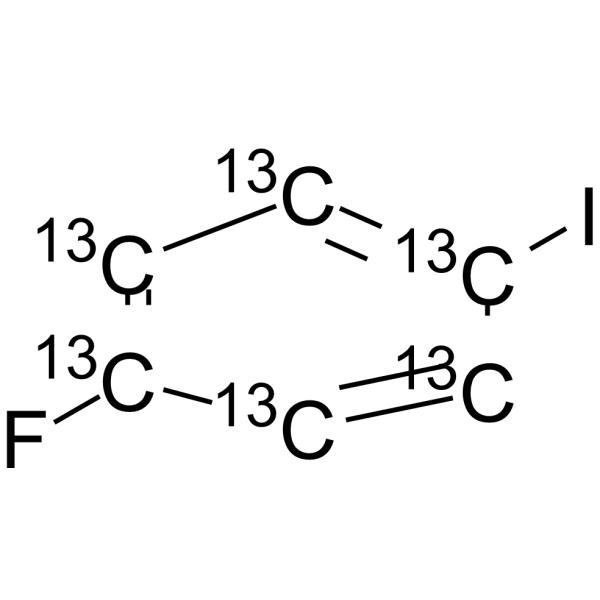
Synonyms: NSC 10280-13C6; NSC 4662-13C6; p-Fluoroiodobenzene-13C6
4-Fluoroiodobenzene- 13C6 is the 13C labeled 4-Fluoroiodobenzene .
loading...
    loading...
Cat. No.: HY-19080
CAS No.: 135133-84-5
Target:  

Lipoxygenase

Research Areas:  

Inflammation/Immunology

SC-45662 is a 5-lipoxygenase inhibitor. SC-45662 inhibits the response of monocytes to phytohemagglutinin (PHA). SC-45662 inhibits superoxide production in neutrophils. SC-45662 slows early changes in lung mechanics and pulmonary hypertension in a sheep model of impaired lung function. SC-45662 can be used in research on diseases of the immune system, respiratory system, etc .
loading...
    loading...
Cat. No.: HY-R01221A
Target:  

MicroRNA

Research Areas:  

Cancer

hsa-miR-4662b agomirs are chemically-modified double-strand miRNA mimics with modified mature miRNA strand: 2 phosphorothioates at the 5' end, 4 phosphorothioates at the 3' end, 3' end cholesterol group, and full-length nucleotide 2'-methoxy modification. They are designed to mimic endogenous miRNAs and recommended for miRNA functional studies. Compared with miRNA mimics, they exhibits enhanced cellular uptake, stability and regulatory activity in vivo.
loading...
    loading...
Cat. No.: HY-RI01221A
Target:  

MicroRNA

Research Areas:  

Cancer

hsa-miR-4662b antagomirs are chemically-modified oligonucleotides that hybridize with mature miRNAs. The miRNA antagomirs have 2 phosphorothioates at the 5' end, 4 phosphorothioates at the 3' end, 1 cholesterol group at the 3' end, and full-length nucleotide 2'-methoxy modification. The miRNA antagomirs strongly compete with mature miRNAs to prevent the complementary pairing of miRNAs and their target genes, thereby inhibiting miRNAs from functioning. Stability of miRNA antagomirs appears to be significantly higher than miRNA inhibitors, they exhibits enhanced cellular uptake, stability and regulatory activity in vivo.
loading...
    loading...
Cat. No.: HY-RI01219
Target:  

MicroRNA

Research Areas:  

Cancer

hsa-miR-4662a-3p inhibitors are chemically-modified oligonucleotides that hybridize with mature miRNAs. The miRNA inhibitors have full-length nucleotide 2'-methoxy modification. The miRNA inhibitors strongly compete with mature miRNAs to prevent the complementary pairing of miRNAs and their target genes, thereby inhibiting miRNAs from functioning.
loading...
    loading...

