



Glucotropaeolin potassium
Based on 1 publication(s) in Google Scholar
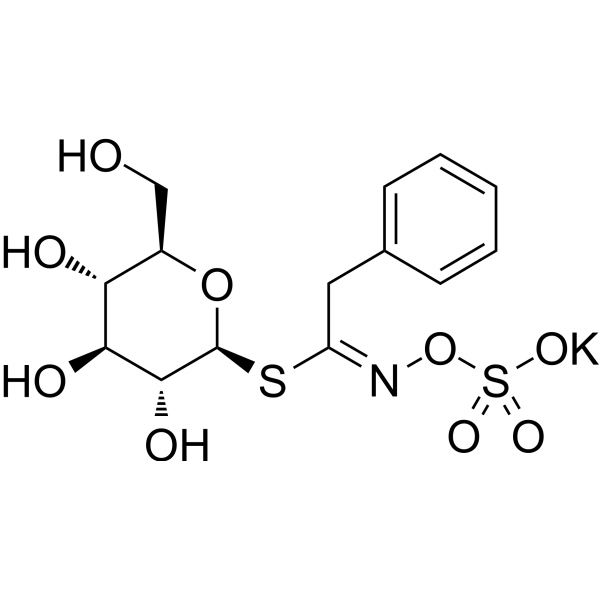
Glucotropaeolin (Benzylglucosinolate) potassium is an orally effective glucosinolate that can be extracted from cruciferous vegetables. Glucotropaeolin potassium exhibits activities including moderate reduction of spontaneous DNA damage in animals, anti-inflammation, antimicrobial action, and anticancer effect. Glucotropaeolin potassium can be used in research related to tendinopathy, late blight, type 2 diabetes, and cancer.
For research use only. We do not sell to patients.
- Purity : 99.40%
- CAS No.: 5115-71-9
- Formula: C14H18KNO9S2
- Molecular Weight:447.52
-
Storage:
-20°C, protect from light
* In solvent : -80°C, 6 months; -20°C, 1 month (protect from light)

To place orders, for customer services and technical support, please contact: MedChemExpress USA
Tel: 609-228-6898 E-mail: [email protected] [email protected]


-
 Biological Activity
-
Chemical Information
-
Solvent & Solubility
- Protocols
- Purity & Documentation
- References
-
 Help & FAQs


-

HY-N4321R
Glucotropaeolin potassium (Standard)Reference Standard -
HY-N0404
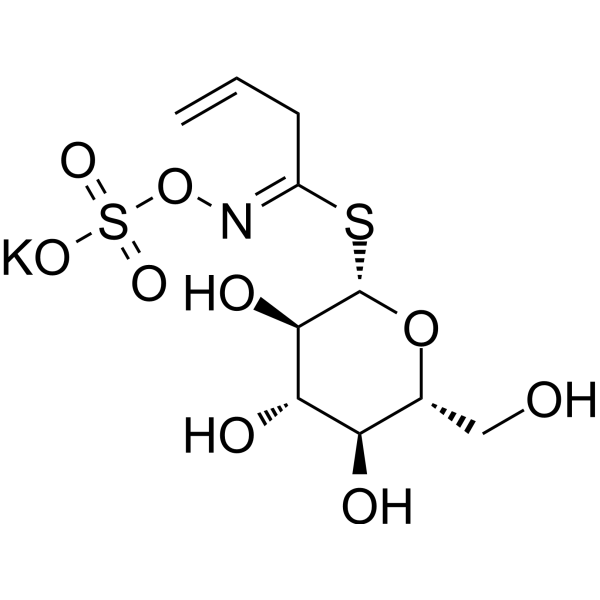
SinigrinGlucosinolate -
HY-12290
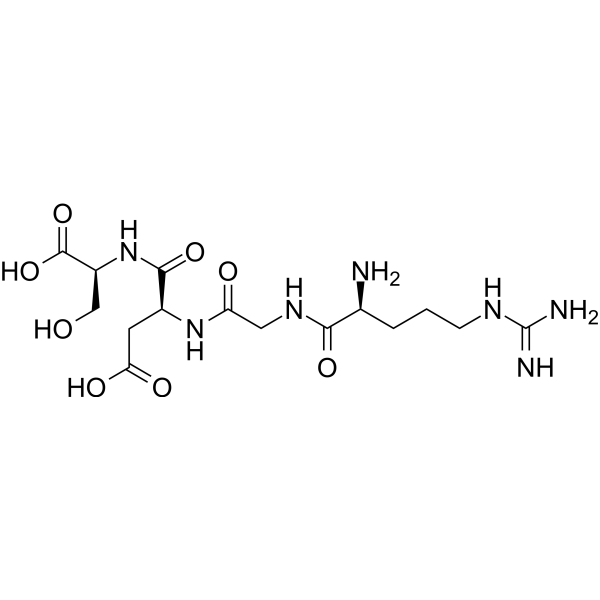
Arg-Gly-Asp-SerIntegrin Inhibitor -

HY-N0404R
Sinigrin (Standard)Standard of Sinigrin -
![Galβ(1-3)[Neu5Acα(2-6)]GalNAc-α-pNP](https://file.medchemexpress.com/product_pic/hy-w145540.gif)
HY-W145540
Galβ(1-3)[Neu5Acα(2-6)]GalNAc-α-pNPBiochemical Assay Reagent -

HY-12290R
Arg-Gly-Asp-Ser (Standard)Integrin Inhibitor -

HY-W102386
Methyl 2,3,4,6-Tetra-O-acetyl-1-thio-α-D-mannopyranosideBiochemical Assay Reagents -
HY-W145526
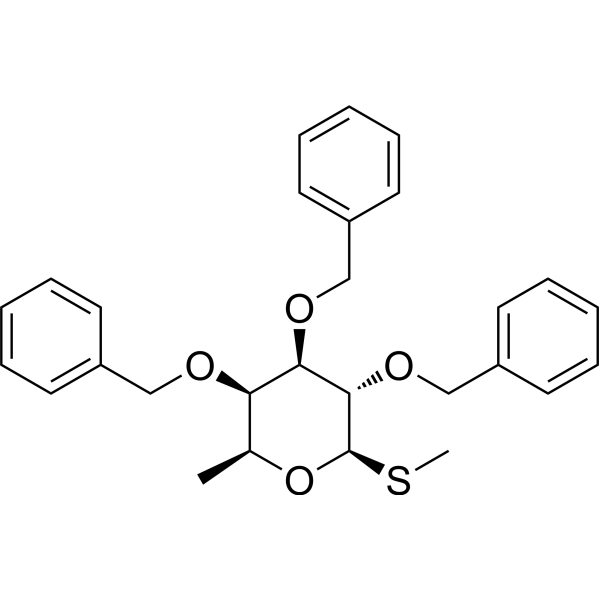
Methyl 2,3,4-tri-O-benzyl-1-thio-β-L-fucopyranosideBiochemical Assay Reagent
Publications Citing Use of MedChemExpress (MCE) Glucotropaeolin potassium
MoreAll DNA/RNA Synthesis Isoforms
More

Biological Activity
Description
In Vitro
Glucotropaeolin (1 mM; 25 min) releases H2S in a cysteine-dependent manner, reaching a final concentration of 0.74 μM over 25 minutes in a cell-free system[1].
MedChemExpress (MCE) has not independently confirmed the accuracy of these methods. They are for reference only. Further protocols information, click here.
In Vivo
Potassium glucotropaeolin (30 µmol/mL, 50 µL per dose; p.i.; once daily; consecutive treatment for 9 days) alleviates spontaneous pain but fails to prevent mechanical hyperalgesia and exercise-induced pain exacerbation in a rat tendinopathy model induced by Collagenase type I[1].
MedChemExpress (MCE) has not independently confirmed the accuracy of these methods. They are for reference only.
-
Animal Model:Sprague-Dawley (male, 220-250 g, tendinopathy induced via intratendinous collagenase type I injection)[1]
-
Dosage:1, 10, 30, 100 µmol/kg
-
Administration:o.p.; single dose; for 7 days
-
Result:Dose-dependently increased the mechanical pain threshold and alleviate spontaneous pain.
-
Animal Model:Sprague-Dawley (male, 220-250 g, tendinopathy induced via intratendinous collagenase type I injection)[1]
-
Dosage:30 µmol/mL, 50 µL/rat
-
Administration:p.i.; once daily; 9 consecutive days
-
Result:Alleviated spontaneous pain but failed to prevent mechanical hyperalgesia and movement-induced exacerbation of pain.


Chemical Information
-
CAS No. 5115-71-9
-
Appearance Solid
-
Molecular Weight 447.52
-
Formula C14H18KNO9S2
-
Color White to off-white
-
SMILES
O=S(O/N=C(CC1=CC=CC=C1)/S[C@@H]2O[C@@H]([C@@H](O)[C@H](O)[C@H]2O)CO)(O[K])=O
-
Synonyms
Benzylglucosinolate potassium
-
Structure Classification
-
Initial Source
-
Shipping
Room temperature in continental US; may vary elsewhere.
-
Storage
-20°C, protect from light
* In solvent : -80°C, 6 months; -20°C, 1 month (protect from light)


Publications (1)
-
Journal Impact Factor
-
Most Recent


Solvent & Solubility
In Vitro:
H2O : ≥ 100 mg/mL (223.45 mM)
* "≥" means soluble, but saturation unknown.
Please refer to the solubility information to select the appropriate solvent. Once prepared, please aliquot and store the solution to prevent product inactivation from repeated freeze-thaw cycles.
Storage method and period of stock solution: -80°C, 6 months; -20°C, 1 month (protect from light). When stored at -80°C, please use it within 6 months. When stored at -20°C, please use it within 1 month.
* Note: If you choose water as the stock solution, please dilute it to the working solution, then filter and sterilize it with a 0.22 μm filter before use.
Please refer to the solubility information to select the appropriate solvent. Once prepared, please aliquot and store the solution to prevent product inactivation from repeated freeze-thaw cycles.
Storage method and period of stock solution: -80°C, 6 months; -20°C, 1 month (protect from light). When stored at -80°C, please use it within 6 months. When stored at -20°C, please use it within 1 month.
* Note: If you choose water as the stock solution, please dilute it to the working solution, then filter and sterilize it with a 0.22 μm filter before use.
Concentration (start) × Volume (start) = Concentration (final) × Volume (final)

Protocols
-
Research Protocol for Infectious Diseases
Infectious-disease experiments test how pathogens interact with host barriers, innate immune receptors, inflammatory signaling, pathogen replication, and tissue injury; pattern-recognition receptors such as TLRs, RIG-I-like receptors, NOD-like receptors, and inflammasomes detect microbial molecules and activate NF-κB, interferon, and cytokine responses. The central hypothesis is that infection severity reflects the balance between pathogen burden and host response: protective inflammation restricts pathogen growth, whereas excessive or mislocalized inflammation contributes to tissue damage and disease phenotype. Unresolved questions include which host pathways are protective versus pathogenic, why some infection models fail to translate to human disease, and which combined readouts best predict clinically relevant infection outcomes.
-
Research Protocol for Inflammation-related Diseases
The NLRP3 inflammasome is a cytosolic innate immune signaling platform that integrates priming signals and danger-signal activation to promote caspase-1 activation, maturation of IL-1β and IL-18, and gasdermin D-mediated pyroptotic cell death. The core experimental logic is to determine whether inflammatory disease phenotypes are driven by increased NLRP3 expression, ASC-containing inflammasome assembly, caspase-1 cleavage, GSDMD cleavage, and extracellular release of IL-1β/IL-18 rather than by nonspecific cell injury alone. The pathway is strongly linked to inflammation-related disease phenotypes because monosodium urate crystals activate NALP3/NLRP3 inflammasome signaling in gout-like crystal inflammation, cholesterol crystals activate NLRP3 inflammasomes in atherogenesis models, and DSS-induced intestinal inflammation has been reported to involve NLRP3 inflammasome activity. However, experimental colitis studies also show context-dependent protective effects of NLRP3 inflammasome co
-
Research Protocol for Metabolic Diseases
AMP-activated protein kinase, AMPK, is a conserved cellular energy sensor that responds to reduced cellular energy status and coordinates metabolism by increasing ATP-generating catabolic pathways while suppressing ATP-consuming anabolic processes. In metabolic disease research, the AMPK pathway is experimentally relevant because it regulates hepatic lipid synthesis, fatty acid oxidation, glucose production, skeletal-muscle glucose disposal, mTORC1-linked biosynthesis, autophagy, mitochondrial homeostasis, and whole-body energy balance. The central pathway logic is that energy stress, metformin, exercise-like stimulation, or direct AMPK activators increase AMPKα Thr172 phosphorylation and downstream substrate phosphorylation, including ACC and RAPTOR. Phosphorylation of ACC suppresses lipogenesis and supports fatty acid oxidation, whereas phosphorylation of RAPTOR suppresses mTORC1 signaling and links cellular energy status to growth and protein synthesis control. The pathway is linked
-
Genotoxicity/Mutagenicity Study
The bacterial reverse mutation assay detects point mutations that restore amino-acid prototrophy in auxotrophic Salmonella typhimurium or Escherichia coli tester strains; after exposure to a test article, mutagenic activity is read out as an increased number of revertant colonies on minimal agar compared with the vehicle control. The assay uses tester strains with different mutation targets so that base-substitution and frameshift mutagens can be detected, and testing is performed with and without exogenous mammalian metabolic activation because some chemicals require biotransformation to become mutagenic.


Purity & Documentation
-
Data Sheet (292 KB)
-
SDS (393 KB)
- English - EN (393 KB)
- Français - FR (393 KB)
- Deutsch - DE (393 KB)
- Norwegian - NO (393 KB)
- Español - ES (393 KB)
- Swedish - SV (393 KB)
- Italian - IT (393 KB)
- Korean - KR (393 KB)
- Portuguese - PT (393 KB)
-
Handling Instructions (2659 KB)
References


Complete Stock Solution Preparation Table
Please refer to the solubility information to select the appropriate solvent. Once prepared, please aliquot and store the solution to prevent product inactivation from repeated freeze-thaw cycles.
Storage method and period of stock solution: -80°C, 6 months; -20°C, 1 month (protect from light). When stored at -80°C, please use it within 6 months. When stored at -20°C, please use it within 1 month.
| Optional Solvent | Concentration Solvent Mass | 1 mg | 5 mg | 10 mg | 25 mg |
|---|---|---|---|---|---|
| H2O | 1 mM | 2.2345 mL | 11.1727 mL | 22.3454 mL | 55.8634 mL |
| 5 mM | 0.4469 mL | 2.2345 mL | 4.4691 mL | 11.1727 mL | |
| 10 mM | 0.2235 mL | 1.1173 mL | 2.2345 mL | 5.5863 mL | |
| 15 mM | 0.1490 mL | 0.7448 mL | 1.4897 mL | 3.7242 mL | |
| 20 mM | 0.1117 mL | 0.5586 mL | 1.1173 mL | 2.7932 mL | |
| 25 mM | 0.0894 mL | 0.4469 mL | 0.8938 mL | 2.2345 mL | |
| 30 mM | 0.0745 mL | 0.3724 mL | 0.7448 mL | 1.8621 mL | |
| 40 mM | 0.0559 mL | 0.2793 mL | 0.5586 mL | 1.3966 mL | |
| 50 mM | 0.0447 mL | 0.2235 mL | 0.4469 mL | 1.1173 mL | |
| 60 mM | 0.0372 mL | 0.1862 mL | 0.3724 mL | 0.9311 mL | |
| 80 mM | 0.0279 mL | 0.1397 mL | 0.2793 mL | 0.6983 mL | |
| 100 mM | 0.0223 mL | 0.1117 mL | 0.2235 mL | 0.5586 mL |
* Note: If you choose water as the stock solution, please dilute it to the working solution, then filter and sterilize it with a 0.22 μm filter before use.


Glucotropaeolin potassium Related Classifications
HY-N4321 Related Classifications
 Powered by Bioz