



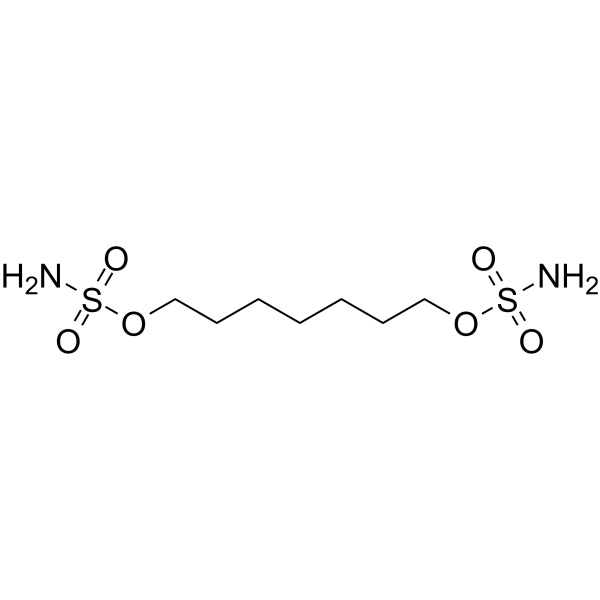
Hepsulfam
Based on 2 publication(s) in Google Scholar
Hepsulfam (NCI 329680; ZINC01574758) is a anticancer agent that shows excellent antileukemic activity with an median IC50 of 0.91 μg/mL in a panel of different tumors.
For research use only. We do not sell to patients.
- Purity : 99.31%
- CAS No.: 96892-57-8
- Formula: C7H18N2O6S2
- Molecular Weight:290.36
-
Storage:Powder -20°C, 3 years , 4°C, 2 years ; In solvent -80°C, 6 months , -20°C, 1 month

To place orders, for customer services and technical support, please contact: MedChemExpress USA
Tel: 609-228-6898 E-mail: [email protected] [email protected]


-
 Biological Activity
-
Chemical Information
-
Solvent & Solubility
- Protocols
- Purity & Documentation
- References
-
 Help & FAQs


-
HY-34477
2-IodoacetamideAlkylating Agent -
HY-34758
N-Nitroso-N-methylureaCarcinogen Agent -
HY-16293
LurbinectedinDNA Minor Groove Binder -
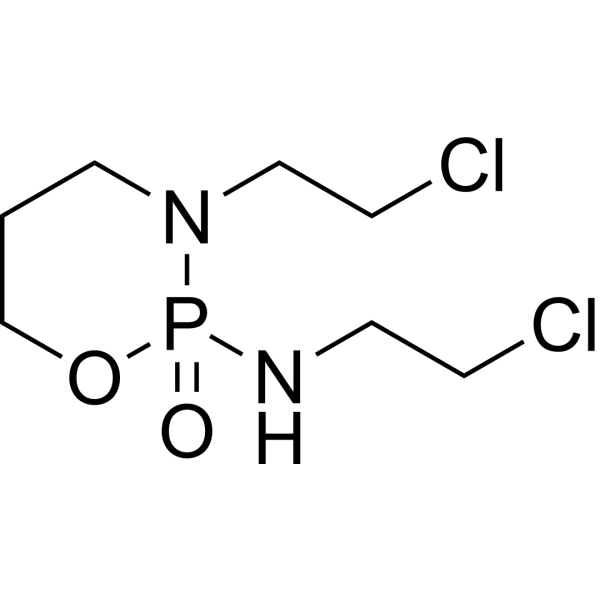
HY-17419
IfosfamideDNA Alkylator/Crosslinker -
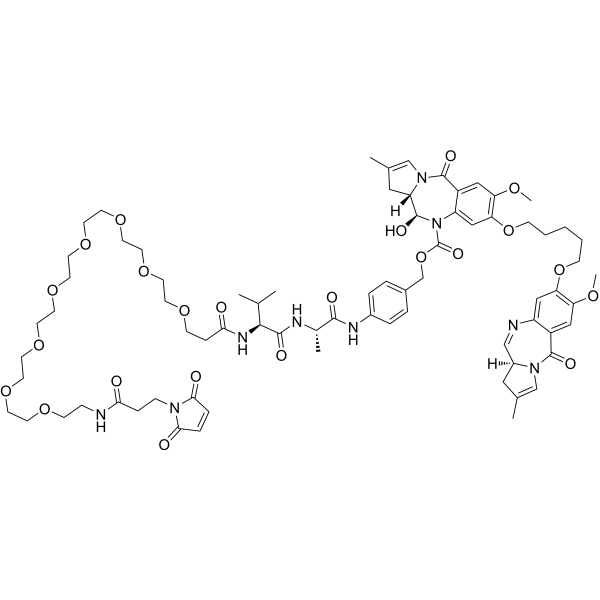
HY-128952
TesirineDrug-Linker Conjugates for ADC -

HY-34477R
2-Iodoacetamide (Standard)Alkylating Agent -
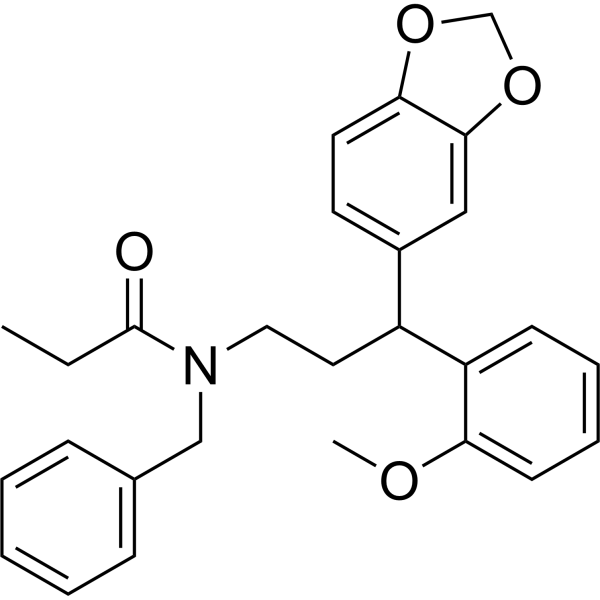
HY-129241
AGX51ID Protein Antagonist -
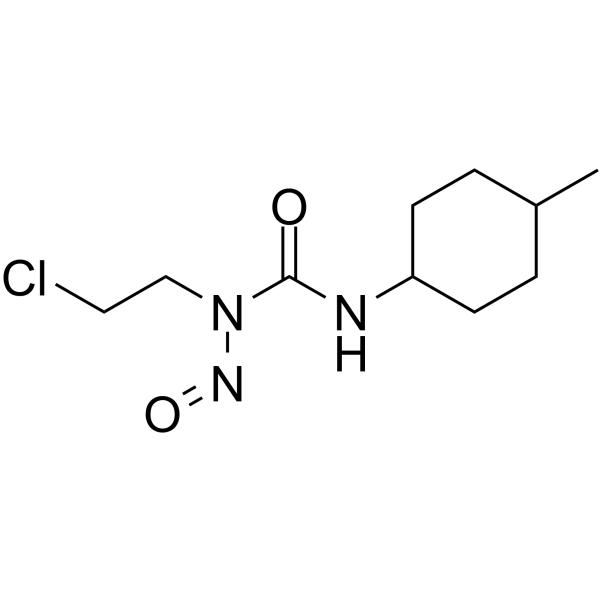
HY-13747
SemustineAntitumor Alkylating Agent -
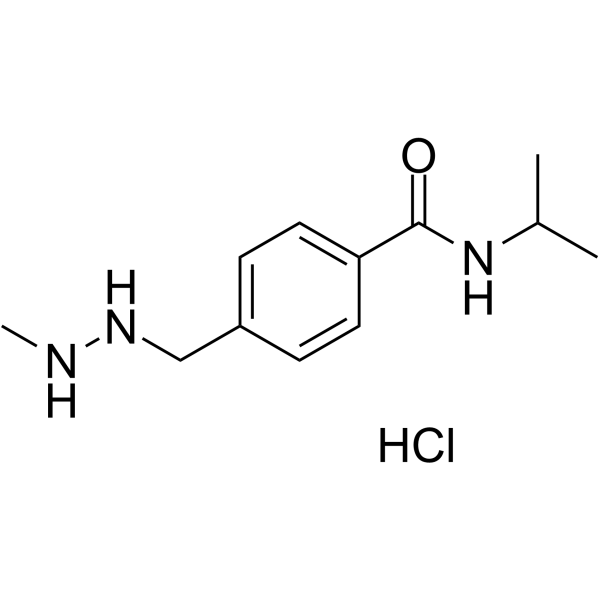
HY-13733
Procarbazine HydrochlorideAlkylating Agent -
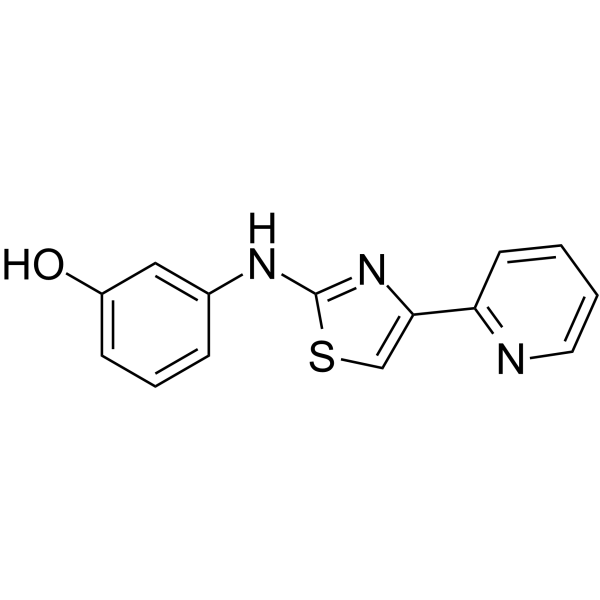
HY-131031
KCC-07MBD2 Inhibitor -
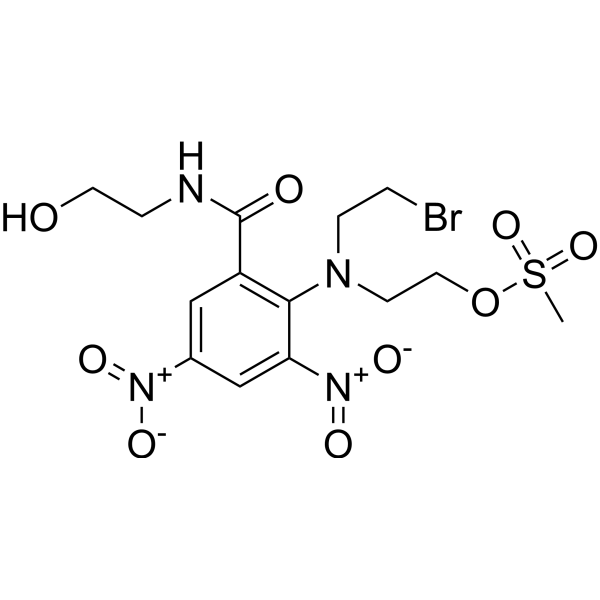
HY-14572
PR-104ADNA Cross-linking Agent -
![N-Succinimidyl 4-[4-maleimidophenyl]butyrate](https://file.medchemexpress.com/product_pic/hy-w011123.gif)
HY-W011123
N-Succinimidyl 4-[4-maleimidophenyl]butyrateCrosslinking Agent
Publications Citing Use of MedChemExpress (MCE) Hepsulfam
More

Biological Activity
Description
IC50 & Target
IC50: 0.91 μg/mL (Tumors)[1]
In Vitro
At a concentration of 1.0 μg/mL, hepsulfam is active in eight of 37 tumors (22%) in the clonogenic assay. Hepsulfam demonstrates a clear in vitro toxicity to human bone marrow cells (CFU-GM) from healthy donors. Evaluation of equitoxic concentrations in vitro reveals a higher activity of hepsulfam, especially in non-small cell lung cancer[1]. Hepsulfam is more toxic to L1210 leukemia cells than is busulfan, its structural homologue . Consistent with the difference in toxicity, hepsulfam induces DNA interstrand cross-links in L1210 mouse leukemia cells, whereas busulfan does not. Hepsulfam is more cytotoxic to two human leukemia cell lines (111-60 and K562) and to two human colon carcinoma cell lines (BE and HT-29) than is busulfan. As in 11210 cells, hepsulfam induces a higher level of DNA interstrand cross-links than busulfan. Hepsulfam is also more cytotoxic to the human leukemia cell lines when the concentrations are reduced 10-fold and the duration of drug exposure is increased to 12 h[2].
MedChemExpress (MCE) has not independently confirmed the accuracy of these methods. They are for reference only. Further protocols information, click here.
In Vivo
MedChemExpress (MCE) has not independently confirmed the accuracy of these methods. They are for reference only.


Chemical Information
-
CAS No. 96892-57-8
-
Appearance Solid
-
Molecular Weight 290.36
-
Formula C7H18N2O6S2
-
Color White to off-white
-
SMILES
O=S(OCCCCCCCOS(=O)(N)=O)(N)=O
-
Synonyms
NCI 329680; ZINC01574758
-
Shipping
Room temperature in continental US; may vary elsewhere.
-
Storage
Powder -20°C 3 years 4°C 2 years In solvent -80°C 6 months -20°C 1 month


Publications (2)
-
Journal Impact Factor
-
Most Recent
-
ACS Environ Au
Machine Learning-Assisted Recognition of Environmental Sulfur-Containing Chemicals in Nontargeted Mass Spectrometry Analysis of Inadequate Mass Resolution. [Abstract]2025 Aug 5;5(6):573-582. PMID: 41277996 -
Anal Chem
Exposome-Scale Investigation of Cl-/Br-Containing Chemicals Using High-Resolution Mass Spectrometry, Multistage Machine Learning, and Cloud Computing. [Abstract]2025 Jun 3;97(21):11099-11109. PMID: 40401576


Solvent & Solubility
In Vitro:
DMSO : 100 mg/mL (344.40 mM; Need ultrasonic; Hygroscopic DMSO has a significant impact on the solubility of product, please use newly opened DMSO)
Please refer to the solubility information to select the appropriate solvent. Once prepared, please aliquot and store the solution to prevent product inactivation from repeated freeze-thaw cycles.
Storage method and period of stock solution: -80°C, 6 months; -20°C, 1 month. When stored at -80°C, please use it within 6 months. When stored at -20°C, please use it within 1 month.
Please refer to the solubility information to select the appropriate solvent. Once prepared, please aliquot and store the solution to prevent product inactivation from repeated freeze-thaw cycles.
Storage method and period of stock solution: -80°C, 6 months; -20°C, 1 month. When stored at -80°C, please use it within 6 months. When stored at -20°C, please use it within 1 month.
Concentration (start) × Volume (start) = Concentration (final) × Volume (final)

Protocols
-
Cell Cytotoxicity Assay
Cytotoxicity assays are usually based on the assessment of cell membrane damage, which can also be indirectly detected by measuring cell viability. Detection methods include MTT assay, CKK-8 assay, LDH assay and ATP assay, etc.


Purity & Documentation
-
Data Sheet (271 KB)
-
SDS (252 KB)
- English - EN (252 KB)
- Français - FR (252 KB)
- Deutsch - DE (252 KB)
- Norwegian - NO (252 KB)
- Español - ES (252 KB)
- Swedish - SV (252 KB)
- Italian - IT (252 KB)
- Korean - KR (252 KB)
- Portuguese - PT (252 KB)
-
Handling Instructions (2659 KB)
References
[1]. Berger DP, et al. Preclinical activity of hepsulfam and busulfan in solid human tumor xenografts and human bone marrow. Anticancer Drugs. 1992 Oct;3(5):531-9. [Content Brief]
[2]. Pacheco DY, et al. Mechanisms of toxicity of hepsulfam in human tumor cell lines. Cancer Res. 1990 Dec 1;50(23):7555-8. [Content Brief]


Complete Stock Solution Preparation Table
Please refer to the solubility information to select the appropriate solvent. Once prepared, please aliquot and store the solution to prevent product inactivation from repeated freeze-thaw cycles.
Storage method and period of stock solution: -80°C, 6 months; -20°C, 1 month. When stored at -80°C, please use it within 6 months. When stored at -20°C, please use it within 1 month.
| Optional Solvent | Concentration Solvent Mass | 1 mg | 5 mg | 10 mg | 25 mg |
|---|---|---|---|---|---|
| DMSO | 1 mM | 3.4440 mL | 17.2200 mL | 34.4400 mL | 86.1000 mL |
| 5 mM | 0.6888 mL | 3.4440 mL | 6.8880 mL | 17.2200 mL | |
| 10 mM | 0.3444 mL | 1.7220 mL | 3.4440 mL | 8.6100 mL | |
| 15 mM | 0.2296 mL | 1.1480 mL | 2.2960 mL | 5.7400 mL | |
| 20 mM | 0.1722 mL | 0.8610 mL | 1.7220 mL | 4.3050 mL | |
| 25 mM | 0.1378 mL | 0.6888 mL | 1.3776 mL | 3.4440 mL | |
| 30 mM | 0.1148 mL | 0.5740 mL | 1.1480 mL | 2.8700 mL | |
| 40 mM | 0.0861 mL | 0.4305 mL | 0.8610 mL | 2.1525 mL | |
| 50 mM | 0.0689 mL | 0.3444 mL | 0.6888 mL | 1.7220 mL | |
| 60 mM | 0.0574 mL | 0.2870 mL | 0.5740 mL | 1.4350 mL | |
| 80 mM | 0.0431 mL | 0.2153 mL | 0.4305 mL | 1.0763 mL | |
| 100 mM | 0.0344 mL | 0.1722 mL | 0.3444 mL | 0.8610 mL |


Hepsulfam Related Classifications
HY-U00095 Related Classifications
 Powered by Bioz