



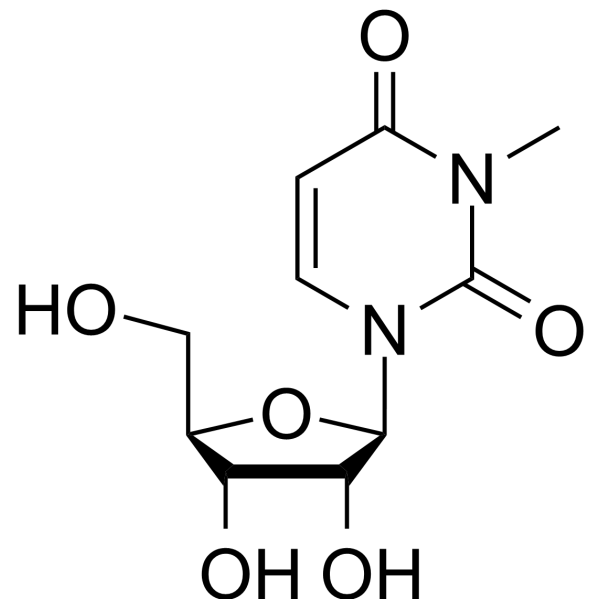
3-Methyluridine
Based on 1 publication(s) in Google Scholar
3-Methyluridine (m3U; N3-Methyluridine) is a methylated nucleotide present in ribosomal RNA (rRNA), mainly targeting specific base sites of RNA molecules such as 23S rRNA. 3-Methyluridine can introduce a methyl group at the N3 position of uracil, affecting the secondary structure stability and base pairing ability of RNA, and regulating ribosome function. For example, it affects ribosomal subunit binding and tRNA interaction. 3-Methyluridine is often used as a key raw material for the synthesis of modified nucleotides, and is used to construct RNA oligonucleotides containing methylation modifications to study the effects of RNA methylation on gene expression and drug resistance.
商品は「研究用試薬」です。人や動物の医療用・臨床診断用・食品用の製品ではありません。
研究用途以外に使用した場合、当社は一切の責任を負いかねます。
- 純度 : 99.88%
- CAS 番号: 2140-69-4
- 分子式: C10H14N2O6
- 分子量:258.23
-
保管条件:
4°C, protect from light
* In solvent : -80°C, 6 months; -20°C, 1 month (protect from light)

To place orders, for customer services and technical support, please contact: MedChemExpress USA
Tel: 609-228-6898 E-mail: [email protected] [email protected]


-
 生物活性
生物活性
-
化学情報
-
溶剤 & 溶解度
- プロトコル
- 純度とドキュメンテーション
- 参考文献
-
 Help & FAQs


-
HY-113136
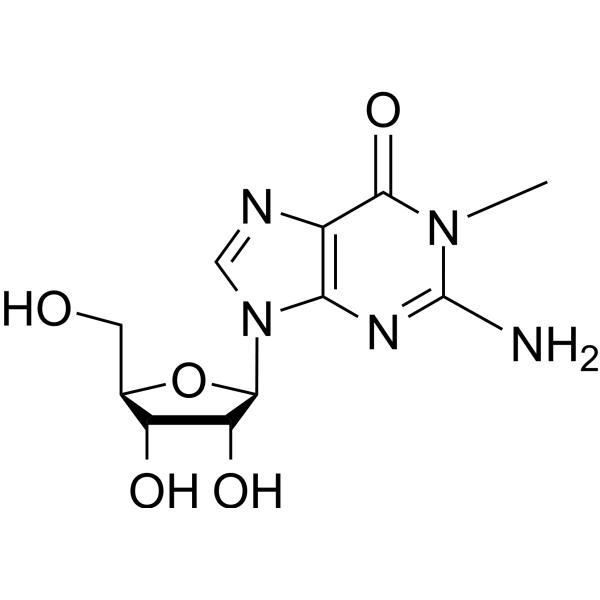
1-MethylguanosineTumour Marker -
HY-122524
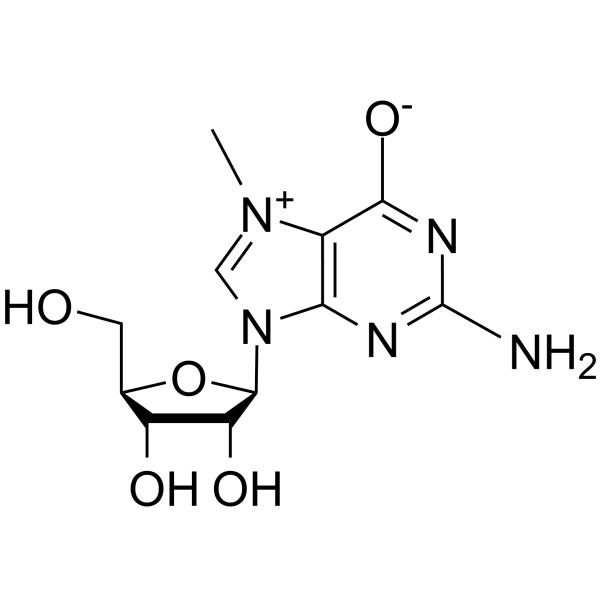
7-MethylguanosineNucleotide Analog -
HY-W009444
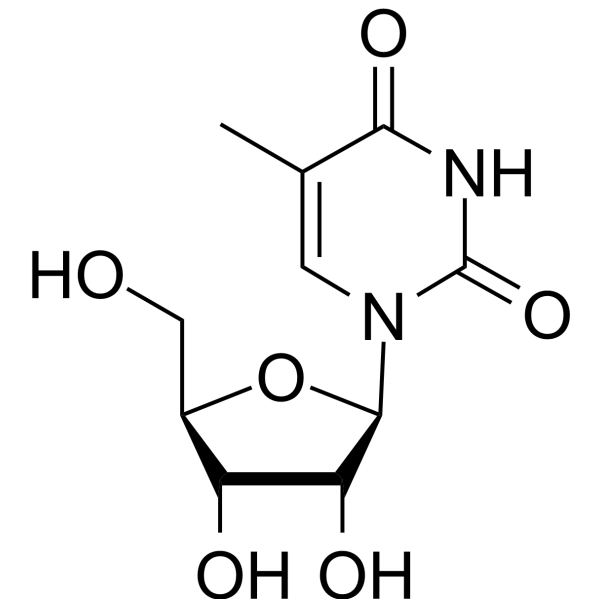
5-MethyluridineRNA nucleoside -
HY-101984
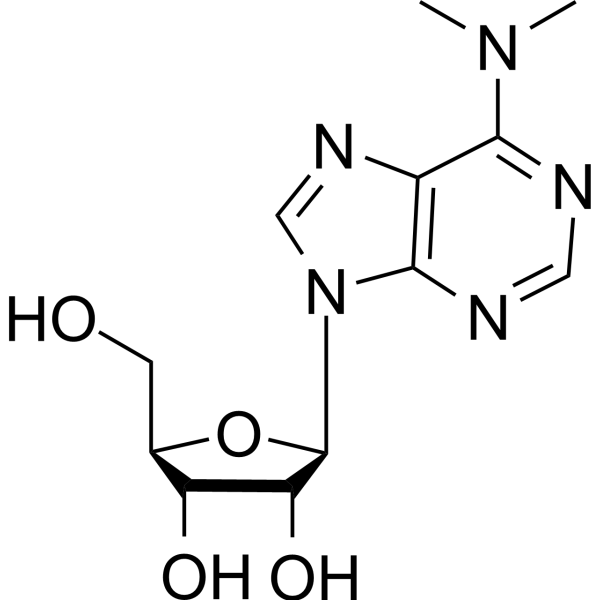
N6,N6-DimethyladenosineModified Ribonucleoside -
HY-W011824
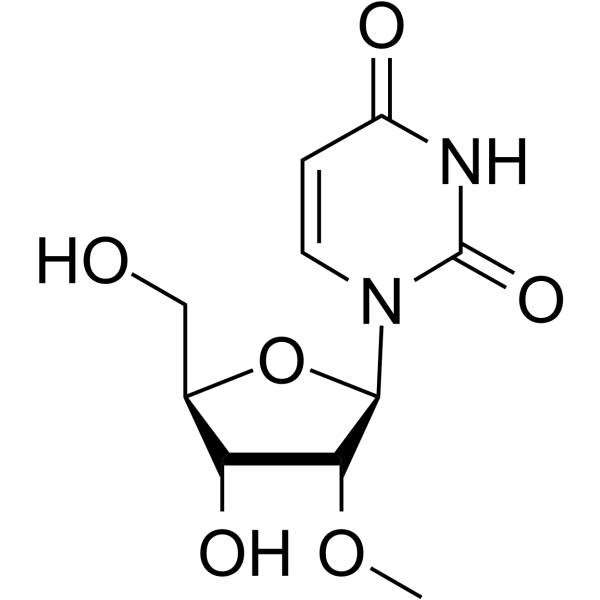
2′-O-MethyluridineModified Nucleoside -
HY-101082
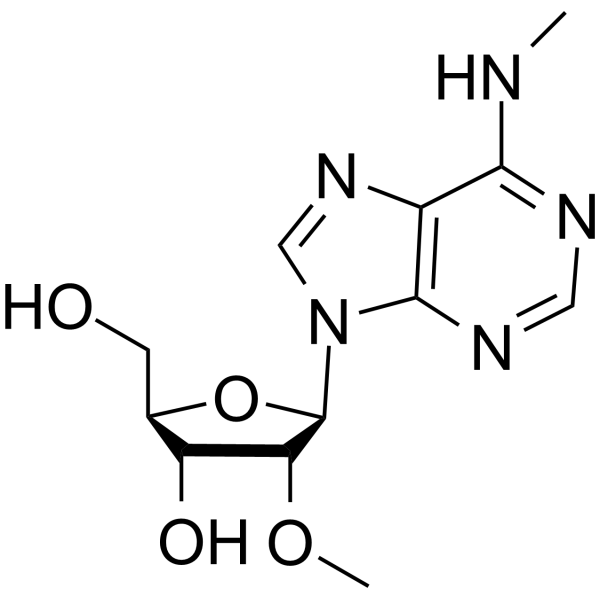
N6,2′-O-DimethyladenosineFTO Substrate -
HY-111645
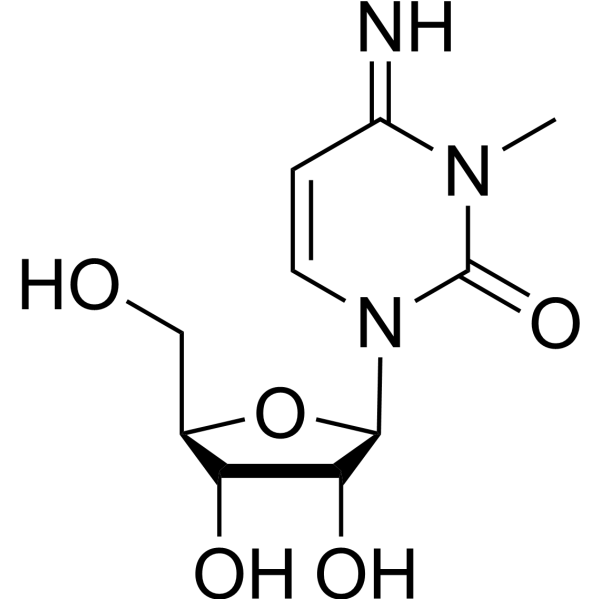
3-MethylcytidineUrinary Nucleoside -
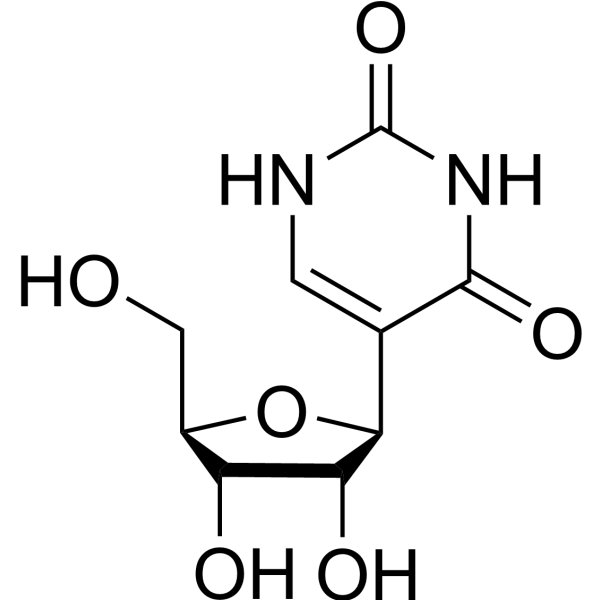
HY-113061
PseudouridineNucleoside -

HY-113061R
Pseudouridine (Standard)Nucleoside -

HY-113138R
3-Methyluridine (Standard)RNA nucleoside
MedChemExpress(MCE)の使用を引用している文献 3-Methyluridine
MoreEndogenous Metabolite アイソフォーム固有の製品をすべて表示
More

生物活性
製品説明
IC50 & Target
|
Human Endogenous Metabolite |
体外実験
1. Single-cell methylation detection experiment:
3-Methyluridine (probe concentration 1 μM; ≥4.5 h) significantly distinguishes wild-type Escherichia coli containing methylated rRNA from mutants lacking KsgA methyltransferase through methylation-sensitive fluorescence in situ hybridization (MR-FISH) technology, showing the inhibitory effect of single methylation sites on probe binding[1].
2. RNA structure and stability analysis experiment:
3-Methyluridine (5-200 μM; thermal melting analysis time 48-72 h) in RNA hairpins containing the 1920-loop region, N3 methylation has a negligible effect on RNA thermodynamic stability and does not change its A-form conformation, which is similar to the effect of unmodified uridine[2].
MedChemExpress (MCE) has not independently confirmed the accuracy of these methods. They are for reference only. Further protocols information, click here.


化学情報
-
CAS 番号 2140-69-4
-
性状 Solid
-
分子量 258.23
-
分子式 C10H14N2O6
-
Color Light yellow to yellow
-
SMILES
O[C@H]1[C@@H](O)[C@H](N(C(N2C)=O)C=CC2=O)O[C@@H]1CO
-
別名
N3-Methyluridine
-
Structure Classification
-
Initial Source
-
輸送条件
Room temperature in continental US; may vary elsewhere.
-
保管条件
4°C, protect from light
* In solvent : -80°C, 6 months; -20°C, 1 month (protect from light)


Publications (1)
-
Journal Impact Factor
-
Most Recent
-
Cell
Adenosine kinase and ADAL coordinate detoxification of modified adenosines to safeguard metabolism. [Abstract]2025 Oct 30;188(22):6151-6169.e24. PMID: 40840445


溶剤 & 溶解度
体外:
DMSO : 160 mg/mL (619.60 mM; Need ultrasonic; Hygroscopic DMSO has a significant impact on the solubility of product, please use newly opened DMSO)
Please refer to the solubility information to select the appropriate solvent. Once prepared, please aliquot and store the solution to prevent product inactivation from repeated freeze-thaw cycles.
Storage method and period of stock solution: -80°C, 6 months; -20°C, 1 month (protect from light). When stored at -80°C, please use it within 6 months. When stored at -20°C, please use it within 1 month.
Please refer to the solubility information to select the appropriate solvent. Once prepared, please aliquot and store the solution to prevent product inactivation from repeated freeze-thaw cycles.
Storage method and period of stock solution: -80°C, 6 months; -20°C, 1 month (protect from light). When stored at -80°C, please use it within 6 months. When stored at -20°C, please use it within 1 month.
濃度 (開始) × 体積 (開始) = 濃度 (終了) × 体積 (終了)
体内:
Select the appropriate dissolution method based on your experimental animal and administration route.
- For the following dissolution methods, please ensure to first prepare a clear stock solution using an In Vitro approach and then sequentially add co-solvents:
- To ensure reliable experimental results, the clarified stock solution can be appropriately stored based on storage conditions. As for the working solution for In Vivo experiments, it is recommended to prepare freshly and use it on the same day.
- The percentages shown for the solvents indicate their volumetric ratio in the final prepared solution. If precipitation or phase separation occurs during preparation, heat and/or sonication can be used to aid dissolution.
Add each solvent one by one: 10% DMSO 40% PEG300 5% Tween-80 45% Saline
Solubility: ≥ 2.67 mg/mL (10.34 mM); Clear solution
This protocol yields a clear solution of ≥ 2.67 mg/mL (saturation unknown).
Taking 1 mL working solution as an example, add 100 μL DMSO stock solution (26.7 mg/mL) to 400 μL PEG300, and mix evenly; then add 50 μL Tween-80 and mix evenly; then add 450 μL Saline to adjust the volume to 1 mL.
Preparation of Saline: Dissolve 0.9 g sodium chloride in ddH₂O and dilute to 100 mL to obtain a clear Saline solution.
Add each solvent one by one: 10% DMSO 90% (20% SBE-β-CD in Saline)
Solubility: ≥ 2.67 mg/mL (10.34 mM); Clear solution
This protocol yields a clear solution of ≥ 2.67 mg/mL (saturation unknown).
Taking 1 mL working solution as an example, add 100 μL DMSO stock solution (26.7 mg/mL) to 900 μL 20% SBE-β-CD in Saline, and mix evenly.
Preparation of 20% SBE-β-CD in Saline (4°C, storage for one week): 2 g SBE-β-CD powder is dissolved in 10 mL Saline, completely dissolve until clear.
In Vivo Dissolution Calculator
Please enter the basic information of animal experiments:
-
-
-
-
Recommended: Prepare an additional quantity of animals to account for potential losses during experiments.
Please enter your animal formula composition:
-
%DMSO +
Recommended: Keep the proportion of DMSO in working solution below 2% if your animal is weak.
-
%+
-
+%Tween-80 + +
-
%Saline +
The co-solvents required include: DMSO, . All of co-solvents are available by MedChemExpress (MCE). , Tween 80. All of co-solvents are available by MedChemExpress (MCE).
Working solution concentration: 0.22 mg/mL
Method for preparing stock solution: mg drug dissolved in μL DMSO. Stock solution concentration: mg/mL. * In solvent : -80°C, 6 months; -20°C, 1 month (protect from light)
1. Take μL DMSO stock solution;
2. Add μL .
μL , mix evenly;
3. Then add μL Tween 80, mix evenly;
4. Then add μL
Please ensure that the stock solution in the first step is dissolved to a clear state, and add co-solvents in sequence. You can use ultrasonic heating (ultrasonic cleaner, recommended frequency 20-40 kHz), vortexing, etc. to assist dissolution.

プロトコル
-
RT-PCR
Reverse transcription technology uses RNA as a template to synthesize DNA. RT-PCR is simple, specific and sensitive, and can be used to detect gene expression levels and expression differences in cells; detect RNA virus content; clone cDNA sequences of specific genes.
-
RNA extraction experimental
By lysing cells, releasing RNA, and removing impurities such as proteins and DNA, high-purity RNA products are finally obtained. The commonly used traditional method is the guanidine isothiocyanate/phenol/chloroform method (Trizol), which is suitable for a variety of animal materials including animal tissues, microorganisms, cultured cells, etc., and most plant materials.
-
Real Time qPCR (Q-PCR)
Real-time quantitative PCR (qPCR) quantifies an amplifiable nucleic-acid target by monitoring fluorescence during PCR cycling rather than measuring product only after amplification. The increase in fluorescence tracks accumulation of PCR product, and the quantification cycle (Cq; historically also Ct/CP) is related to the initial amount of target: samples containing more starting target generally reach the defined fluorescence threshold in fewer cycles.


純度とドキュメンテーション
-
データシート (278 KB)
-
SDS (393 KB)
- English - EN (393 KB)
- Français - FR (393 KB)
- Deutsch - DE (393 KB)
- Norwegian - NO (393 KB)
- Español - ES (393 KB)
- Swedish - SV (393 KB)
- Italian - IT (393 KB)
- Korean - KR (393 KB)
- Portuguese - PT (393 KB)
-
取扱説明書 (2659 KB)
参考文献
[1]. Rohan T Ranasinghe, et al. Detecting RNA base methylations in single cells by in situ hybridization. Nat Commun [Content Brief]
[2]. Desaulniers JP, et al. Solution conformations of two naturally occurring RNA nucleosides: 3-methyluridine and 3-methylpseudouridine. Bioorg Med Chem. 2005 Dec 15;13(24):6777-81. [Content Brief]
[3]. Chui HM, et al. Synthesis of a 3-methyluridine phosphoramidite to investigate the role of methylation in a ribosomal RNA hairpin. Bioorg Med Chem. 2002 Feb;10(2):325-32. [Content Brief]


Complete Stock Solution Preparation Table
Please refer to the solubility information to select the appropriate solvent. Once prepared, please aliquot and store the solution to prevent product inactivation from repeated freeze-thaw cycles.
Storage method and period of stock solution: -80°C, 6 months; -20°C, 1 month (protect from light). When stored at -80°C, please use it within 6 months. When stored at -20°C, please use it within 1 month.
| Optional Solvent | Concentration Solvent Mass | 1 mg | 5 mg | 10 mg | 25 mg |
|---|---|---|---|---|---|
| DMSO | 1 mM | 3.8725 mL | 19.3626 mL | 38.7252 mL | 96.8129 mL |
| 5 mM | 0.7745 mL | 3.8725 mL | 7.7450 mL | 19.3626 mL | |
| 10 mM | 0.3873 mL | 1.9363 mL | 3.8725 mL | 9.6813 mL | |
| 15 mM | 0.2582 mL | 1.2908 mL | 2.5817 mL | 6.4542 mL | |
| 20 mM | 0.1936 mL | 0.9681 mL | 1.9363 mL | 4.8406 mL | |
| 25 mM | 0.1549 mL | 0.7745 mL | 1.5490 mL | 3.8725 mL | |
| 30 mM | 0.1291 mL | 0.6454 mL | 1.2908 mL | 3.2271 mL | |
| 40 mM | 0.0968 mL | 0.4841 mL | 0.9681 mL | 2.4203 mL | |
| 50 mM | 0.0775 mL | 0.3873 mL | 0.7745 mL | 1.9363 mL | |
| 60 mM | 0.0645 mL | 0.3227 mL | 0.6454 mL | 1.6135 mL | |
| 80 mM | 0.0484 mL | 0.2420 mL | 0.4841 mL | 1.2102 mL | |
| 100 mM | 0.0387 mL | 0.1936 mL | 0.3873 mL | 0.9681 mL |


3-Methyluridine 関連分類
HY-113138 関連分類
 Powered by Bioz