



DAP-81
DAP-81 is an inhibitory agent targeting Polo-like kinases (Plks), a class of evolutionarily conserved serine/threonine kinases. DAP-81 dose-dependently increases the number of monopolar spindles in treated cells. High-resolution live-cell microscopy revealed that Plk activity is required for the assembly and maintenance of bipolar mitotic spindles. Plk inhibition destabilizes centromeric microtubules while stabilizing other spindle microtubules, leading to the formation of monopolar spindles. Further testing of compounds based on "privileged scaffolds" such as the DAP scaffold may lead to the discovery of new cell division probes and anti-microtubule agents.
商品は「研究用試薬」です。人や動物の医療用・臨床診断用・食品用の製品ではありません。
研究用途以外に使用した場合、当社は一切の責任を負いかねます。
- CAS 番号: 794466-17-4
- 分子式: C25H20N6O4
- 分子量:468.46
-
保管条件:
Please store the product under the recommended conditions in the Certificate of Analysis.


To place orders, for customer services and technical support, please contact: MedChemExpress USA
Tel: 609-228-6898 E-mail: [email protected] [email protected]


-
 生物活性
生物活性
-
化学情報
- プロトコル
- 純度とドキュメンテーション
- 参考文献
-
 Help & FAQs


-
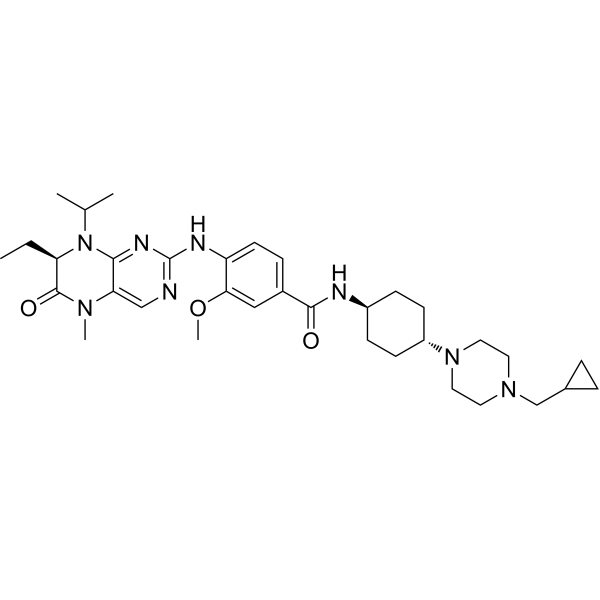
HY-12137
VolasertibPLK1 Inhibitor -
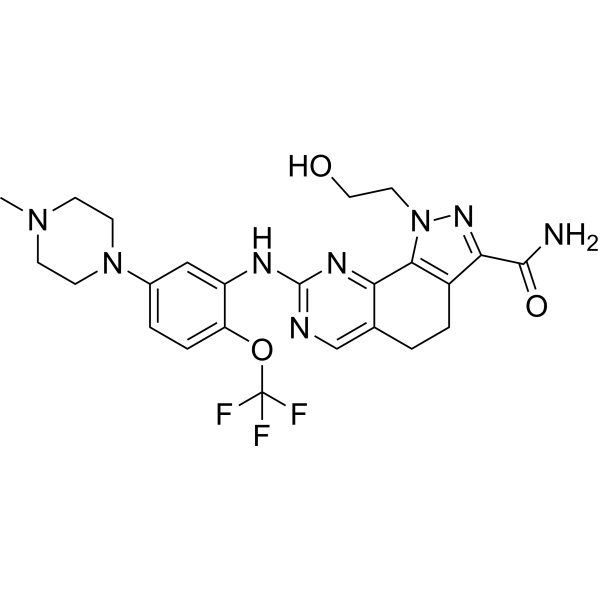
HY-15828
OnvansertibPLK1 Inhibitor -
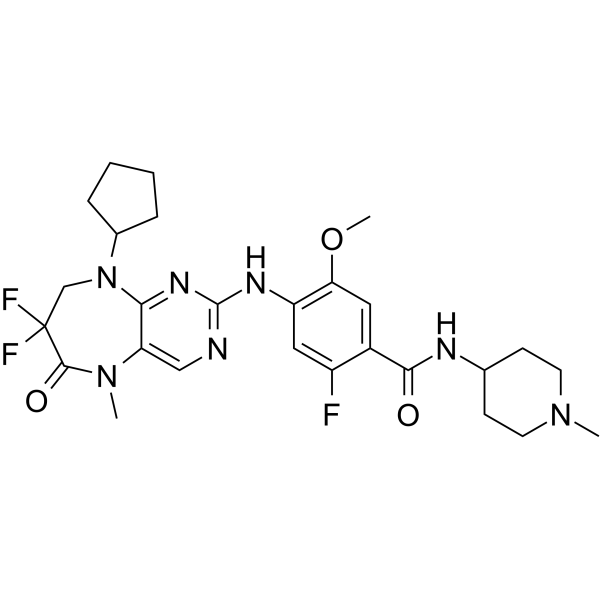
HY-15160
TAK-960PLK1 Inhibitor -
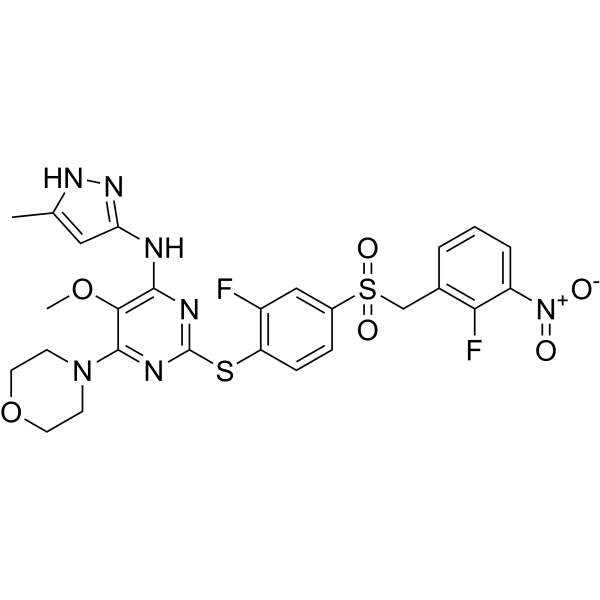
HY-18682
CentrinonePLK4 Inhibitor -
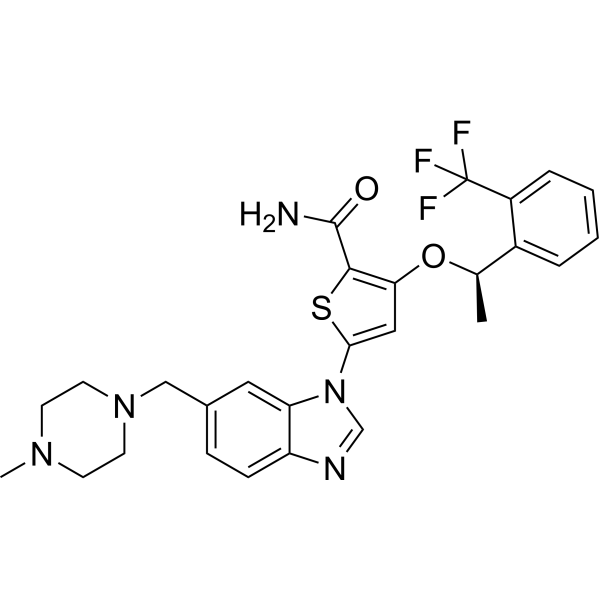
HY-50877
GSK461364PLK1 Inhibitor -
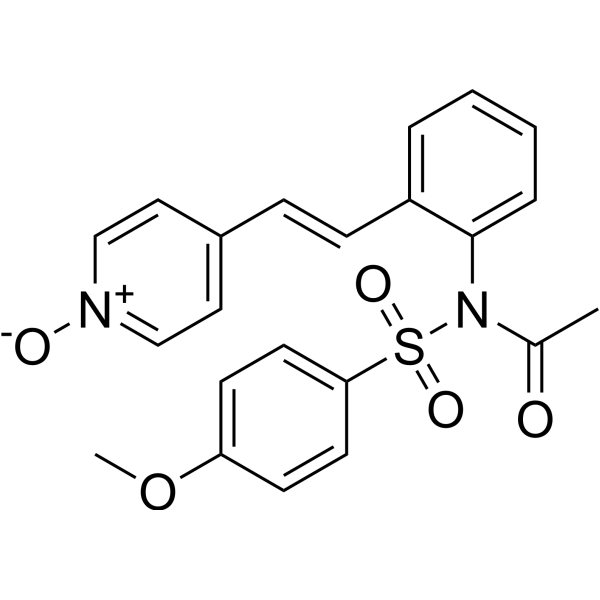
HY-12045
HMN-214PLK1 Inhibitor -
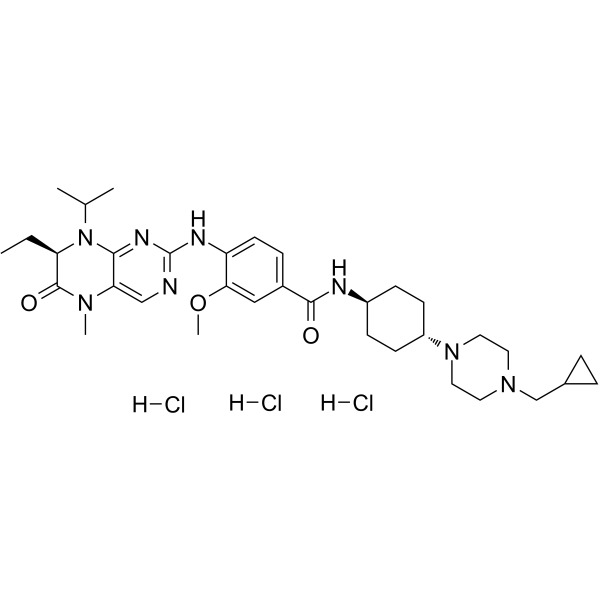
HY-12137A
Volasertib trihydrochloridePLK1 Inhibitor -
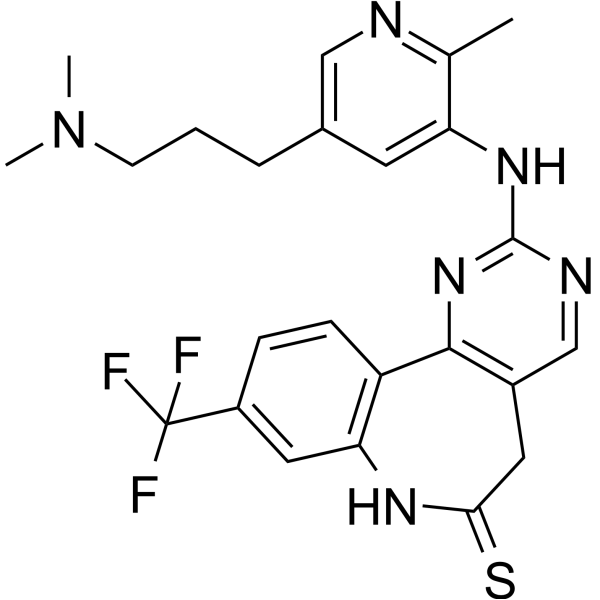
HY-15155
MLN0905PLK1 Inhibitor -
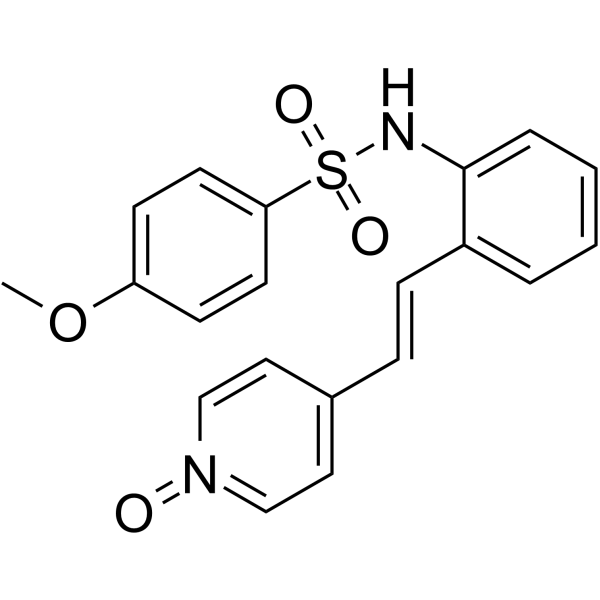
HY-13647
HMN-176PLK Inhibitor -
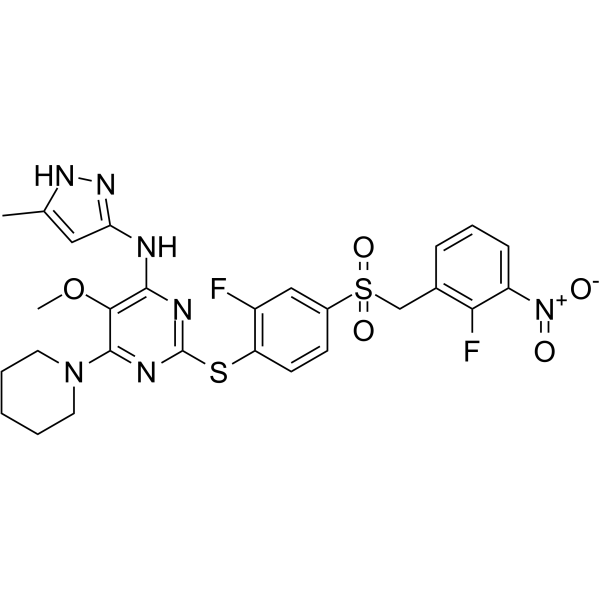
HY-18683
Centrinone-BPLK4 Inhibitor -
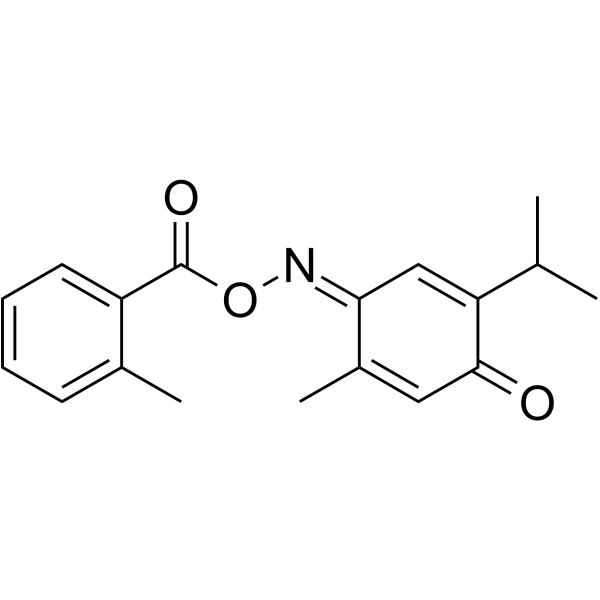
HY-12134
PoloxinPLK Inhibitor -
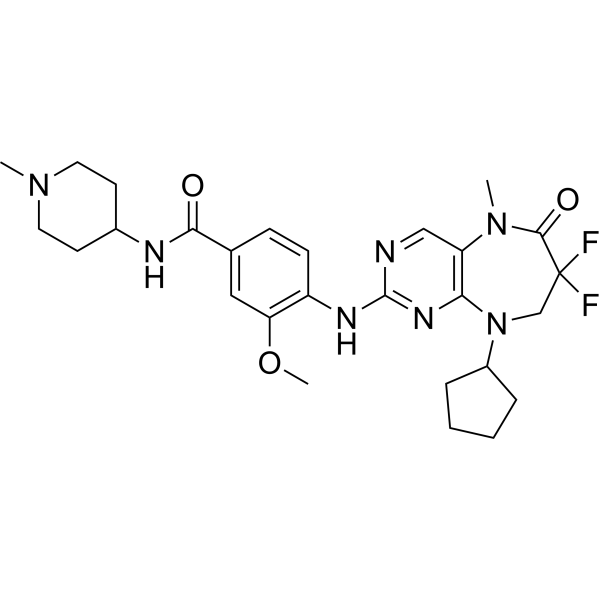
HY-15161
Ro3280PLK1 Inhibitor


生物活性
製品説明
Cellular Effect
|
Cell Line

|
Type | Value | Description | References |
|---|---|---|---|---|
| BSC-1 | EC50 |
5 μM
Compound: 1, DAP-81
|
Antimitotic activity against african green monkey BSC1 cells assessed as induction of monopolar spindles by immunofluorescence microscopy
Antimitotic activity against african green monkey BSC1 cells assessed as induction of monopolar spindles by immunofluorescence microscopy
|
[PMID: 17028580] |


化学情報
-
CAS 番号 794466-17-4
-
分子量 468.46
-
分子式 C25H20N6O4
-
SMILES
CC(NC1=CC=C(C=C1)NC2=NC=C(C(NC3=CC=CC=C3C(C4=CC=CC=C4)=O)=N2)[N+]([O-])=O)=O
-
輸送条件
Room temperature in continental US; may vary elsewhere.
-
保管条件
Please store the product under the recommended conditions in the Certificate of Analysis.

プロトコル
-
CFSE Dye Dilution Proliferation Assay
The CFSE (carboxyfluorescein diacetate succinimidyl ester) dye dilution proliferation assay is based on the covalent labeling of intracellular proteins by a cell-permeant fluorescent dye that becomes fluorescent upon intracellular ester cleavage and then is stably retained within cells. As labeled cells divide, the dye is partitioned equally between daughter cells, resulting in a stepwise halving of fluorescence intensity that can be quantified by flow cytometry to determine the number of cell divisions undergone by each cell population. This fluorescence dilution approach enables quantitative tracking of lymphocyte proliferation at the single-cell level over multiple rounds of division. CFSE-based proliferation analysis has been widely applied to measure antigen-driven lymphocyte expansion in vitro, where discrete fluorescence peaks correspond to successive cell divisions and allow reconstruction of proliferative history within heterogeneous populations.
-
Dye-dilution cell tracking and proliferation staining
Dye-dilution cell tracking assays quantify cell proliferation by covalently labeling intracellular proteins with a stable fluorescent dye that is equally partitioned between daughter cells during mitosis, resulting in stepwise halving of fluorescence intensity with each cell division as measured by flow cytometry histograms. Carboxyfluorescein diacetate succinimidyl ester (CFSE) is a prototypical dye that diffuses into cells, is enzymatically converted into a fluorescent compound, and then covalently binds intracellular amine groups, producing long-lived fluorescence suitable for tracking multiple rounds of division in vitro and in vivo. Successive generations of dividing cells form discrete peaks of decreasing fluorescence intensity, enabling estimation of proliferation history, precursor frequency, and division index within heterogeneous populations. Alternative dyes such as CellTrace Violet (CTV) and far-red membrane dyes (e. g. , PKH26) follow the same dilution principle but differ


純度とドキュメンテーション
参考文献

Calculators
濃度 (開始) × 体積 (開始) = 濃度 (終了) × 体積 (終了)


DAP-81 関連分類
HY-121634 関連分類
 Powered by Bioz