



Ezetimibe ketone

Based on 1 Customer Validation
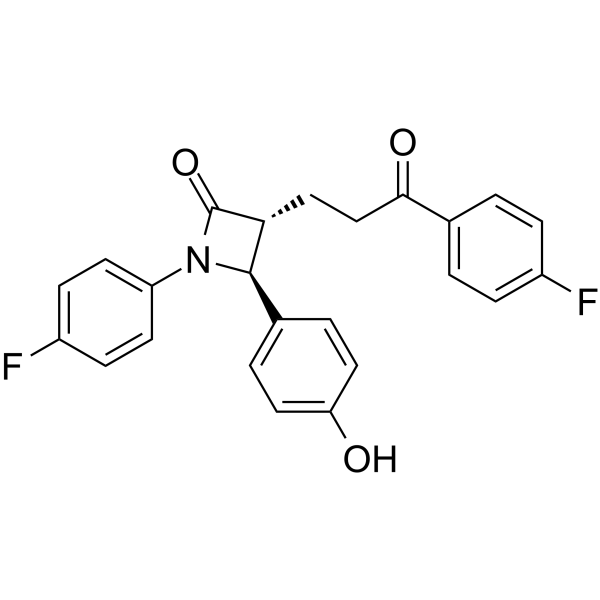
Ezetimibe ketone is an orall active Nrf2 activator and ROS inhibitor. Ezetimibe ketone attenuates H2O2-induced reactive oxygen species production and reduces H2O2-induced apoptosis in renal tubular epithelial cells. Ezetimibe ketone suppresses renal tubular injury and inflammation.
商品は「研究用試薬」です。人や動物の医療用・臨床診断用・食品用の製品ではありません。
研究用途以外に使用した場合、当社は一切の責任を負いかねます。
- 純度 : 99.97%
- CAS 番号: 191330-56-0
- 分子式: C24H19F2NO3
- 分子量:407.41
-
保管条件:Powder -20°C, 3 years , 4°C, 2 years ; In solvent -80°C, 6 months , -20°C, 1 month

To place orders, for customer services and technical support, please contact: MedChemExpress USA
Tel: 609-228-6898 E-mail: [email protected] [email protected]


-
 生物活性
生物活性
-
化学情報
-
溶剤 & 溶解度
- プロトコル
- 純度とドキュメンテーション
- 参考文献
-
 Help & FAQs


-
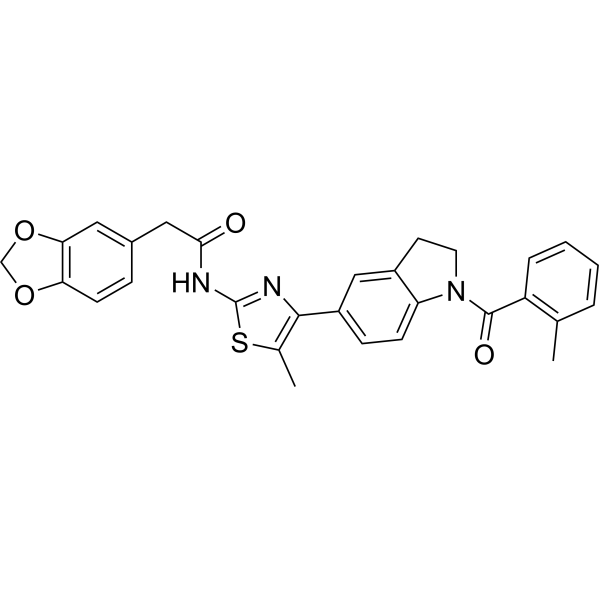
HY-100523
ML385Nrf2 Inhibitor -
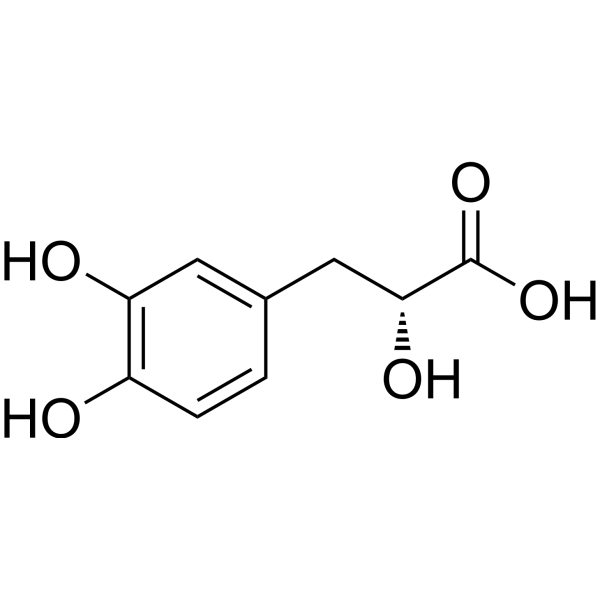
HY-N1913
DanshensuNrf2/HO-1 Activator -
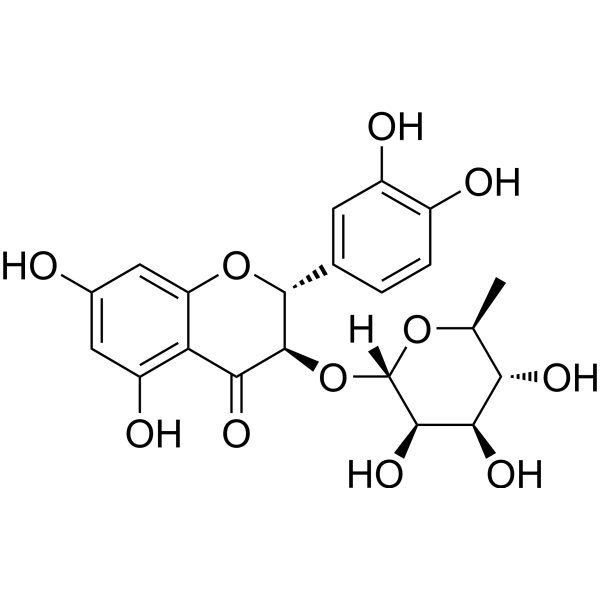
HY-N0509
AstilbinTNF Receptor Inhibitor -
HY-N1902
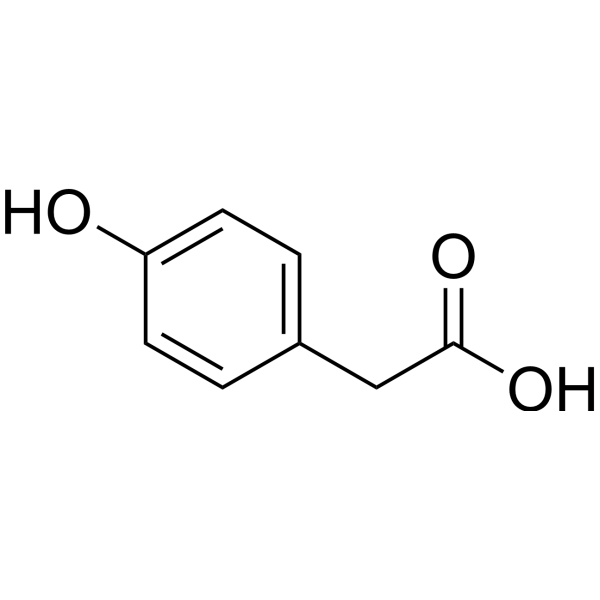
4-Hydroxyphenylacetic acidEndogenous Metabolite -
HY-120912
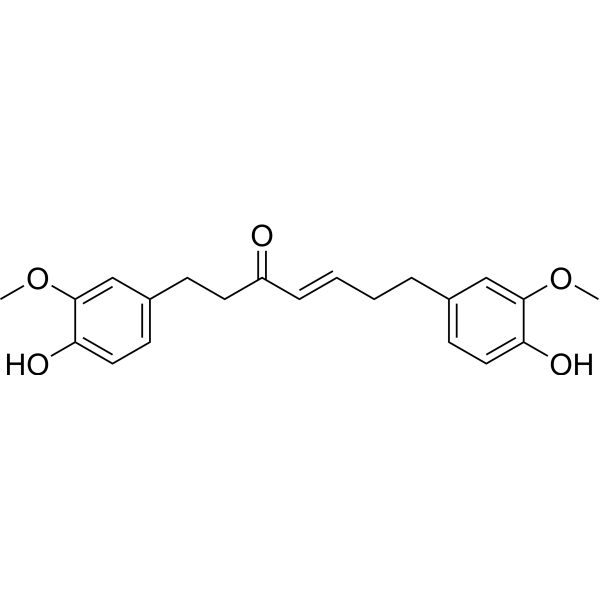
Gingerenone ANrf2-Gpx4 Activator -
HY-110258
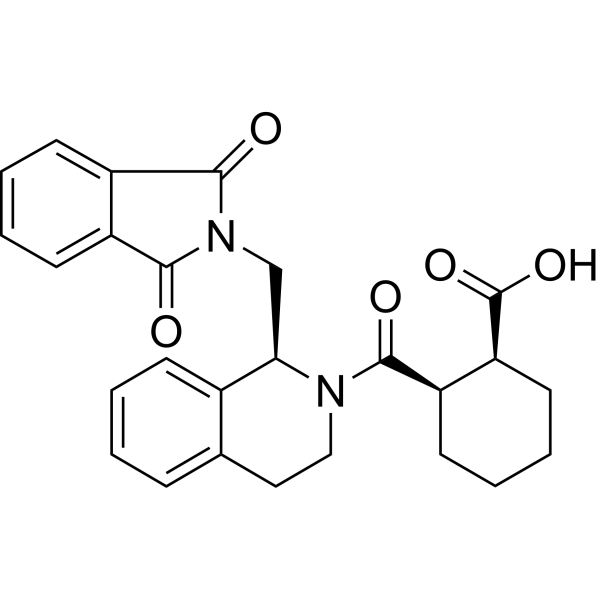
ML334NRF2 Activator -
HY-N0826
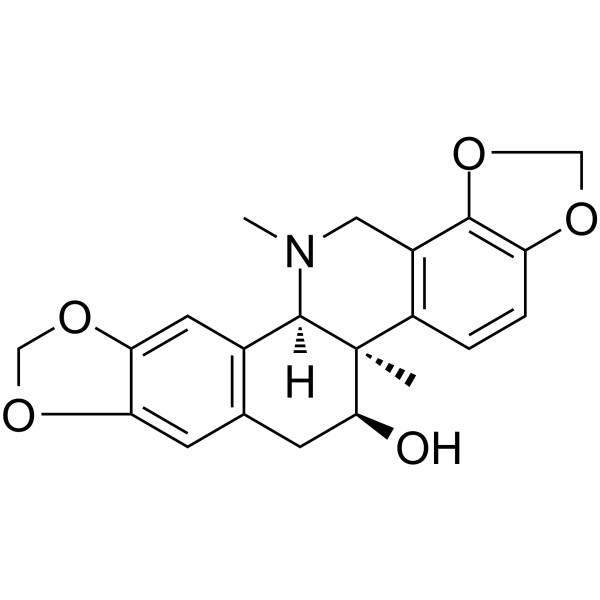
CorynolineAChE Inhibitor -
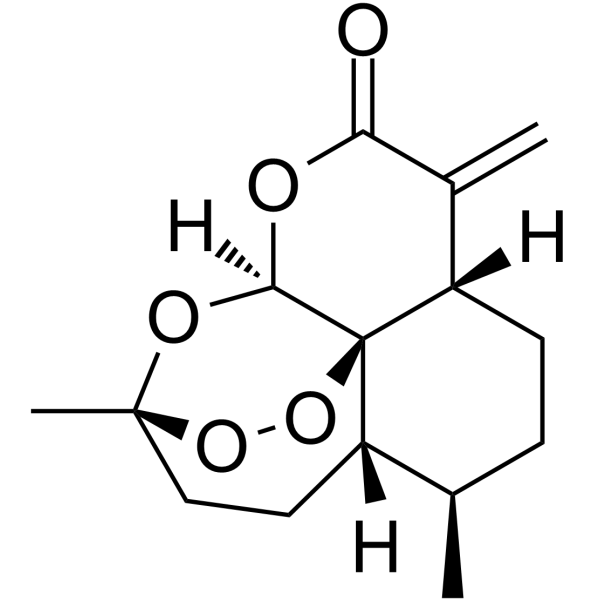
HY-122550
ArtemisiteneNrf2 Activator -
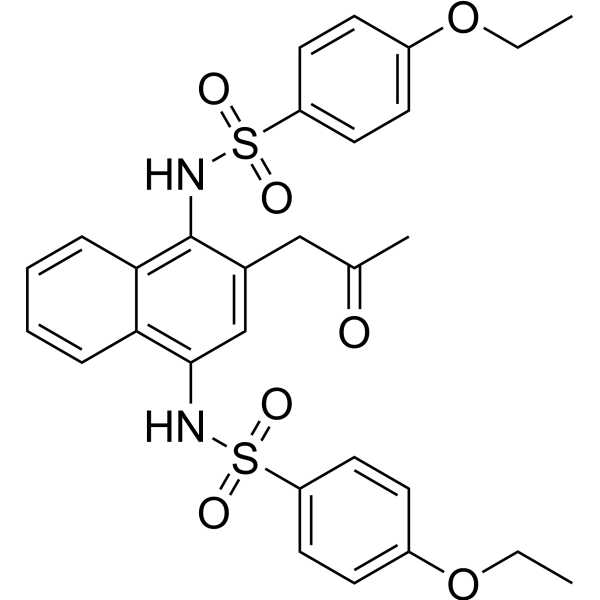
HY-111126
K67Keap1/S349-p-p62 Interaction Inhibitor -
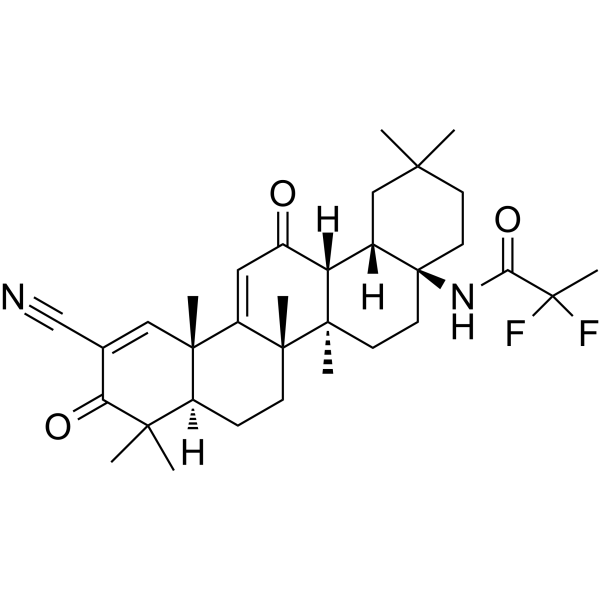
HY-12212
OmaveloxoloneNrf2 Activator -

HY-133114R
Ezetimibe ketone (Standard)Analytical Standard -
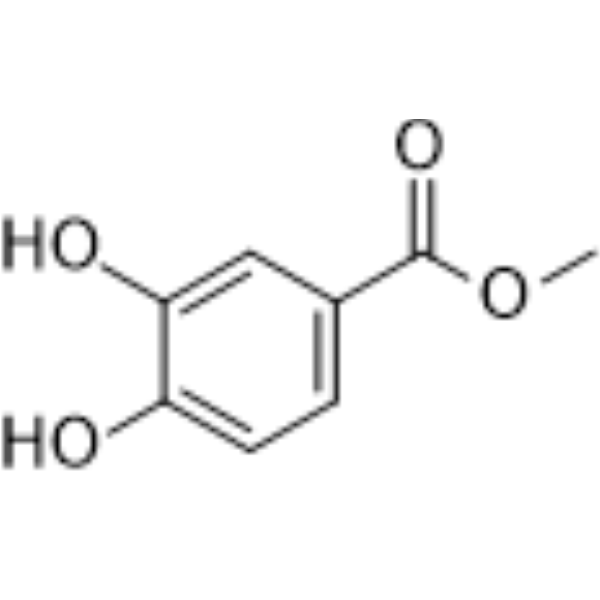
HY-Z0548
Methyl 3,4-dihydroxybenzoate


生物活性
製品説明
IC50 & Target
NPC1L1, Nrf2[1]
体外実験
Ezetimibe ketone (5-50 μM; 24 h) does not induce cytotoxicity in rat renal tubular epithelial NRK-52E cells[1].
Ezetimibe ketone (5-50 μM; 24 h, concurrent with H2O2) reduces H2O2-induced apoptosis in rat renal tubular epithelial NRK-52E cells; ezetimibe ketone (25 μM; administered before, during, or after H2O2 exposure) reduces H2O2-induced apoptosis and ROS production, with maximal inhibition when added simultaneously with H2O2[1].
Ezetimibe ketone (5-50 μM; 24 h, concurrent with H2O2) preserves mitochondrial membrane potential in H2O2-treated rat renal tubular epithelial NRK-52E cells; ezetimibe ketone (25 μM; administered before, during, or after H2O2 exposure) preserves ΔΨm, with maximal preservation when added simultaneously with H2O2[1].
Ezetimibe ketone (5-50 μM; 24 h, concurrent with H2O2) inhibits H2O2-induced Caspase-3/7 activation in rat renal tubular epithelial NRK-52E cells; ezetimibe ketone (25 μM; administered before, during, or after H2O2 exposure) inhibits Caspase-3/7 activation, with maximal inhibition when added simultaneously with H2O2[1].
Ezetimibe ketone (25 μM; administered before, during, or after H2O2 exposure for 24 h) activates the Nrf2/HO-1 signaling pathway by increasing nuclear and cytoplasmic Nrf2 and HO-1 protein levels in H2O2-treated rat renal tubular epithelial NRK-52E cells[1].
The protective effects of ezetimibe ketone (25 μM; concurrent with 300 μM H2O2 for 24 h, with simultaneous 10 μM SnPP or 5 μM ML385 co-treatment) against H2O2-induced injury in rat renal tubular epithelial NRK-52E cells are mediated via the Nrf2/HO-1 signaling pathway, as co-treatment with Nrf2 or HO-1 inhibitors reverses ezetimibe ketone-induced pathway activation and protective effects[1].
MedChemExpress (MCE) has not independently confirmed the accuracy of these methods. They are for reference only.
-
Cell Line:rat renal tubular epithelial NRK-52E cells
-
Concentration:5-50 μM
-
Incubation Time:24 h
-
Result:Showed no cytotoxic effects on NRK-52E cells.
-
Cell Line:rat renal tubular epithelial NRK-52E cells (treated with 300 μM H₂O₂)
-
Concentration:5-50 μM (concurrent with H₂O₂); 25 μM (6 h before, concurrent with, or 6 h after H₂O₂)
-
Incubation Time:24 h (H₂O₂ treatment duration)
-
Result:Significantly reduced H₂O₂-induced apoptosis in NRK-52E cells. Reduced H₂O₂-induced apoptosis and reactive oxygen species production, with the strongest effect observed when added simultaneously with H₂O₂.
-
Cell Line:rat renal tubular epithelial NRK-52E cells (treated with 300 μM H₂O₂)
-
Concentration:25 μM
-
Incubation Time:6 h before, concurrent with, or 6 h after H₂O₂ exposure; 24 h (H₂O₂ treatment duration)
-
Result:Significantly increased nuclear Nrf2 and HO-1 protein levels compared to H₂O₂ treatment alone. Increased cytoplasmic Nrf2 and HO-1 protein levels relative to H₂O₂ treatment alone.
体内実験
MedChemExpress (MCE) has not independently confirmed the accuracy of these methods. They are for reference only.
-
Animal Model:Sprague-Dawley (male, 7 weeks old, 300 ± 10 g, renal ischemia-reperfusion injury model)[1]
-
Dosage:10 mg/kg
-
Administration:p.o.; daily; 4 consecutive days (last dose 30 min before surgery)
-
Result:Significantly reduced serum blood urea nitrogen (BUN) and serum creatinine (SCr) levels compared to untreated RIRI rats.\nSignificantly decreased renal tissue mRNA expression levels of proinflammatory cytokines TNF-α and IL-1β.\nReduced renal tubular injury including tubular necrosis, cast formation, and tubular dilation.\nDecreased renal cell apoptosis (measured via TUNEL staining).\nReduced renal immune cell infiltration (measured via F4/80 immunohistochemistry).\nSignificantly increased nuclear and total protein expression levels of Nrf2 and HO-1 in kidney tissues.


化学情報
-
CAS 番号 191330-56-0
-
性状 Solid
-
分子量 407.41
-
分子式 C24H19F2NO3
-
Color White to off-white
-
SMILES
O=C1N(C2=CC=C(F)C=C2)[C@H](C3=CC=C(O)C=C3)[C@H]1CCC(C4=CC=C(F)C=C4)=O
-
別名
EZM-K
-
輸送条件
Room temperature in continental US; may vary elsewhere.
-
保管条件
Powder -20°C 3 years 4°C 2 years In solvent -80°C 6 months -20°C 1 month


溶剤 & 溶解度
体外:
DMSO : 100 mg/mL (245.45 mM; Need ultrasonic; Hygroscopic DMSO has a significant impact on the solubility of product, please use newly opened DMSO)
Please refer to the solubility information to select the appropriate solvent. Once prepared, please aliquot and store the solution to prevent product inactivation from repeated freeze-thaw cycles.
Storage method and period of stock solution: -80°C, 6 months; -20°C, 1 month. When stored at -80°C, please use it within 6 months. When stored at -20°C, please use it within 1 month.
Please refer to the solubility information to select the appropriate solvent. Once prepared, please aliquot and store the solution to prevent product inactivation from repeated freeze-thaw cycles.
Storage method and period of stock solution: -80°C, 6 months; -20°C, 1 month. When stored at -80°C, please use it within 6 months. When stored at -20°C, please use it within 1 month.
濃度 (開始) × 体積 (開始) = 濃度 (終了) × 体積 (終了)
体内:
Select the appropriate dissolution method based on your experimental animal and administration route.
- For the following dissolution methods, please ensure to first prepare a clear stock solution using an In Vitro approach and then sequentially add co-solvents:
- To ensure reliable experimental results, the clarified stock solution can be appropriately stored based on storage conditions. As for the working solution for In Vivo experiments, it is recommended to prepare freshly and use it on the same day.
- The percentages shown for the solvents indicate their volumetric ratio in the final prepared solution. If precipitation or phase separation occurs during preparation, heat and/or sonication can be used to aid dissolution.
Add each solvent one by one: 10% DMSO 40% PEG300 5% Tween-80 45% Saline
Solubility: ≥ 1.25 mg/mL (3.07 mM); Clear solution
This protocol yields a clear solution of ≥ 1.25 mg/mL (saturation unknown).
Taking 1 mL working solution as an example, add 100 μL DMSO stock solution (12.5 mg/mL) to 400 μL PEG300, and mix evenly; then add 50 μL Tween-80 and mix evenly; then add 450 μL Saline to adjust the volume to 1 mL.
Preparation of Saline: Dissolve 0.9 g sodium chloride in ddH₂O and dilute to 100 mL to obtain a clear Saline solution.
Add each solvent one by one: 10% DMSO 90% (20% SBE-β-CD in Saline)
Solubility: 1.25 mg/mL (3.07 mM); Suspended solution; Need ultrasonic
This protocol yields a suspended solution of 1.25 mg/mL. Suspended solution can be used for oral and intraperitoneal injection.
Taking 1 mL working solution as an example, add 100 μL DMSO stock solution (12.5 mg/mL) to 900 μL 20% SBE-β-CD in Saline, and mix evenly.
Preparation of 20% SBE-β-CD in Saline (4°C, storage for one week): 2 g SBE-β-CD powder is dissolved in 10 mL Saline, completely dissolve until clear.
In Vivo Dissolution Calculator
Please enter the basic information of animal experiments:
-
-
-
-
Recommended: Prepare an additional quantity of animals to account for potential losses during experiments.
Please enter your animal formula composition:
-
%DMSO +
Recommended: Keep the proportion of DMSO in working solution below 2% if your animal is weak.
-
%+
-
+%Tween-80 + +
-
%Saline +
The co-solvents required include: DMSO, . All of co-solvents are available by MedChemExpress (MCE). , Tween 80. All of co-solvents are available by MedChemExpress (MCE).
Working solution concentration: 0.22 mg/mL
Method for preparing stock solution: mg drug dissolved in μL DMSO. Stock solution concentration: mg/mL.
1. Take μL DMSO stock solution;
2. Add μL .
μL , mix evenly;
3. Then add μL Tween 80, mix evenly;
4. Then add μL
Please ensure that the stock solution in the first step is dissolved to a clear state, and add co-solvents in sequence. You can use ultrasonic heating (ultrasonic cleaner, recommended frequency 20-40 kHz), vortexing, etc. to assist dissolution.


純度とドキュメンテーション
-
データシート (280 KB)
-
SDS (761 KB)
- English - EN (761 KB)
- Français - FR (761 KB)
- Deutsch - DE (761 KB)
- Norwegian - NO (761 KB)
- Español - ES (761 KB)
- Swedish - SV (761 KB)
- Italian - IT (761 KB)
- Korean - KR (761 KB)
- Portuguese - PT (761 KB)
-
取扱説明書 (2659 KB)
参考文献


Complete Stock Solution Preparation Table
Please refer to the solubility information to select the appropriate solvent. Once prepared, please aliquot and store the solution to prevent product inactivation from repeated freeze-thaw cycles.
Storage method and period of stock solution: -80°C, 6 months; -20°C, 1 month. When stored at -80°C, please use it within 6 months. When stored at -20°C, please use it within 1 month.
| Optional Solvent | Concentration Solvent Mass | 1 mg | 5 mg | 10 mg | 25 mg |
|---|---|---|---|---|---|
| DMSO | 1 mM | 2.4545 mL | 12.2726 mL | 24.5453 mL | 61.3632 mL |
| 5 mM | 0.4909 mL | 2.4545 mL | 4.9091 mL | 12.2726 mL | |
| 10 mM | 0.2455 mL | 1.2273 mL | 2.4545 mL | 6.1363 mL | |
| 15 mM | 0.1636 mL | 0.8182 mL | 1.6364 mL | 4.0909 mL | |
| 20 mM | 0.1227 mL | 0.6136 mL | 1.2273 mL | 3.0682 mL | |
| 25 mM | 0.0982 mL | 0.4909 mL | 0.9818 mL | 2.4545 mL | |
| 30 mM | 0.0818 mL | 0.4091 mL | 0.8182 mL | 2.0454 mL | |
| 40 mM | 0.0614 mL | 0.3068 mL | 0.6136 mL | 1.5341 mL | |
| 50 mM | 0.0491 mL | 0.2455 mL | 0.4909 mL | 1.2273 mL | |
| 60 mM | 0.0409 mL | 0.2045 mL | 0.4091 mL | 1.0227 mL | |
| 80 mM | 0.0307 mL | 0.1534 mL | 0.3068 mL | 0.7670 mL | |
| 100 mM | 0.0245 mL | 0.1227 mL | 0.2455 mL | 0.6136 mL |


Ezetimibe ketone 関連分類
HY-133114 関連分類
 Powered by Bioz