



LFS-1107
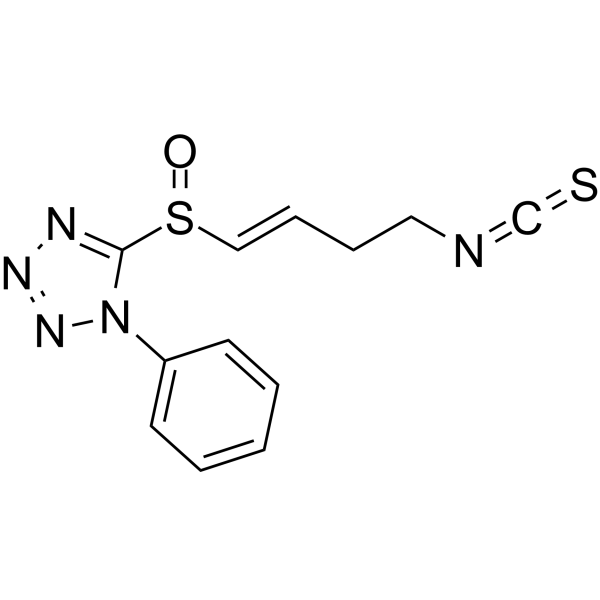
LFS-1107 is a reversible CRM1 inhibitor (Kd: 12.5 pM). LFS-1107 can selectively eliminate extranodal natural killer/T cell lymphoma (ENKTL) cells and can be used for cancer research.
商品は「研究用試薬」です。人や動物の医療用・臨床診断用・食品用の製品ではありません。
研究用途以外に使用した場合、当社は一切の責任を負いかねます。
- CAS 番号: 1799330-91-8
- 分子式: C12H11N5OS2
- 分子量:305.38
-
保管条件:
Please store the product under the recommended conditions in the Certificate of Analysis.

To place orders, for customer services and technical support, please contact: MedChemExpress USA
Tel: 609-228-6898 E-mail: [email protected] [email protected]


-
 生物活性
生物活性
-
化学情報
- プロトコル
- 純度とドキュメンテーション
- 参考文献
-
 Help & FAQs




生物活性
製品説明
IC50 & Target
|
COX-2 |
体外実験
LFS-1107 (4-9 μM, 72 h) can selectively eliminate ENKTL cells while sparing normal human PBMC with good safety profile in PBMC cell lines[1].
LFS-1107 (0.15-500 μM, 24 h) barely exhibits any effects in human platelets[1].
LFS-1107 (50-200 nM, 3 h) can lead to nuclear accumulation IκBα in 293T cells[1].
MedChemExpress (MCE) has not independently confirmed the accuracy of these methods. They are for reference only. Further protocols information, click here.
-
Cell Line:SNK6, HANK-1
-
Concentration:0-800 nM
-
Incubation Time:72 h
-
Result:Achieved IC50 value of 26 nM in SNK6 cell line and 36 nM in HANK-1 cell line.
-
Cell Line:SNK6
-
Concentration:62.5 nM, 125 nM, 250 nM, 500 nM, 1000 nM
-
Incubation Time:3 h
-
Result:Suppressed the expression of CRM1 in a dose-dependent manner. Downregulated the expression of proinflammatory and proliferative proteins p65, COX-2, c-Myc, and Survivin in a dose dependent manner.
-
Cell Line:293T cells
-
Concentration:50 nM, 100 nM, 200 nM
-
Incubation Time:3 h
-
Result:Could lead to nuclear accumulation of IκBα in a dose dependent manner.
体内実験
MedChemExpress (MCE) has not independently confirmed the accuracy of these methods. They are for reference only.
-
Animal Model:SNK6 cell xenograft mouse model[1]
-
Dosage:10 mg/kg
-
Administration:Intraperitoneal injection (i.p.), once a week
-
Result:Extended mouse survival and Eliminated tumor cells.


化学情報
-
CAS 番号 1799330-91-8
-
分子量 305.38
-
分子式 C12H11N5OS2
-
SMILES
O=S(C1=NN=NN1C2=CC=CC=C2)/C=C/CCN=C=S
-
輸送条件
Room temperature in continental US; may vary elsewhere.
-
保管条件
Please store the product under the recommended conditions in the Certificate of Analysis.

プロトコル
-
Research Protocol for Cancer Immunology
Cancer immunology studies how the immune system recognizes, suppresses, edits, or fails to eliminate malignant cells through tumor antigen release, antigen presentation, T-cell priming, immune trafficking, tumor-cell killing, and feedback inhibition in the tumor microenvironment. The cancer-immunity cycle links tumor antigenicity, dendritic-cell priming, CD8+ T-cell infiltration, cytotoxic function, and immune-checkpoint regulation to tumor rejection or immune escape. Immune-checkpoint pathways such as PD-1/PD-L1 and CTLA-4 suppress antitumor T-cell activity and can be therapeutically blocked, but many tumors remain resistant because of poor antigen presentation, weak T-cell infiltration, suppressive myeloid cells, regulatory T cells, and tumor-intrinsic immune-exclusion programs. Unresolved questions include which immune-cell states predict response, how tumor-intrinsic pathways exclude immune cells, how myeloid suppression limits checkpoint blockade, and which combination strategies


純度とドキュメンテーション
参考文献

Calculators
濃度 (開始) × 体積 (開始) = 濃度 (終了) × 体積 (終了)


LFS-1107 関連分類
HY-157136 関連分類
 Powered by Bioz