



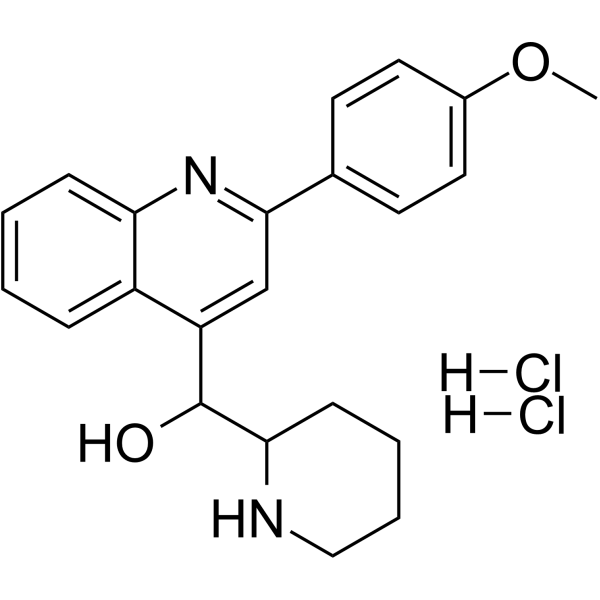
NSC23925

Based on 1 Customer Validation
NSC23925 is a novel, selective and effective P-glycoprotein (Pgp) inhibitor.
연구목적의 판매만을 진행합니다. 환자를 대상으로 한 판매는 하지 않습니다.
- Purity : 99.90%
- CAS No.: 858474-14-3
- 화학식: C22H26Cl2N2O2
- 분자량:421.36
-
보관:
4°C, sealed storage, away from moisture
* In solvent : -80°C, 6 months; -20°C, 1 month (sealed storage, away from moisture)

To place orders, for customer services and technical support, please contact: MedChemExpress USA
Tel: 609-228-6898 E-mail: [email protected] [email protected]


-
 Biological Activity
-
Chemical Information
-
용액&용해도
- 순도&문서
- References
-
 Help & FAQs


-
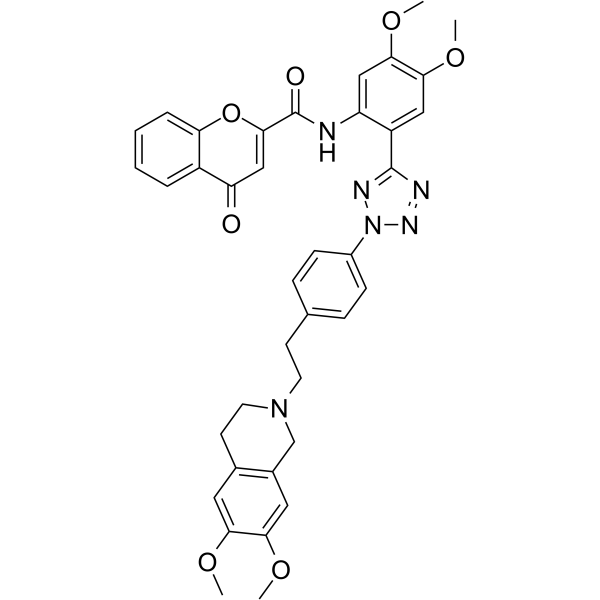
HY-13646
EncequidarP-glycoprotein Inhibitor -
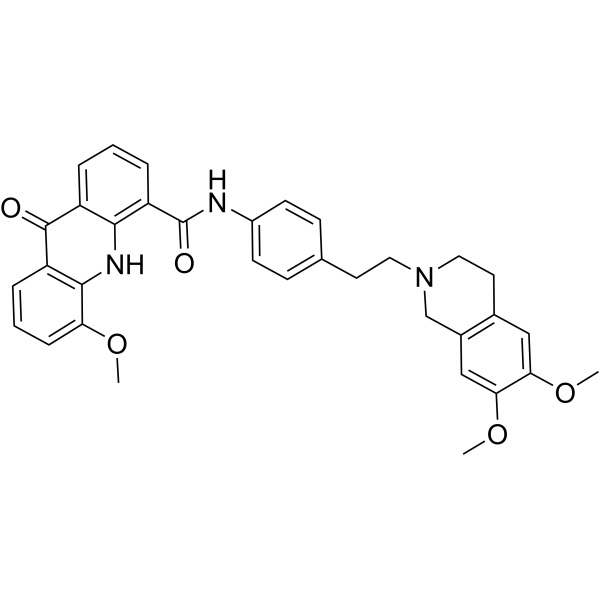
HY-50879
ElacridarP-gp And BCRP Dual-Inhibitor -
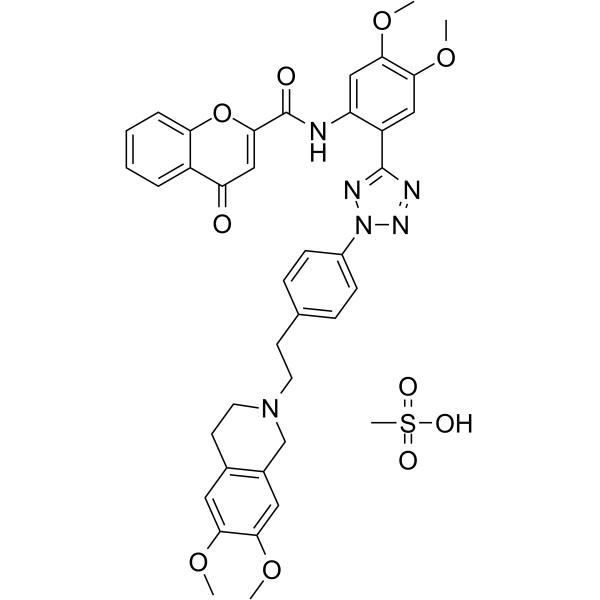
HY-13646A
Encequidar mesylateP-gp Inhibitor -
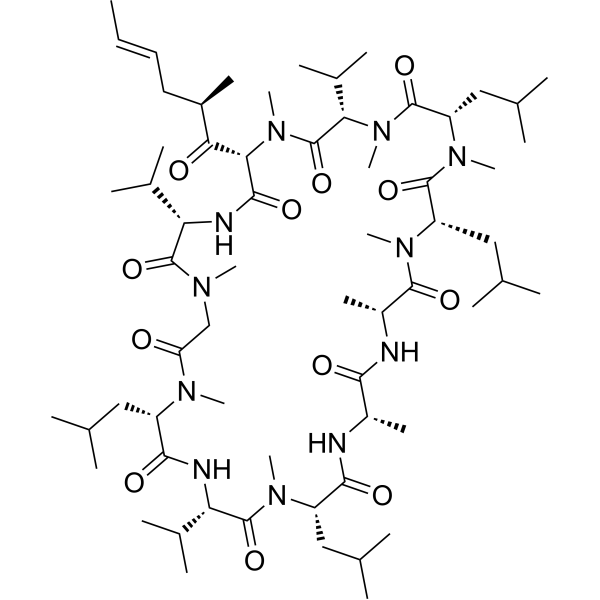
HY-17384
ValspodarP-glycoprotein Inhibitor -
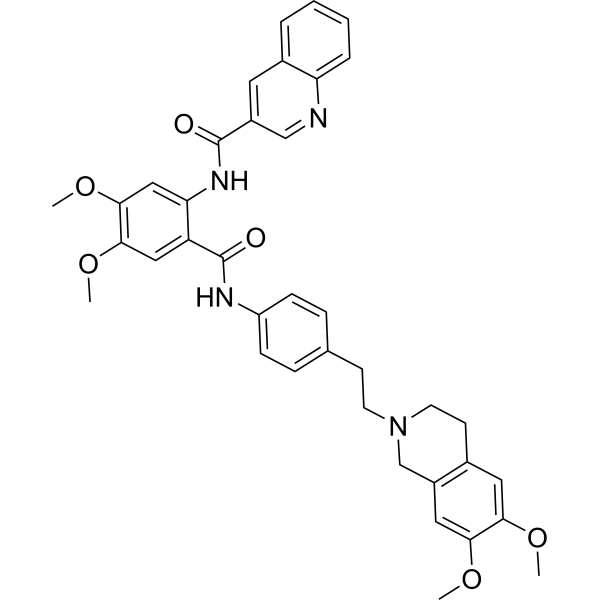
HY-10550
TariquidarP-gp Inhibitor -

HY-50879R
Elacridar (Standard)P-gp And BCRP Dual-Inhibitor -
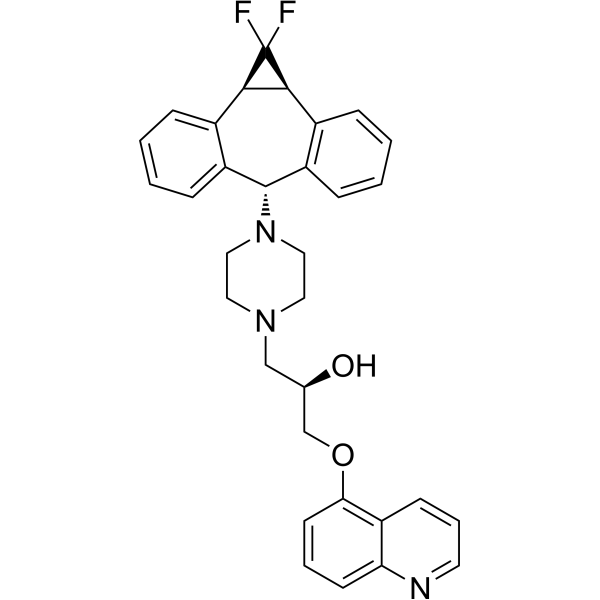
HY-15255
ZosuquidarP-gp Inhibitor -
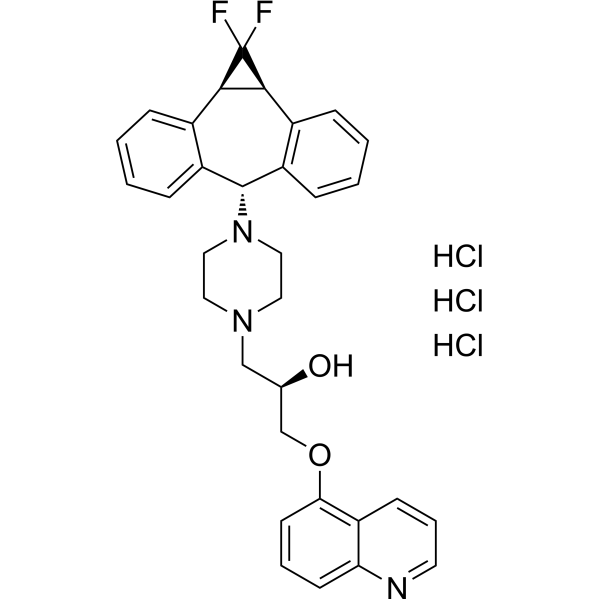
HY-50671
Zosuquidar trihydrochlorideP-gp Inhibitor -
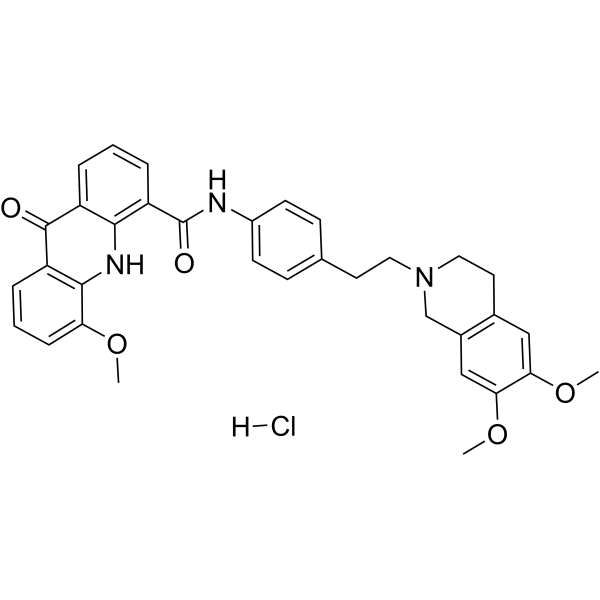
HY-50880
Elacridar hydrochlorideP-gp And BCRP Dual-Inhibitor -
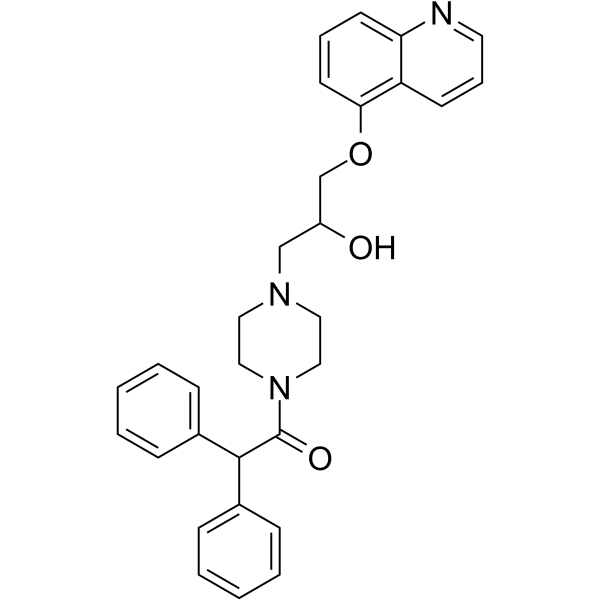
HY-17013
DofequidarP-glycoprotein Inhibitor -
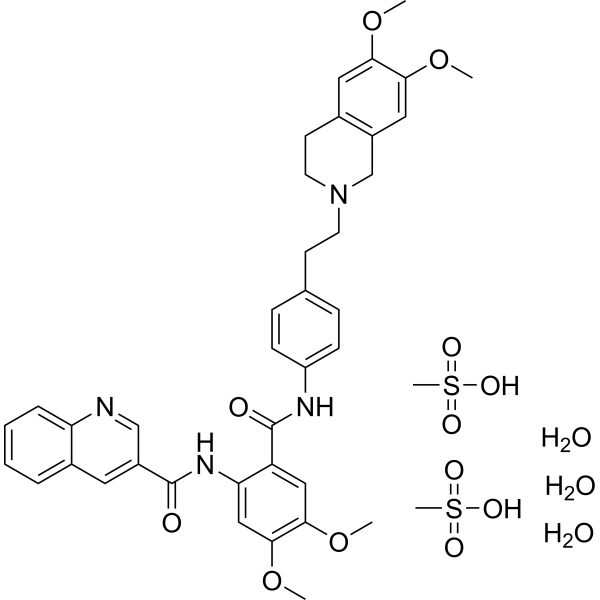
HY-10550A
Tariquidar methanesulfonate, hydrateP-gp Inhibitor -
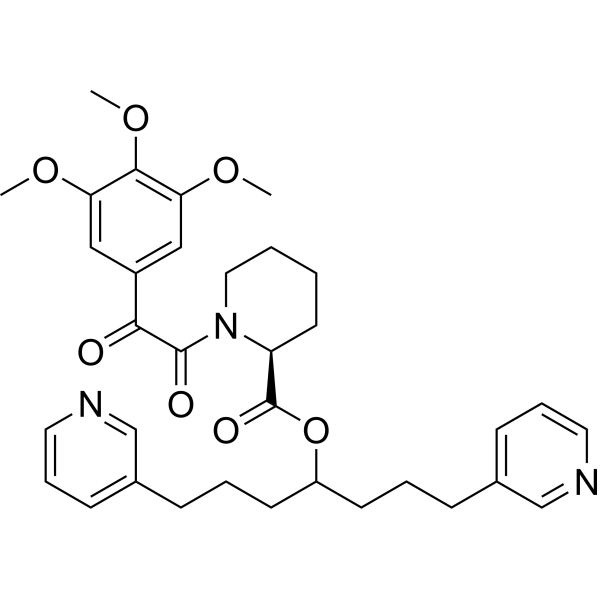
HY-13574A
BiricodarP-glycoprotein Modulator


Biological Activity
제품 설명
IC50 & Target
P-glycoprotein[1]
In Vitro
NSC23925 is a novel, selective and effective P-glycoprotein (Pgp) inhibitor. SKOV-3 cells with long-term exposure of 1 μM NSC23925 show stable growth in culture medium. NSC23925 specifically inhibits Pgp overexpression to prevent the emergence of paclitaxel resistance during paclitaxel treatment[1]. NSC23925 reverses chemoresistance in a wide variety of tumor types where Multidrug resistance 1 (MDR1) is highly expressed. Maximal reversal of MDR is typically seen in NSC23925 doses between 0.5 and 1 µM. The IC50 for NSC23925 is 8 µM in SKOV-3/SKOV-3TR and 25 µM in OVCAR8/OVCAR8TR cell lines, whereas the mean concentration of NSC23925 required for maximal reversal of resistance in SKOV-3TR or OVCAR8TR to cytotoxic drugs is 0.5 µM to 1 µM[2].
MedChemExpress (MCE) has not independently confirmed the accuracy of these methods. They are for reference only.
In Vivo
MedChemExpress (MCE) has not independently confirmed the accuracy of these methods. They are for reference only.


Chemical Information
-
CAS No. 858474-14-3
-
Appearance Solid
-
분자량 421.36
-
화학식 C22H26Cl2N2O2
-
Color Light yellow to yellow
-
SMILES
OC(C1NCCCC1)C2=CC(C3=CC=C(OC)C=C3)=NC4=CC=CC=C24.[H]Cl.[H]Cl
-
선적
Room temperature in continental US; may vary elsewhere.
-
보관
4°C, sealed storage, away from moisture
* In solvent : -80°C, 6 months; -20°C, 1 month (sealed storage, away from moisture)


용액&용해도
In Vitro:
DMSO : 14.29 mg/mL (33.91 mM; ultrasonic and warming and heat to 80°C; Hygroscopic DMSO has a significant impact on the solubility of product, please use newly opened DMSO)
H2O : 4 mg/mL (9.49 mM; ultrasonic and warming and heat to 80°C)
Please refer to the solubility information to select the appropriate solvent. Once prepared, please aliquot and store the solution to prevent product inactivation from repeated freeze-thaw cycles.
Storage method and period of stock solution: -80°C, 6 months; -20°C, 1 month (sealed storage, away from moisture). When stored at -80°C, please use it within 6 months. When stored at -20°C, please use it within 1 month.
* Note: If you choose water as the stock solution, please dilute it to the working solution, then filter and sterilize it with a 0.22 μm filter before use.
Please refer to the solubility information to select the appropriate solvent. Once prepared, please aliquot and store the solution to prevent product inactivation from repeated freeze-thaw cycles.
Storage method and period of stock solution: -80°C, 6 months; -20°C, 1 month (sealed storage, away from moisture). When stored at -80°C, please use it within 6 months. When stored at -20°C, please use it within 1 month.
* Note: If you choose water as the stock solution, please dilute it to the working solution, then filter and sterilize it with a 0.22 μm filter before use.
Concentration (start) × Volume (start) = Concentration (final) × Volume (final)
In Vivo:
Select the appropriate dissolution method based on your experimental animal and administration route.
- For the following dissolution methods, please ensure to first prepare a clear stock solution using an In Vitro approach and then sequentially add co-solvents:
- To ensure reliable experimental results, the clarified stock solution can be appropriately stored based on storage conditions. As for the working solution for In Vivo experiments, it is recommended to prepare freshly and use it on the same day.
- The percentages shown for the solvents indicate their volumetric ratio in the final prepared solution. If precipitation or phase separation occurs during preparation, heat and/or sonication can be used to aid dissolution.
Add each solvent one by one: 10% DMSO 40% PEG300 5% Tween-80 45% Saline
Solubility: ≥ 1.43 mg/mL (3.39 mM); Clear solution
This protocol yields a clear solution of ≥ 1.43 mg/mL (saturation unknown).
Taking 1 mL working solution as an example, add 100 μL DMSO stock solution (14.3 mg/mL) to 400 μL PEG300, and mix evenly; then add 50 μL Tween-80 and mix evenly; then add 450 μL Saline to adjust the volume to 1 mL.
Preparation of Saline: Dissolve 0.9 g sodium chloride in ddH₂O and dilute to 100 mL to obtain a clear Saline solution.
Add each solvent one by one: 10% DMSO 90% (20% SBE-β-CD in Saline)
Solubility: ≥ 1.43 mg/mL (3.39 mM); Clear solution
This protocol yields a clear solution of ≥ 1.43 mg/mL (saturation unknown).
Taking 1 mL working solution as an example, add 100 μL DMSO stock solution (14.3 mg/mL) to 900 μL 20% SBE-β-CD in Saline, and mix evenly.
Preparation of 20% SBE-β-CD in Saline (4°C, storage for one week): 2 g SBE-β-CD powder is dissolved in 10 mL Saline, completely dissolve until clear.
In Vivo Dissolution Calculator
Please enter the basic information of animal experiments:
-
-
-
-
Recommended: Prepare an additional quantity of animals to account for potential losses during experiments.
Please enter your animal formula composition:
-
%DMSO +
Recommended: Keep the proportion of DMSO in working solution below 2% if your animal is weak.
-
%+
-
+%Tween-80 + +
-
%Saline +
The co-solvents required include: DMSO, . All of co-solvents are available by MedChemExpress (MCE). , Tween 80. All of co-solvents are available by MedChemExpress (MCE).
Working solution concentration: 0.22 mg/mL
Method for preparing stock solution: mg drug dissolved in μL DMSO. Stock solution concentration: mg/mL. * In solvent : -80°C, 6 months; -20°C, 1 month (sealed storage, away from moisture)
1. Take μL DMSO stock solution;
2. Add μL .
μL , mix evenly;
3. Then add μL Tween 80, mix evenly;
4. Then add μL
Please ensure that the stock solution in the first step is dissolved to a clear state, and add co-solvents in sequence. You can use ultrasonic heating (ultrasonic cleaner, recommended frequency 20-40 kHz), vortexing, etc. to assist dissolution.


순도&문서
-
Data Sheet (280 KB)
-
SDS (480 KB)
- English - EN (480 KB)
- Français - FR (480 KB)
- Deutsch - DE (480 KB)
- Norwegian - NO (480 KB)
- Español - ES (480 KB)
- Swedish - SV (480 KB)
- Italian - IT (480 KB)
- Korean - KR (480 KB)
- Portuguese - PT (480 KB)
-
Handling Instructions (2659 KB)
References
[1]. Yang X, et al. Nsc23925 prevents the development of paclitaxel resistance by inhibiting the introduction of P-glycoprotein and enhancing apoptosis. Int J Cancer. 2015 Oct 15;137(8):2029-39. [Content Brief]
[2]. Duan Z, et al. NSC23925, identified in a high-throughput cell-based screen, reverses multidrug resistance. PLoS One. 2009 Oct 12;4(10):e7415. [Content Brief]


Complete Stock Solution Preparation Table
Please refer to the solubility information to select the appropriate solvent. Once prepared, please aliquot and store the solution to prevent product inactivation from repeated freeze-thaw cycles.
Storage method and period of stock solution: -80°C, 6 months; -20°C, 1 month (sealed storage, away from moisture). When stored at -80°C, please use it within 6 months. When stored at -20°C, please use it within 1 month.
| Optional Solvent | Concentration Solvent Mass | 1 mg | 5 mg | 10 mg | 25 mg |
|---|---|---|---|---|---|
| H2O / DMSO | 1 mM | 2.3733 mL | 11.8663 mL | 23.7327 mL | 59.3317 mL |
| 5 mM | 0.4747 mL | 2.3733 mL | 4.7465 mL | 11.8663 mL | |
| DMSO | 10 mM | 0.2373 mL | 1.1866 mL | 2.3733 mL | 5.9332 mL |
| 15 mM | 0.1582 mL | 0.7911 mL | 1.5822 mL | 3.9554 mL | |
| 20 mM | 0.1187 mL | 0.5933 mL | 1.1866 mL | 2.9666 mL | |
| 25 mM | 0.0949 mL | 0.4747 mL | 0.9493 mL | 2.3733 mL | |
| 30 mM | 0.0791 mL | 0.3955 mL | 0.7911 mL | 1.9777 mL |
* Note: If you choose water as the stock solution, please dilute it to the working solution, then filter and sterilize it with a 0.22 μm filter before use.


NSC23925 Related Classifications
HY-19626 Related Classifications
 Powered by Bioz