



Ketodarolutamide
Based on 1 publication(s) in Google Scholar
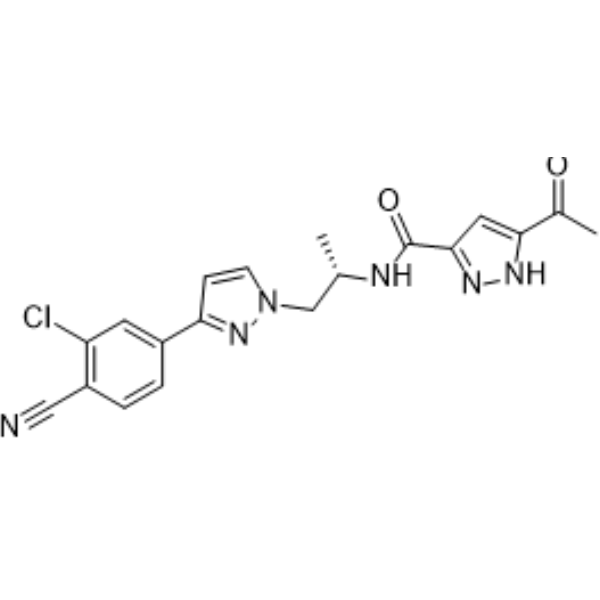
Ketodarolutamide (ORM-15341) is a potent, high-affinity nonsteroidal competitive full antagonist of androgen receptor (AR). Ketodarolutamide displays a Ki value of 8 nM for rat wild-type AR and an IC50 value of 38 nM in AR-HEK293 cells. Ketodarolutamide inhibits testosterone-induced nuclear translocation of the AR and antagonizes both overexpressed and mutant ARs. Ketodarolutamide specifically suppresses the proliferation of AR-dependent prostate cancer cells and exhibits antitumor activity in models of castration-resistant prostate cancer (CRPC) . Ketodarolutamide is suitable for the mechanistic and therapeutic research of prostate cancer.
연구목적의 판매만을 진행합니다. 환자를 대상으로 한 판매는 하지 않습니다.
- Purity : 98.72%
- CAS No.: 1297537-33-7
- 화학식: C19H17ClN6O2
- 분자량:396.83
-
보관:Powder -20°C, 3 years , 4°C, 2 years ; In solvent -80°C, 2 years , -20°C, 1 year

To place orders, for customer services and technical support, please contact: MedChemExpress USA
Tel: 609-228-6898 E-mail: [email protected] [email protected]


-
 Biological Activity
-
Chemical Information
-
용액&용해도
- Protocol
- 순도&문서
- References
-
 Help & FAQs


-
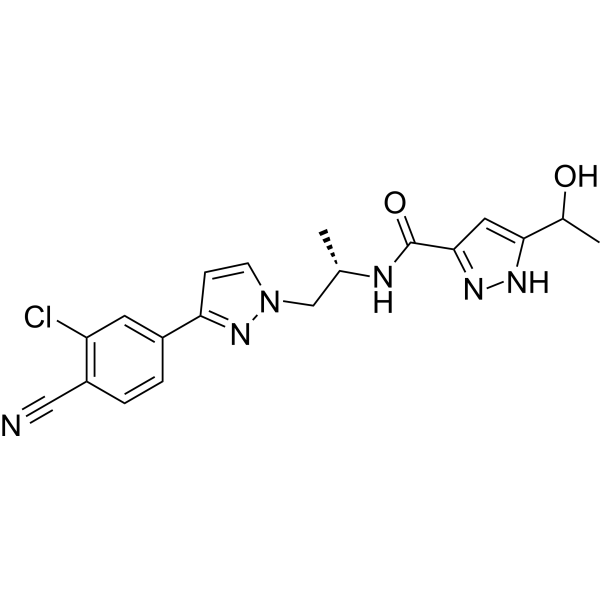
HY-16985
DarolutamideAndrogen Receptor Antagonist -
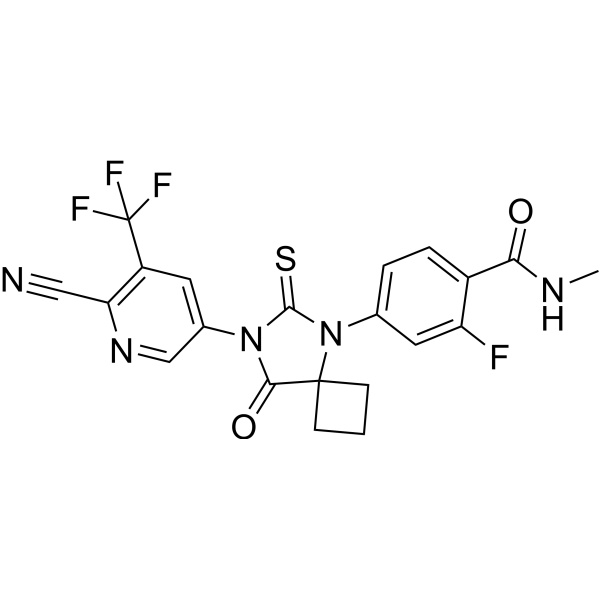
HY-16060
ApalutamideAR Antagonist -
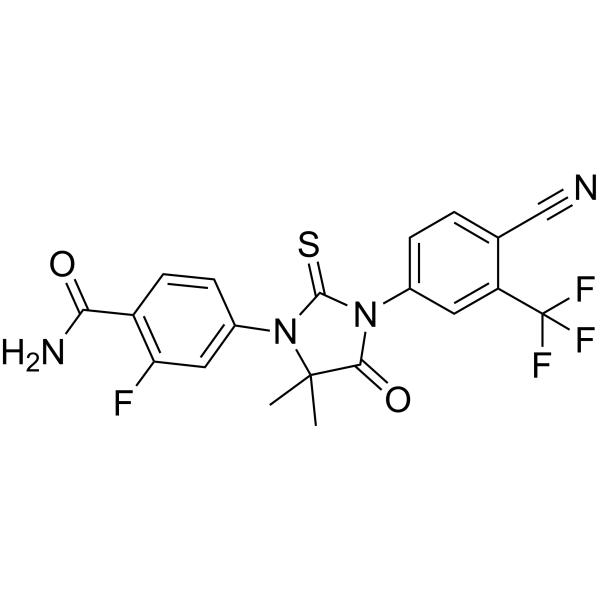
HY-70002A
N-Desmethyl enzalutamideActive Metabolite of Enzalutamide -
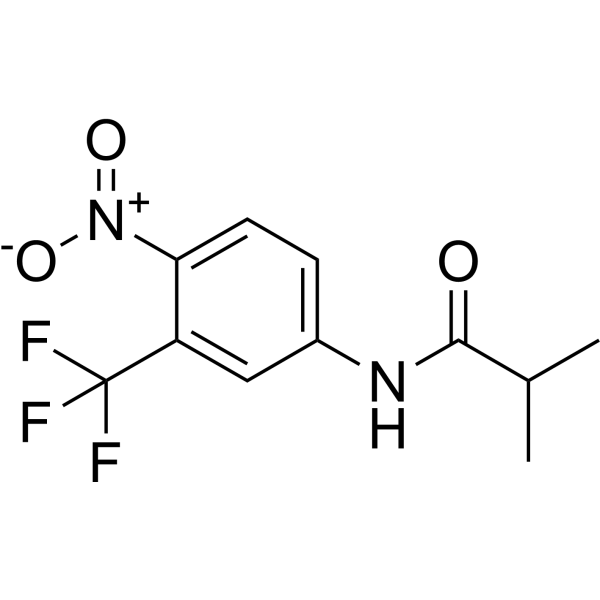
HY-B0022
FlutamideAntiandrogen Agent -
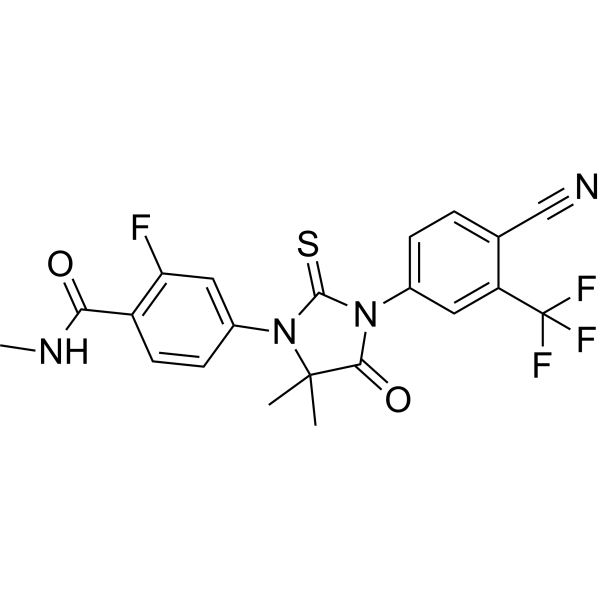
HY-70002
EnzalutamideAndrogen Receptor Antagonist -
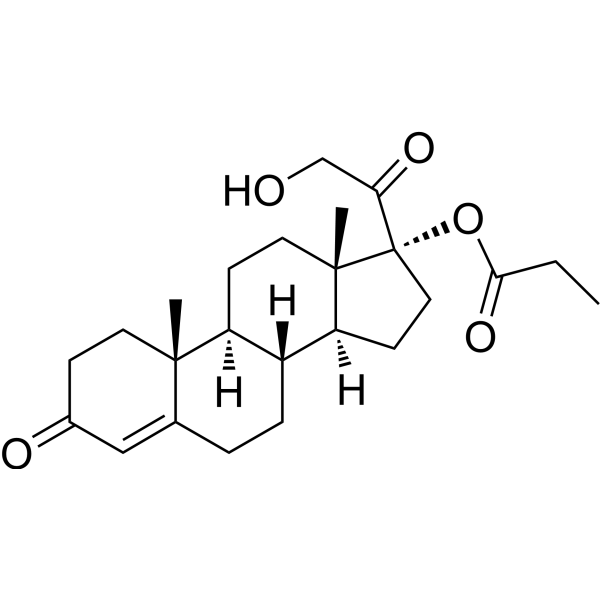
HY-13331
ClascoteroneAndrogen Receptor Inhibitor -
HY-10561
RU 58841Androgen Receptor Antagonist -
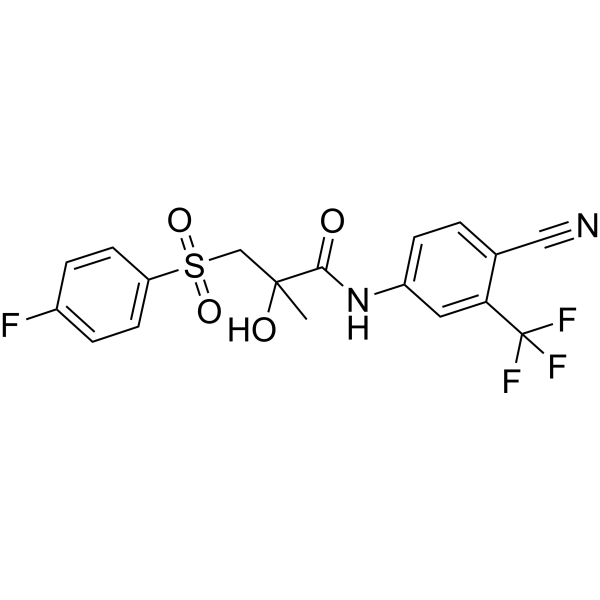
HY-14249
BicalutamideAndrogen Receptor Inhibitor -
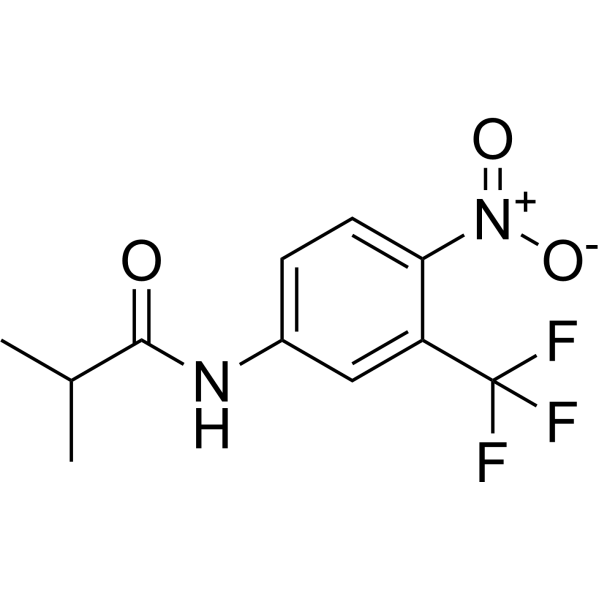
HY-B0022R
Flutamide (Standard)Antiandrogen Agent -
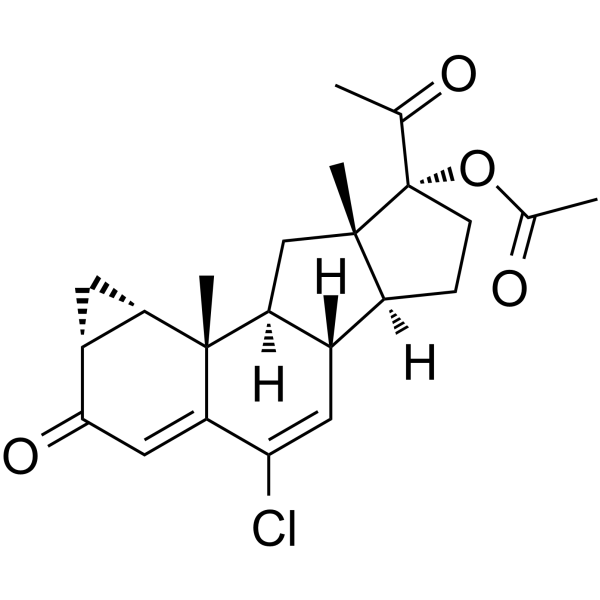
HY-13604
Cyproterone acetateAndrogen Receptor Antagonist -

HY-70002R
Enzalutamide (Standard)Androgen Receptor Antagonist -
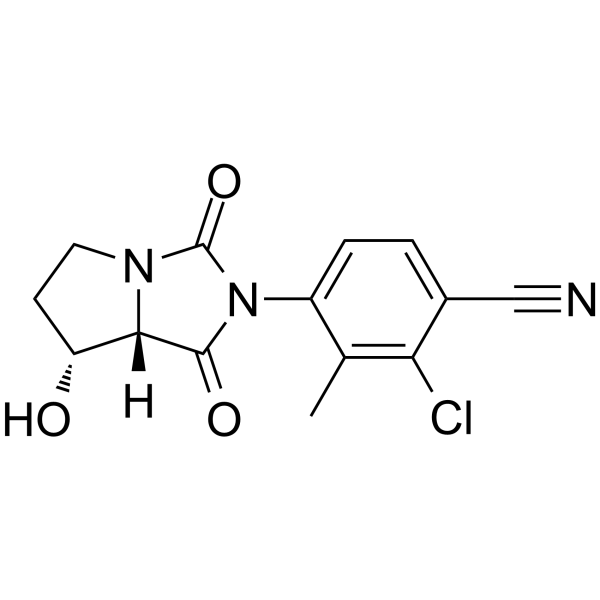
HY-12111
BMS-564929Androgen Receptor Agonist
Publications Citing Use of MedChemExpress (MCE) Ketodarolutamide
More

Biological Activity
제품 설명
Cellular Effect
|
Cell Line

|
Type | Value | Description | References |
|---|---|---|---|---|
| CWR22R | IC50 |
>30 μM
Compound: 1c; ORM-15341
|
Antiproliferative activity against human 22Rv1 expressing AR assessed as reduction in cell viability incubated for 6 days by CCK-8 assay
Antiproliferative activity against human 22Rv1 expressing AR assessed as reduction in cell viability incubated for 6 days by CCK-8 assay
|
[PMID: 31437779] |
| LNCaP | IC50 |
1.13 μM
Compound: 1c; ORM-15341
|
Antiproliferative activity against human LNCAP expressing AR assessed as reduction in cell viability incubated for 6 days by CCK-8 assay
Antiproliferative activity against human LNCAP expressing AR assessed as reduction in cell viability incubated for 6 days by CCK-8 assay
|
[PMID: 31437779] |
| PC-3 | IC50 |
>30 μM
Compound: 1c; ORM-15341
|
Cytotoxicity against human PC3 assessed as reduction in cell viability incubated for 6 days by CCK-8 assay
Cytotoxicity against human PC3 assessed as reduction in cell viability incubated for 6 days by CCK-8 assay
|
[PMID: 31437779] |
In Vitro
Ketodarolutamide (ORM-15341) (24 h) exhibits a Ki value of 8 nM for rat wild-type AR (wtAR) and an IC50 value of 38 nM for human AR (hAR) in AR-HEK293 cells and shows IC50 values of 51 nM, 1160 nM and 700 nM against mutant AR variants (F876L, W741L, T877A) in U2-OS cells[1].
Ketodarolutamide (0.3 μM; 4 h) inhibits testosterone-induced nuclear translocation of AR in HS-HEK293 cells and LNCaP cells[1].
Ketodarolutamide (10-10000 nM; 4 days) suppresses androgen-induced proliferation of VCaP cells more potently than Enzalutamide (HY-70002) and has no effect on the viability of AR-negative DU-145 prostate cancer cells and H1581 lung cancer cells, as determined by cell proliferation assay[1].
MedChemExpress (MCE) has not independently confirmed the accuracy of these methods. They are for reference only.
-
Cell Line:HS-HEK293 cells
-
Concentration:0.3 μM, 1 μM
-
Incubation Time:4 h (HCS reader), 5 h (confocal imaging)
-
Result:Inhibited testosterone-induced nuclear translocation of overexpressed AR.
-
Cell Line:HS-HEK293 cells
-
Concentration:3 μM
-
Incubation Time:4 h
-
Result:Blocked testosterone-induced AR nuclear translocation.
-
Cell Line:VCaP cells, DU-145 cells, H1581 cells
-
Concentration:10 nM, 100 nM, 1000 nM, 10000 nM (increasing concentration gradient)
-
Incubation Time:4 days
-
Result:Suppressed androgen-induced cell proliferation more potently than enzalutamide.
Had no effect on the viability of AR-negative cells.
Parmacokinetics
| Species | Dose | Route | AUC0-∞ | C0 | T1/2 |
|---|---|---|---|---|---|
| Mice[2] | 1 mg/kg | i.v. | 4636 ng·h/mL | 1372 ng/mL | 2.70 h |
In Vivo
Ketodarolutamide (metabolized from oral administration of ODM-201) (50 mg/kg; oral administration; twice a day; for 3 weeks) does not increase serum testosterone levels in intact nude mice bearing orthotopic VCaP tumors[1].
Ketodarolutamide (metabolized from oral administration of ODM-201) (25, 50, 100 mg/kg; oral administration; twice a day; for 7 days) shows negligible blood-brain barrier penetration with a brain/plasma ratio of 1.9-2.8% in mice[1].
MedChemExpress (MCE) has not independently confirmed the accuracy of these methods. They are for reference only.


Chemical Information
-
CAS No. 1297537-33-7
-
Appearance Solid
-
분자량 396.83
-
화학식 C19H17ClN6O2
-
Color White to off-white
-
SMILES
ClC1=C(C#N)C=CC(C2=NN(C[C@H](C)NC(C3=NNC(C(C)=O)=C3)=O)C=C2)=C1
-
Synonyms
BAY 1896953; ORM-15341
-
선적
Room temperature in continental US; may vary elsewhere.
-
보관
Powder -20°C 3 years 4°C 2 years In solvent -80°C 2 years -20°C 1 year


Publications (1)
-
Journal Impact Factor
-
Most Recent
-
Int J Cancer
2024 Jul 15;155(2):314-323. PMID: 38491867


용액&용해도
In Vitro:
DMSO : 100 mg/mL (252.00 mM; Need ultrasonic; Hygroscopic DMSO has a significant impact on the solubility of product, please use newly opened DMSO)
Please refer to the solubility information to select the appropriate solvent. Once prepared, please aliquot and store the solution to prevent product inactivation from repeated freeze-thaw cycles.
Storage method and period of stock solution: -80°C, 2 years; -20°C, 1 year. When stored at -80°C, please use it within 2 years. When stored at -20°C, please use it within 1 year.
Please refer to the solubility information to select the appropriate solvent. Once prepared, please aliquot and store the solution to prevent product inactivation from repeated freeze-thaw cycles.
Storage method and period of stock solution: -80°C, 2 years; -20°C, 1 year. When stored at -80°C, please use it within 2 years. When stored at -20°C, please use it within 1 year.
Concentration (start) × Volume (start) = Concentration (final) × Volume (final)
In Vivo:
Select the appropriate dissolution method based on your experimental animal and administration route.
- For the following dissolution methods, please ensure to first prepare a clear stock solution using an In Vitro approach and then sequentially add co-solvents:
- To ensure reliable experimental results, the clarified stock solution can be appropriately stored based on storage conditions. As for the working solution for In Vivo experiments, it is recommended to prepare freshly and use it on the same day.
- The percentages shown for the solvents indicate their volumetric ratio in the final prepared solution. If precipitation or phase separation occurs during preparation, heat and/or sonication can be used to aid dissolution.
Add each solvent one by one: 10% DMSO 40% PEG300 5% Tween-80 45% Saline
Solubility: ≥ 2.5 mg/mL (6.30 mM); Clear solution
This protocol yields a clear solution of ≥ 2.5 mg/mL (saturation unknown).
Taking 1 mL working solution as an example, add 100 μL DMSO stock solution (25.0 mg/mL) to 400 μL PEG300, and mix evenly; then add 50 μL Tween-80 and mix evenly; then add 450 μL Saline to adjust the volume to 1 mL.
Preparation of Saline: Dissolve 0.9 g sodium chloride in ddH₂O and dilute to 100 mL to obtain a clear Saline solution.
Add each solvent one by one: 10% DMSO 90% (20% SBE-β-CD in Saline)
Solubility: 2.5 mg/mL (6.30 mM); Suspended solution; Need ultrasonic
This protocol yields a suspended solution of 2.5 mg/mL. Suspended solution can be used for oral and intraperitoneal injection.
Taking 1 mL working solution as an example, add 100 μL DMSO stock solution (25.0 mg/mL) to 900 μL 20% SBE-β-CD in Saline, and mix evenly.
Preparation of 20% SBE-β-CD in Saline (4°C, storage for one week): 2 g SBE-β-CD powder is dissolved in 10 mL Saline, completely dissolve until clear.
In Vivo Dissolution Calculator
Please enter the basic information of animal experiments:
-
-
-
-
Recommended: Prepare an additional quantity of animals to account for potential losses during experiments.
Please enter your animal formula composition:
-
%DMSO +
Recommended: Keep the proportion of DMSO in working solution below 2% if your animal is weak.
-
%+
-
+%Tween-80 + +
-
%Saline +
The co-solvents required include: DMSO, . All of co-solvents are available by MedChemExpress (MCE). , Tween 80. All of co-solvents are available by MedChemExpress (MCE).
Working solution concentration: 0.22 mg/mL
Method for preparing stock solution: mg drug dissolved in μL DMSO. Stock solution concentration: mg/mL.
1. Take μL DMSO stock solution;
2. Add μL .
μL , mix evenly;
3. Then add μL Tween 80, mix evenly;
4. Then add μL
Please ensure that the stock solution in the first step is dissolved to a clear state, and add co-solvents in sequence. You can use ultrasonic heating (ultrasonic cleaner, recommended frequency 20-40 kHz), vortexing, etc. to assist dissolution.


순도&문서
-
Data Sheet (277 KB)
-
SDS (252 KB)
- English - EN (252 KB)
- Français - FR (252 KB)
- Deutsch - DE (252 KB)
- Norwegian - NO (252 KB)
- Español - ES (252 KB)
- Swedish - SV (252 KB)
- Italian - IT (252 KB)
- Korean - KR (252 KB)
- Portuguese - PT (252 KB)
-
Handling Instructions (2659 KB)
References
[1]. Moilanen AM, et al. Discovery of ODM-201, a new-generation androgen receptor inhibitor targeting resistance mechanisms toandrogen signaling-directed prostate cancer therapies. Sci Rep. 2015 Jul 3;5:12007. doi: 10.1038/srep12007. [Content Brief]
[2]. Sulochana SP, et al. Validation of an LC-MS/MS method for simultaneous quantitation of enzalutamide, N-desmethylenzalutamide, apalutamide, darolutamide and ORM-15341 in mice plasma and its application to a mice pharmacokinetic study. J Pharm Biomed Anal. 2018 Jul 15;156:170-180. [Content Brief]


Complete Stock Solution Preparation Table
Please refer to the solubility information to select the appropriate solvent. Once prepared, please aliquot and store the solution to prevent product inactivation from repeated freeze-thaw cycles.
Storage method and period of stock solution: -80°C, 2 years; -20°C, 1 year. When stored at -80°C, please use it within 2 years. When stored at -20°C, please use it within 1 year.
| Optional Solvent | Concentration Solvent Mass | 1 mg | 5 mg | 10 mg | 25 mg |
|---|---|---|---|---|---|
| DMSO | 1 mM | 2.5200 mL | 12.5999 mL | 25.1997 mL | 62.9993 mL |
| 5 mM | 0.5040 mL | 2.5200 mL | 5.0399 mL | 12.5999 mL | |
| 10 mM | 0.2520 mL | 1.2600 mL | 2.5200 mL | 6.2999 mL | |
| 15 mM | 0.1680 mL | 0.8400 mL | 1.6800 mL | 4.2000 mL | |
| 20 mM | 0.1260 mL | 0.6300 mL | 1.2600 mL | 3.1500 mL | |
| 25 mM | 0.1008 mL | 0.5040 mL | 1.0080 mL | 2.5200 mL | |
| 30 mM | 0.0840 mL | 0.4200 mL | 0.8400 mL | 2.1000 mL | |
| 40 mM | 0.0630 mL | 0.3150 mL | 0.6300 mL | 1.5750 mL | |
| 50 mM | 0.0504 mL | 0.2520 mL | 0.5040 mL | 1.2600 mL | |
| 60 mM | 0.0420 mL | 0.2100 mL | 0.4200 mL | 1.0500 mL | |
| 80 mM | 0.0315 mL | 0.1575 mL | 0.3150 mL | 0.7875 mL | |
| 100 mM | 0.0252 mL | 0.1260 mL | 0.2520 mL | 0.6300 mL |


Ketodarolutamide Related Classifications
HY-19337 Related Classifications
 Powered by Bioz
Keywords
- Ketodarolutamide
- 1297537-33-7
- BAY 1896953
- ORM-15341
- BAY1896953
- BAY-1896953
- ORM15341
- ORM 15341
- ORM-15341
- Androgen Receptor
- androgen receptor (AR) antagonist
- nonsteroidal high-affinity competitive full antagonist
- inhibits testosterone-induced AR nuclear translocation
- suppresses AR-dependent cell proliferation
- antitumor activity
- AR-HEK293 cells
- U2-OS cells
- HS-HEK293 cells
- LNCaP cells
- VCaP cells
- DU-145 cells
- H1581 cells
- castrated male nude mice
- orthotopic VCaP tumor-bearing nude mice
- BalbC mice
- prostate cancer
- castration-resistant prostate cancer (CRPC)
- Inhibitor
- inhibitor
- inhibit