



HSP40
HSP40 (also known as DnaJ proteins) functions as a molecular co-chaperone that regulates HSP70 activity and assists protein folding[1][2][3]. Mechanistically, HSP40 recognizes unfolded or misfolded client proteins and delivers them to HSP70, stimulating ATP hydrolysis and promoting proper substrate folding[1][2]. HSP40 participates in key cellular processes including protein quality control, endoplasmic reticulum-associated degradation (ERAD), and stress-induced proteostasis, which are essential for maintaining neuronal and cardiac cell integrity[2][3]. In disease models, HSP40 dysfunction contributes to neurodegenerative disorders such as Parkinson’s disease and protein-misfolding myopathies, including LGMDD1, through disrupted client recognition and HSP70 cooperation[3][4]. Compared with related isoforms, specific HSP40 members like DNAJB6 exhibit unique substrate specificity and domain-dependent regulatory mechanisms that influence client degradation or stabilization[4][2]. Experimental studies demonstrate that HSP40 modulates the stability and trafficking of ion channels, including hERG and KCNQ4, indicating its utility in therapeutic protein rescue strategies[2]. Small-molecule modulators and genetic manipulations targeting HSP40 interactions provide insights into co-chaperone regulation and offer potential intervention points for proteostasis-related pathologies[1][5]. Therefore, HSP40 acts as a versatile node within chaperone networks, integrating stress signals, client specificity, and co-chaperone dynamics for cellular homeostasis and experimental applications.
References:
- [1]. Melville MW, et al. The molecular chaperone hsp40 regulates the activity of P58IPK, the cellular inhibitor of PKR. Proc Natl Acad Sci U S A. 1997 Jan 7;94(1):97-102. [Content Brief]
- [2]. Walker VE, et al. Hsp40 chaperones promote degradation of the HERG potassium channel. J Biol Chem. 2010 Jan 29;285(5):3319-29. [Content Brief]
- [3]. Hasegawa T, et al. DnaJ/Hsp40 Family and Parkinson's Disease. Front Neurosci. 2018 Jan 10;11:743. [Content Brief]
- [4]. Bhadra AK, et al. Mutations in Hsp40 co-chaperone change the canonical interdomain interactions stimulating LGMDD1 myopathy. J Biol Chem. 2026 Jan;302(1):110945. [Content Brief]
- [5]. Ferraro M, et al. Allosteric Modulators of HSP90 and HSP70: Dynamics Meets Function through Structure-Based Drug Design. J Med Chem. 2019 Jan 10;62(1):60-87. [Content Brief]
All Product Categories
-
HSP40 관련 제품 (3)
관련 제품 (3)

-
Antibodies (1)
-
Col003
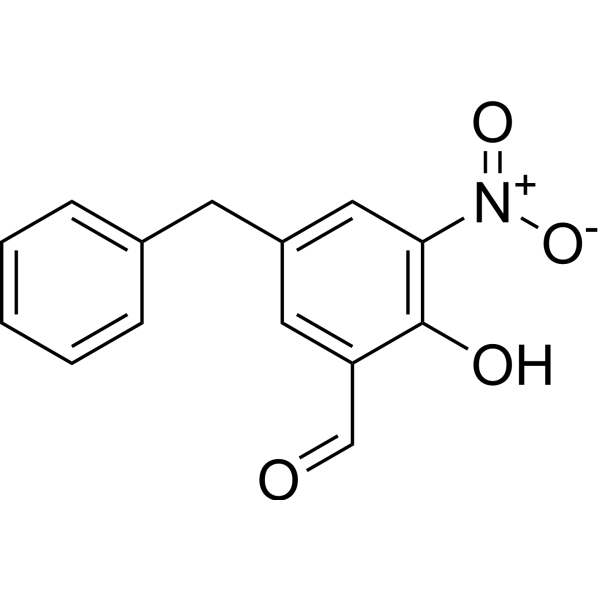 0 ImagesCol003 is a selective and potent inhibitor of Hsp47 and competitively binds to the collagen binding site on Hsp47 (IC50=1.8 μM). Col003 discourages the interaction of Hsp47 with collagen and inhibits collagen secretion by destabilizing the collagen triple helix. Col003 can be used for the investigation of fibrosis
-
LA1011
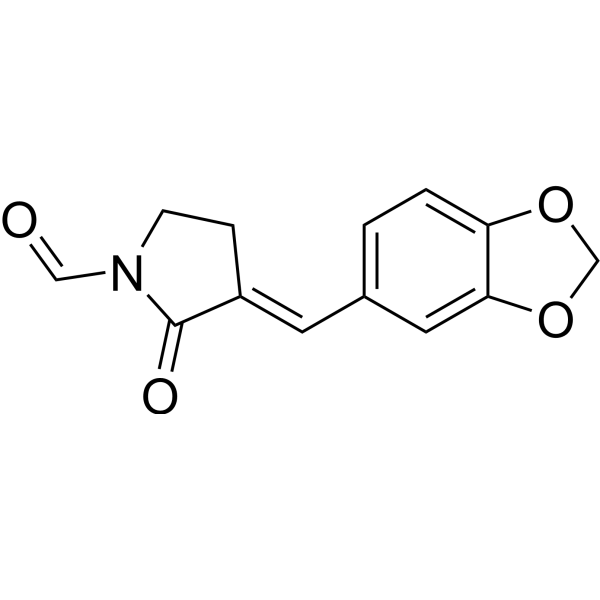
 0 ImagesCat. No.: HY-129396CAS No.: 1439268-65-1LA1011 is a heat shock protein (Hsps) co-inducer that selectively enhances heat shock-induced Hsp70, Hsp40, and Hsp27 expression. LA1011 exhibits neuroprotective effects in APPxPS1 transgenic Alzheimer's disease mice, preventing hippocampal neuronal loss, reducing tau pathology and neurofibrillary tangle accumulation in the hippocampus, decreasing amyloid plaque formation in the hippocampus, and increasing dendritic spine density in hippocampal CA1. LA1011 can be used for research on Alzheimer's disease.




