



ACTH (4-9)
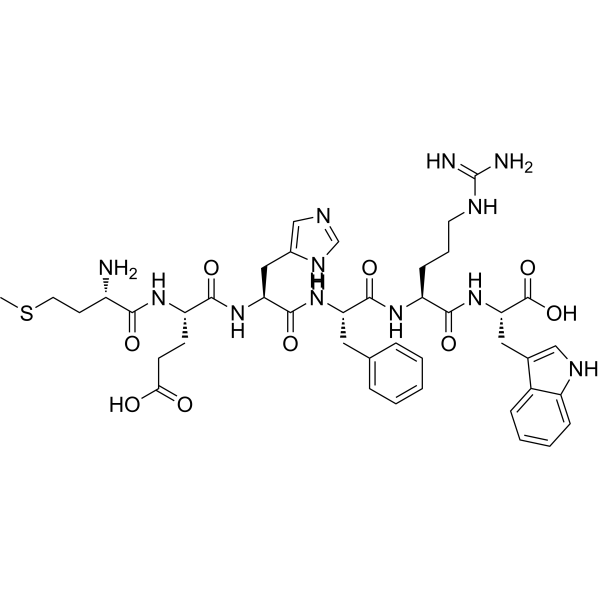
ACTH (4-9) is an adrenocorticotropic hormone (ACTH) fragment. ACTH (4-9) is the 4-9 sequence fragment of ACTH.
연구목적의 판매만을 진행합니다. 환자를 대상으로 한 판매는 하지 않습니다.
- CAS No.: 56236-83-0
- 화학식: C42H56N12O9S
- 분자량:905.03
-
보관:
Please store the product under the recommended conditions in the Certificate of Analysis.

To place orders, for customer services and technical support, please contact: MedChemExpress USA
Tel: 609-228-6898 E-mail: [email protected] [email protected]


-
 Biological Activity
-
Chemical Information
- Protocol
- 순도&문서
- References
-
 Help & FAQs




Biological Activity
제품 설명
In Vivo
MedChemExpress (MCE) has not independently confirmed the accuracy of these methods. They are for reference only.
-
Animal Model:Pregnant female mouse or newborn pups[1]
-
Dosage:1 mg/kg
-
Administration:Subcutaneous injection
-
Result:Inhibited learning/memory task performance m males and females mouse.


Chemical Information
-
CAS No. 56236-83-0
-
분자량 905.03
-
화학식 C42H56N12O9S
-
Sequence Shortening
MEHFRW
-
선적
Room temperature in continental US; may vary elsewhere.
-
보관
Please store the product under the recommended conditions in the Certificate of Analysis.

Protocol
-
Research Protocol for Endocrine Diseases
Endocrine diseases often arise from disrupted hormone production, hormone signaling, or target-tissue responsiveness; for diabetes-focused endocrine disease models, insulin signaling regulates glucose uptake, hepatic glucose output, lipid metabolism, and β-cell compensation. Type 2 diabetes develops through interacting defects in insulin resistance, β-cell dysfunction, adipose inflammation, hepatic glucose overproduction, altered incretin signaling, and ectopic lipid metabolism. A major unresolved question is whether endocrine dysfunction is driven primarily by target-tissue insulin resistance, intrinsic β-cell failure, immune/inflammatory stress, or combined multi-organ failure that differs by disease stage.


순도&문서
References
[1]. Honour LC, et, al. Pre- and postnatally administered ACTH, Organon 2766 and CRF facilitate or inhibit active avoidance task performance in young adult mice. Peptides. 1988 Jul-Aug;9(4):745-50. [Content Brief]
[2]. Sekita-Krzak J, et, al. Protective effects of ACTH (4-9) in degeneration of hippocampal nerve cells caused by dexamethasone: ultrastructural studies. Ann Univ Mariae Curie Sklodowska Med. 2002;57(2):233-8. [Content Brief]

Calculators
Concentration (start) × Volume (start) = Concentration (final) × Volume (final)


ACTH (4-9) Related Classifications
HY-P3978 Related Classifications
 Powered by Bioz