



JO146

Based on 1 Customer Validation
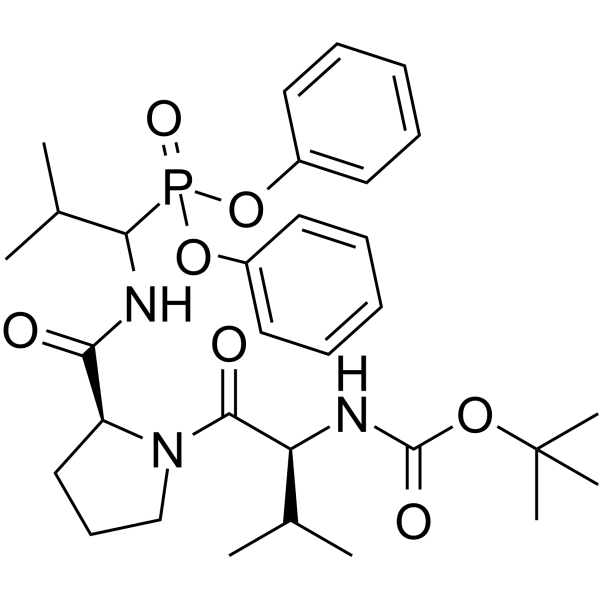
JO146 is an anti-chlamydial agent, Antibacterial agent, and CtHtrA serine protease inhibitor, with an IC50 of 21.86 μM against CtHtrA serine protease. JO146 alters the morphology of chlamydial cells, reduces inclusion vacuoles, decreases the number of infectious progeny, and eliminates viable Chlamydia trachomatis under stress or conditions that reverse persistent infection. JO146 shows no activity against Escherichia coli, Pseudomonas aeruginosa, and Staphylococcus aureus, but exhibits bactericidal activity against Helicobacter pylori. JO146 can be used in research related to Chlamydia trachomatis infection, chlamydial infection in cattle and sheep, and Helicobacter pylori infection.
연구목적의 판매만을 진행합니다. 환자를 대상으로 한 판매는 하지 않습니다.
- Purity : 98.49%
- CAS No.: 130727-21-8
- 화학식: C31H44N3O7P
- 분자량:601.67
-
보관:Powder -20°C, 3 years , 4°C, 2 years ; In solvent -80°C, 6 months , -20°C, 1 month

To place orders, for customer services and technical support, please contact: MedChemExpress USA
Tel: 609-228-6898 E-mail: [email protected] [email protected]


-
 Biological Activity
-
Chemical Information
-
용액&용해도
- Protocol
- 순도&문서
- References
-
 Help & FAQs


-
HY-W018781
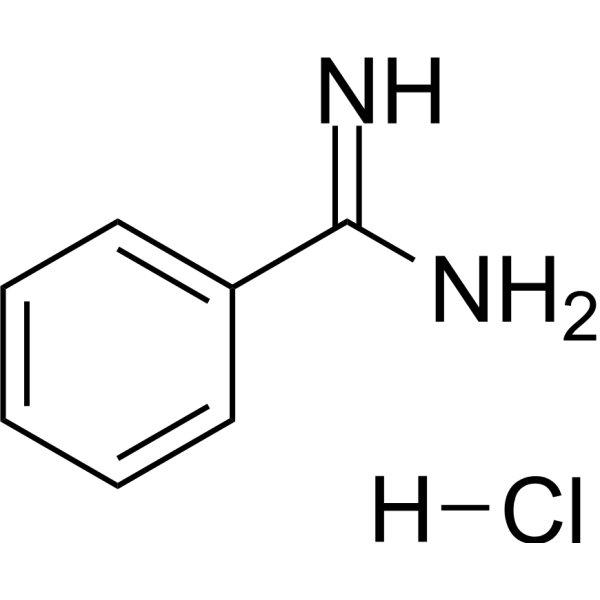
Benzamidine hydrochlorideSerine Proteases Inhibitor -
HY-100626
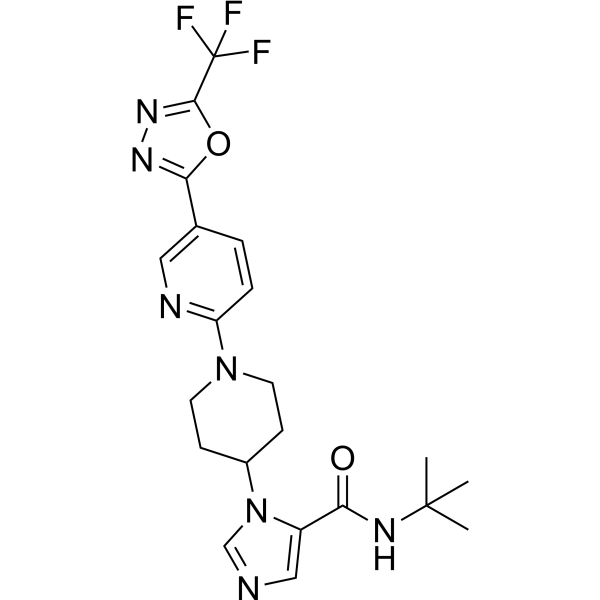
WNK463WNK Inhibitor -
HY-111056
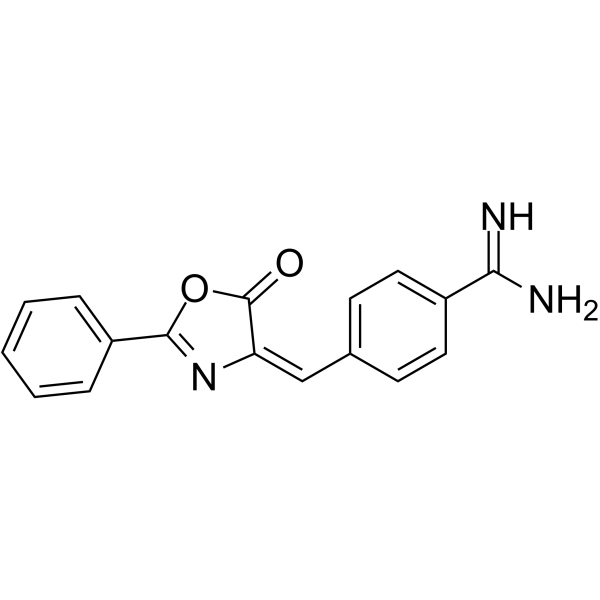
UK122 TFAuPA Inhibitor -
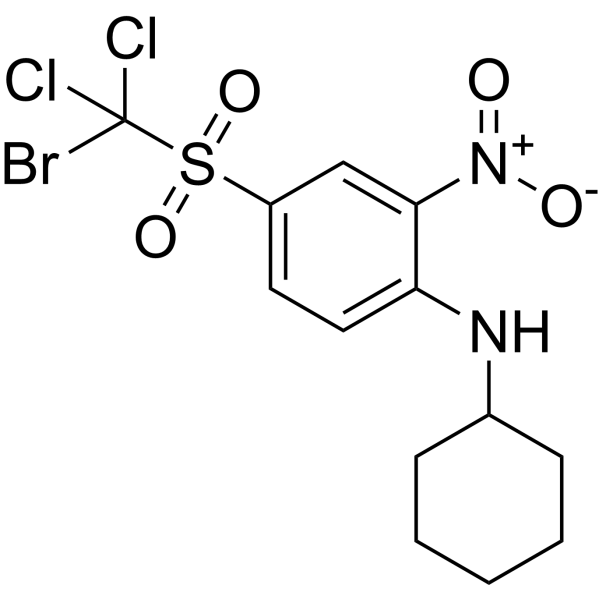
HY-151545
WNK1-IN-1WNK1 Inhibitor -
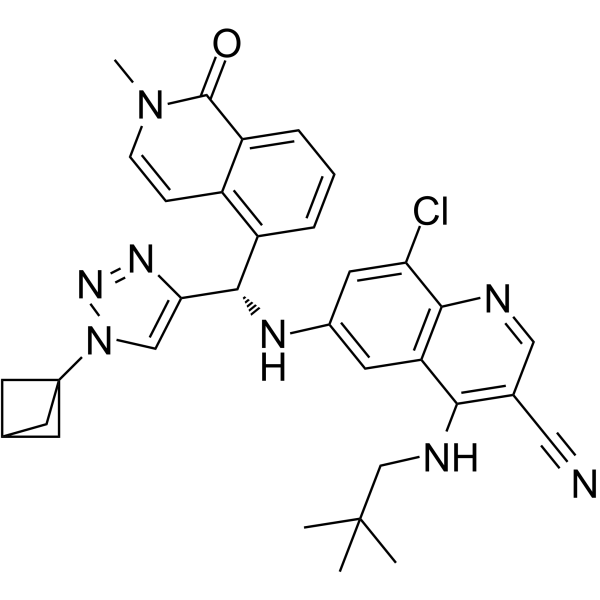
HY-137456
TilpisertibSerine/Threonine Kinase Inhibitor -
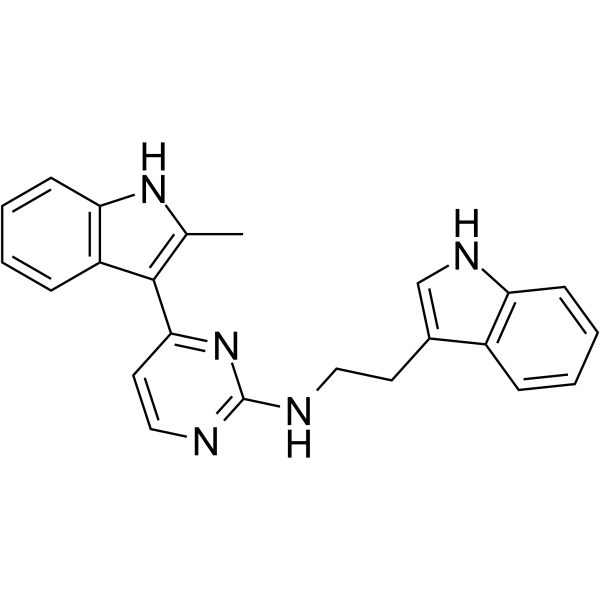
HY-118131
PKR-IN-C51PKR Inhibitor -
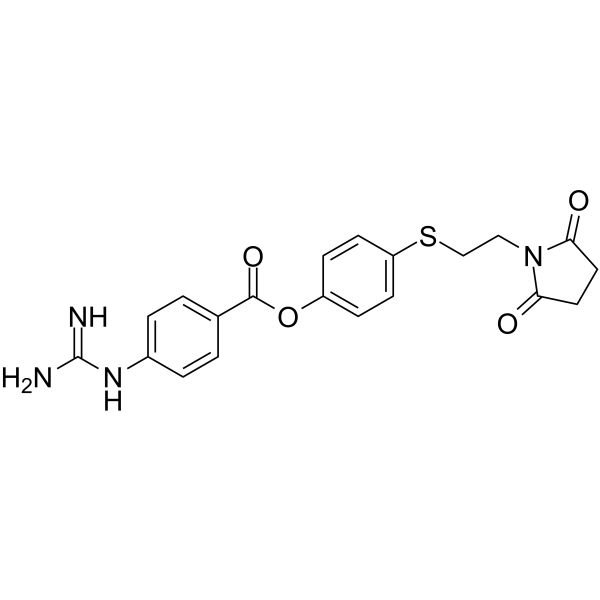
HY-114080
PatamostatProtease Inhibitor -
HY-112094S
WNK-IN-11-d3WNK Kinase Inhibitor -

HY-W018781R
Benzamidine hydrochloride (Standard)Serine Proteases Inhibitor -

HY-114080R
Patamostat (Standard)Protease Inhibitor


Biological Activity
제품 설명
In Vitro
Treatment of McCoy B cells infected with C. trachomatis isolates (1-017 (1), 1-079 (1), 1-019 (1), 1-048 (1), 1-028 (1), 1-020 (1)) or serovar CtD with JO146 (100 μM) starting at 16 hours post-infection (16 h PI) reduces the size of chlamydial inclusions; among these, the inclusions of 4 isolates show a significant reduction at 24 hours post-infection (24 h PI), and the inclusions of all tested isolates and the serovar strain show a significant reduction at 40 hours post-infection (40 h PI)[3].
Treatment of McCoy B cells infected with C. trachomatis isolates or serovar CtD strains with JO146 (8 h) starting at 16 h post-infection (16 h PI) reduces chlamydial MOMP levels, which correlates with decreased inclusion volume and reduced numbers of infectious progeny[3].
JO146 (1.56-500 µM; 4-6 days) potently inhibits the growth of *Helicobacter pylori* ATCC 43504, with a minimum inhibitory concentration range of 50-62.5 µM (30-37.6 µg/mL)[4].
MedChemExpress (MCE) has not independently confirmed the accuracy of these methods. They are for reference only.
-
Cell Line:McCoy B cells infected with Chlamydia trachomatis clinical isolates and C. trachomatis D (CtD) type strain
-
Concentration:Not specified
-
Incubation Time:8 h
-
Result:Reduced MOMP levels compared to matched DMSO controls for most tested C. trachomatis clinical isolates and the CtD type strain.


Chemical Information
-
CAS No. 130727-21-8
-
Appearance Solid
-
분자량 601.67
-
화학식 C31H44N3O7P
-
Color White to off-white
-
SMILES
O=C(OC(C)(C)C)N[C@@H](C(C)C)C(N1[C@H](C(NC(P(OC2=CC=CC=C2)(OC3=CC=CC=C3)=O)C(C)C)=O)CCC1)=O
-
선적
Room temperature in continental US; may vary elsewhere.
-
보관
Powder -20°C 3 years 4°C 2 years In solvent -80°C 6 months -20°C 1 month


용액&용해도
In Vitro:
DMSO : 100 mg/mL (166.20 mM; Need ultrasonic; Hygroscopic DMSO has a significant impact on the solubility of product, please use newly opened DMSO)
Please refer to the solubility information to select the appropriate solvent. Once prepared, please aliquot and store the solution to prevent product inactivation from repeated freeze-thaw cycles.
Storage method and period of stock solution: -80°C, 6 months; -20°C, 1 month. When stored at -80°C, please use it within 6 months. When stored at -20°C, please use it within 1 month.
Please refer to the solubility information to select the appropriate solvent. Once prepared, please aliquot and store the solution to prevent product inactivation from repeated freeze-thaw cycles.
Storage method and period of stock solution: -80°C, 6 months; -20°C, 1 month. When stored at -80°C, please use it within 6 months. When stored at -20°C, please use it within 1 month.
Concentration (start) × Volume (start) = Concentration (final) × Volume (final)
In Vivo:
Select the appropriate dissolution method based on your experimental animal and administration route.
- For the following dissolution methods, please ensure to first prepare a clear stock solution using an In Vitro approach and then sequentially add co-solvents:
- To ensure reliable experimental results, the clarified stock solution can be appropriately stored based on storage conditions. As for the working solution for In Vivo experiments, it is recommended to prepare freshly and use it on the same day.
- The percentages shown for the solvents indicate their volumetric ratio in the final prepared solution. If precipitation or phase separation occurs during preparation, heat and/or sonication can be used to aid dissolution.
Add each solvent one by one: 10% DMSO 40% PEG300 5% Tween-80 45% Saline
Solubility: 2.5 mg/mL (4.16 mM); Clear solution; Need ultrasonic
This protocol yields a clear solution of 2.5 mg/mL.
Taking 1 mL working solution as an example, add 100 μL DMSO stock solution (25.0 mg/mL) to 400 μL PEG300, and mix evenly; then add 50 μL Tween-80 and mix evenly; then add 450 μL Saline to adjust the volume to 1 mL.
Preparation of Saline: Dissolve 0.9 g sodium chloride in ddH₂O and dilute to 100 mL to obtain a clear Saline solution.
Add each solvent one by one: 10% DMSO 90% (20% SBE-β-CD in Saline)
Solubility: 2.5 mg/mL (4.16 mM); Clear solution; Need ultrasonic
This protocol yields a clear solution of 2.5 mg/mL.
Taking 1 mL working solution as an example, add 100 μL DMSO stock solution (25.0 mg/mL) to 900 μL 20% SBE-β-CD in Saline, and mix evenly.
Preparation of 20% SBE-β-CD in Saline (4°C, storage for one week): 2 g SBE-β-CD powder is dissolved in 10 mL Saline, completely dissolve until clear.
In Vivo Dissolution Calculator
Please enter the basic information of animal experiments:
-
-
-
-
Recommended: Prepare an additional quantity of animals to account for potential losses during experiments.
Please enter your animal formula composition:
-
%DMSO +
Recommended: Keep the proportion of DMSO in working solution below 2% if your animal is weak.
-
%+
-
+%Tween-80 + +
-
%Saline +
The co-solvents required include: DMSO, . All of co-solvents are available by MedChemExpress (MCE). , Tween 80. All of co-solvents are available by MedChemExpress (MCE).
Working solution concentration: 0.22 mg/mL
Method for preparing stock solution: mg drug dissolved in μL DMSO. Stock solution concentration: mg/mL.
1. Take μL DMSO stock solution;
2. Add μL .
μL , mix evenly;
3. Then add μL Tween 80, mix evenly;
4. Then add μL
Please ensure that the stock solution in the first step is dissolved to a clear state, and add co-solvents in sequence. You can use ultrasonic heating (ultrasonic cleaner, recommended frequency 20-40 kHz), vortexing, etc. to assist dissolution.


순도&문서
-
Data Sheet (287 KB)
-
SDS (251 KB)
- English - EN (251 KB)
- Français - FR (251 KB)
- Deutsch - DE (251 KB)
- Norwegian - NO (251 KB)
- Español - ES (251 KB)
- Swedish - SV (251 KB)
- Italian - IT (251 KB)
- Korean - KR (251 KB)
- Portuguese - PT (251 KB)
-
Handling Instructions (2659 KB)
References
[1]. Hwang J, et al. Design, synthesis and biological evaluation of P2-modified proline analogues targeting the HtrA serine protease in Chlamydia. European journal of medicinal chemistry. 2022 Feb 15;230:114064. [Content Brief]
[2]. Ong VA, et al. The protease inhibitor JO146 demonstrates a critical role for CtHtrA for Chlamydia trachomatis reversion from penicillin persistence. Frontiers in cellular and infection microbiology. 2013;3:100. [Content Brief]
[3]. Ong VA, et al. In vitro susceptibility of recent Chlamydia trachomatis clinical isolates to the CtHtrA inhibitor JO146. Microbes and infection. 2015;17(11-12):738-44. [Content Brief]
[4]. Hwang J, et al. Improving Antibacterial Activity of a HtrA Protease Inhibitor JO146 against Helicobacter pylori: A Novel Approach Using Microfluidics-Engineered PLGA Nanoparticles. Pharmaceutics. 2022 Feb 1;14(2):348. [Content Brief]


Complete Stock Solution Preparation Table
Please refer to the solubility information to select the appropriate solvent. Once prepared, please aliquot and store the solution to prevent product inactivation from repeated freeze-thaw cycles.
Storage method and period of stock solution: -80°C, 6 months; -20°C, 1 month. When stored at -80°C, please use it within 6 months. When stored at -20°C, please use it within 1 month.
| Optional Solvent | Concentration Solvent Mass | 1 mg | 5 mg | 10 mg | 25 mg |
|---|---|---|---|---|---|
| DMSO | 1 mM | 1.6620 mL | 8.3102 mL | 16.6204 mL | 41.5510 mL |
| 5 mM | 0.3324 mL | 1.6620 mL | 3.3241 mL | 8.3102 mL | |
| 10 mM | 0.1662 mL | 0.8310 mL | 1.6620 mL | 4.1551 mL | |
| 15 mM | 0.1108 mL | 0.5540 mL | 1.1080 mL | 2.7701 mL | |
| 20 mM | 0.0831 mL | 0.4155 mL | 0.8310 mL | 2.0776 mL | |
| 25 mM | 0.0665 mL | 0.3324 mL | 0.6648 mL | 1.6620 mL | |
| 30 mM | 0.0554 mL | 0.2770 mL | 0.5540 mL | 1.3850 mL | |
| 40 mM | 0.0416 mL | 0.2078 mL | 0.4155 mL | 1.0388 mL | |
| 50 mM | 0.0332 mL | 0.1662 mL | 0.3324 mL | 0.8310 mL | |
| 60 mM | 0.0277 mL | 0.1385 mL | 0.2770 mL | 0.6925 mL | |
| 80 mM | 0.0208 mL | 0.1039 mL | 0.2078 mL | 0.5194 mL | |
| 100 mM | 0.0166 mL | 0.0831 mL | 0.1662 mL | 0.4155 mL |


JO146 Related Classifications
HY-144820 Related Classifications
 Powered by Bioz