



Metolazone
Based on 2 publication(s) in Google Scholar
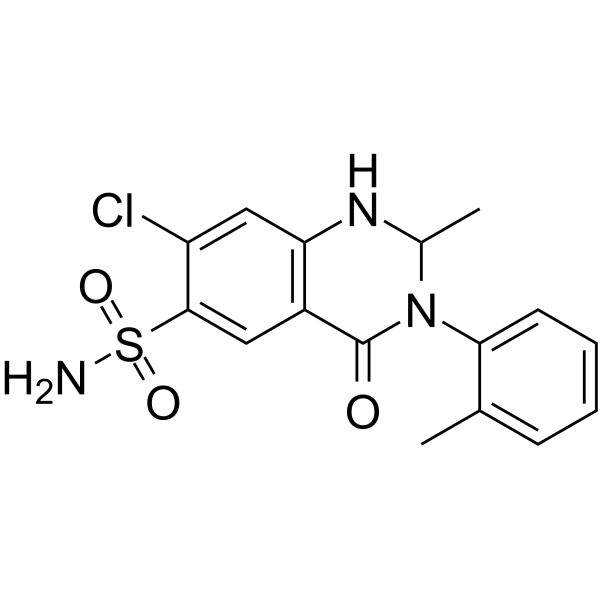
Metolazone (SR-720-22) is primarily used to treat congestive heart failure and high blood pressure.
For research use only. We do not sell to patients.
- Purity : 99.68%
- CAS No.: 17560-51-9
- Formula: C16H16ClN3O3S
- Molecular Weight:365.83
-
Storage:Powder -20°C, 3 years , 4°C, 2 years ; In solvent -80°C, 2 years , -20°C, 1 year

To place orders, for customer services and technical support, please contact: MedChemExpress USA
Tel: 609-228-6898 E-mail: [email protected] [email protected]


-
 Biological Activity
-
Chemical Information
-
Solvent & Solubility
- Protocols
- Purity & Documentation
- References
-
 Help & FAQs


-
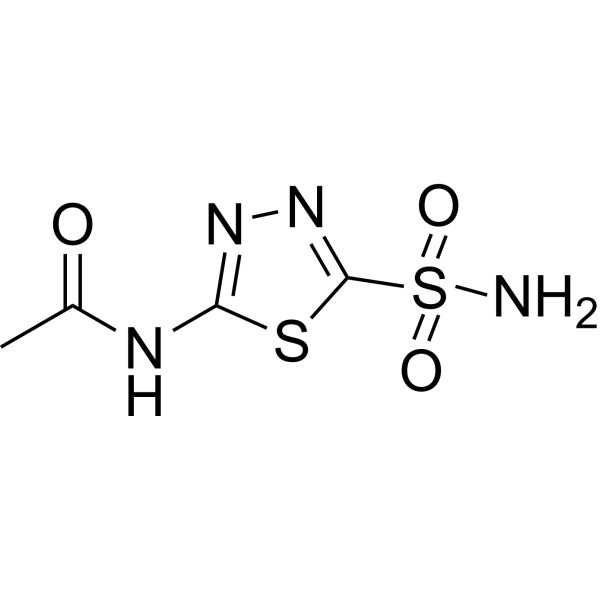
HY-B0782
AcetazolamideCA IX Inhibitor -
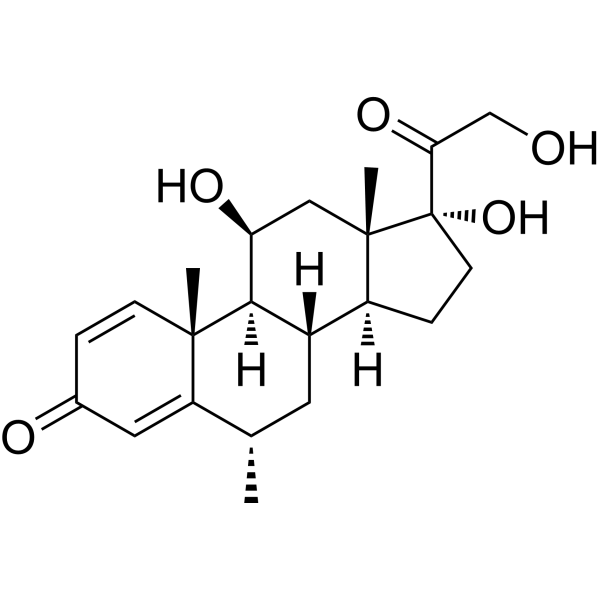
HY-B0260
MethylprednisoloneGlucocorticoid -
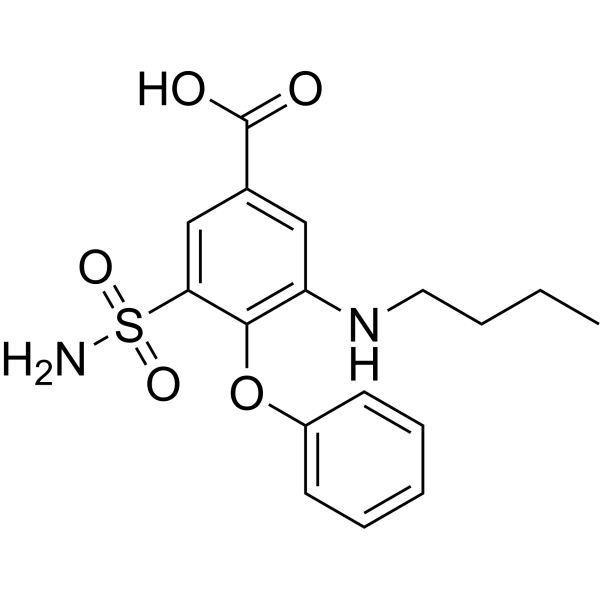
HY-17468
BumetanideNKCC1 Inhibitor -
HY-17408
MevastatinHMG-CoA Reductase Inhibitor -
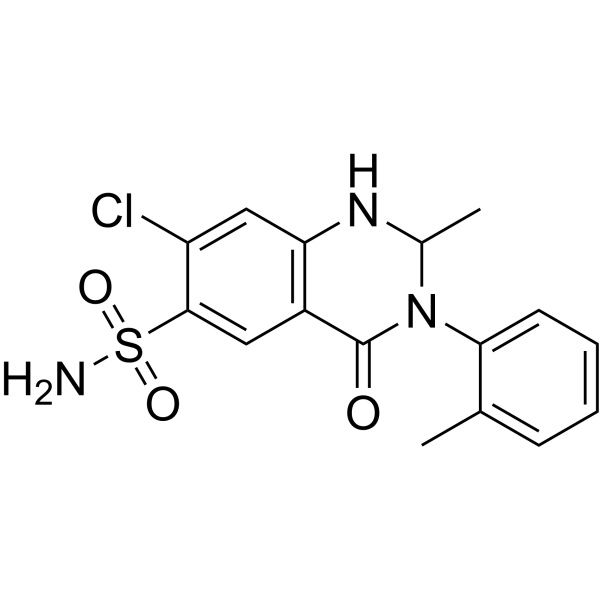
HY-B0209R
Metolazone (Standard) -
HY-13955
TelmisartanAngiotensin II Type 1 Receptor -
HY-B0375
ArgatrobanThrombin Inhibitor -
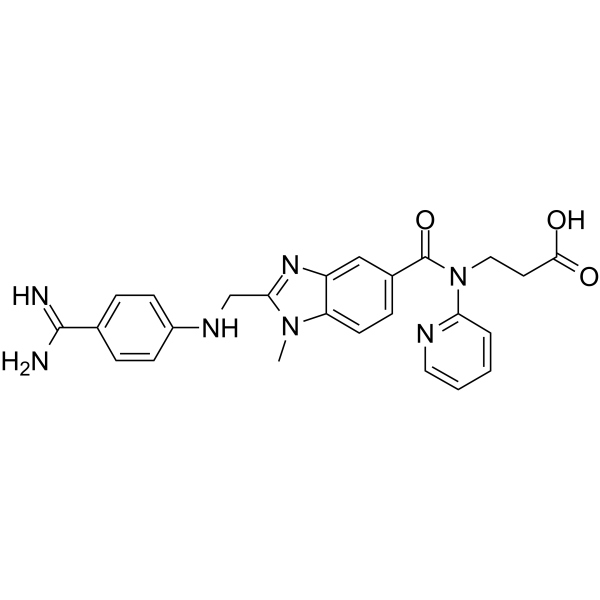
HY-10163
DabigatranThrombin Inhibitor -
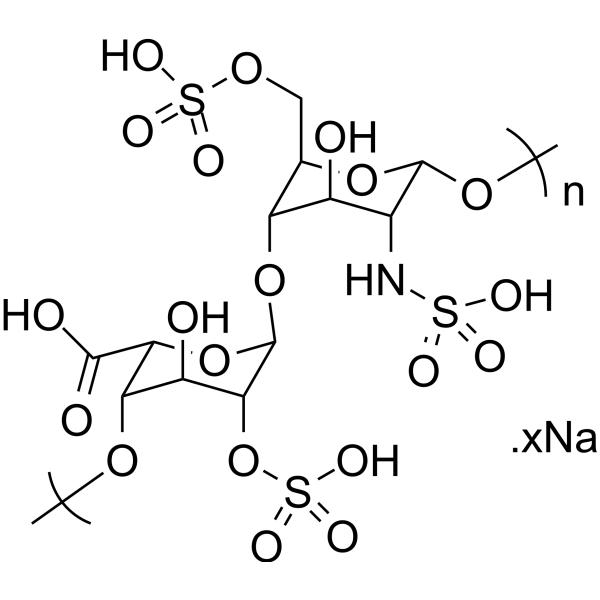
HY-17567A
Heparin sodium saltAnticoagulant -
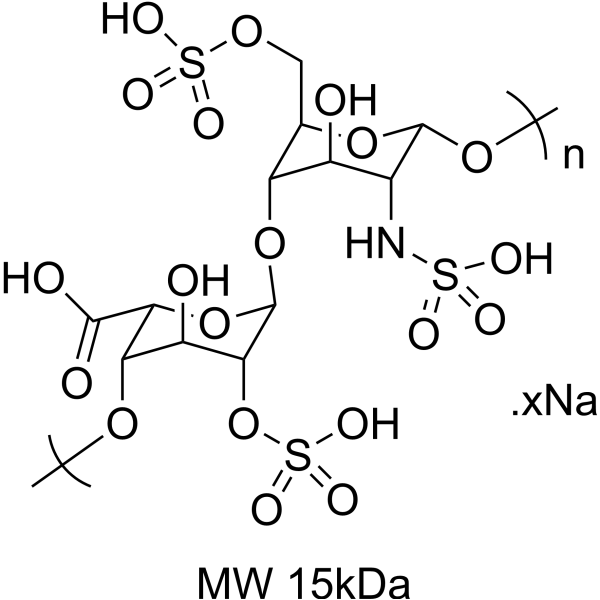
HY-17567C
Heparin sodium salt (MW 15kDa)Anticoagulant Agent -
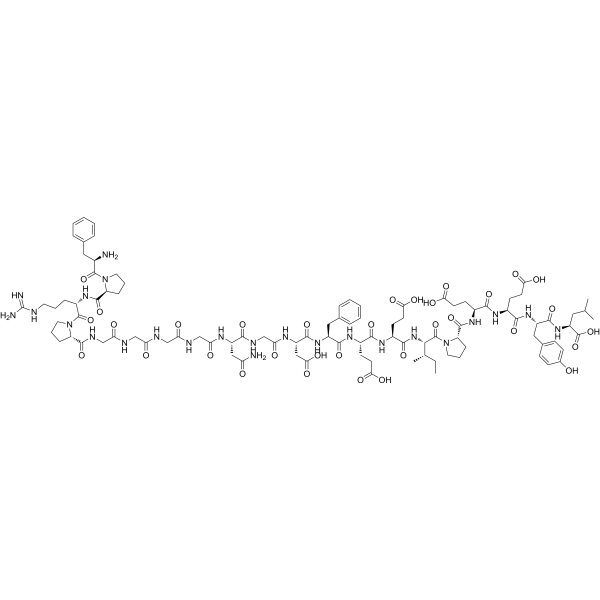
HY-P1929
BivalirudinThrombin Inhibitor -
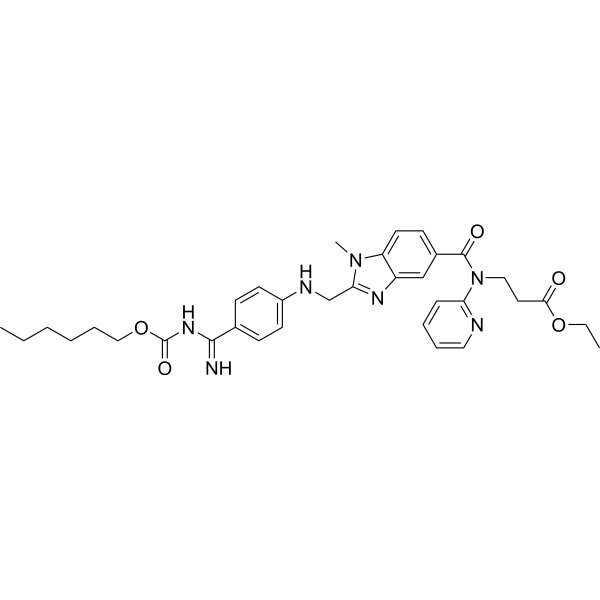
HY-10274
Dabigatran etexilateAntithrombotic Agent
Publications Citing Use of MedChemExpress (MCE) Metolazone
More

Biological Activity
Description
In Vitro
Metolazone (SR-720-22) is a thiazide-like diuretic marketed under the brand names Zytanix from Zydus Cadila, Zaroxolyn, and Mykrox. It is primarily used to treat congestive heart failure and high blood pressure. Metolazone indirectly decreases the amount of water reabsorbed into the bloodstream by the kidney, so that blood volume decreases and urine volume increases. This lowers blood pressure and prevents excess fluid accumulation in heart failure. Metolazone is sometimes used together with loop diuretics such as furosemide or bumetanide, but these highly effective combinations can lead to dehydration and electrolyte abnormalities. Metolazone and the other thiazide diuretics inhibit the function of the sodium-chloride symporter, preventing sodium and chloride, and therefore water too, from leaving the lumen to enter the tubule cell. As a result, water remains in the lumen and is excreted as urine, instead of being reabsorbed into the bloodstream. Since most of the sodium in the lumen has already been reabsorbed by the time the filtrate reaches the distal convoluted tubule, thiazide diuretics have limited effects on water balance and on electrolyte levels. Nevertheless, they can be associated with low sodium levels, volume depletion, and low blood pressure, among other adverse effects.
MedChemExpress (MCE) has not independently confirmed the accuracy of these methods. They are for reference only. Further protocols information, click here.
Clinical Trial
| NCT Number | Sponsor | Condition | Start Date |
Phase

|
|---|---|---|---|---|
| NCT01329991 | Plexxikon| | 2011-05 | PHASE1 |


Chemical Information
-
CAS No. 17560-51-9
-
Appearance Solid
-
Molecular Weight 365.83
-
Formula C16H16ClN3O3S
-
Color White to off-white
-
SMILES
O=S(C1=CC2=C(NC(C)N(C3=CC=CC=C3C)C2=O)C=C1Cl)(N)=O
-
Synonyms
SR-720-22
-
Shipping
Room temperature in continental US; may vary elsewhere.
-
Storage
Powder -20°C 3 years 4°C 2 years In solvent -80°C 2 years -20°C 1 year


Publications (2)
-
Journal Impact Factor
-
Most Recent
-
ACS Environ Au
Machine Learning-Assisted Recognition of Environmental Sulfur-Containing Chemicals in Nontargeted Mass Spectrometry Analysis of Inadequate Mass Resolution. [Abstract]2025 Aug 5;5(6):573-582. PMID: 41277996 -
bioRxiv
DOPAMINE D4 RECEPTOR DOWN-REGULATES RENAL SODIUM CHLORIDE COTRANSPORTER VIA UBIQUITINATION-ASSOCIATED LYSOSOME DEGRADATION. [Abstract]2024 Feb 16:2024.02.14.580405. PMID: 38405772


Solvent & Solubility
In Vitro:
DMSO : ≥ 100 mg/mL (273.35 mM; Hygroscopic DMSO has a significant impact on the solubility of product, please use newly opened DMSO)
H2O : < 0.1 mg/mL (insoluble)
* "≥" means soluble, but saturation unknown.
Please refer to the solubility information to select the appropriate solvent. Once prepared, please aliquot and store the solution to prevent product inactivation from repeated freeze-thaw cycles.
Storage method and period of stock solution: -80°C, 2 years; -20°C, 1 year. When stored at -80°C, please use it within 2 years. When stored at -20°C, please use it within 1 year.
Please refer to the solubility information to select the appropriate solvent. Once prepared, please aliquot and store the solution to prevent product inactivation from repeated freeze-thaw cycles.
Storage method and period of stock solution: -80°C, 2 years; -20°C, 1 year. When stored at -80°C, please use it within 2 years. When stored at -20°C, please use it within 1 year.
Concentration (start) × Volume (start) = Concentration (final) × Volume (final)
In Vivo:
Select the appropriate dissolution method based on your experimental animal and administration route.
- For the following dissolution methods, please ensure to first prepare a clear stock solution using an In Vitro approach and then sequentially add co-solvents:
- To ensure reliable experimental results, the clarified stock solution can be appropriately stored based on storage conditions. As for the working solution for In Vivo experiments, it is recommended to prepare freshly and use it on the same day.
- The percentages shown for the solvents indicate their volumetric ratio in the final prepared solution. If precipitation or phase separation occurs during preparation, heat and/or sonication can be used to aid dissolution.
Add each solvent one by one: 10% DMSO 40% PEG300 5% Tween-80 45% Saline
Solubility: ≥ 2.75 mg/mL (7.52 mM); Clear solution
This protocol yields a clear solution of ≥ 2.75 mg/mL (saturation unknown).
Taking 1 mL working solution as an example, add 100 μL DMSO stock solution (27.5 mg/mL) to 400 μL PEG300, and mix evenly; then add 50 μL Tween-80 and mix evenly; then add 450 μL Saline to adjust the volume to 1 mL.
Preparation of Saline: Dissolve 0.9 g sodium chloride in ddH₂O and dilute to 100 mL to obtain a clear Saline solution.
Add each solvent one by one: 10% DMSO 90% (20% SBE-β-CD in Saline)
Solubility: ≥ 2.75 mg/mL (7.52 mM); Clear solution
This protocol yields a clear solution of ≥ 2.75 mg/mL (saturation unknown).
Taking 1 mL working solution as an example, add 100 μL DMSO stock solution (27.5 mg/mL) to 900 μL 20% SBE-β-CD in Saline, and mix evenly.
Preparation of 20% SBE-β-CD in Saline (4°C, storage for one week): 2 g SBE-β-CD powder is dissolved in 10 mL Saline, completely dissolve until clear.
In Vivo Dissolution Calculator
Please enter the basic information of animal experiments:
-
-
-
-
Recommended: Prepare an additional quantity of animals to account for potential losses during experiments.
Please enter your animal formula composition:
-
%DMSO +
Recommended: Keep the proportion of DMSO in working solution below 2% if your animal is weak.
-
%+
-
+%Tween-80 + +
-
%Saline +
The co-solvents required include: DMSO, . All of co-solvents are available by MedChemExpress (MCE). , Tween 80. All of co-solvents are available by MedChemExpress (MCE).
Working solution concentration: 0.22 mg/mL
Method for preparing stock solution: mg drug dissolved in μL DMSO. Stock solution concentration: mg/mL.
1. Take μL DMSO stock solution;
2. Add μL .
μL , mix evenly;
3. Then add μL Tween 80, mix evenly;
4. Then add μL
Please ensure that the stock solution in the first step is dissolved to a clear state, and add co-solvents in sequence. You can use ultrasonic heating (ultrasonic cleaner, recommended frequency 20-40 kHz), vortexing, etc. to assist dissolution.

Protocols
-
Research Protocol for Cardiovascular Diseases
Cardiovascular disease can be modeled as maladaptive cardiac remodeling, where ischemic injury or pressure overload activates inflammatory signaling, fibroblast activation, extracellular-matrix deposition, cardiomyocyte hypertrophy, vascular remodeling, and progressive ventricular dysfunction. The TGF-β/SMAD axis is a central profibrotic pathway after myocardial injury and pressure overload, while innate immune and cytokine pathways regulate leukocyte recruitment, scar formation, and adverse remodeling. Key unresolved questions include which inflammatory signals are reparative versus harmful, when fibrosis is protective versus maladaptive, and whether pathway inhibition improves function without weakening necessary infarct healing or compensatory remodeling.


Purity & Documentation
-
Data Sheet (276 KB)
-
SDS (393 KB)
- English - EN (393 KB)
- Français - FR (393 KB)
- Deutsch - DE (393 KB)
- Norwegian - NO (393 KB)
- Español - ES (393 KB)
- Swedish - SV (393 KB)
- Italian - IT (393 KB)
- Korean - KR (393 KB)
- Portuguese - PT (393 KB)
-
Handling Instructions (2659 KB)
References


Complete Stock Solution Preparation Table
Please refer to the solubility information to select the appropriate solvent. Once prepared, please aliquot and store the solution to prevent product inactivation from repeated freeze-thaw cycles.
Storage method and period of stock solution: -80°C, 2 years; -20°C, 1 year. When stored at -80°C, please use it within 2 years. When stored at -20°C, please use it within 1 year.
| Optional Solvent | Concentration Solvent Mass | 1 mg | 5 mg | 10 mg | 25 mg |
|---|---|---|---|---|---|
| DMSO | 1 mM | 2.7335 mL | 13.6676 mL | 27.3351 mL | 68.3378 mL |
| 5 mM | 0.5467 mL | 2.7335 mL | 5.4670 mL | 13.6676 mL | |
| 10 mM | 0.2734 mL | 1.3668 mL | 2.7335 mL | 6.8338 mL | |
| 15 mM | 0.1822 mL | 0.9112 mL | 1.8223 mL | 4.5559 mL | |
| 20 mM | 0.1367 mL | 0.6834 mL | 1.3668 mL | 3.4169 mL | |
| 25 mM | 0.1093 mL | 0.5467 mL | 1.0934 mL | 2.7335 mL | |
| 30 mM | 0.0911 mL | 0.4556 mL | 0.9112 mL | 2.2779 mL | |
| 40 mM | 0.0683 mL | 0.3417 mL | 0.6834 mL | 1.7084 mL | |
| 50 mM | 0.0547 mL | 0.2734 mL | 0.5467 mL | 1.3668 mL | |
| 60 mM | 0.0456 mL | 0.2278 mL | 0.4556 mL | 1.1390 mL | |
| 80 mM | 0.0342 mL | 0.1708 mL | 0.3417 mL | 0.8542 mL | |
| 100 mM | 0.0273 mL | 0.1367 mL | 0.2734 mL | 0.6834 mL |


Metolazone Related Classifications
HY-B0209 Related Classifications
 Powered by Bioz