



MIT-PZR

Based on 1 Customer Validation
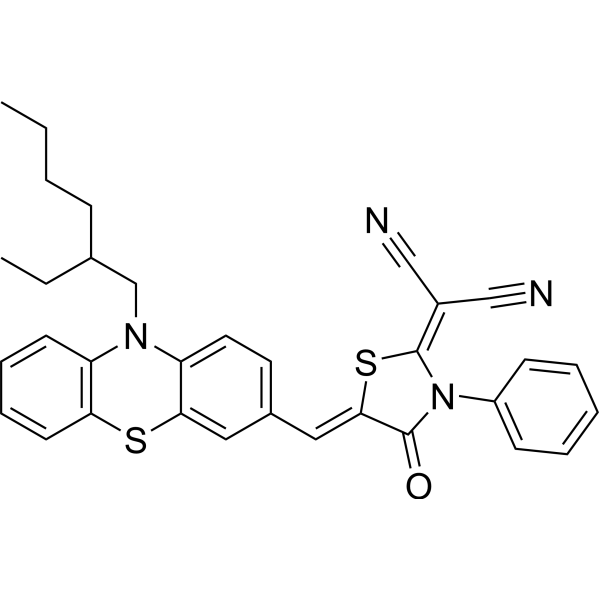
MIT-PZR is a mitochondria-targeted,? low cytotoxicity fluorescent probe that can be used in live cells and in vivo imaging. Ex / Em = 485 / 705 nm
For research use only. We do not sell to patients.
- Purity : 99.46%
- CAS No.: 2376848-06-3
- Formula: C33H30N4OS2
- Molecular Weight:562.75
-
Storage:Powder -20°C, 3 years ; In solvent -80°C, 6 months , -20°C, 1 month

To place orders, for customer services and technical support, please contact: MedChemExpress USA
Tel: 609-228-6898 E-mail: [email protected] [email protected]


-
 Biological Activity
-
Chemical Information
-
Solvent & Solubility
- Protocols
- Purity & Documentation
- References
-
 Help & FAQs


-
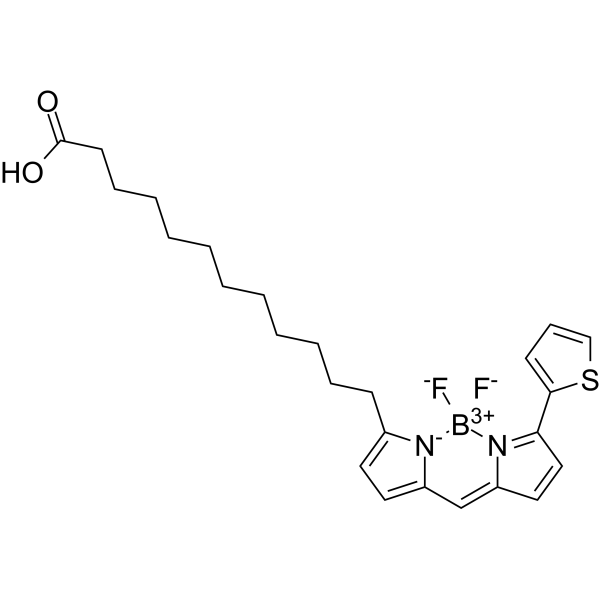
HY-138226
BODIPY 558/568 C12Lipid Droplets Probe -
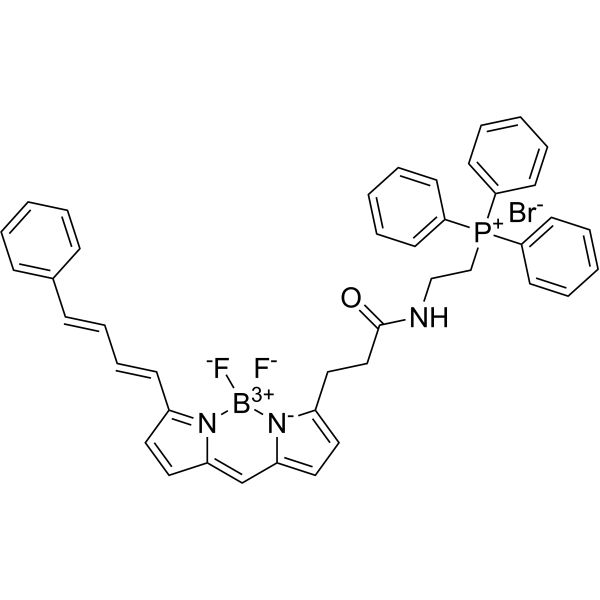
HY-125623
MitoPerOxFluorescent Probe -

HY-DY1073
MitoPerOx (solution)Fluorescent Probe -
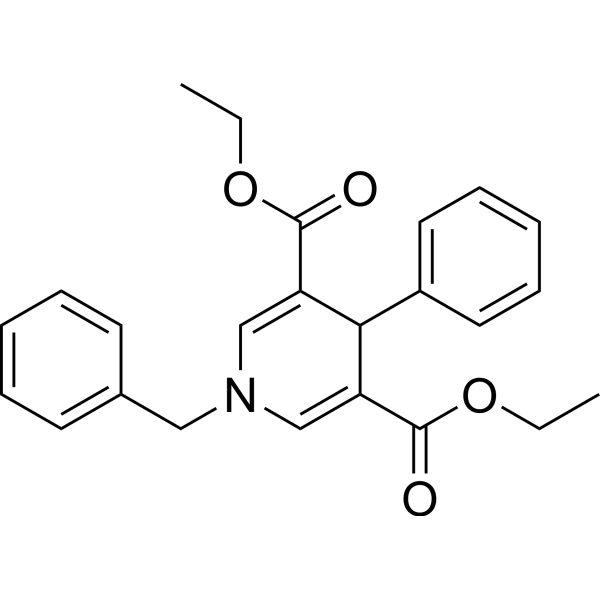
HY-W025074
BML-278SIRT1 Activator -

HY-D0896
ANSAntibacterial Agent -
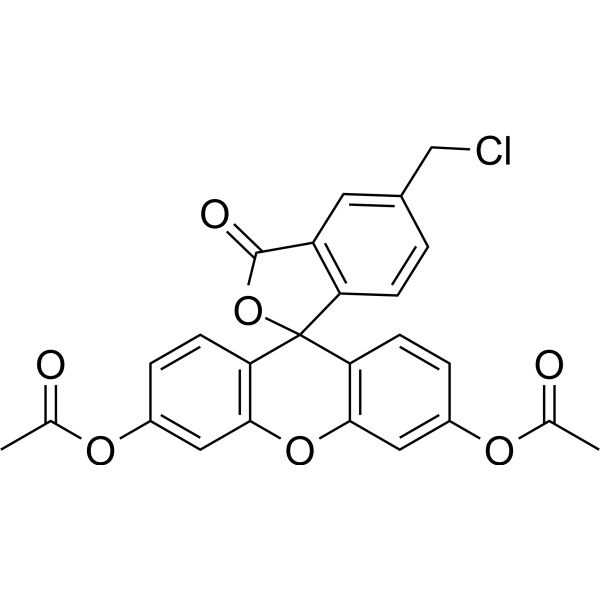
HY-126561
Green CMFDACell Tracer -

HY-DY1061
BODIPY 558/568 C12 (solution)Lipid Droplets Probe -
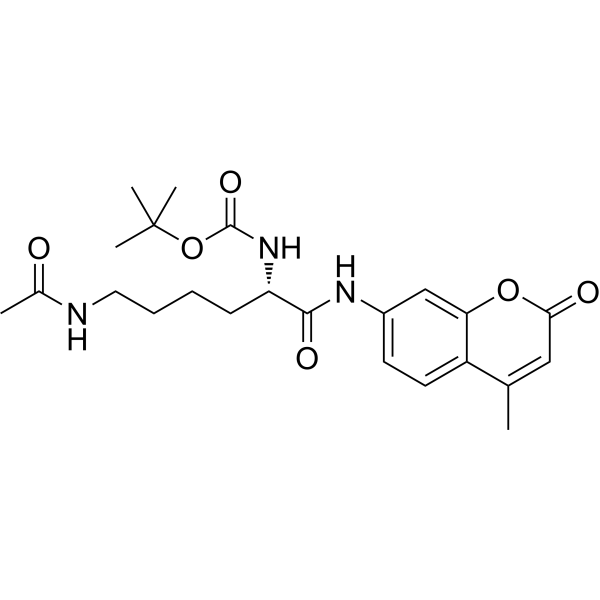
HY-138159
Boc-Lys(Ac)-AMCFluorometric HDAC Substrate -
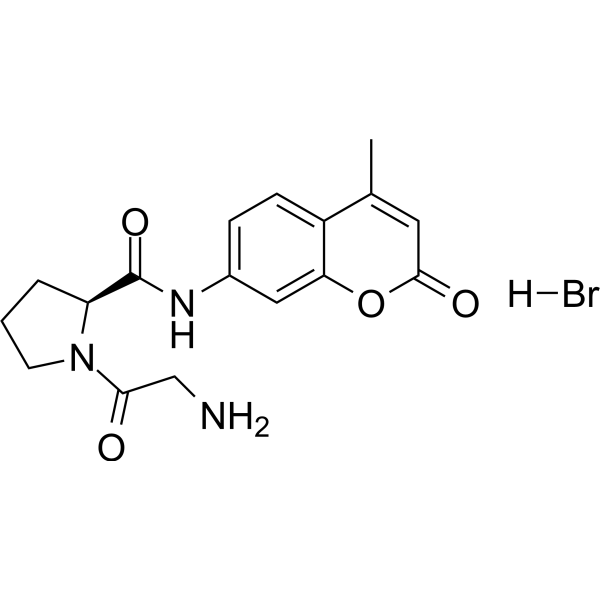
HY-137834
Gly-Pro-AMC hydrobromideFluorescent Dye -

HY-DY1046
Green CMFDA (solution)Cell Tracer -
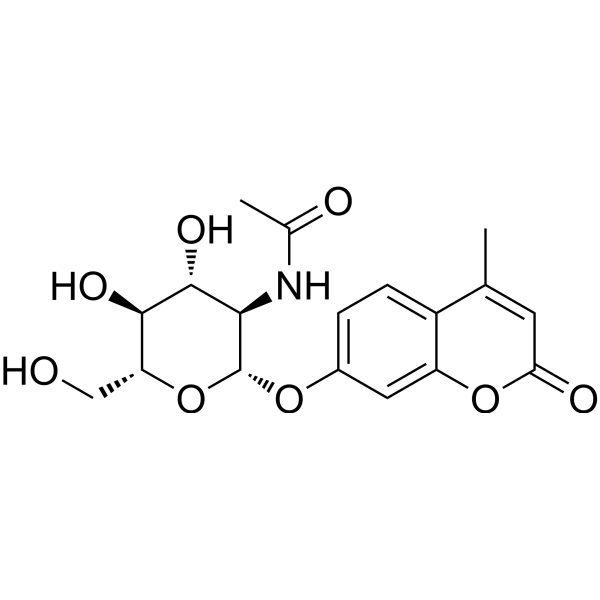
HY-137853
4-Methylumbelliferyl-2-acetamido-2-deoxy-β-D-GlucopyranosideFluorogenic Substrate -
HY-D1176
Calcium Green 1AMCalcium Indicator


Biological Activity
Description


Chemical Information
-
CAS No. 2376848-06-3
-
Appearance Solid
-
Molecular Weight 562.75
-
Formula C33H30N4OS2
-
Color Orange to red
-
SMILES
N#C/C(C#N)=C1S/C(C(N\1C2=CC=CC=C2)=O)=C\C3=CC=C4C(SC5=C(N4CC(CCCC)CC)C=CC=C5)=C3
-
Shipping
Room temperature in continental US; may vary elsewhere.
-
Storage
Powder -20°C 3 years In solvent -80°C 6 months -20°C 1 month


Solvent & Solubility
In Vitro:
DMSO : 30 mg/mL (53.31 mM; Need ultrasonic and warming; Hygroscopic DMSO has a significant impact on the solubility of product, please use newly opened DMSO)
Please refer to the solubility information to select the appropriate solvent. Once prepared, please aliquot and store the solution to prevent product inactivation from repeated freeze-thaw cycles.
Storage method and period of stock solution: -80°C, 6 months; -20°C, 1 month. When stored at -80°C, please use it within 6 months. When stored at -20°C, please use it within 1 month.
Please refer to the solubility information to select the appropriate solvent. Once prepared, please aliquot and store the solution to prevent product inactivation from repeated freeze-thaw cycles.
Storage method and period of stock solution: -80°C, 6 months; -20°C, 1 month. When stored at -80°C, please use it within 6 months. When stored at -20°C, please use it within 1 month.
Concentration (start) × Volume (start) = Concentration (final) × Volume (final)


Purity & Documentation
-
Data Sheet (272 KB)
-
SDS (252 KB)
- English - EN (252 KB)
- Français - FR (252 KB)
- Deutsch - DE (252 KB)
- Norwegian - NO (252 KB)
- Español - ES (252 KB)
- Swedish - SV (252 KB)
- Italian - IT (252 KB)
- Korean - KR (252 KB)
- Portuguese - PT (252 KB)
-
Handling Instructions (2659 KB)
References


Complete Stock Solution Preparation Table
Please refer to the solubility information to select the appropriate solvent. Once prepared, please aliquot and store the solution to prevent product inactivation from repeated freeze-thaw cycles.
Storage method and period of stock solution: -80°C, 6 months; -20°C, 1 month. When stored at -80°C, please use it within 6 months. When stored at -20°C, please use it within 1 month.
| Optional Solvent | Concentration Solvent Mass | 1 mg | 5 mg | 10 mg | 25 mg |
|---|---|---|---|---|---|
| DMSO | 1 mM | 1.7770 mL | 8.8849 mL | 17.7699 mL | 44.4247 mL |
| 5 mM | 0.3554 mL | 1.7770 mL | 3.5540 mL | 8.8849 mL | |
| 10 mM | 0.1777 mL | 0.8885 mL | 1.7770 mL | 4.4425 mL | |
| 15 mM | 0.1185 mL | 0.5923 mL | 1.1847 mL | 2.9616 mL | |
| 20 mM | 0.0888 mL | 0.4442 mL | 0.8885 mL | 2.2212 mL | |
| 25 mM | 0.0711 mL | 0.3554 mL | 0.7108 mL | 1.7770 mL | |
| 30 mM | 0.0592 mL | 0.2962 mL | 0.5923 mL | 1.4808 mL | |
| 40 mM | 0.0444 mL | 0.2221 mL | 0.4442 mL | 1.1106 mL | |
| 50 mM | 0.0355 mL | 0.1777 mL | 0.3554 mL | 0.8885 mL |


MIT-PZR Related Classifications
HY-141646 Related Classifications
 Powered by Bioz