



ML291

Based on 1 Customer Validation
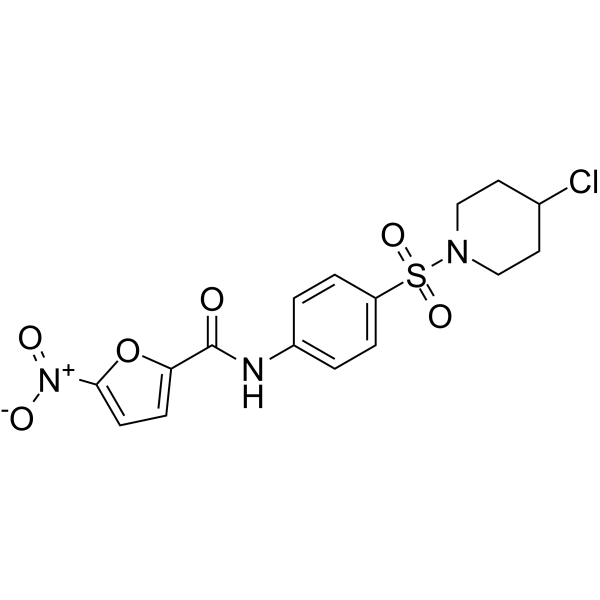
ML291 is a UPR (unfolded protein response)-inducing sulfonamidebenzamide. ML291 overwhelms the adaptive capacity of the UPR and induces apoptosis in a variety of solid cancer models. ML291 can activate the PERK/eIF2a/CHOP (apoptotic) arm of the UPR and reduce leukemic cell burden.
Nur für Forschungszwecke. Wir verkaufen nicht an Patienten.
- Reinheit : 99.80%
- CAS. Nr.: 1523437-16-2
- Formel: C16H16ClN3O6S
- Molecular Weight:413.83
-
Speicherung:
4°C, stored under nitrogen
* In solvent : -80°C, 6 months; -20°C, 1 month (stored under nitrogen)

To place orders, for customer services and technical support, please contact: MedChemExpress USA
Tel: 609-228-6898 E-mail: [email protected] [email protected]


-
 Biologische Aktivität
-
Chemical Information
-
Lösungsmittel & Löslichkeit
- Protokoll
- Reinheit & Dokumentation
- Verweise
-
 Help & FAQs


-
HY-15486
SalubrinaleIF2α Dephosphorylation Inhibitor -
HY-119240
CCT020312EIF2AK3/PERK Activator -
HY-100877
GCN2-IN-1GCN2 Inhibitor -
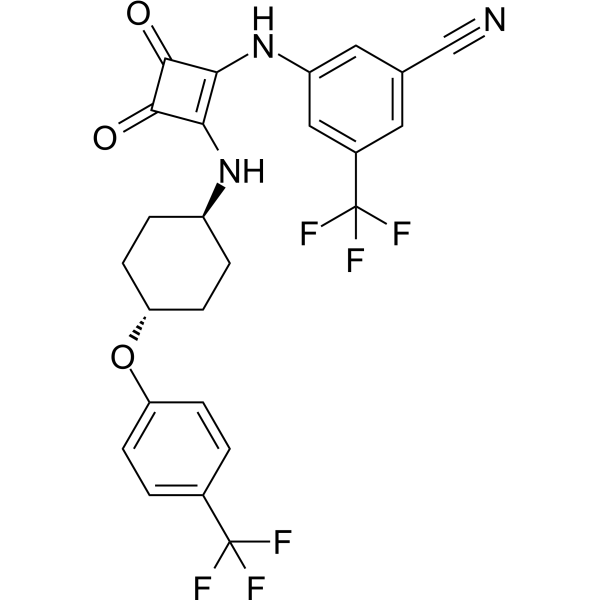
HY-147831
HR-19011EIF2α Activator -
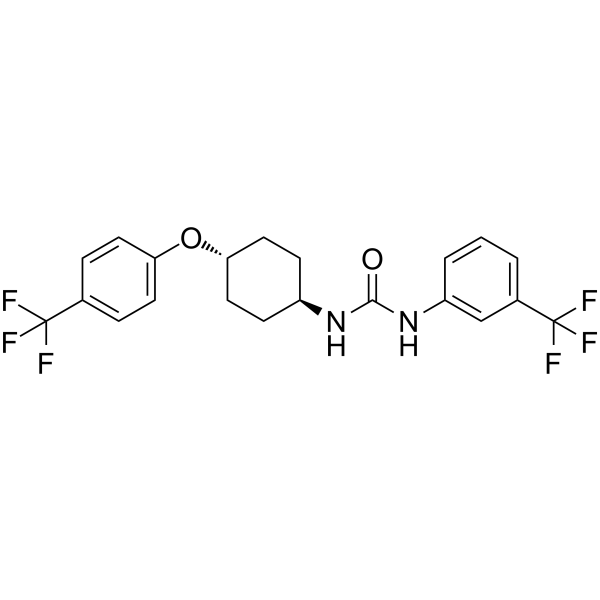
HY-147832
EIF2α activator 2EIF2α Activator -
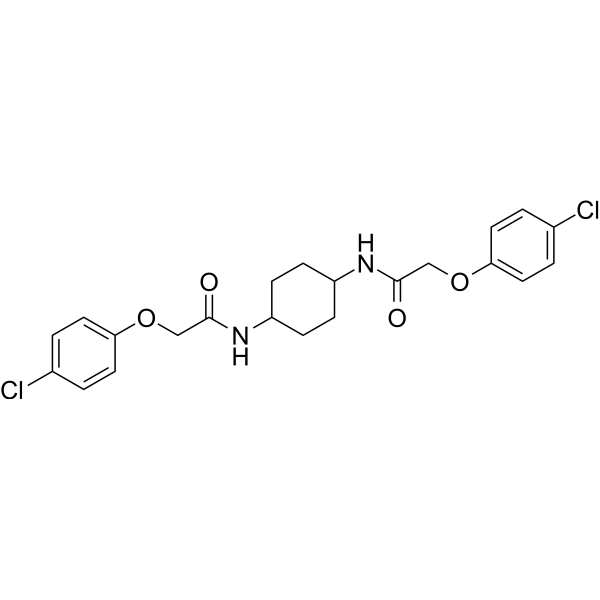
HY-12495A
ISRIBInhibitor of Integrated Stress Response -

HY-101991R
ML291 (Standard)Reference Standard -
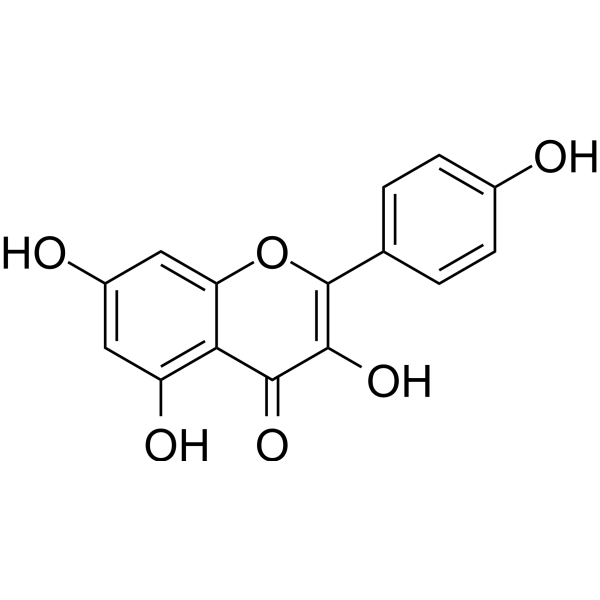
HY-14590
KaempferolEstrogen Receptor α Inhibitor -
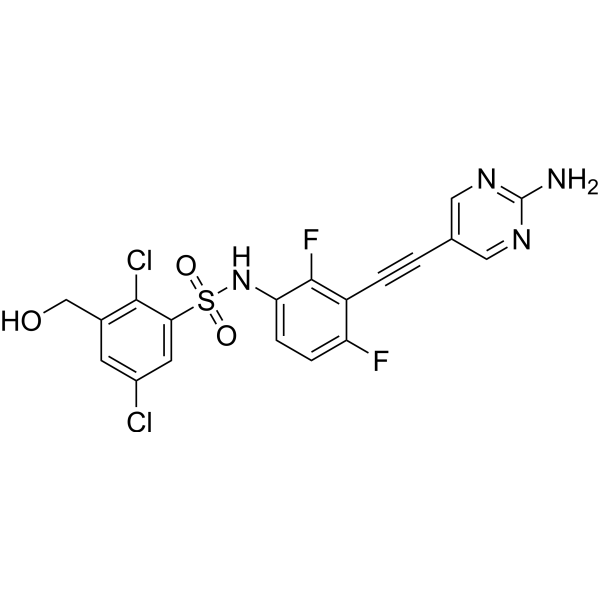
HY-130240
GCN2-IN-6eIF Inhibitor -
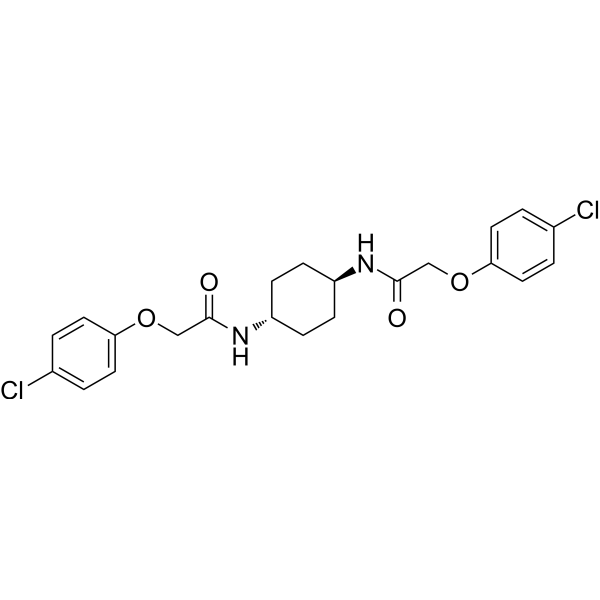
HY-12495
ISRIB (trans-isomer)PERK Inhiitor -
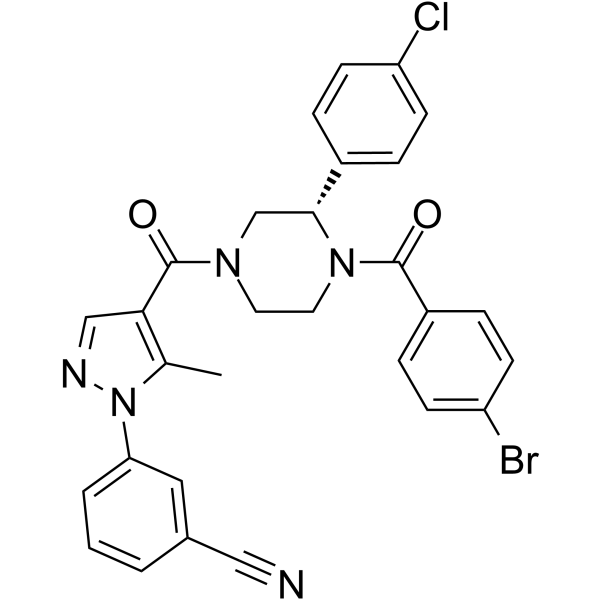
HY-101513
eIF4A3-IN-1eIF4A3 Inhibitor -
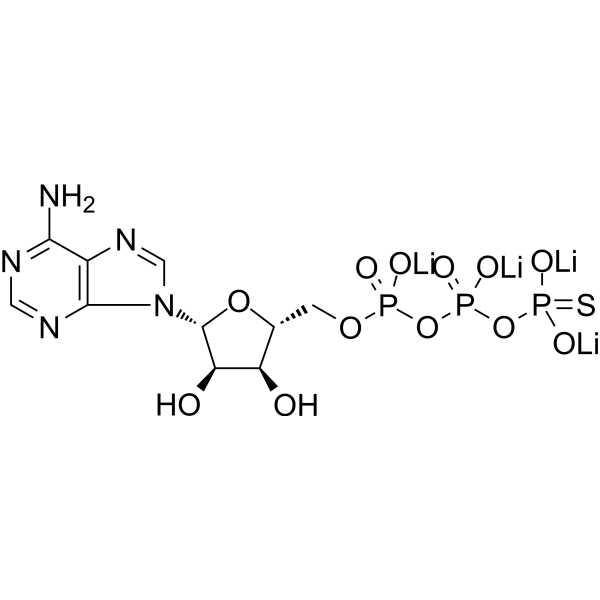
HY-108666
ATPγS tetralithium saltP2Y11 Receptor Agonist


Biologische Aktivität
Beschreibung
IC50 & Target
|
eIF2 |
Cellular Effect
|
Cell Line

|
Type | Value | Description | References |
|---|---|---|---|---|
| IMR-90 | EC50 |
>25 μM
Compound: 8
|
Cytotoxicity against human IMR90 cells after 44 to 46 hrs by CellTiter-Blue assay
Cytotoxicity against human IMR90 cells after 44 to 46 hrs by CellTiter-Blue assay
|
[PMID: 28119024] |
| MEF | EC50 |
>20 μM
Compound: 12
|
Antiproliferative activity against CHOP-knock out MEF cells after 16 hrs by luminescence assay
Antiproliferative activity against CHOP-knock out MEF cells after 16 hrs by luminescence assay
|
[PMID: 25530830] |
| MEF | EC50 |
4.8 μM
Compound: 12
|
Antiproliferative activity against wild-type MEF cells after 16 hrs by luminescence assay
Antiproliferative activity against wild-type MEF cells after 16 hrs by luminescence assay
|
[PMID: 25530830] |


Chemical Information
-
CAS. Nr. 1523437-16-2
-
Appearance Solid
-
Molecular Weight 413.83
-
Formel C16H16ClN3O6S
-
Color Off-white to light yellow
-
SMILES
O=C(C1=CC=C([N+]([O-])=O)O1)NC2=CC=C(S(=O)(N3CCC(Cl)CC3)=O)C=C2
-
Versand
Room temperature in continental US; may vary elsewhere.
-
Speicherung
4°C, stored under nitrogen
* In solvent : -80°C, 6 months; -20°C, 1 month (stored under nitrogen)


Lösungsmittel & Löslichkeit
In Vitro:
DMSO : ≥ 50 mg/mL (120.82 mM; Hygroscopic DMSO has a significant impact on the solubility of product, please use newly opened DMSO)
* "≥" means soluble, but saturation unknown.
Please refer to the solubility information to select the appropriate solvent. Once prepared, please aliquot and store the solution to prevent product inactivation from repeated freeze-thaw cycles.
Storage method and period of stock solution: -80°C, 6 months; -20°C, 1 month (stored under nitrogen). When stored at -80°C, please use it within 6 months. When stored at -20°C, please use it within 1 month.
Please refer to the solubility information to select the appropriate solvent. Once prepared, please aliquot and store the solution to prevent product inactivation from repeated freeze-thaw cycles.
Storage method and period of stock solution: -80°C, 6 months; -20°C, 1 month (stored under nitrogen). When stored at -80°C, please use it within 6 months. When stored at -20°C, please use it within 1 month.
Konzentration (Stammlösung) × Volumen (Stammlösung) = Konzentration (Ziellösung) × Volumen (Ziellösung)


Reinheit & Dokumentation
-
Data Sheet (271 KB)
-
SDS (393 KB)
- English - EN (393 KB)
- Français - FR (393 KB)
- Deutsch - DE (393 KB)
- Norwegian - NO (393 KB)
- Español - ES (393 KB)
- Swedish - SV (393 KB)
- Italian - IT (393 KB)
- Korean - KR (393 KB)
- Portuguese - PT (393 KB)
-
Handling Instructions (2659 KB)
Verweise


Complete Stock Solution Preparation Table
Please refer to the solubility information to select the appropriate solvent. Once prepared, please aliquot and store the solution to prevent product inactivation from repeated freeze-thaw cycles.
Storage method and period of stock solution: -80°C, 6 months; -20°C, 1 month (stored under nitrogen). When stored at -80°C, please use it within 6 months. When stored at -20°C, please use it within 1 month.
| Optional Solvent | Concentration Solvent Mass | 1 mg | 5 mg | 10 mg | 25 mg |
|---|---|---|---|---|---|
| DMSO | 1 mM | 2.4165 mL | 12.0823 mL | 24.1645 mL | 60.4113 mL |
| 5 mM | 0.4833 mL | 2.4165 mL | 4.8329 mL | 12.0823 mL | |
| 10 mM | 0.2416 mL | 1.2082 mL | 2.4165 mL | 6.0411 mL | |
| 15 mM | 0.1611 mL | 0.8055 mL | 1.6110 mL | 4.0274 mL | |
| 20 mM | 0.1208 mL | 0.6041 mL | 1.2082 mL | 3.0206 mL | |
| 25 mM | 0.0967 mL | 0.4833 mL | 0.9666 mL | 2.4165 mL | |
| 30 mM | 0.0805 mL | 0.4027 mL | 0.8055 mL | 2.0137 mL | |
| 40 mM | 0.0604 mL | 0.3021 mL | 0.6041 mL | 1.5103 mL | |
| 50 mM | 0.0483 mL | 0.2416 mL | 0.4833 mL | 1.2082 mL | |
| 60 mM | 0.0403 mL | 0.2014 mL | 0.4027 mL | 1.0069 mL | |
| 80 mM | 0.0302 mL | 0.1510 mL | 0.3021 mL | 0.7551 mL | |
| 100 mM | 0.0242 mL | 0.1208 mL | 0.2416 mL | 0.6041 mL |


ML291 Related Classifications
HY-101991 Related Classifications
 Powered by Bioz