



N-trans-Feruloyltyramine

Based on 1 Customer Validation
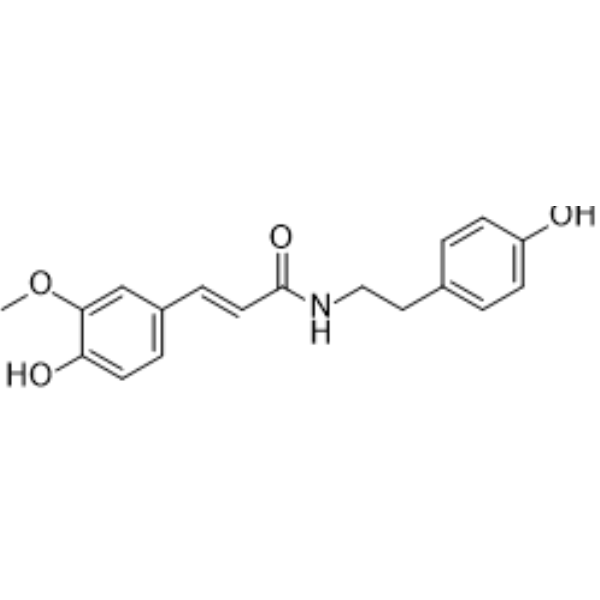
N-trans-Feruloyltyramine (N-feruloyltyramine), an alkaloid, is a potent antioxidant. N-trans-Feruloyltyramine improves H2O2-induced intracellular ROS generation and decreases apoptosis. N-trans-Feruloyltyramine has the potential for oxidative stress-related neurodegenerative conditions and cancer research.
For research use only. We do not sell to patients.
- Purity : 99.90%
- CAS No.: 66648-43-9
- Formula: C18H19NO4
- Molecular Weight:313.35
-
Storage:
4°C, protect from light
* In solvent : -80°C, 6 months; -20°C, 1 month (protect from light)

To place orders, for customer services and technical support, please contact: MedChemExpress USA
Tel: 609-228-6898 E-mail: [email protected] [email protected]


-
 Biological Activity
-
Chemical Information
-
Solvent & Solubility
- Protocols
- Purity & Documentation
- References
-
 Help & FAQs


-
HY-N8241
N-trans-CaffeoyltyramineAntioxidant -
HY-10219
RapamycinmTOR Inhibitor -
HY-B0522A
Ampicillin sodiumBacterial Inhibitor -
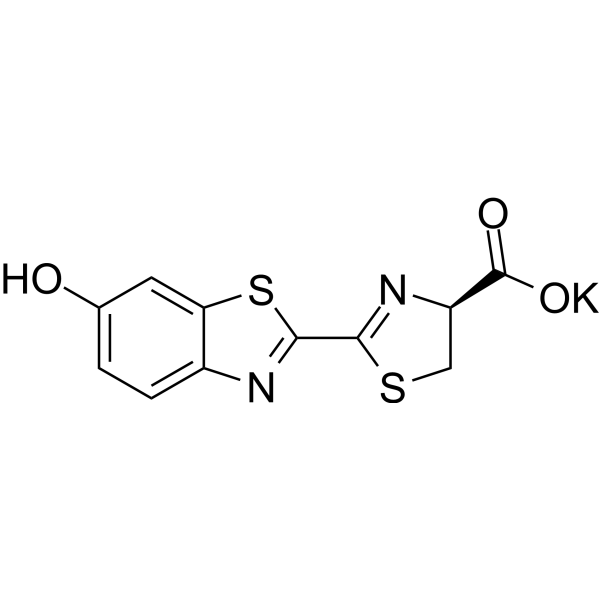
HY-12591B
D-Luciferin potassiumSubstrate for Luciferase -
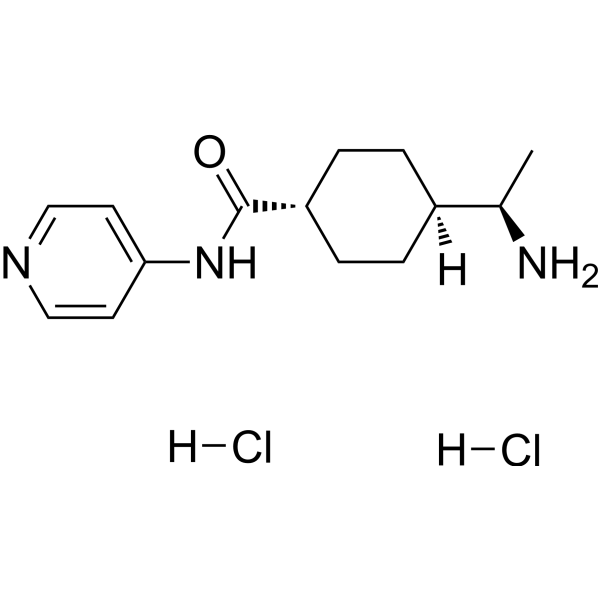
HY-10583
Y-27632 dihydrochlorideROCK Inhibitor -
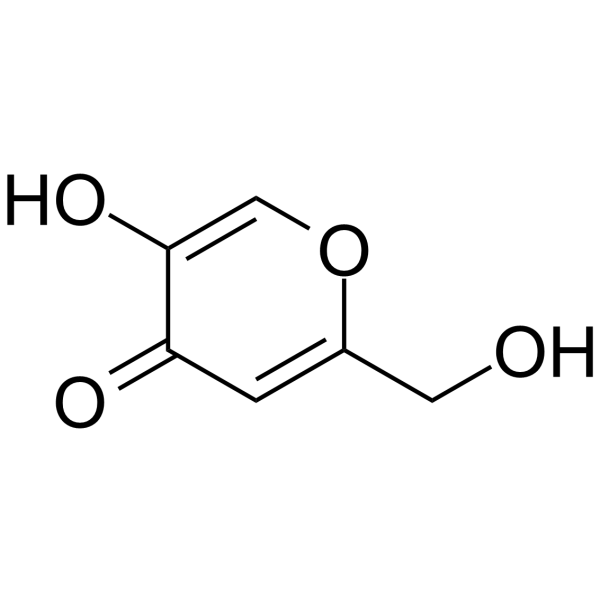
HY-W050154
Kojic acidTyrosinase Inhibitor -
HY-K1057
Puromycin, Sterile -

HY-K0301
Cell Counting Kit-8 -
HY-N3945
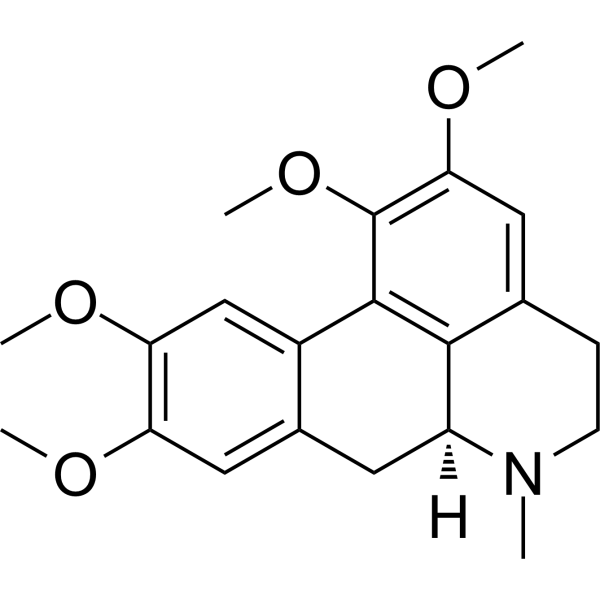
GlaucinePDE4 Inhibitor -
HY-N7080
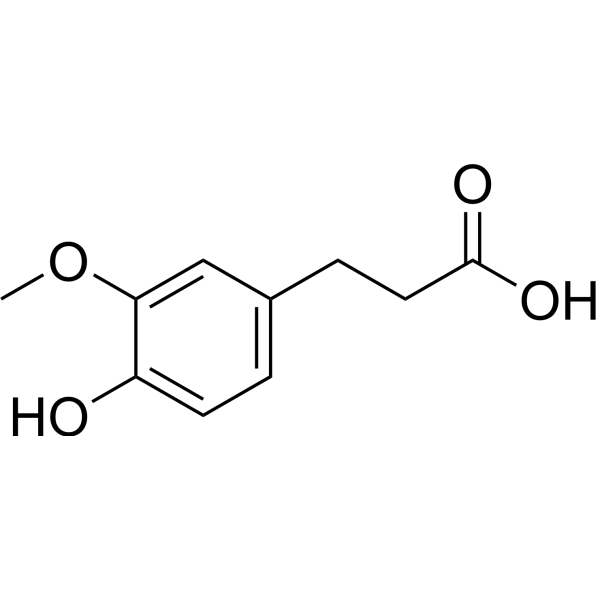
Dihydroferulic acidAntioxidant Agent -
HY-N0902
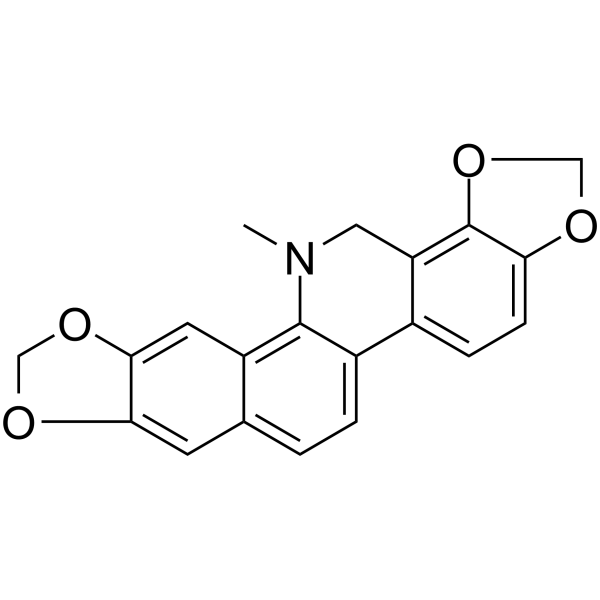
DihydrosanguinarineNatural Product -
HY-N2230
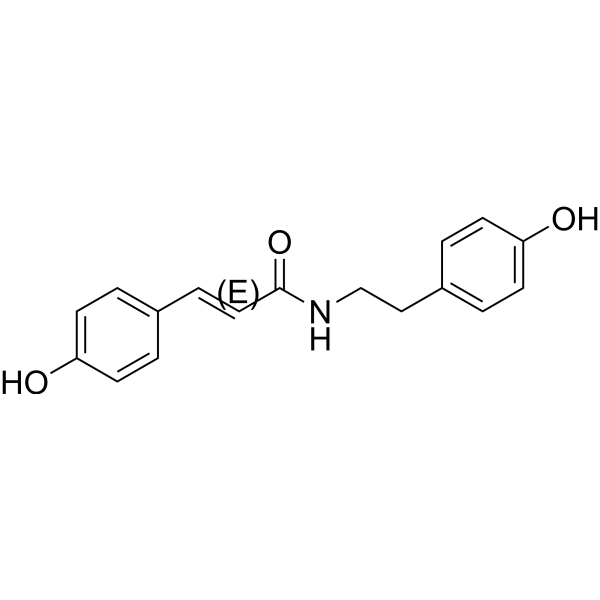
N-p-trans-CoumaroyltyramineChE Inhibitor


Biological Activity
Description
Cellular Effect
|
Cell Line

|
Type | Value | Description | References |
|---|---|---|---|---|
| A549 | ED50 |
13.35 μg/mL
Compound: 6
|
Cytotoxicity against human A549 cells after 7 days
Cytotoxicity against human A549 cells after 7 days
|
[PMID: 1593281] |
| A549 | IC50 |
>30 μM
Compound: 7
|
Cytotoxicity against human A549 cells by SRB assay
Cytotoxicity against human A549 cells by SRB assay
|
[PMID: 22951040] |
| A549 | IC50 |
>40 μM
Compound: 24
|
Antiproliferative activity against human A549 cells after 3 days by SRB assay
Antiproliferative activity against human A549 cells after 3 days by SRB assay
|
[PMID: 25241925] |
| BV-2 | IC50 |
17.36 μM
Compound: 7
|
Antiinflammatory activity in mouse BV2 cells assessed as inhibition of LPS-induced NO production treated 30 mins before LPS stimulation measured after 24 hrs by Griess reaction
Antiinflammatory activity in mouse BV2 cells assessed as inhibition of LPS-induced NO production treated 30 mins before LPS stimulation measured after 24 hrs by Griess reaction
|
[PMID: 22951040] |
| BV-2 | IC50 |
18 μM
Compound: 21
|
Antineuroinflammatory activity against mouse BV2 cells assessed as inhibition of LPS-induced NO production incubated for 20 hrs by Griess assay
Antineuroinflammatory activity against mouse BV2 cells assessed as inhibition of LPS-induced NO production incubated for 20 hrs by Griess assay
|
[PMID: 33822610] |
| DU-145 | IC50 |
>40 μM
Compound: 24
|
Antiproliferative activity against human DU145 cells after 3 days by SRB assay
Antiproliferative activity against human DU145 cells after 3 days by SRB assay
|
[PMID: 25241925] |
| Erythrocyte | IC50 |
0.88 mM
Compound: 25
|
Anticomplement activity in sheep erythrocytes assessed as concentration required for 50% hemolytic inhibition by classic pathway pretreated for 10 mins with guinea pig serum followed by erythrocyte addition measured after 30 mins by spectrophotometeric me
Anticomplement activity in sheep erythrocytes assessed as concentration required for 50% hemolytic inhibition by classic pathway pretreated for 10 mins with guinea pig serum followed by erythrocyte addition measured after 30 mins by spectrophotometeric me
|
[PMID: 29631958] |
| Erythrocyte | IC50 |
1.33 mM
Compound: 25
|
Anticomplement activity in rabbit erythrocytes assessed as concentration required for 50% hemolytic inhibition by alternative pathway pretreated for 10 mins with normal human serum followed by erythrocyte addition measured after 30 mins by spectrophotomet
Anticomplement activity in rabbit erythrocytes assessed as concentration required for 50% hemolytic inhibition by alternative pathway pretreated for 10 mins with normal human serum followed by erythrocyte addition measured after 30 mins by spectrophotomet
|
[PMID: 29631958] |
| GES1 | IC50 |
>150 μM
Compound: 14
|
Antiproliferative activity against human GES1 cells assessed as reduction in cell viability after 24 hrs by MTT assay
Antiproliferative activity against human GES1 cells assessed as reduction in cell viability after 24 hrs by MTT assay
|
[PMID: 35286954] |
| HCT-15 | IC50 |
>30 μM
Compound: 7
|
Cytotoxicity against human HCT15 cells by SRB assay
Cytotoxicity against human HCT15 cells by SRB assay
|
[PMID: 22951040] |
| HepG2 | IC50 |
6.6 μg/mL
Compound: 6
|
Cytotoxicity against human HepG2 cells by MTT assay
Cytotoxicity against human HepG2 cells by MTT assay
|
[PMID: 11374955] |
| HepG2 2.2.15 | IC50 |
1.9 μg/mL
Compound: 6
|
Cytotoxicity against human HepG2(2.2.15) cells by MTT assay
Cytotoxicity against human HepG2(2.2.15) cells by MTT assay
|
[PMID: 11374955] |
| HGC-27 | IC50 |
84.5 μM
Compound: 14
|
Antiproliferative activity against human HGC-27 cells assessed as reduction in cell viability after 24 hrs by MTT assay
Antiproliferative activity against human HGC-27 cells assessed as reduction in cell viability after 24 hrs by MTT assay
|
[PMID: 35286954] |
| HT-29 | ED50 |
23.58 μg/mL
Compound: 6
|
Cytotoxicity against human HT-29 cells after 7 days
Cytotoxicity against human HT-29 cells after 7 days
|
[PMID: 1593281] |
| HT-29 | IC50 |
>20 μM
Compound: 17
|
Cytotoxicity against human HT-29 cells assessed as reduction in cell growth incubated for 72 hrs
Cytotoxicity against human HT-29 cells assessed as reduction in cell growth incubated for 72 hrs
|
[PMID: 26147490] |
| KB | IC50 |
>40 μM
Compound: 24
|
Antiproliferative activity against human KB cells after 3 days by SRB assay
Antiproliferative activity against human KB cells after 3 days by SRB assay
|
[PMID: 25241925] |
| KB | IC50 |
>47.8 μM
Compound: 12
|
Cytotoxicity against human KB cells by sulforhodamine B assay
Cytotoxicity against human KB cells by sulforhodamine B assay
|
[PMID: 26928423] |
| LNCaP | IC50 |
>100 μM
Compound: 5
|
Cytotoxicity against human LNCAP cells after 48 hrs by MTT assay
Cytotoxicity against human LNCAP cells after 48 hrs by MTT assay
|
[PMID: 11858758] |
| MCF7 | ED50 |
4.76 μg/mL
Compound: 6
|
Cytotoxicity against human MCF7 cells after 7 days
Cytotoxicity against human MCF7 cells after 7 days
|
[PMID: 1593281] |
| MCF7 | IC50 |
>40 μM
Compound: 24
|
Antiproliferative activity against human MCF7 cells after 3 days by SRB assay
Antiproliferative activity against human MCF7 cells after 3 days by SRB assay
|
[PMID: 25241925] |
| MDA-MB-231 | IC50 |
>40 μM
Compound: 24
|
Antiproliferative activity against human MDA-MB-231 cells after 3 days by SRB assay
Antiproliferative activity against human MDA-MB-231 cells after 3 days by SRB assay
|
[PMID: 25241925] |
| MDA-MB-435 | IC50 |
>20 μM
Compound: 17
|
Cytotoxicity against human MDA-MB-435 cells assessed as reduction in cell growth incubated for 72 hrs
Cytotoxicity against human MDA-MB-435 cells assessed as reduction in cell growth incubated for 72 hrs
|
[PMID: 26147490] |
| MGC-803 | IC50 |
98.3 μM
Compound: 14
|
Antiproliferative activity against human MGC-803 cells assessed as reduction in cell viability after 24 hrs by MTT assay
Antiproliferative activity against human MGC-803 cells assessed as reduction in cell viability after 24 hrs by MTT assay
|
[PMID: 35286954] |
| RAW264.7 | IC50 |
>50 μM
Compound: 25
|
Antiinflammatory activity in mouse RAW264.7 assessed as inhibition of LPS-induced NO production preincubated for 30 mins followed by LPS stimulation measured after 24 hrs by Griess reagent based assay
Antiinflammatory activity in mouse RAW264.7 assessed as inhibition of LPS-induced NO production preincubated for 30 mins followed by LPS stimulation measured after 24 hrs by Griess reagent based assay
|
[PMID: 33939429] |
| RAW264.7 | IC50 |
6.33 μM
Compound: 9
|
Antiinflammatory activity against mouse RAW264.7 cells assessed as inhibition of LPS-induced PGE2 production preincubated for 1 hr followed by LPS-stimulation and measured after 18 hrs
Antiinflammatory activity against mouse RAW264.7 cells assessed as inhibition of LPS-induced PGE2 production preincubated for 1 hr followed by LPS-stimulation and measured after 18 hrs
|
[PMID: 31126853] |
| SK-BR-3 | IC50 |
>40 μM
Compound: 24
|
Antiproliferative activity against human SK-BR-3 cells after 3 days by SRB assay
Antiproliferative activity against human SK-BR-3 cells after 3 days by SRB assay
|
[PMID: 25241925] |
| SK-MEL-2 | IC50 |
>30 μM
Compound: 7
|
Cytotoxicity against human SK-MEL-2 cells by SRB assay
Cytotoxicity against human SK-MEL-2 cells by SRB assay
|
[PMID: 22951040] |
| SK-OV-3 | IC50 |
>30 μM
Compound: 7
|
Cytotoxicity against human SKOV3 cells by SRB assay
Cytotoxicity against human SKOV3 cells by SRB assay
|
[PMID: 22951040] |
| Vero | IC50 |
>47.8 μM
Compound: 12
|
Cytotoxicity against African green monkey Vero cells by sulforhodamine B assay
Cytotoxicity against African green monkey Vero cells by sulforhodamine B assay
|
[PMID: 26928423] |
| ZR-75-1 | IC50 |
>40 μM
Compound: 24
|
Antiproliferative activity against human ZR-75-1 cells after 3 days by SRB assay
Antiproliferative activity against human ZR-75-1 cells after 3 days by SRB assay
|
[PMID: 25241925] |
In Vitro
N-trans-Feruloyltyramine (N-feruloyltyramine; 10-500 µM; 3 hours prior H2O2) protects the cells against H2O2-induced toxicity[1].
N-trans-Feruloyltyramine (25-100 µM; 3 hours prior H2O2) with 100 µM significantly reduces Bax and activated caspase-3 levels in H2O2-treated SK-N-SH cells[1].
N-trans-Feruloyltyramine significantly improves an H2O2-mediated increase in ROS levels[1].
N-trans-Feruloyltyramine (10-500 µM) does not affect viability of the SK-N-SH cells[1].
N-trans-Feruloyltyramine (64-320 µM; 24 hours) shows proliferation inhibition on HepG2 cells with IC50 value of 194 µM[2].
MedChemExpress (MCE) has not independently confirmed the accuracy of these methods. They are for reference only. Further protocols information, click here.
-
Cell Line:SK-N-SH cells
-
Concentration:10, 25, 50, 100, 150, 250, 500 µM
-
Incubation Time:For 3 hours prior H2O2
-
Result:Protected the cells against H2O2 (150 µM)-induced toxicity as determined by a significant higher percentage of viability in cells.
-
Cell Line:SK-N-SH cells
-
Concentration:25, 50, 100 μM
-
Incubation Time:For 3 hours prior H2O2
-
Result:Abolished H2O2-induced Bax expression.
Significantly decreased activated caspase-3 levels.
Clinical Trial
| NCT Number | Sponsor | Condition | Start Date |
Phase
|
|---|---|---|---|---|
| NCT01329991 | Plexxikon| | 2011-05 | PHASE1 |


Chemical Information
-
CAS No. 66648-43-9
-
Appearance Solid
-
Molecular Weight 313.35
-
Formula C18H19NO4
-
Color White to off-white
-
SMILES
O=C(NCCC1=CC=C(O)C=C1)/C=C/C2=CC=C(O)C(OC)=C2
-
Synonyms
N-feruloyltyramine; Moupinamide
-
Structure Classification
-
Initial Source
-
Shipping
Room temperature in continental US; may vary elsewhere.
-
Storage
4°C, protect from light
* In solvent : -80°C, 6 months; -20°C, 1 month (protect from light)


Solvent & Solubility
In Vitro:
DMSO : 100 mg/mL (319.13 mM; Need ultrasonic; Hygroscopic DMSO has a significant impact on the solubility of product, please use newly opened DMSO)
Please refer to the solubility information to select the appropriate solvent. Once prepared, please aliquot and store the solution to prevent product inactivation from repeated freeze-thaw cycles.
Storage method and period of stock solution: -80°C, 6 months; -20°C, 1 month (protect from light). When stored at -80°C, please use it within 6 months. When stored at -20°C, please use it within 1 month.
Please refer to the solubility information to select the appropriate solvent. Once prepared, please aliquot and store the solution to prevent product inactivation from repeated freeze-thaw cycles.
Storage method and period of stock solution: -80°C, 6 months; -20°C, 1 month (protect from light). When stored at -80°C, please use it within 6 months. When stored at -20°C, please use it within 1 month.
Concentration (start) × Volume (start) = Concentration (final) × Volume (final)
In Vivo:
Select the appropriate dissolution method based on your experimental animal and administration route.
- For the following dissolution methods, please ensure to first prepare a clear stock solution using an In Vitro approach and then sequentially add co-solvents:
- To ensure reliable experimental results, the clarified stock solution can be appropriately stored based on storage conditions. As for the working solution for In Vivo experiments, it is recommended to prepare freshly and use it on the same day.
- The percentages shown for the solvents indicate their volumetric ratio in the final prepared solution. If precipitation or phase separation occurs during preparation, heat and/or sonication can be used to aid dissolution.
Add each solvent one by one: 10% DMSO 40% PEG300 5% Tween-80 45% Saline
Solubility: ≥ 2.5 mg/mL (7.98 mM); Clear solution
This protocol yields a clear solution of ≥ 2.5 mg/mL (saturation unknown).
Taking 1 mL working solution as an example, add 100 μL DMSO stock solution (25.0 mg/mL) to 400 μL PEG300, and mix evenly; then add 50 μL Tween-80 and mix evenly; then add 450 μL Saline to adjust the volume to 1 mL.
Preparation of Saline: Dissolve 0.9 g sodium chloride in ddH₂O and dilute to 100 mL to obtain a clear Saline solution.
Add each solvent one by one: 10% DMSO 90% (20% SBE-β-CD in Saline)
Solubility: ≥ 2.5 mg/mL (7.98 mM); Clear solution
This protocol yields a clear solution of ≥ 2.5 mg/mL (saturation unknown).
Taking 1 mL working solution as an example, add 100 μL DMSO stock solution (25.0 mg/mL) to 900 μL 20% SBE-β-CD in Saline, and mix evenly.
Preparation of 20% SBE-β-CD in Saline (4°C, storage for one week): 2 g SBE-β-CD powder is dissolved in 10 mL Saline, completely dissolve until clear.
In Vivo Dissolution Calculator
Please enter the basic information of animal experiments:
-
-
-
-
Recommended: Prepare an additional quantity of animals to account for potential losses during experiments.
Please enter your animal formula composition:
-
%DMSO +
Recommended: Keep the proportion of DMSO in working solution below 2% if your animal is weak.
-
%+
-
+%Tween-80 + +
-
%Saline +
The co-solvents required include: DMSO, . All of co-solvents are available by MedChemExpress (MCE). , Tween 80. All of co-solvents are available by MedChemExpress (MCE).
Working solution concentration: 0.22 mg/mL
Method for preparing stock solution: mg drug dissolved in μL DMSO. Stock solution concentration: mg/mL. * In solvent : -80°C, 6 months; -20°C, 1 month (protect from light)
1. Take μL DMSO stock solution;
2. Add μL .
μL , mix evenly;
3. Then add μL Tween 80, mix evenly;
4. Then add μL
Please ensure that the stock solution in the first step is dissolved to a clear state, and add co-solvents in sequence. You can use ultrasonic heating (ultrasonic cleaner, recommended frequency 20-40 kHz), vortexing, etc. to assist dissolution.

Protocols
-
Apoptosis
Apoptosis, also called programmed cell death, is generally characterized by distinct morphological characteristics.
-
TUNEL staining for apoptotic DNA fragmentation
TUNEL staining detects DNA strand breaks by using terminal deoxynucleotidyl transferase to add labeled nucleotides to exposed 3′-OH DNA termini, generating either microscopic staining in fixed cells or tissue sections, or fluorescence/cytometric signal in cell suspensions. TUNEL positivity reflects DNA fragmentation but should not be interpreted alone as definitive apoptosis, because TUNEL can also label necrotic, autolytic, mechanically damaged, or DNA-repair-associated DNA breaks.
-
Annexin V plus membrane-impermeant dye apoptosis staining
Annexin V-based apoptosis assays rely on the detection of phosphatidylserine (PS) externalization from the inner leaflet of the plasma membrane to the outer leaflet, an early biochemical hallmark of apoptosis. Fluorescently labeled Annexin V binds PS in a calcium-dependent manner, enabling identification of early apoptotic cells by flow cytometry or fluorescence microscopy. When combined with a membrane-impermeant DNA-binding dye (e. g. , propidium iodide), this approach allows discrimination between viable (Annexin V−/dye−), early apoptotic (Annexin V+/dye−), and late apoptotic or necrotic (Annexin V+/dye+) cell populations by assessing membrane integrity and PS exposure.
-
ROS/oxidative-stress fluorescent staining
ROS/oxidative-stress fluorescent staining uses cell-permeant fluorogenic probes that become fluorescent after oxidation inside cells or tissues; commonly used examples include DCFH-DA/DCFDA for broad cellular oxidant detection, DHE for superoxide-related signal detection, MitoSOX for mitochondrial superoxide-related signal detection, and CellROX probes for oxidative-stress-associated fluorescence readouts. The assay detects probe oxidation rather than a single ROS species unless the probe and analysis method have been chemically validated for that species. DCFH-DA enters cells, is deacetylated by intracellular esterases to DCFH, and produces fluorescent DCF after oxidation, so the readout is used as an operational measure of total cellular oxidative stress rather than a species-specific ROS measurement. DHE and MitoSOX can report superoxide-related oxidation, but red fluorescence alone can include non-specific ethidium-like oxidation products; HPLC or optimized spectral approaches are
-
Apoptosis Solutions
Apoptosis is a regulated, generally non-lytic cell-death pathway that removes unwanted, damaged, infected, or abnormal cells through coordinated morphological changes, caspase activation, DNA fragmentation, and membrane remodeling. The intrinsic apoptosis pathway is controlled mainly by mitochondrial outer membrane permeabilization, BCL-2 family proteins, cytochrome c release, apoptosome formation, caspase-9 activation, and downstream executioner caspase-3/7 activation. The extrinsic apoptosis pathway is initiated by death receptors such as Fas, TNFR, and TRAIL receptors, which recruit adaptor proteins and activate caspase-8 before engaging executioner caspases or mitochondrial amplification through BID cleavage. Apoptosis is linked to many phenotypes, including cancer cell killing, tissue homeostasis, immune regulation, neurodegeneration, infection response, and treatment-induced cytotoxicity; unresolved questions include how apoptosis interacts with necroptosis, pyroptosis, ferroptos


Purity & Documentation
-
Data Sheet (271 KB)
-
SDS (398 KB)
- English - EN (398 KB)
- Français - FR (398 KB)
- Deutsch - DE (398 KB)
- Norwegian - NO (398 KB)
- Español - ES (398 KB)
- Swedish - SV (398 KB)
- Italian - IT (398 KB)
- Korean - KR (398 KB)
- Portuguese - PT (398 KB)
-
Handling Instructions (2659 KB)
References


Complete Stock Solution Preparation Table
Please refer to the solubility information to select the appropriate solvent. Once prepared, please aliquot and store the solution to prevent product inactivation from repeated freeze-thaw cycles.
Storage method and period of stock solution: -80°C, 6 months; -20°C, 1 month (protect from light). When stored at -80°C, please use it within 6 months. When stored at -20°C, please use it within 1 month.
| Optional Solvent | Concentration Solvent Mass | 1 mg | 5 mg | 10 mg | 25 mg |
|---|---|---|---|---|---|
| DMSO | 1 mM | 3.1913 mL | 15.9566 mL | 31.9132 mL | 79.7830 mL |
| 5 mM | 0.6383 mL | 3.1913 mL | 6.3826 mL | 15.9566 mL | |
| 10 mM | 0.3191 mL | 1.5957 mL | 3.1913 mL | 7.9783 mL | |
| 15 mM | 0.2128 mL | 1.0638 mL | 2.1275 mL | 5.3189 mL | |
| 20 mM | 0.1596 mL | 0.7978 mL | 1.5957 mL | 3.9891 mL | |
| 25 mM | 0.1277 mL | 0.6383 mL | 1.2765 mL | 3.1913 mL | |
| 30 mM | 0.1064 mL | 0.5319 mL | 1.0638 mL | 2.6594 mL | |
| 40 mM | 0.0798 mL | 0.3989 mL | 0.7978 mL | 1.9946 mL | |
| 50 mM | 0.0638 mL | 0.3191 mL | 0.6383 mL | 1.5957 mL | |
| 60 mM | 0.0532 mL | 0.2659 mL | 0.5319 mL | 1.3297 mL | |
| 80 mM | 0.0399 mL | 0.1995 mL | 0.3989 mL | 0.9973 mL | |
| 100 mM | 0.0319 mL | 0.1596 mL | 0.3191 mL | 0.7978 mL |


N-trans-Feruloyltyramine Related Classifications
HY-N2410 Related Classifications
 Powered by Bioz