



Nimotuzumab
Based on 1 publication(s) in Google Scholar
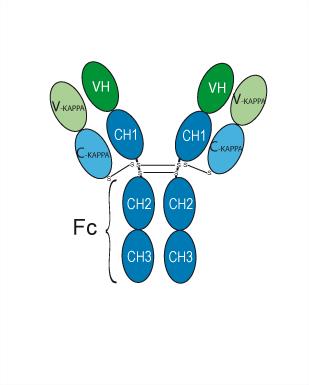
Nimotuzumab is a humanized IgG1 monoclonal antibody targeting EGFR with a KD of 0.21 nM. Nimotuzumab is directed against the extracellular domain of the EGFR blocking the binding to its ligands. Nimotuzumab, a strong antitumor agent, is cytolytic on target tumors by its capacity to cause antibody dependent cell mediated cytotoxicity (ADCC) and complement dependent cytotoxicity (CDC).
For research use only. We do not sell to patients.
- Purity : 96.80%
- CAS No.: 780758-10-3
- Molecular Weight:147.58 kDa
-
Storage:
Please store the product under the recommended conditions in the Certificate of Analysis.


To place orders, for customer services and technical support, please contact: MedChemExpress USA
Tel: 609-228-6898 E-mail: [email protected] [email protected]


-
 Biological Activity
-
Chemical Information
- Protocols
- Purity & Documentation
- References
-
 Help & FAQs


-

HY-P9905
CetuximabEGFR Inhibitor -

HY-P99041
PanitumumabAnti-EGFR Monoclonal Antibody -

HY-P9969
MatuzumabEGFR Inhibitor -

HY-P9977
AmivantamabEGFR-MET Dual Antibody -

HY-P9906
BevacizumabVEGF-A Inhibitor -
HY-10999
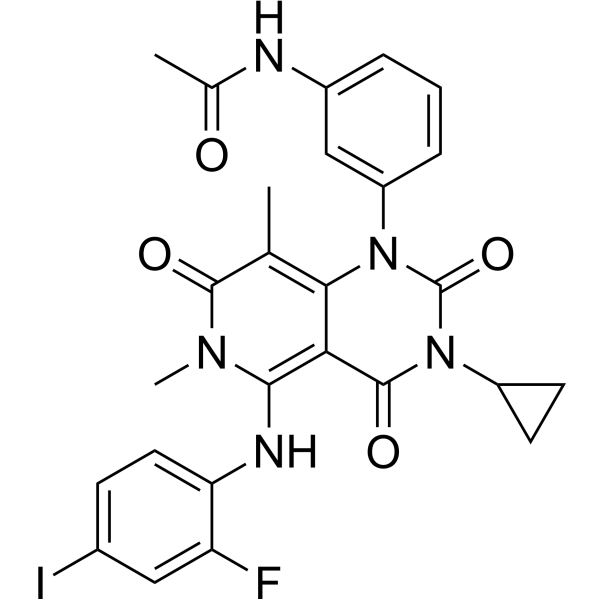
TrametinibMEK Inhibitor -

HY-P9964
NecitumumabEGFR IgG Monoclonal -

HY-P99406
PetosemtamabAnti-EGFR mAb -

HY-P99155
ZalutumumabEGFR Antibody -

HY-P99849
DepatuxizumabMonoclonal Antibody -

HY-P99316
SirukumabAnti-IL6 Antibody
Publications Citing Use of MedChemExpress (MCE) Nimotuzumab
MoreAll EGFR Isoforms
More

Biological Activity
Description
Isotype
Human IgG1 kappa
Recommend Isotype Controls
Species Reactivity
Human
IC50 & Target
ERBB1/EGFR/HER1
In Vitro
Nimotuzumab (10 μg/mL; 24 hours) induces significant downregulation of CD16 on NK cells[1].
Nimotuzumab (10 μg/mL; 48 hours) induces the upregulation of PD-L1 molecule on DCs when co-cultured with the NK: DC: HNSCC cells[1].
The intrinsic properties of Nimotuzumab requires bivalent binding (i.e., binding with both antibody arms to two targets simultaneously) for stable attachment to cellular surface, which leads to Nimotuzumab selectively binding to cells that express moderate to high EGFR levels[2].
MedChemExpress (MCE) has not independently confirmed the accuracy of these methods. They are for reference only. Further protocols information, click here.
Clinical Trial
| NCT Number | Sponsor | Condition | Start Date |
Phase

|
|---|---|---|---|---|
| NCT01329991 | Plexxikon| | 2011-05 | PHASE1 |
Gene ID
Accession
Conjugated
Unconjugated
Reconsititution
The product can be reconstituted/diluted with sterile PBS or saline.
Format
-
Human IgG1 kappa
Application
ELISA, FACS, Functional assay
Verified Bioactivity
-
 Immobilized EGFR vIII Protein, Human (HEK293, His, HY-P70189) can bind Nimotuzumab. The EC50 for this effect is 19 ng/mL.
 -
 Flow Cytometry analysis of A431 cells labelling ERBB1/EGFR/HER1 (red) with Nimotuzumab (anti-ERBB1/EGFR/HER1) (HY-P9968). Goat Anti-Human IgG (Alexa Fluor 488) (HY-P83776) at a dilution of 1/1000 was used as the secondary antibody. Blue-Human IgG1 kappa (HY-P99001). Black-Unlabelled control, cells without incubation with primary antibody.


Chemical Information
-
CAS No. 780758-10-3
-
Appearance Liquid
-
Molecular Weight 147.58 kDa
-
Color Colorless to light yellow
-
SMILES
[Nimotuzumab]
-
Synonyms
h-R3
-
Formulation
Please refer to the lot-specific COA for specific buffer information.
-
Storage
Please store the product under the recommended conditions in the Certificate of Analysis.


Publications (1)
-
Journal Impact Factor
-
Most Recent
-
Cell Rep Med
DDX5 super-enhancer promotes vasculogenic mimicry formation and metastasis in nasopharyngeal carcinoma by enhancing ADAM10 transcription. [Abstract]2025 Jun 17;6(6):102146. PMID: 40412383

Protocols
-
Cell Cytotoxicity Assay
Cytotoxicity assays are usually based on the assessment of cell membrane damage, which can also be indirectly detected by measuring cell viability. Detection methods include MTT assay, CKK-8 assay, LDH assay and ATP assay, etc.
-
Mammalian live/dead viability and cytotoxicity staining
Live/dead viability and cytotoxicity staining assays are based on the simultaneous detection of intracellular esterase activity in metabolically active (viable) cells and membrane integrity loss in non-viable cells. In commonly used dual-staining approaches, membrane-permeant fluorogenic substrates are converted by intracellular esterases into fluorescent products in live cells, while impermeant DNA-binding dyes selectively enter cells with compromised plasma membranes and label nucleic acids in dead or dying cells, enabling discrimination between viable and non-viable populations by fluorescence microscopy or flow cytometry.
-
Cell Viability Determination by MTT Colorimetric Assay
The following protocol uses the MTT colorimetric assay as a classic literature-established method for assessing cell viability/metabolic activity in cultured mammalian cells. MTT[3-(4,5-dimethylthiazol-2-yl)-2,5-diphenyltetrazolium bromide] is reduced by metabolically active cells to a colored formazan product; the amount of formazan is quantified spectrophotometrically and provides an indirect measure of metabolically active viable cells. Importantly, MTT reduction reflects cellular oxidoreductase/metabolic activity rather than an absolute direct count of living cells, so changes in cellular metabolism can alter the signal independently of cell number.


Purity & Documentation
-
Data Sheet (260 KB)
-
SDS (251 KB)
- English - EN (251 KB)
- Français - FR (251 KB)
- Deutsch - DE (251 KB)
- Norwegian - NO (251 KB)
- Español - ES (251 KB)
- Swedish - SV (251 KB)
- Italian - IT (251 KB)
- Korean - KR (251 KB)
- Portuguese - PT (251 KB)
-
Inhibitory Antibodies User Guide (603 KB)
References
[1]. Zaima Mazorra, et al. Nimotuzumab Induces NK Cell Activation, Cytotoxicity, Dendritic Cell Maturation and Expansion of EGFR-Specific T Cells in Head and Neck Cancer Patients. Front Pharmacol. 2017 Jun 19;8:382. [Content Brief]
[2]. Melarkode S Ramakrishnan, et al. Nimotuzumab, a promising therapeutic monoclonal for treatment of tumors of epithelial origin. MAbs. Jan-Feb 2009;1(1):41-8. [Content Brief]

Calculators
Concentration (start) × Volume (start) = Concentration (final) × Volume (final)


Nimotuzumab Related Classifications
HY-P9968 Related Classifications
 Powered by Bioz