



CP 376395

Based on 1 Customer Validation
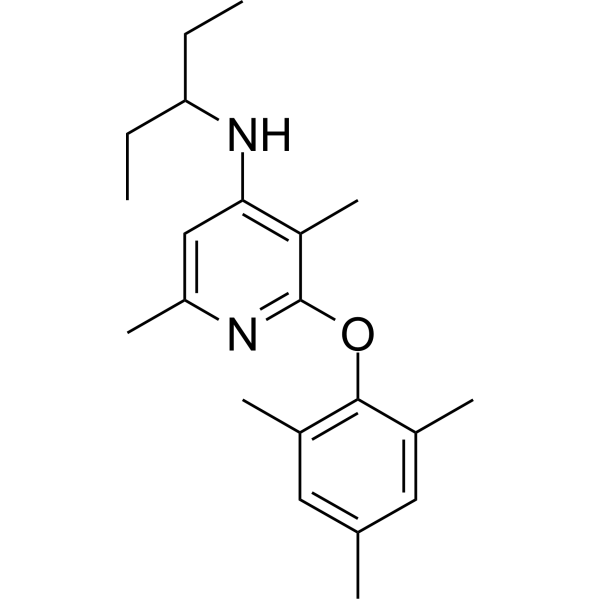
CP 376395 is a potent, selective, and brain-penetrable Corticotropin releasing factor 1 (CRF1) receptor antagonist.
For research use only. We do not sell to patients.
- Purity : 99.59%
- CAS No.: 175140-00-8
- Formula: C21H30N2O
- Molecular Weight:326.48
-
Storage:Powder -20°C, 3 years , 4°C, 2 years ; In solvent -80°C, 2 years , -20°C, 1 year

To place orders, for customer services and technical support, please contact: MedChemExpress USA
Tel: 609-228-6898 E-mail: [email protected] [email protected]


-
 Biological Activity
-
Chemical Information
-
Solvent & Solubility
- Purity & Documentation
- References
-
 Help & FAQs


-
HY-14875
VerucerfontCRFR Antagonist -
HY-12127
PexacerfontCRFR Antagonist -
HY-P1295
Urocortin, humanCRF Receptor Agonist -
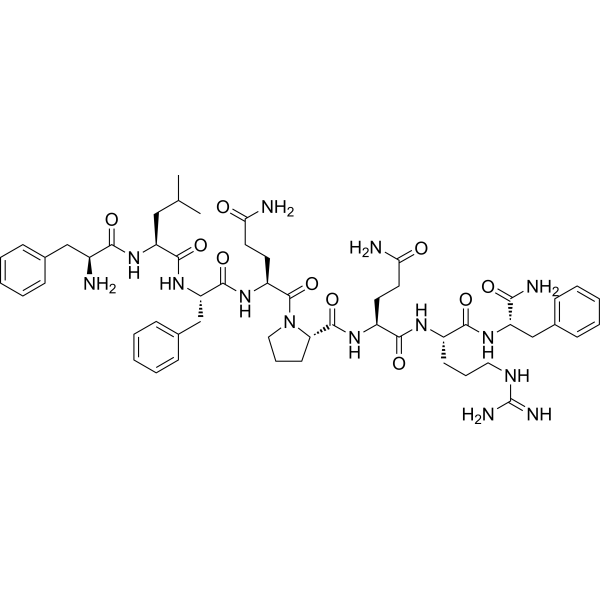
HY-P1248
Neuropeptide FFNPFF1/NPFF2 Receptor Agonist -
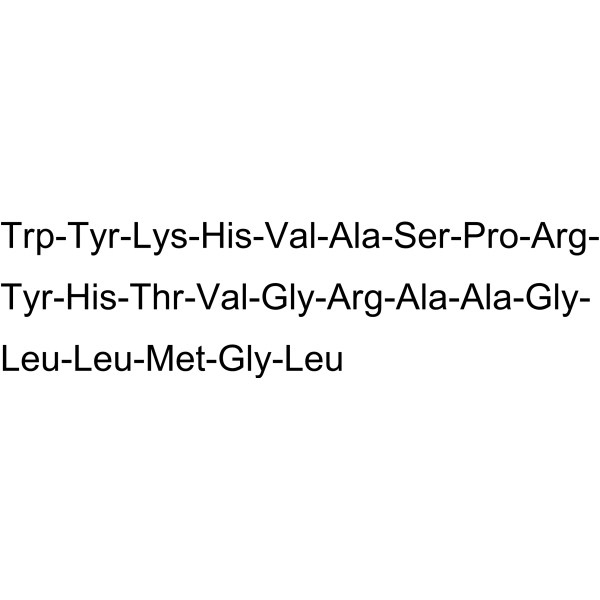
HY-P1035
Neuropeptide W-23 (human)NPBW1/2 Agonist -
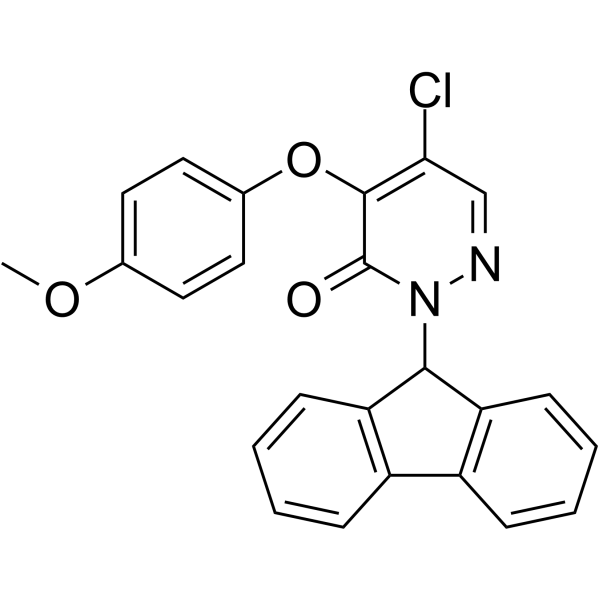
HY-108624
CYM 50769GPR7 Antagonist -

HY-P0086
Corticotropin-releasing factor (human)CRFR Modulator -
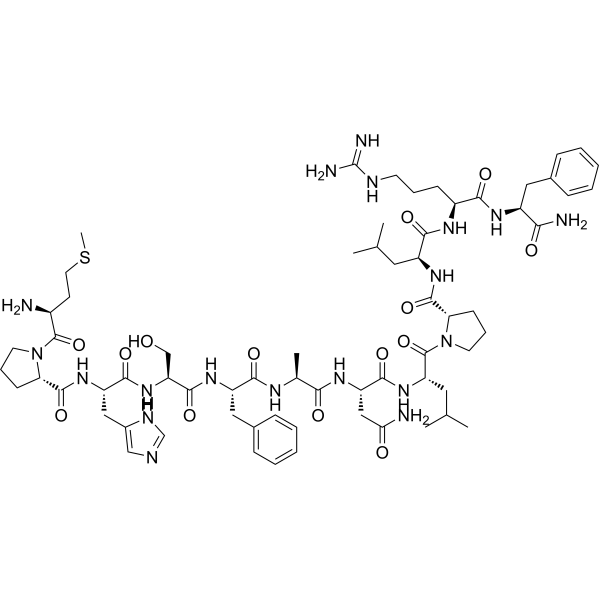
HY-P1428
RFRP-1(human)NPFF Receptor Agonist -
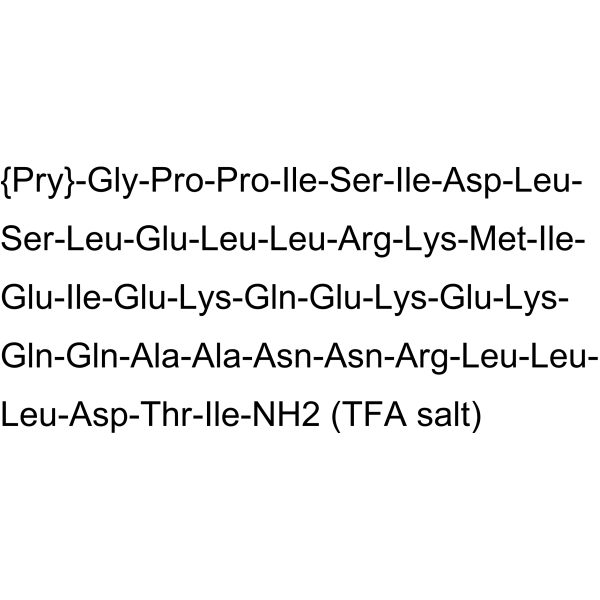
HY-P1298A
Sauvagine TFACRFR Agonist -
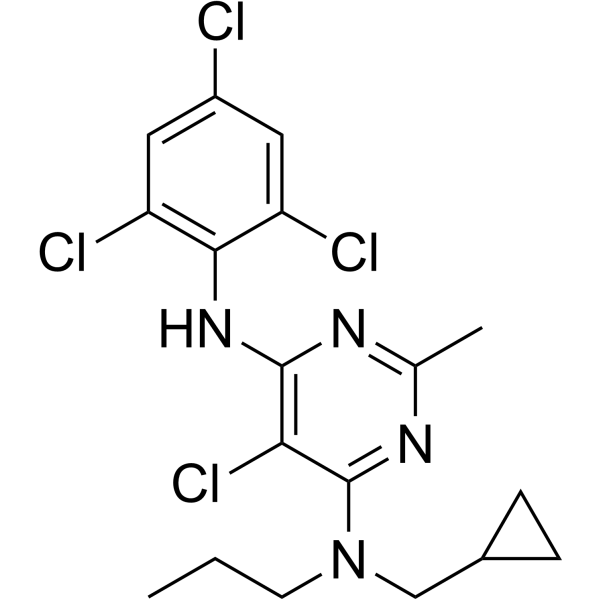
HY-135542
NBI-27914CRFR1 Antagonist -
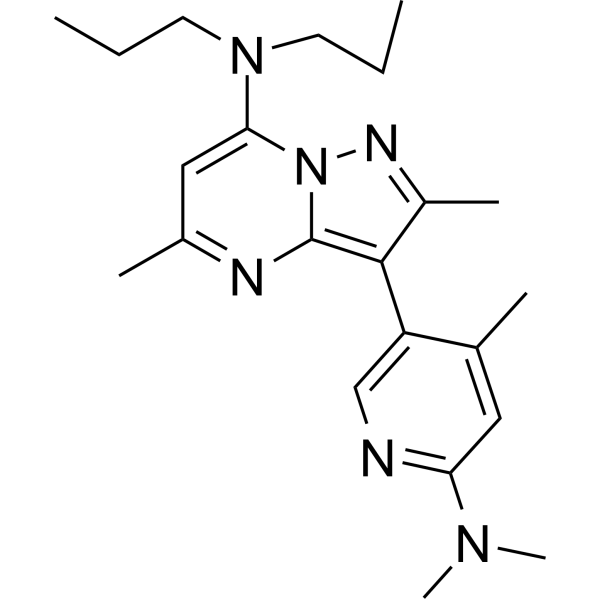
HY-14127
R121919CRF1 Receptor Antagonist -
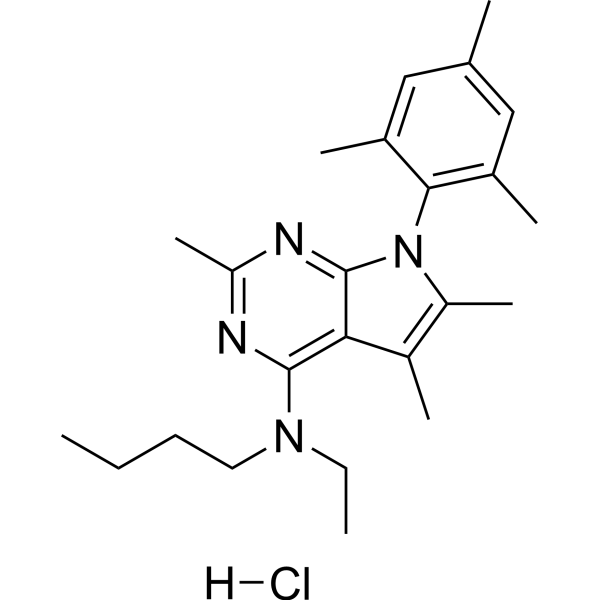
HY-103377
Antalarmin hydrochlorideCRHR1 Antagonist


Biological Activity
Description
IC50 & Target
|
CRFR1 |
CRFR2 |
Cellular Effect
|
Cell Line

|
Type | Value | Description | References |
|---|---|---|---|---|
| IMR-32 | IC50 |
5.1 nM
Compound: 11, CP-376395
|
Displacement of [125I]-sauvagine from rat CRF-1 receptor expressed in human IMR-32 cells after 2 hrs by scintillation counting
Displacement of [125I]-sauvagine from rat CRF-1 receptor expressed in human IMR-32 cells after 2 hrs by scintillation counting
|
[PMID: 21618986] |
In Vitro
CP 376395 fully antagonizes oCRF-stimulated adenylate cyclase activity in rat cerebral cortex and at human CRF1 receptors with an apparent Ki value of 12 nM, indicating antagonist functional activity. It is highly selective for the human CRF1 receptor subtype; affinity for the CRF2 receptor is >10000 nM. It shows affinities greater than 1 µM against 40 neurotransmitter receptor and ion channels[1].
MedChemExpress (MCE) has not independently confirmed the accuracy of these methods. They are for reference only. .
In Vivo
MedChemExpress (MCE) has not independently confirmed the accuracy of these methods. They are for reference only.
-
Animal Model:Male B6 mice (n=8-9 per group)[2]
-
Dosage:0.0, 10.0, or 20.0 mg/kg
-
Administration:Intraperitoneally
-
Result:Dose-dependently attenuated intake of H2O and food, with H2O intake affected specifically during the first half of the session.


Chemical Information
-
CAS No. 175140-00-8
-
Appearance Solid
-
Molecular Weight 326.48
-
Formula C21H30N2O
-
Color White to off-white
-
SMILES
CCC(CC)NC1=C(C)C(OC2=C(C)C=C(C)C=C2C)=NC(C)=C1
-
Shipping
Room temperature in continental US; may vary elsewhere.
-
Storage
Powder -20°C 3 years 4°C 2 years In solvent -80°C 2 years -20°C 1 year


Solvent & Solubility
In Vitro:
DMSO : ≥ 100 mg/mL (306.30 mM; Hygroscopic DMSO has a significant impact on the solubility of product, please use newly opened DMSO)
* "≥" means soluble, but saturation unknown.
Please refer to the solubility information to select the appropriate solvent. Once prepared, please aliquot and store the solution to prevent product inactivation from repeated freeze-thaw cycles.
Storage method and period of stock solution: -80°C, 2 years; -20°C, 1 year. When stored at -80°C, please use it within 2 years. When stored at -20°C, please use it within 1 year.
Please refer to the solubility information to select the appropriate solvent. Once prepared, please aliquot and store the solution to prevent product inactivation from repeated freeze-thaw cycles.
Storage method and period of stock solution: -80°C, 2 years; -20°C, 1 year. When stored at -80°C, please use it within 2 years. When stored at -20°C, please use it within 1 year.
Concentration (start) × Volume (start) = Concentration (final) × Volume (final)
In Vivo:
Select the appropriate dissolution method based on your experimental animal and administration route.
- For the following dissolution methods, please ensure to first prepare a clear stock solution using an In Vitro approach and then sequentially add co-solvents:
- To ensure reliable experimental results, the clarified stock solution can be appropriately stored based on storage conditions. As for the working solution for In Vivo experiments, it is recommended to prepare freshly and use it on the same day.
- The percentages shown for the solvents indicate their volumetric ratio in the final prepared solution. If precipitation or phase separation occurs during preparation, heat and/or sonication can be used to aid dissolution.
Add each solvent one by one: 10% DMSO 40% PEG300 5% Tween-80 45% Saline
Solubility: ≥ 2.5 mg/mL (7.66 mM); Clear solution
This protocol yields a clear solution of ≥ 2.5 mg/mL (saturation unknown).
Taking 1 mL working solution as an example, add 100 μL DMSO stock solution (25.0 mg/mL) to 400 μL PEG300, and mix evenly; then add 50 μL Tween-80 and mix evenly; then add 450 μL Saline to adjust the volume to 1 mL.
Preparation of Saline: Dissolve 0.9 g sodium chloride in ddH₂O and dilute to 100 mL to obtain a clear Saline solution.
Add each solvent one by one: 10% DMSO 90% (20% SBE-β-CD in Saline)
Solubility: 2.5 mg/mL (7.66 mM); Suspended solution; Need ultrasonic
This protocol yields a suspended solution of 2.5 mg/mL. Suspended solution can be used for oral and intraperitoneal injection.
Taking 1 mL working solution as an example, add 100 μL DMSO stock solution (25.0 mg/mL) to 900 μL 20% SBE-β-CD in Saline, and mix evenly.
Preparation of 20% SBE-β-CD in Saline (4°C, storage for one week): 2 g SBE-β-CD powder is dissolved in 10 mL Saline, completely dissolve until clear.
In Vivo Dissolution Calculator
Please enter the basic information of animal experiments:
-
-
-
-
Recommended: Prepare an additional quantity of animals to account for potential losses during experiments.
Please enter your animal formula composition:
-
%DMSO +
Recommended: Keep the proportion of DMSO in working solution below 2% if your animal is weak.
-
%+
-
+%Tween-80 + +
-
%Saline +
The co-solvents required include: DMSO, . All of co-solvents are available by MedChemExpress (MCE). , Tween 80. All of co-solvents are available by MedChemExpress (MCE).
Working solution concentration: 0.22 mg/mL
Method for preparing stock solution: mg drug dissolved in μL DMSO. Stock solution concentration: mg/mL.
1. Take μL DMSO stock solution;
2. Add μL .
μL , mix evenly;
3. Then add μL Tween 80, mix evenly;
4. Then add μL
Please ensure that the stock solution in the first step is dissolved to a clear state, and add co-solvents in sequence. You can use ultrasonic heating (ultrasonic cleaner, recommended frequency 20-40 kHz), vortexing, etc. to assist dissolution.


Purity & Documentation
-
Data Sheet (273 KB)
-
SDS (393 KB)
- English - EN (393 KB)
- Français - FR (393 KB)
- Deutsch - DE (393 KB)
- Norwegian - NO (393 KB)
- Español - ES (393 KB)
- Swedish - SV (393 KB)
- Italian - IT (393 KB)
- Korean - KR (393 KB)
- Portuguese - PT (393 KB)
-
Handling Instructions (2659 KB)
References
[1]. Chen YL, et al. 2-aryloxy-4-alkylaminopyridines: discovery of novel corticotropin-releasing factor 1 antagonists. J Med Chem. 2008 Mar 13;51(5):1385-92. [Content Brief]
[2]. Giardino WJ, et al. CRF1 receptor signaling regulates food and fluid intake in the drinking-in-the-dark model of binge alcohol consumption. Alcohol Clin Exp Res. 2013 Jul;37(7):1161-70. [Content Brief]


Complete Stock Solution Preparation Table
Please refer to the solubility information to select the appropriate solvent. Once prepared, please aliquot and store the solution to prevent product inactivation from repeated freeze-thaw cycles.
Storage method and period of stock solution: -80°C, 2 years; -20°C, 1 year. When stored at -80°C, please use it within 2 years. When stored at -20°C, please use it within 1 year.
| Optional Solvent | Concentration Solvent Mass | 1 mg | 5 mg | 10 mg | 25 mg |
|---|---|---|---|---|---|
| DMSO | 1 mM | 3.0630 mL | 15.3149 mL | 30.6297 mL | 76.5744 mL |
| 5 mM | 0.6126 mL | 3.0630 mL | 6.1259 mL | 15.3149 mL | |
| 10 mM | 0.3063 mL | 1.5315 mL | 3.0630 mL | 7.6574 mL | |
| 15 mM | 0.2042 mL | 1.0210 mL | 2.0420 mL | 5.1050 mL | |
| 20 mM | 0.1531 mL | 0.7657 mL | 1.5315 mL | 3.8287 mL | |
| 25 mM | 0.1225 mL | 0.6126 mL | 1.2252 mL | 3.0630 mL | |
| 30 mM | 0.1021 mL | 0.5105 mL | 1.0210 mL | 2.5525 mL | |
| 40 mM | 0.0766 mL | 0.3829 mL | 0.7657 mL | 1.9144 mL | |
| 50 mM | 0.0613 mL | 0.3063 mL | 0.6126 mL | 1.5315 mL | |
| 60 mM | 0.0510 mL | 0.2552 mL | 0.5105 mL | 1.2762 mL | |
| 80 mM | 0.0383 mL | 0.1914 mL | 0.3829 mL | 0.9572 mL | |
| 100 mM | 0.0306 mL | 0.1531 mL | 0.3063 mL | 0.7657 mL |


CP 376395 Related Classifications
HY-14130 Related Classifications
 Powered by Bioz