



Lazabemide

Based on 1 Customer Validation
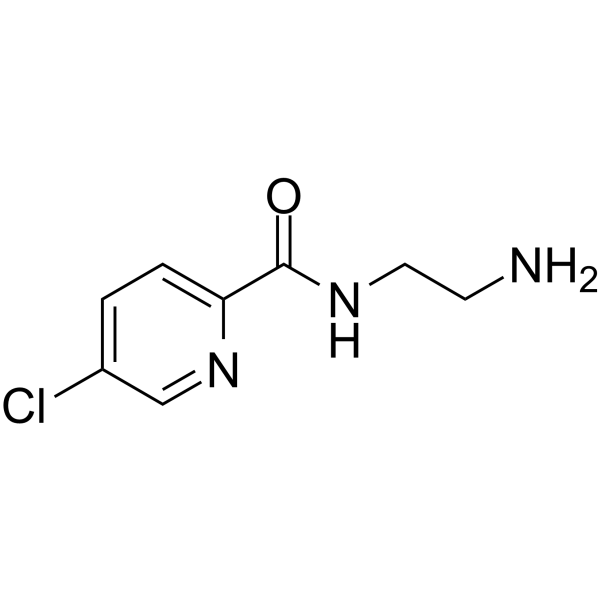
Lazabemide (Ro 19-6327) is a selective, reversible inhibitor of monoamine oxidase B (MAO-B) (IC50=0.03 μM) but less active for MAO-A (IC50>100 μM). Lazabemide inhibits monoamine uptake at high concentrations, the IC50 values are 86 μM, 123 μM and >500 μM for noradrenalin, serotonin and dopamine uptake, respectively. Lazabemide can be used for the research of parkinson and alzheimer′s disease.
For research use only. We do not sell to patients.
- Purity : 99.95%
- CAS No.: 103878-84-8
- Formula: C8H10ClN3O
- Molecular Weight:199.64
-
Storage:Powder -20°C, 3 years , 4°C, 2 years ; In solvent -80°C, 2 years , -20°C, 1 year

To place orders, for customer services and technical support, please contact: MedChemExpress USA
Tel: 609-228-6898 E-mail: [email protected] [email protected]


-
 Biological Activity
-
Chemical Information
-
Solvent & Solubility
- Purity & Documentation
- References
-
 Help & FAQs


-
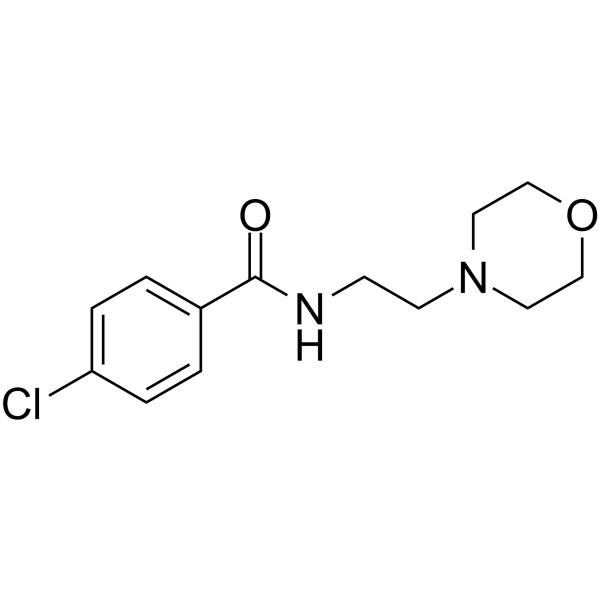
HY-B0534
MoclobemideMAOI Antidepressant -
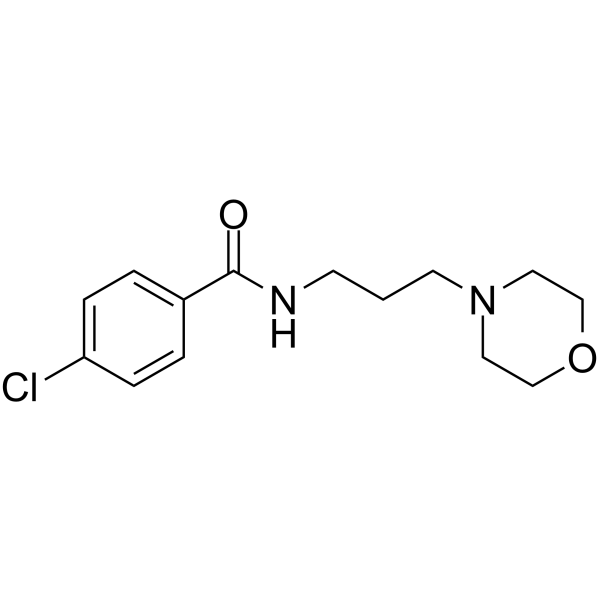
HY-B1413
EprobemideMonoamine Oxidase Inhibitor -
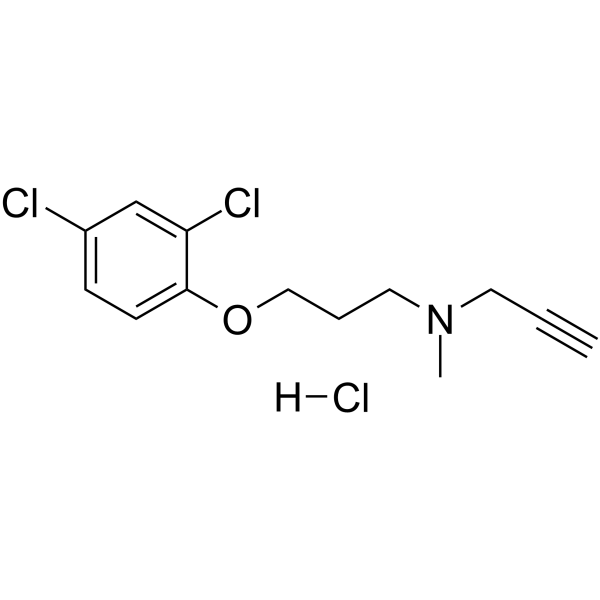
HY-14197A
Clorgyline hydrochlorideMAO-A Inhibitor -
HY-100027A
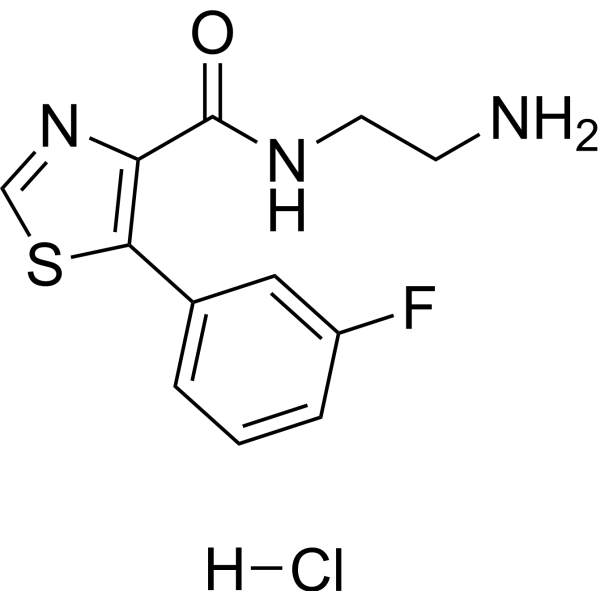
Ro 41-1049 hydrochlorideMAO-A Inhibitor -
HY-70057
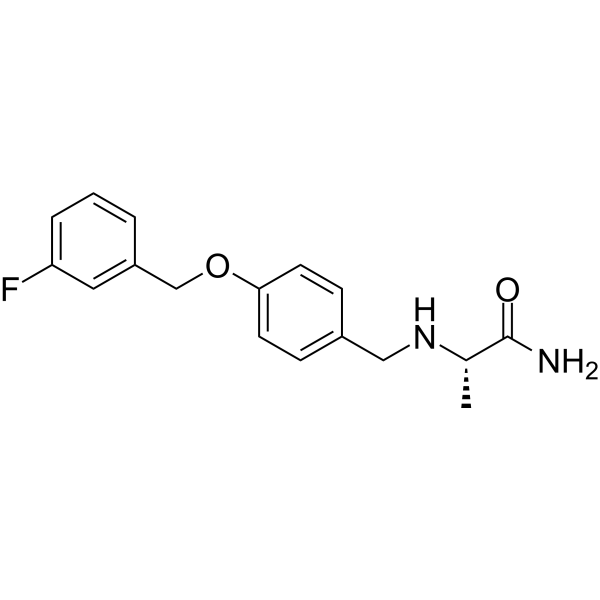
SafinamideMAO-B Inhibitor -
HY-B1018A
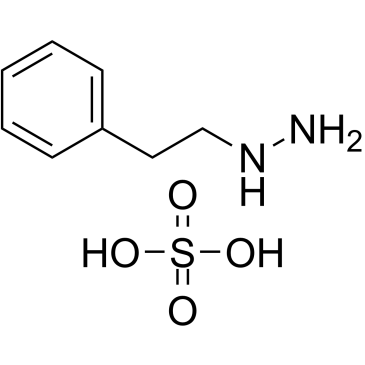
Phenelzine sulfateMAO Inhibitor -
HY-A0091
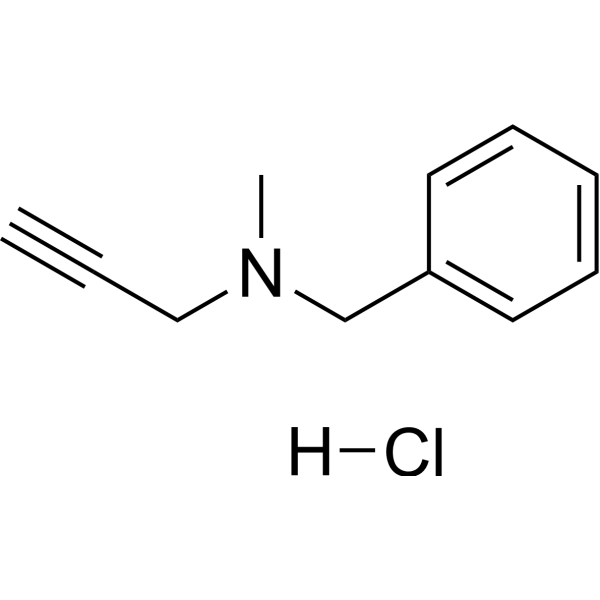
Pargyline hydrochlorideMonoamine Oxidase Inhibitor -
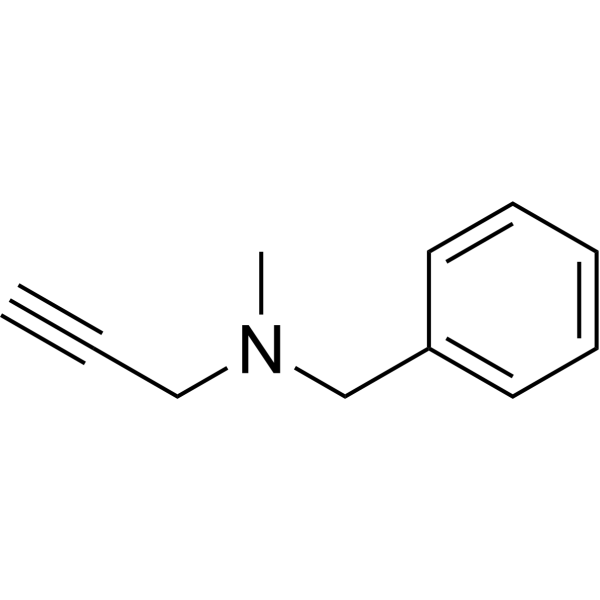
HY-A0091A
PargylineMonoamine Oxidase Inhibitor -
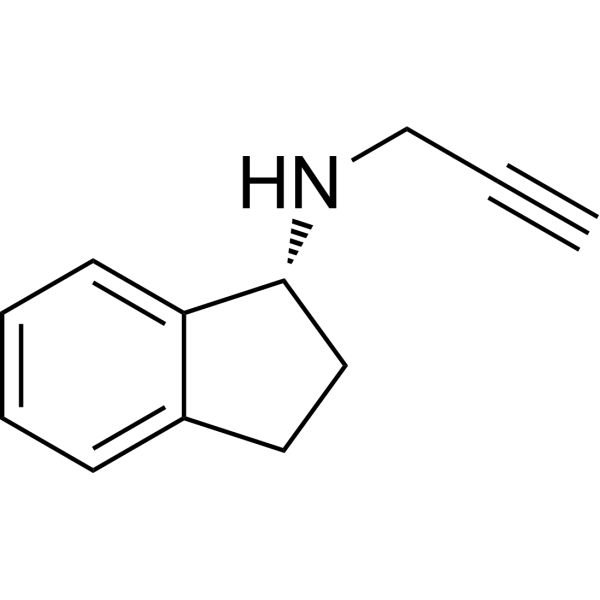
HY-14605A
RasagilineMAO Inhibitor -
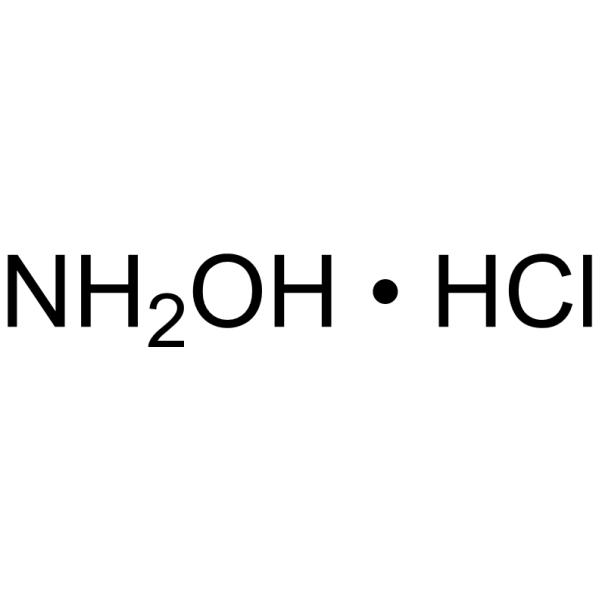
HY-Y0882
Hydroxylamine hydrochlorideMAO Inhibitor -
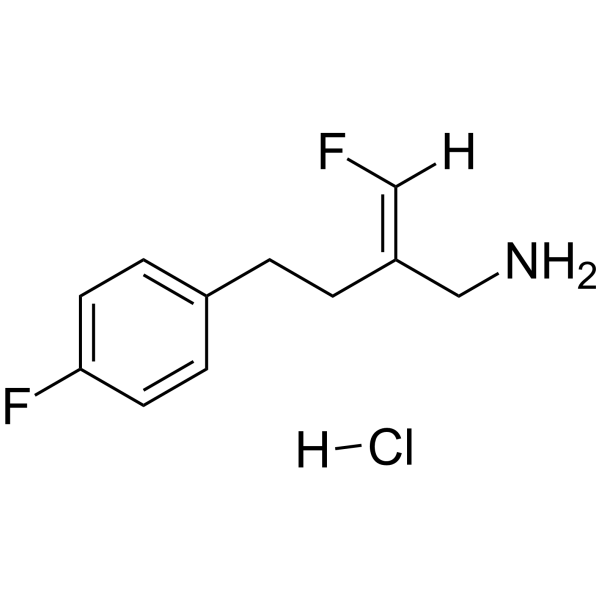
HY-16677A
Mofegiline hydrochlorideMAO‑B/SSAO Inhibitor -
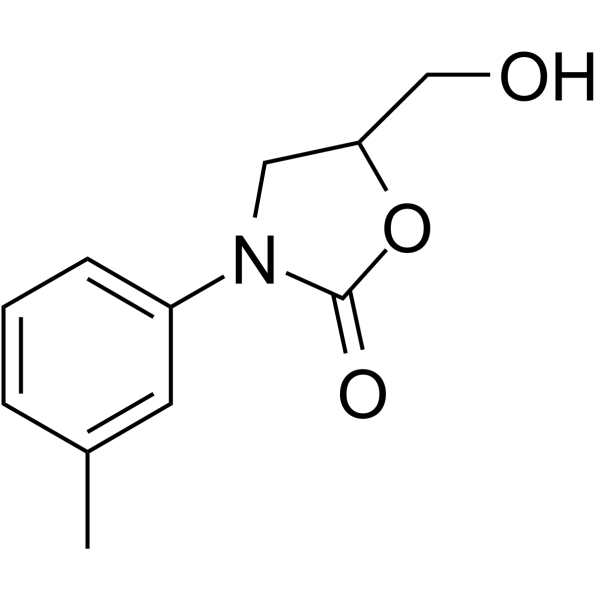
HY-14196
ToloxatoneMAO-A Inhibitor


Biological Activity
Description
IC50 & Target
IC50: 30 nM (MAO-B)[1].
In Vitro
The in vitro binding characteristics of both radiolabeled inhibitors revealed them to be selective, high-affinity ligands for the respective enzymes. KD and Bmax values for 3H-Ro 19-6327 in rat cerebral cortex are 18.4 nM and 3.45 pmol/mg protein, respectively[1]. The IC50 values for lazabemide are: 86 μM for NA uptake; 123 μM for 5HT uptake; > 500 μM for DA uptake, respectively[1].. Lazabemide (5 μM) inhibits human MAO-B and MAO-A with IC50 of 6.9 nM and >10 nM, respectively. And it inhibits rat MAO-B and MAO-A with IC50of 37 nM and >10 μM, respectively ina enzymatic assay[2].Lazabemide differs from L-deprenyl in their ability to induce release of endogenous monoamines from synaptosomes. Thus, Lazabemide (500 μM) induces a greater 5 HT release than does L-deprenyl, but is less effective than L-deprenyl in releasing DA. On the contrary, lazabemide was almost completely inactive on either 5-HT and DA release[2]. Lazabemide (250 nM) results in a clear inhibition of DOPAC formation, while does not increase the accumulation of newly-formed DA in those tubular epithelial cells loaded with 50 microM L-DOPA[3].
MedChemExpress (MCE) has not independently confirmed the accuracy of these methods. They are for reference only. .
In Vivo
MedChemExpress (MCE) has not independently confirmed the accuracy of these methods. They are for reference only.


Chemical Information
-
CAS No. 103878-84-8
-
Appearance Solid
-
Molecular Weight 199.64
-
Formula C8H10ClN3O
-
Color Light yellow to yellow
-
SMILES
ClC1=CC=C(C(NCCN)=O)N=C1
-
Synonyms
Ro 19-6327
-
Shipping
Room temperature in continental US; may vary elsewhere.
-
Storage
Powder -20°C 3 years 4°C 2 years In solvent -80°C 2 years -20°C 1 year


Solvent & Solubility
In Vitro:
DMSO : 5 mg/mL (25.05 mM; Need ultrasonic; Hygroscopic DMSO has a significant impact on the solubility of product, please use newly opened DMSO)
Please refer to the solubility information to select the appropriate solvent. Once prepared, please aliquot and store the solution to prevent product inactivation from repeated freeze-thaw cycles.
Storage method and period of stock solution: -80°C, 2 years; -20°C, 1 year. When stored at -80°C, please use it within 2 years. When stored at -20°C, please use it within 1 year.
Please refer to the solubility information to select the appropriate solvent. Once prepared, please aliquot and store the solution to prevent product inactivation from repeated freeze-thaw cycles.
Storage method and period of stock solution: -80°C, 2 years; -20°C, 1 year. When stored at -80°C, please use it within 2 years. When stored at -20°C, please use it within 1 year.
Concentration (start) × Volume (start) = Concentration (final) × Volume (final)
In Vivo:
Select the appropriate dissolution method based on your experimental animal and administration route.
- For the following dissolution methods, please ensure to first prepare a clear stock solution using an In Vitro approach and then sequentially add co-solvents:
- To ensure reliable experimental results, the clarified stock solution can be appropriately stored based on storage conditions. As for the working solution for In Vivo experiments, it is recommended to prepare freshly and use it on the same day.
- The percentages shown for the solvents indicate their volumetric ratio in the final prepared solution. If precipitation or phase separation occurs during preparation, heat and/or sonication can be used to aid dissolution.
Add each solvent one by one: 10% DMSO 40% PEG300 5% Tween-80 45% Saline
Solubility: ≥ 0.5 mg/mL (2.50 mM); Clear solution
This protocol yields a clear solution of ≥ 0.5 mg/mL (saturation unknown).
Taking 1 mL working solution as an example, add 100 μL DMSO stock solution (5.0 mg/mL) to 400 μL PEG300, and mix evenly; then add 50 μL Tween-80 and mix evenly; then add 450 μL Saline to adjust the volume to 1 mL.
Preparation of Saline: Dissolve 0.9 g sodium chloride in ddH₂O and dilute to 100 mL to obtain a clear Saline solution.
Add each solvent one by one: 10% DMSO 90% (20% SBE-β-CD in Saline)
Solubility: ≥ 0.5 mg/mL (2.50 mM); Clear solution
This protocol yields a clear solution of ≥ 0.5 mg/mL (saturation unknown).
Taking 1 mL working solution as an example, add 100 μL DMSO stock solution (5.0 mg/mL) to 900 μL 20% SBE-β-CD in Saline, and mix evenly.
Preparation of 20% SBE-β-CD in Saline (4°C, storage for one week): 2 g SBE-β-CD powder is dissolved in 10 mL Saline, completely dissolve until clear.
In Vivo Dissolution Calculator
Please enter the basic information of animal experiments:
-
-
-
-
Recommended: Prepare an additional quantity of animals to account for potential losses during experiments.
Please enter your animal formula composition:
-
%DMSO +
Recommended: Keep the proportion of DMSO in working solution below 2% if your animal is weak.
-
%+
-
+%Tween-80 + +
-
%Saline +
The co-solvents required include: DMSO, . All of co-solvents are available by MedChemExpress (MCE). , Tween 80. All of co-solvents are available by MedChemExpress (MCE).
Working solution concentration: 0.22 mg/mL
Method for preparing stock solution: mg drug dissolved in μL DMSO. Stock solution concentration: mg/mL.
1. Take μL DMSO stock solution;
2. Add μL .
μL , mix evenly;
3. Then add μL Tween 80, mix evenly;
4. Then add μL
Please ensure that the stock solution in the first step is dissolved to a clear state, and add co-solvents in sequence. You can use ultrasonic heating (ultrasonic cleaner, recommended frequency 20-40 kHz), vortexing, etc. to assist dissolution.


Purity & Documentation
-
Data Sheet (272 KB)
-
SDS (393 KB)
- English - EN (393 KB)
- Français - FR (393 KB)
- Deutsch - DE (393 KB)
- Norwegian - NO (393 KB)
- Español - ES (393 KB)
- Swedish - SV (393 KB)
- Italian - IT (393 KB)
- Korean - KR (393 KB)
- Portuguese - PT (393 KB)
-
Handling Instructions (2659 KB)
References
[1]. Saura J, et al. Quantitative enzyme radioautography with 3H-Ro 41-1049 and 3H-Ro 19-6327 in vitro: localization and abundance of MAO-A and MAO-B in rat CNS, peripheral organs, and human brain. J Neurosci. 1992 May;12(5):1977-99. [Content Brief]
[2]. Bondiolotti GP, et al. In vitro effects on monoamine uptake and release by the reversible monoamine oxidase-B inhibitors lazabemide and N-(2-aminoethyl)-p-chlorobenzamide: a comparison with L-deprenyl. Biochem Pharmacol. 1995 Jun 29;50(1):97-102. [Content Brief]
[3]. Guimaraes J, et al. The activity of MAO A and B in rat renal cells and tubules. Life Sci. 1998;62(8):727-37. [Content Brief]
[4]. Suzuki T, et al. MAO inhibitors, clorgyline and lazabemide, prevent hydroxyl radical generation caused by brain ischemia/reperfusion in mice. Pharmacology. 1995 Jun;50(6):357-62. [Content Brief]


Complete Stock Solution Preparation Table
Please refer to the solubility information to select the appropriate solvent. Once prepared, please aliquot and store the solution to prevent product inactivation from repeated freeze-thaw cycles.
Storage method and period of stock solution: -80°C, 2 years; -20°C, 1 year. When stored at -80°C, please use it within 2 years. When stored at -20°C, please use it within 1 year.
| Optional Solvent | Concentration Solvent Mass | 1 mg | 5 mg | 10 mg | 25 mg |
|---|---|---|---|---|---|
| DMSO | 1 mM | 5.0090 mL | 25.0451 mL | 50.0902 mL | 125.2254 mL |
| 5 mM | 1.0018 mL | 5.0090 mL | 10.0180 mL | 25.0451 mL | |
| 10 mM | 0.5009 mL | 2.5045 mL | 5.0090 mL | 12.5225 mL | |
| 15 mM | 0.3339 mL | 1.6697 mL | 3.3393 mL | 8.3484 mL | |
| 20 mM | 0.2505 mL | 1.2523 mL | 2.5045 mL | 6.2613 mL | |
| 25 mM | 0.2004 mL | 1.0018 mL | 2.0036 mL | 5.0090 mL |


Lazabemide Related Classifications
HY-14201 Related Classifications
 Powered by Bioz