



PK68
Based on 1 publication(s) in Google Scholar
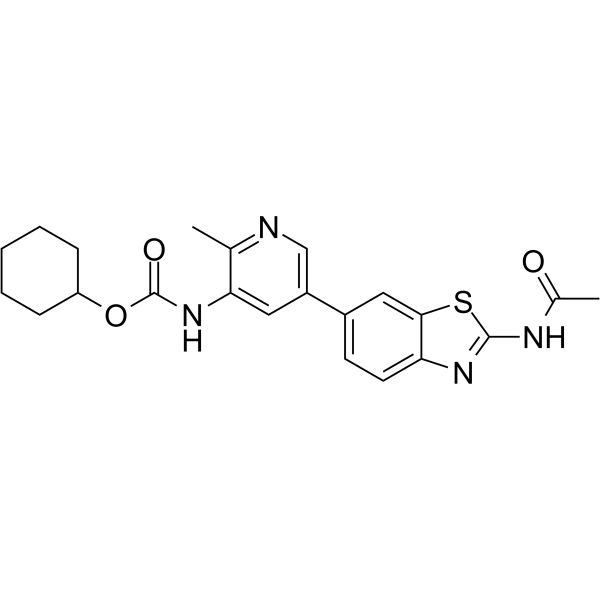
PK68 is a potent orally active and specifical type II inhibitor of receptor-interacting kinase 1 (RIPK1) with an IC50 of ~90 nM, displays inhibition of RIPK1-dependent necroptosis. PK68 powerfully ameliorates TNF-induced systemic inflammatory response syndrome, and can be used for the research of inflammatory disorders and cancer metastasis.
For research use only. We do not sell to patients.
- Purity : 99.92%
- CAS No.: 2173556-69-7
- Formula: C22H24N4O3S
- Molecular Weight:424.52
-
Storage:Powder -20°C, 3 years , 4°C, 2 years ; In solvent -80°C, 6 months , -20°C, 1 month

To place orders, for customer services and technical support, please contact: MedChemExpress USA
Tel: 609-228-6898 E-mail: [email protected] [email protected]


-
 Biological Activity
-
Chemical Information
-
Solvent & Solubility
- Protocols
- Purity & Documentation
- References
-
 Help & FAQs


-
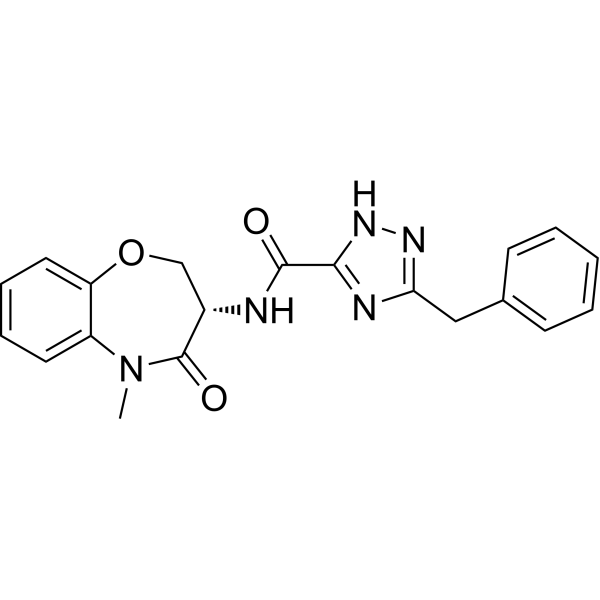
HY-101760
GSK2982772RIPK1 Inhibitor -
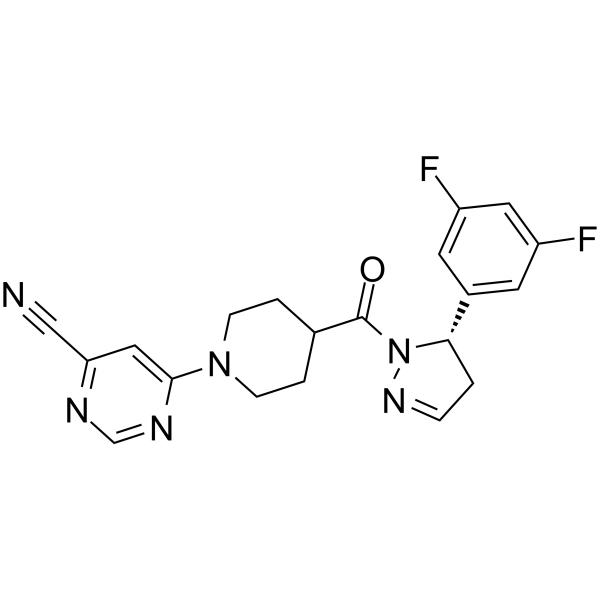
HY-114492
GSK547RIPK1 Inhibitor -
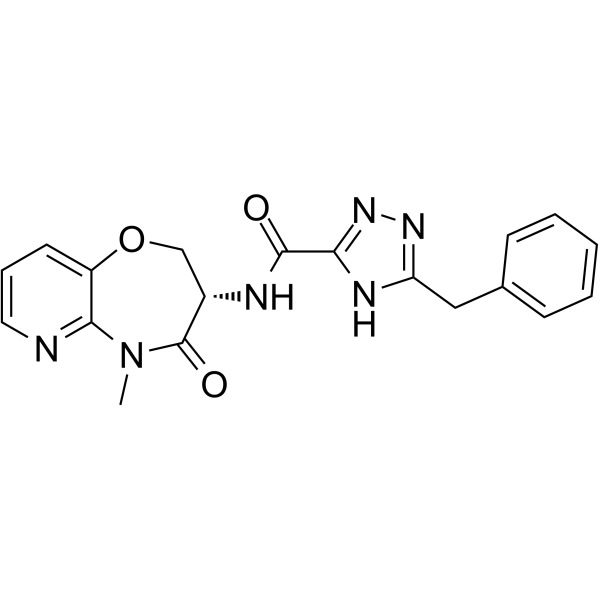
HY-114371
EclitasertibRIPK1 Inhibitor -
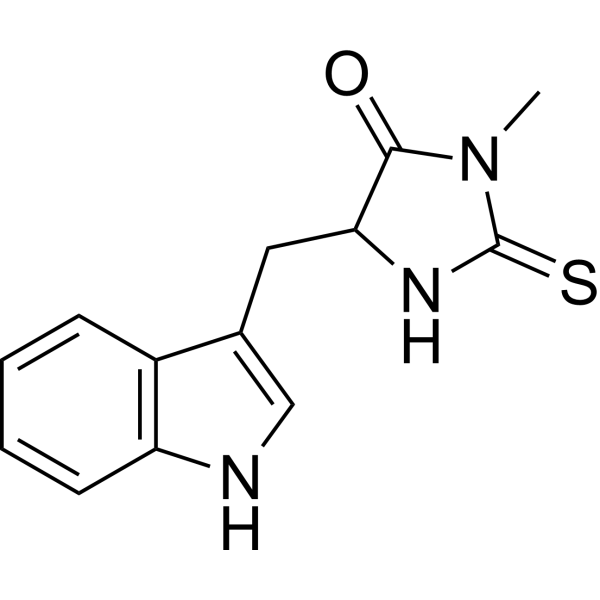
HY-15760
Necrostatin-1RIPK1 Inhibitor -
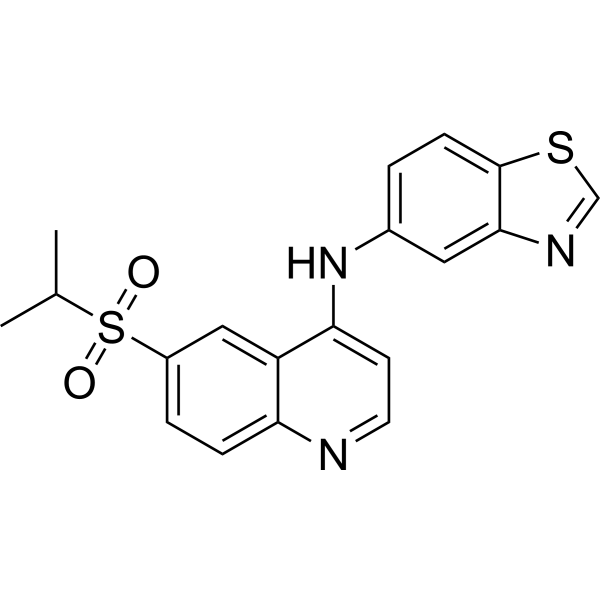
HY-101872
GSK-872RIPK3 Inhibitor -
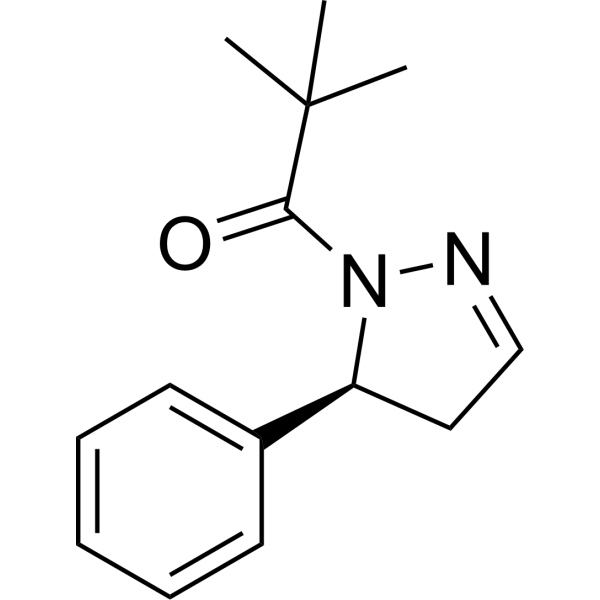
HY-103028A
GSK963RIP1 Kinase Inhibitor -
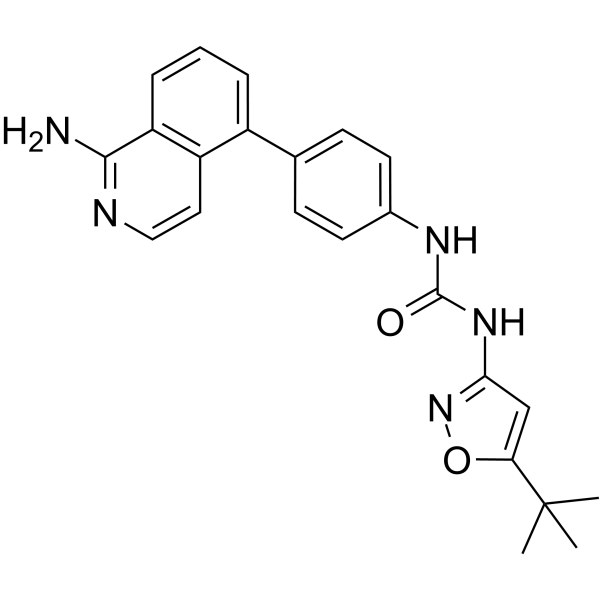
HY-18901
RIPK1-IN-4RIP1 Kinease Inhibtior -
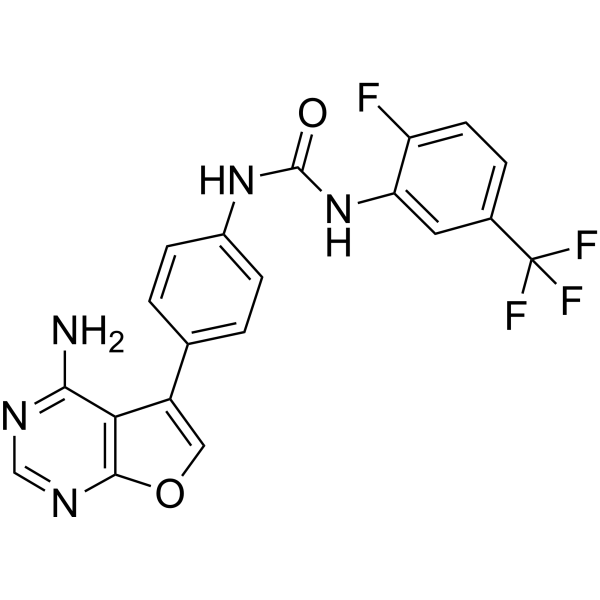
HY-12572
TIE-2/VEGFR-2 kinase-IN-2VEGFR2/Tie-2 Inhibitor -
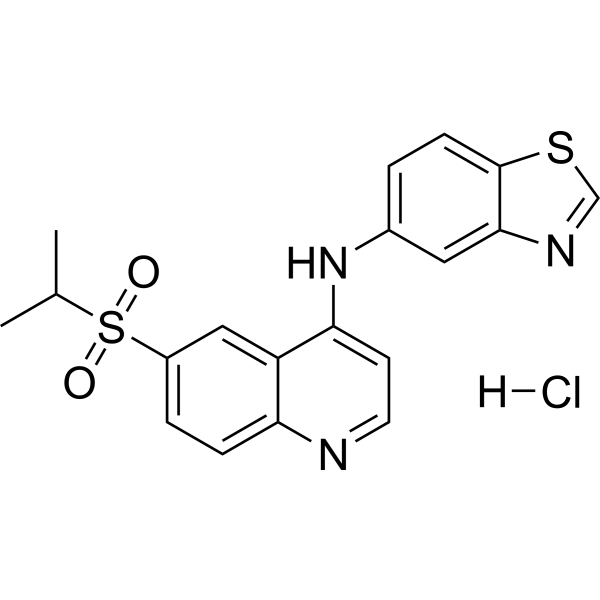
HY-101872A
GSK-872 hydrochlorideRIPK3 Inhibitor -
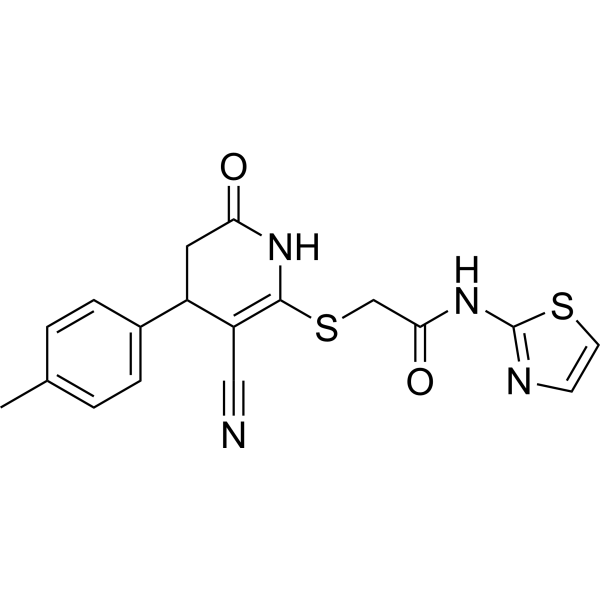
HY-132203
Necrostatin-34RIPK1 Inhibitor -
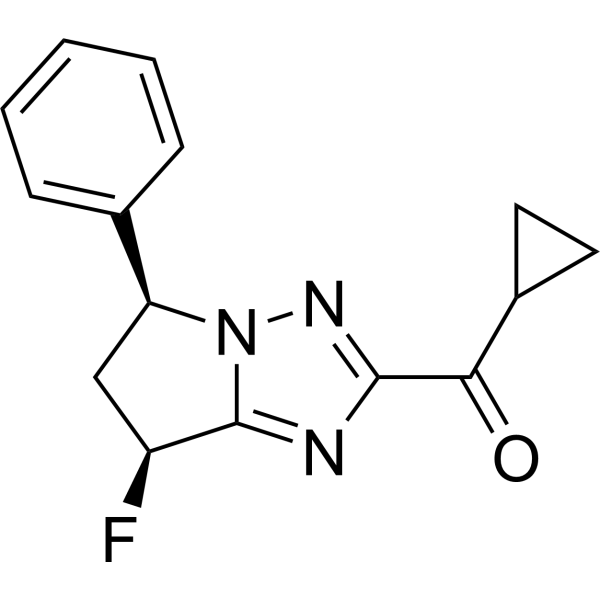
HY-152846
FlizasertibRIP1 Inhibitor -
HY-125402
GSK-843RIP3 Inhibitor
Publications Citing Use of MedChemExpress (MCE) PK68
More

Biological Activity
Description
IC50 & Target
|
RIPK1 90 nM (IC50) |
RIPK1 23 nM (EC50) |
Cellular Effect
|
Cell Line

|
Type | Value | Description | References |
|---|---|---|---|---|
| HT-29 | EC50 |
23 nM
Compound: 6; PK68
|
Anti-necroptic activity in human HT-29 cells assessed as TNFalpha/Z-VAD (TSZ) induced necroptosis by measuring cell viability preincubated for 1 hr followed by TSZ addition ans measured after 24 hrs by celltiter-glo luminescent cell viability assay
Anti-necroptic activity in human HT-29 cells assessed as TNFalpha/Z-VAD (TSZ) induced necroptosis by measuring cell viability preincubated for 1 hr followed by TSZ addition ans measured after 24 hrs by celltiter-glo luminescent cell viability assay
|
[PMID: 34906762] |
| L929 | EC50 |
13 nM
Compound: 6; PK68
|
Anti-necroptic activity in mouse L929 cells assessed as TNFalpha/Z-VAD (TSZ) induced necroptosis by measuring cell viability preincubated for 1 hr followed by TSZ addition and measured after 24 hrs by celltiter-glo luminescent cell viability assay
Anti-necroptic activity in mouse L929 cells assessed as TNFalpha/Z-VAD (TSZ) induced necroptosis by measuring cell viability preincubated for 1 hr followed by TSZ addition and measured after 24 hrs by celltiter-glo luminescent cell viability assay
|
[PMID: 34906762] |
In Vitro
PK68 has highly potent inhibition of TNF-induced necroptosis with EC50 values of 23 nM and 13 nM in human and mouse cells, respectively[1].
PK68 is a highly selective inhibitor of RIPK1 kinase activity with IC50 value of 90 nM[1].
PK68 (100 nM, 1 h) blocks necroptosis through the suppression of RIPK3 function or signaling upstream of RIPK3 activation[1].
MedChemExpress (MCE) has not independently confirmed the accuracy of these methods. They are for reference only.
-
Cell Line:Bone marrow-derived macrophages, NIH3T3-RIPK3 cells
-
Concentration:100 nM
-
Incubation Time:1 h
-
Result:PK68 block cellular activation of RIPK1, RIPK3, and MLKL upon necroptotic stimuli.
PK68 inhibit TNF-induced necroptosis but not RIPK3 dimerization-induced cell death in NIH3T3-RIPK3 cells.
-
Cell Line:HT-29 cells
-
Concentration:100 nM
-
Incubation Time:1 h
-
Result:Completely abolished phosphorylation of RIPK1, RIPK3, and MLKL.
-
Cell Line:HT-29 cells
-
Concentration:100 nM
-
Incubation Time:1 h
-
Result:Prevented generation of RIPK3 puncta.
In Vivo
PK68 (1 mg/kg, i.p.) ameliorates TNF-induced systemic inflammatory response syndrome[1].
PK68 (5 mg/kg, i.v.) inhibits RIPK1 that results in attenuated tumor cell transmigration across the endothelial barrier and preventive suppression of tumor metastasis[1].
MedChemExpress (MCE) has not independently confirmed the accuracy of these methods. They are for reference only.
-
Animal Model:C57BL/6 mice[1]
-
Dosage:5 mg/kg, 25 mg/kg
-
Administration:5 mg/kg, 25 mg/kg; oral gavage; daily; for 7 days
-
Result:Exhibited favorable pharmacokinetic profiles and no obvious toxicity in mice treated with a 14-day course at a dose of 25 mg/kg.
-
Animal Model:C57BL/6 mice[1]
-
Dosage:2 mg/kg, 10 mg/kg
-
Administration:2 mg/kg, i.v.; 10 mg/kg, p.o; for 14 days
-
Result:
PO (Gavage) IV (Bolus) Tmax (hr) 0.5 Cmax (ng/mL) 2423 AUC0-24 (ng/mL•hr) 4821 1588 AUCINF (ng/mL•hr) 4897 1590 t1/2 (hr) 1.3 1.0 MRT (hr) 1.8 0.8 CL (mL/hr/kg) 1258 CL (mL/min/kg) 21 Vss (mL/kg) 1009 Vss (L/kg) 1.0 F(%) 61
-
Animal Model:C57BL/6 mice[1]
-
Dosage:1 mg/kg
-
Administration:1 mg/kg, i.p.
-
Result:Provided effective protection against TNFα-induced lethal shock.
-
Animal Model:C57BL/6 mice[1]
-
Dosage:5 mg/kg
-
Administration:5 mg/kg, i.v.
-
Result:Significantly reduced the number of pulmonary metastasis nodules, decreased lung metastasis, decreased number of RFP-LL/2 cells, attenuated transmigration of RFP-LL/2 cells through the endothelial cell monolayer and had no obvious influence on the proliferation rate and invasion ability of B16-F10 or RFP-LL/2 cells without the endothelial cell monolayer in vitro.


Chemical Information
-
CAS No. 2173556-69-7
-
Appearance Solid
-
Molecular Weight 424.52
-
Formula C22H24N4O3S
-
Color Off-white to light yellow
-
SMILES
O=C(OC1CCCCC1)NC2=CC(C3=CC=C4N=C(NC(C)=O)SC4=C3)=CN=C2C
-
Shipping
Room temperature in continental US; may vary elsewhere.
-
Storage
Powder -20°C 3 years 4°C 2 years In solvent -80°C 6 months -20°C 1 month


Publications (1)
-
Journal Impact Factor
-
Most Recent


Solvent & Solubility
In Vitro:
DMSO : 30 mg/mL (70.67 mM; Need ultrasonic; Hygroscopic DMSO has a significant impact on the solubility of product, please use newly opened DMSO)
Please refer to the solubility information to select the appropriate solvent. Once prepared, please aliquot and store the solution to prevent product inactivation from repeated freeze-thaw cycles.
Storage method and period of stock solution: -80°C, 6 months; -20°C, 1 month. When stored at -80°C, please use it within 6 months. When stored at -20°C, please use it within 1 month.
Please refer to the solubility information to select the appropriate solvent. Once prepared, please aliquot and store the solution to prevent product inactivation from repeated freeze-thaw cycles.
Storage method and period of stock solution: -80°C, 6 months; -20°C, 1 month. When stored at -80°C, please use it within 6 months. When stored at -20°C, please use it within 1 month.
Concentration (start) × Volume (start) = Concentration (final) × Volume (final)
In Vivo:
Select the appropriate dissolution method based on your experimental animal and administration route.
- For the following dissolution methods, please ensure to first prepare a clear stock solution using an In Vitro approach and then sequentially add co-solvents:
- To ensure reliable experimental results, the clarified stock solution can be appropriately stored based on storage conditions. As for the working solution for In Vivo experiments, it is recommended to prepare freshly and use it on the same day.
- The percentages shown for the solvents indicate their volumetric ratio in the final prepared solution. If precipitation or phase separation occurs during preparation, heat and/or sonication can be used to aid dissolution.
Add each solvent one by one: 10% DMSO 90% (20% SBE-β-CD in Saline)
Solubility: ≥ 3 mg/mL (7.07 mM); Clear solution
This protocol yields a clear solution of ≥ 3 mg/mL (saturation unknown).
Taking 1 mL working solution as an example, add 100 μL DMSO stock solution (30.0 mg/mL) to 900 μL 20% SBE-β-CD in Saline, and mix evenly.
Preparation of 20% SBE-β-CD in Saline (4°C, storage for one week): 2 g SBE-β-CD powder is dissolved in 10 mL Saline, completely dissolve until clear.
Add each solvent one by one: 10% DMSO 40% PEG300 5% Tween-80 45% Saline
Solubility: ≥ 2.08 mg/mL (4.90 mM); Clear solution
This protocol yields a clear solution of ≥ 2.08 mg/mL (saturation unknown).
Taking 1 mL working solution as an example, add 100 μL DMSO stock solution (20.8 mg/mL) to 400 μL PEG300, and mix evenly; then add 50 μL Tween-80 and mix evenly; then add 450 μL Saline to adjust the volume to 1 mL.
Preparation of Saline: Dissolve 0.9 g sodium chloride in ddH₂O and dilute to 100 mL to obtain a clear Saline solution.
In Vivo Dissolution Calculator
Please enter the basic information of animal experiments:
-
-
-
-
Recommended: Prepare an additional quantity of animals to account for potential losses during experiments.
Please enter your animal formula composition:
-
%DMSO +
Recommended: Keep the proportion of DMSO in working solution below 2% if your animal is weak.
-
%+
-
+%Tween-80 + +
-
%Saline +
The co-solvents required include: DMSO, . All of co-solvents are available by MedChemExpress (MCE). , Tween 80. All of co-solvents are available by MedChemExpress (MCE).
Working solution concentration: 0.22 mg/mL
Method for preparing stock solution: mg drug dissolved in μL DMSO. Stock solution concentration: mg/mL.
1. Take μL DMSO stock solution;
2. Add μL .
μL , mix evenly;
3. Then add μL Tween 80, mix evenly;
4. Then add μL
Please ensure that the stock solution in the first step is dissolved to a clear state, and add co-solvents in sequence. You can use ultrasonic heating (ultrasonic cleaner, recommended frequency 20-40 kHz), vortexing, etc. to assist dissolution.


Purity & Documentation
-
Data Sheet (279 KB)
-
SDS (254 KB)
- English - EN (254 KB)
- Français - FR (254 KB)
- Deutsch - DE (254 KB)
- Norwegian - NO (254 KB)
- Español - ES (254 KB)
- Swedish - SV (254 KB)
- Italian - IT (254 KB)
- Korean - KR (254 KB)
- Portuguese - PT (254 KB)
-
Handling Instructions (2659 KB)
References


Complete Stock Solution Preparation Table
Please refer to the solubility information to select the appropriate solvent. Once prepared, please aliquot and store the solution to prevent product inactivation from repeated freeze-thaw cycles.
Storage method and period of stock solution: -80°C, 6 months; -20°C, 1 month. When stored at -80°C, please use it within 6 months. When stored at -20°C, please use it within 1 month.
| Optional Solvent | Concentration Solvent Mass | 1 mg | 5 mg | 10 mg | 25 mg |
|---|---|---|---|---|---|
| DMSO | 1 mM | 2.3556 mL | 11.7780 mL | 23.5560 mL | 58.8900 mL |
| 5 mM | 0.4711 mL | 2.3556 mL | 4.7112 mL | 11.7780 mL | |
| 10 mM | 0.2356 mL | 1.1778 mL | 2.3556 mL | 5.8890 mL | |
| 15 mM | 0.1570 mL | 0.7852 mL | 1.5704 mL | 3.9260 mL | |
| 20 mM | 0.1178 mL | 0.5889 mL | 1.1778 mL | 2.9445 mL | |
| 25 mM | 0.0942 mL | 0.4711 mL | 0.9422 mL | 2.3556 mL | |
| 30 mM | 0.0785 mL | 0.3926 mL | 0.7852 mL | 1.9630 mL | |
| 40 mM | 0.0589 mL | 0.2945 mL | 0.5889 mL | 1.4723 mL | |
| 50 mM | 0.0471 mL | 0.2356 mL | 0.4711 mL | 1.1778 mL | |
| 60 mM | 0.0393 mL | 0.1963 mL | 0.3926 mL | 0.9815 mL |


PK68 Related Classifications
HY-128348 Related Classifications
 Powered by Bioz