



Enzyme Substrates

Enzyme substrates are compounds that enzymes act upon and catalyze, The specific binding between the enzyme and the substrate forms an enzyme-substrate complex, resulting in color or fluorescence changes that facilitate detection.
MCE provides highly sensitive and specific enzyme substrates, including chromogenic and fluorescent substrates.
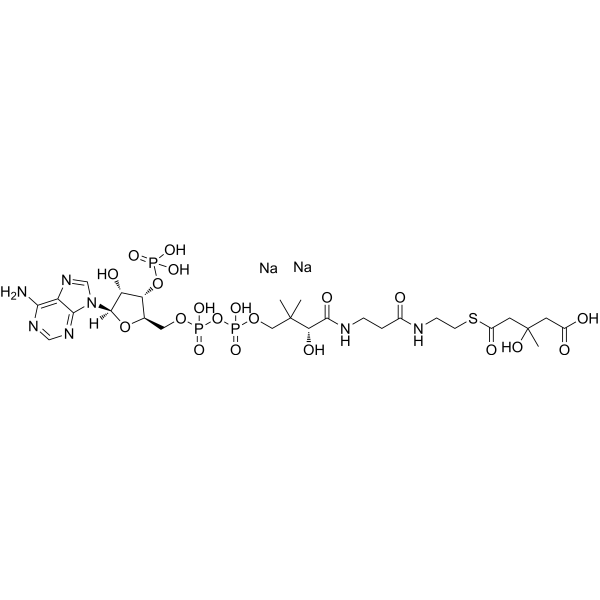
- Formula: C27H44N7Na2O21P3S.xH2O
DL-3-Hydroxy-3-methylglutaryl coenzyme A disodium hydrate is a disodium salt compound of HMG-CoA, is a intermediate of terpenes and ketone bodies. DL-3-Hydroxy-3-methylglutaryl coenzyme A disodium also involves in ester metabolism in vivo, as a precursor for cholesterol synthesis, and regulates cholesterol synthesis by coupling LDL receptor.
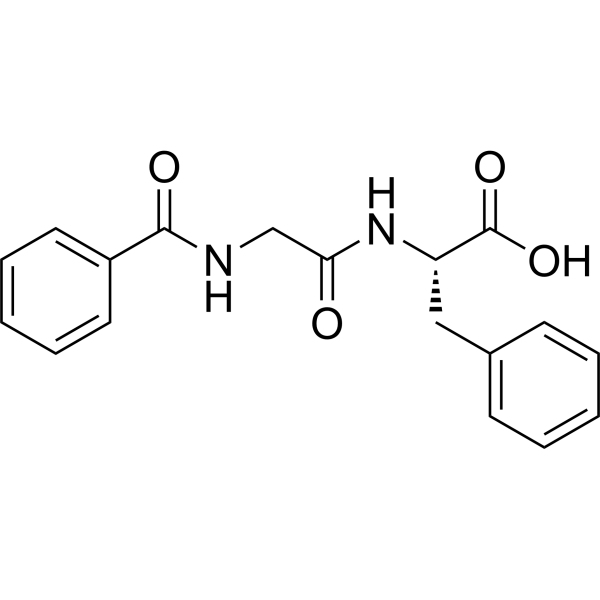
- Formula: C18H18N2O4
- Molecular Weight: 326.35
Hippuryl-L-phenylalanine is a substrate of carboxypeptidase. Carboxypeptidase is a protease enzyme that related with obesity, epilepsy and neurodegeneration. Hippuryl-L-phenylalanine can be used for the determination of carboxypeptidase activity.

- Formula: C6H15K2O11P
- Molecular Weight: 372.35
α-D-Glucose 1-phosphate (dipotassium) is a biochemical reagent used in the study of glycobiology. Glycobiology studies the structure, synthesis, biology, and evolution of sugars. It deals with carbohydrate chemistry, glycan formation and degradation enzymology, protein-glycan recognition, and the role of glycans in biological systems. The field is closely related to basic research, biomedicine and biotechnology.

- Formula: C9H18NO6P
- Molecular Weight: 267.22
Phosphoenolpyruvic acid (Phosphoenolpyruvate) cyclohexylammonium salt is a glycolysis metabolite with a high-energy phosphate group. Phosphoenolpyruvic acid cyclohexylammonium salt is involved in glycolysis and gluconeogenesis, and used as energy source to produce ATP, under the energy-limited conditions. Phosphoenolpyruvic acid cyclohexylammonium salt also exhibits cytoprotective and anti-oxidative properties.

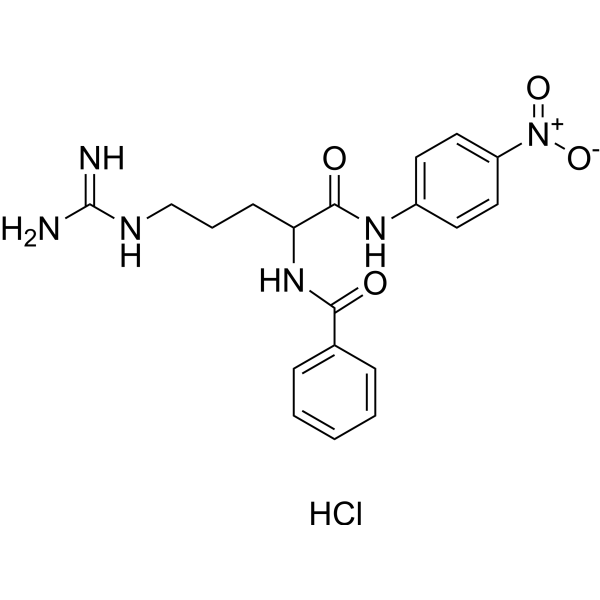
- Formula: C19H23ClN6O4
- Molecular Weight: 434.88
N-Benzoyl-DL-arginine-4-nitroanilide hydrochloride is a biochemical reagent that can be used as a biological material or organic compound for life science related research.
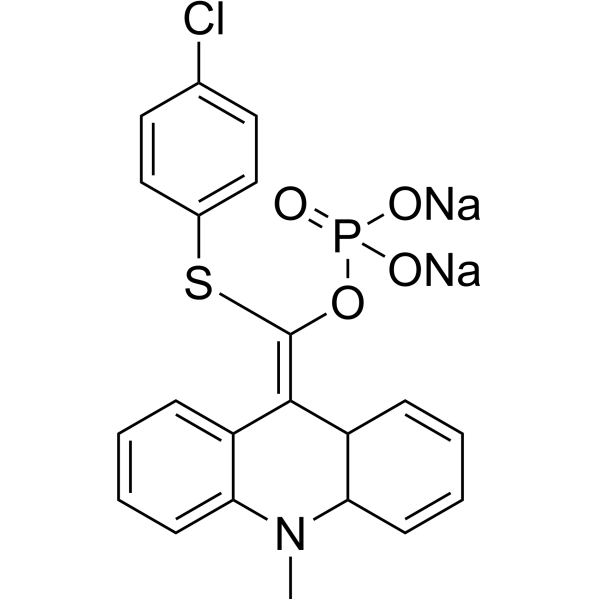
- Formula: C21H15ClNNa2O4PS
- Molecular Weight: 489.82
Lumigen APS-5 is a substrate of alkaline phosphatase (ALP). Lumigen APS-5 can be used to assess the activity of alkaline phosphatase (ALP).

- Formula: C7H16ClNOS
- Molecular Weight: 197.73
Acetylthiocholine (chloride) is a biochemical assay reagent.
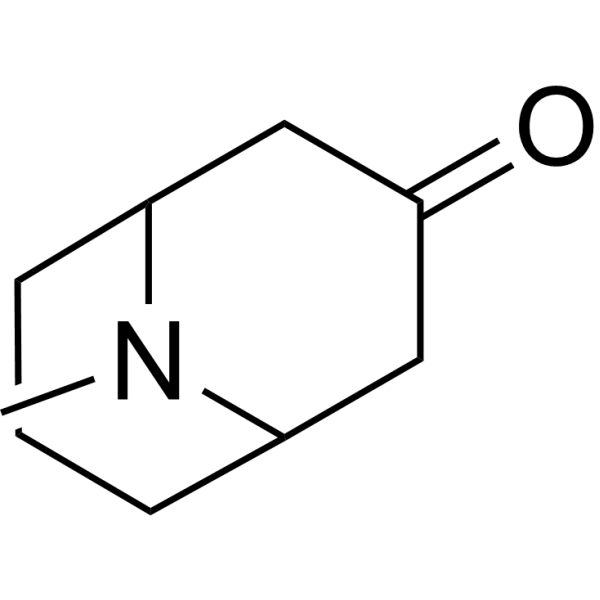
- Formula: C9H15NO
- Molecular Weight: 153.22
Pseudopelletierine is an alkaloid compound that can be used as a enzyme substrate.
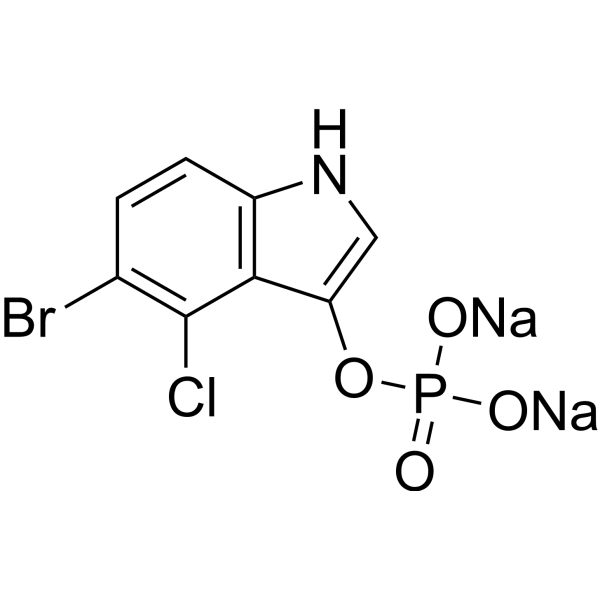
- Formula: C8H4BrClNNa2O4P
- Molecular Weight: 370.43
Sodium 5-bromo-4-chloro-1H-indol-3-yl phosphate is commonly used as a substrate for phosphatase assays in biochemistry and molecular biology. This compound is converted by phosphatases to a yellow compound that can be easily measured spectrophotometrically or fluorometrically. Furthermore, it has been used as a useful reagent in enzyme-catalyzed reactions and a tool for studying signal transduction pathways.
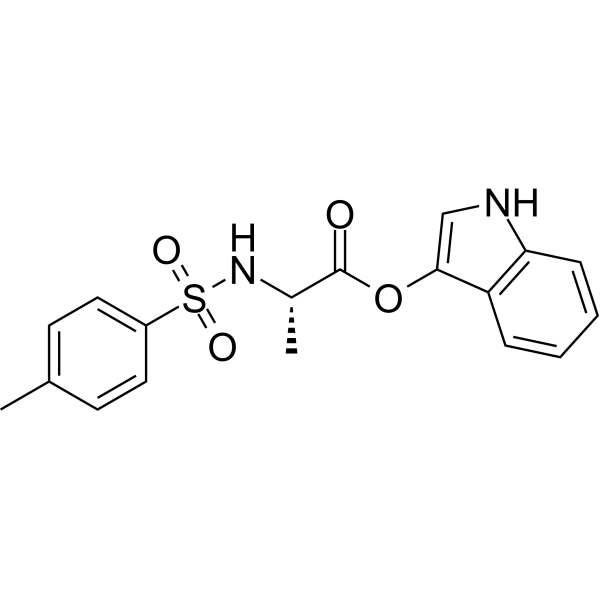
- Formula: C18H18N2O4S
- Molecular Weight: 358.41
Taloxin is a biochemical reagent that can be used as a biological material or organic compound for life science related research.
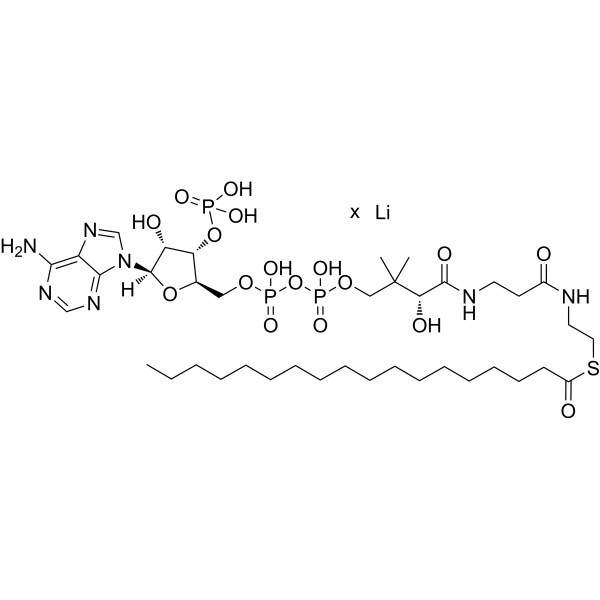
- Formula: C39H70N7O17P3S.xLi
Stearoyl coenzyme A (Stearoyl-CoA) lithium is an active compound that can be used as a substrate for the determination of stearoyl-Coenzyme desaturase in microsomes.
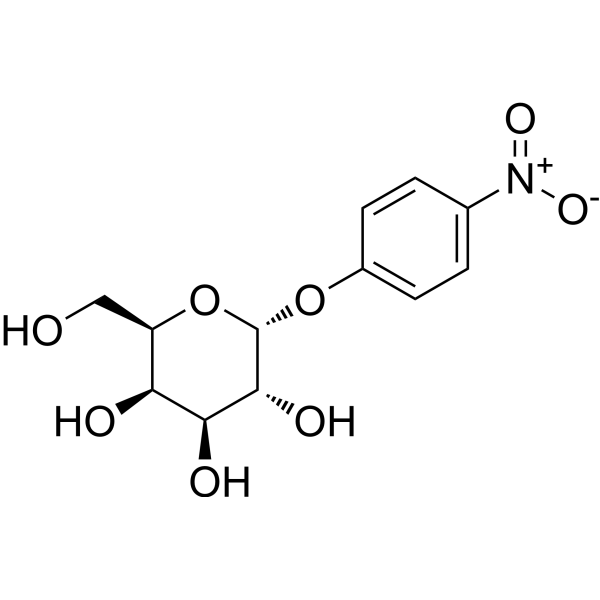
- Formula: C12H15NO8
- Molecular Weight: 301.25
4-Nitrophenyl α-D-galactopyranoside (PNP-alpha-D-Gal) is an artificial substrate of 4-nitrophenyl (pNP) glycopyranoside for detecting α-galactosidase activity. The amount of released pNP is significantly increased when 4-Nitrophenyl α-D-galactopyranoside is used as substrates.

- Formula: C12H20Cl2N6O3
- Molecular Weight: 367.23
L-Arginine p-nitroanilide dihydrochloride, 98% (H-Arg-pNA 2HCl, 98%) is a chromogenic substrate for cathepsin H. L-Arginine p-nitroanilide dihydrochloride, 98% can be hydrolyzed to produce a chromogenic product detectable by photometry, which is used to measure the activities of cathepsin H and aminopeptidases.

- Formula: C3H6O3
- Molecular Weight: 90.08
(R)-2,3-Dihydroxypropanal, 80% is a biochemical assay reagent.

N-Acetylglucosaminyltransferase III (EC:2.4.1.144 MGAT3) transfers a GlcNAc residue to the beta-linked mannose of the trimannosyl core of N-linked oligosaccharides and produces a bisecting GlcNAc.
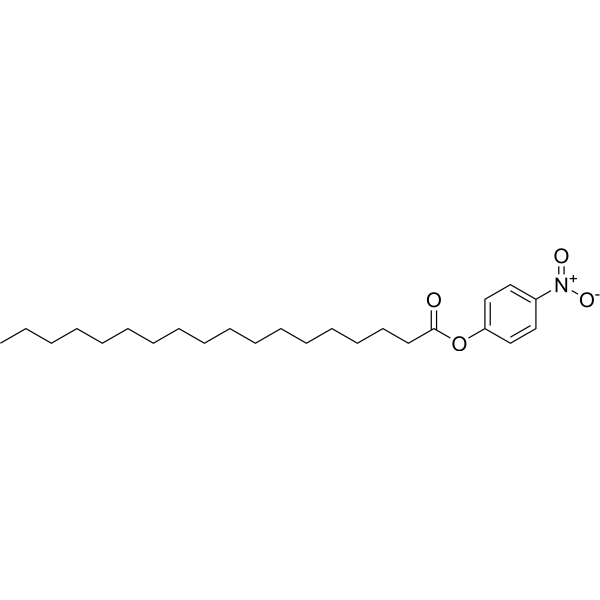
- Formula: C24H39NO4
- Molecular Weight: 405.57
4-Nitrophenyl stearate, which is an ester formed by the condensation of stearic acid and 4-nitrophenol, is commonly used as a substrate for enzymatic assays, where the hydrolysis of ester bonds by esterase and lipase can be measured by absorbance or ratio In addition, 4-Nitrophenyl stearate has been used as a model compound to study the enzymatic activity and selectivity of lipases and esterases from various sources. The long hydrophobic tail of the molecule makes it suitable for use in lipophilic Good solubility in the environment makes it a useful probe for studying lipid metabolism.
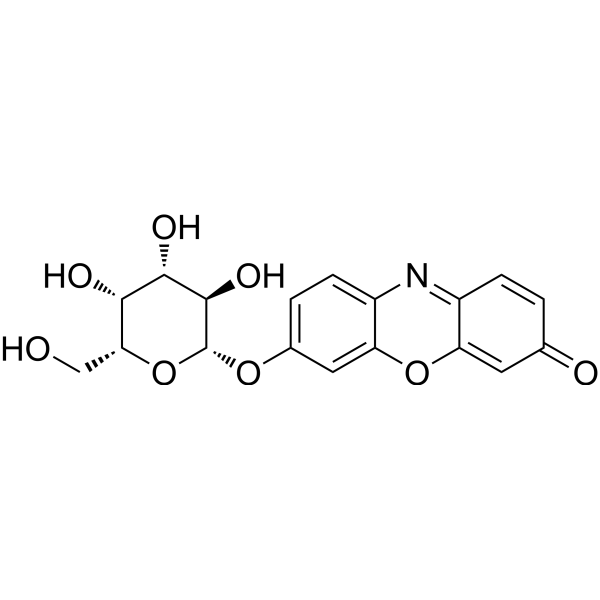
- Formula: C18H17NO8
- Molecular Weight: 375.33
Resorufin-β-D-galactopyranoside is a commonly used substrate in various biochemical assays to measure the activity of β-galactosidase, an important enzyme involved in lactose metabolism and regulation of gene expression. Resorufin-β-D-galactopyranoside has unique chemical properties and can be hydrolyzed by β-galactosidase to form a red fluorescent product called resorufin. This makes it a useful tool for detecting and quantifying β-galactosidase activity in biological samples such as bacteria or mammalian cells.

- Formula: C3H3NOS2
- Molecular Weight: 133.20
Rhodanine is a selective Echovirus 12 proliferation inhibitor and intermediate. Rhodanine is used to determine tannase activity. Rhodanine can be used in the synthesis of anticancer and antibacterial agents.

- Formula: C5H3N4NaO2
- Molecular Weight: 174.09
Xanthine sodium, 98%, a plant alkaloid found in tea, coffee, and cocoa, is a mild stimulant of the central nervous system. Xanthine sodium, 98% also acts as an intermediate product on the pathway of purine degradation.



