



Pyrazine

Based on 1 Customer Validation
Pyrazine (1,4-Diazine) is an aromatic nitrogen-containing heterocyclic compound with two nitrogen atoms, and is well known for its electron-deficient property. Pyrazine serves as a key pharmacophore in a variety of drugs, and also acts as the core skeleton of derivatives with anticancer, antimycobacterial, antithrombotic and anti-inflammatory activities.
Nos produits utilisent uniquement pour la recherche. Nous ne vendons pas aux patients.
- Pureté : 99.97%
- CAS No.: 290-37-9
- Formule: C4H4N2
- Masse moléculaire:80.09
-
Stockage:
Store at room temperature 3 years.
In solvent -80°C, 2 years , -20°C, 1 year


To place orders, for customer services and technical support, please contact: MedChemExpress USA
Tel: 609-228-6898 E-mail: [email protected] [email protected]


-
 Activité biologique
-
Chemical Information
-
Solvant et solubilité
- Protocole
- Pureté et documentation
- Références
-
 Help & FAQs


-
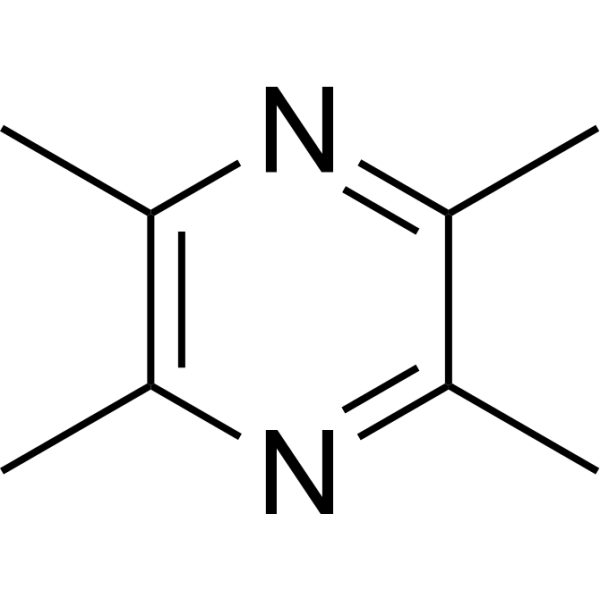
HY-N0264
LigustrazineNeuroprotective Agent/Lipid Lowering Agent -
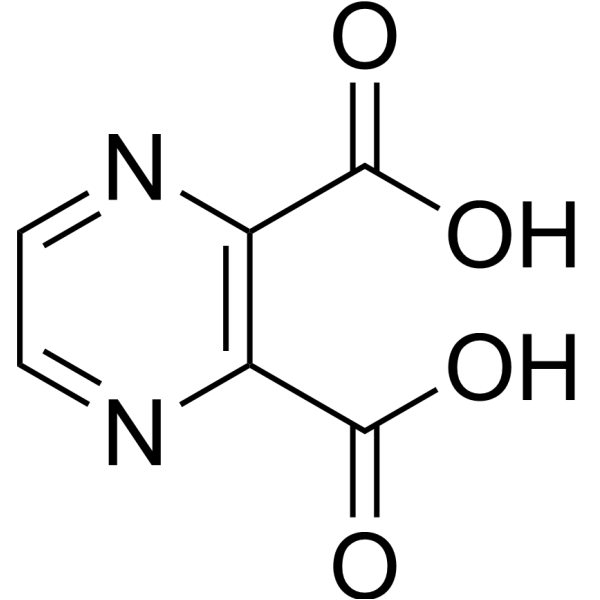
HY-W017105
Pyrazine-2,3-dicarboxylic acidBiochemical Reagent -
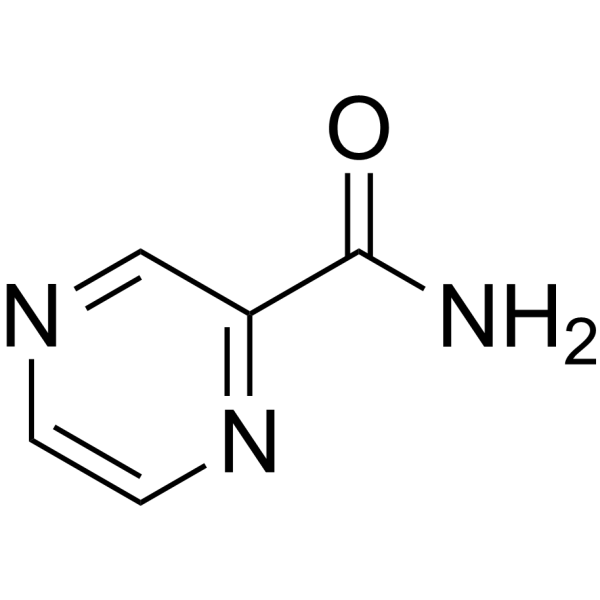
HY-B0271
PyrazinamideAntitubercular Antibiotic -
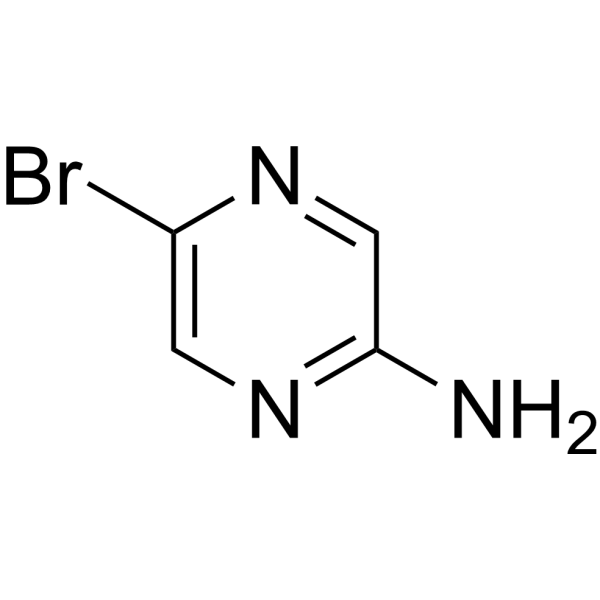
HY-59261
2-Amino-5-bromopyrazineOrganic Synthesis Intermediate -

HY-B0271R
Pyrazinamide (Standard)Antitubercular Antibiotic -
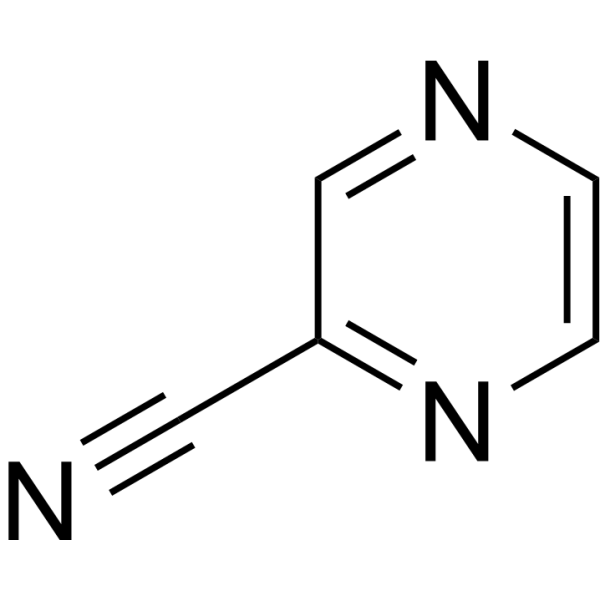
HY-Y0131
Pyrazine-2-carbonitrileAlbumin Binder, Gold Nanoparticle Binder -
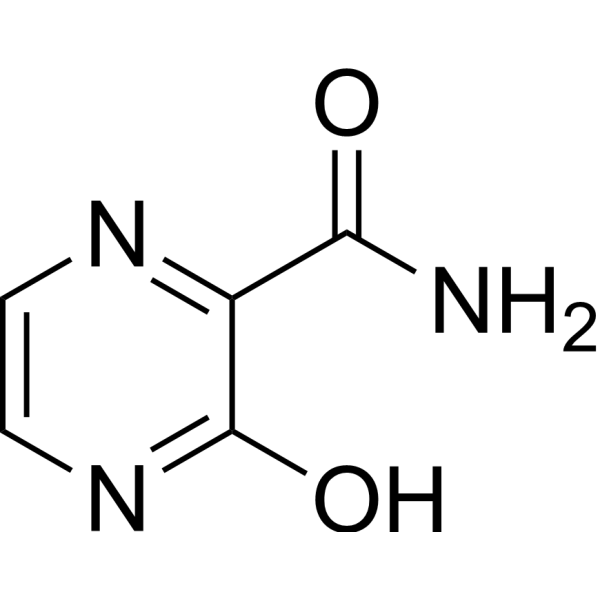
HY-W015764
T-1105Polymerase Inhibitor -

HY-W017105R
Pyrazine-2,3-dicarboxylic acid (Standard)Biochemical Reagent -
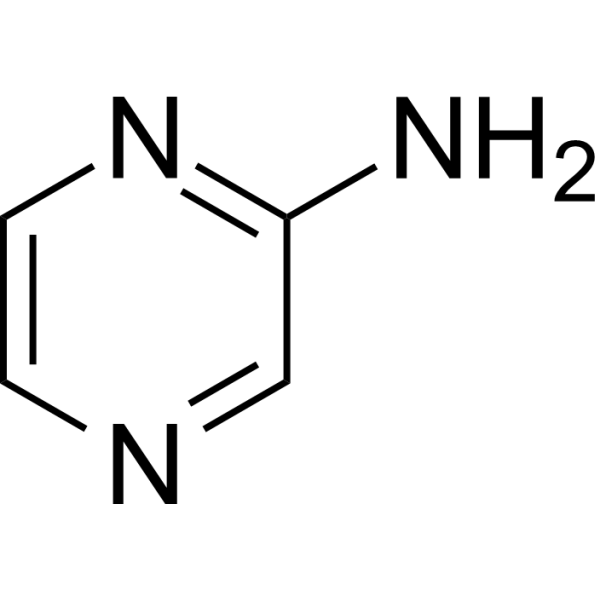
HY-34068
PyrazinamineBiochemical Reagent -
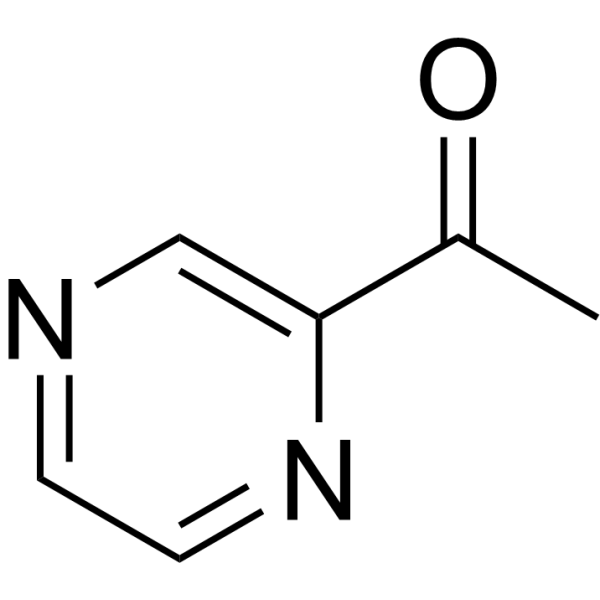
HY-W007692
Acetylpyrazine -

HY-76353R
2-Pyrazinecarboxylic acid (Standard)Biochemical Reagent -
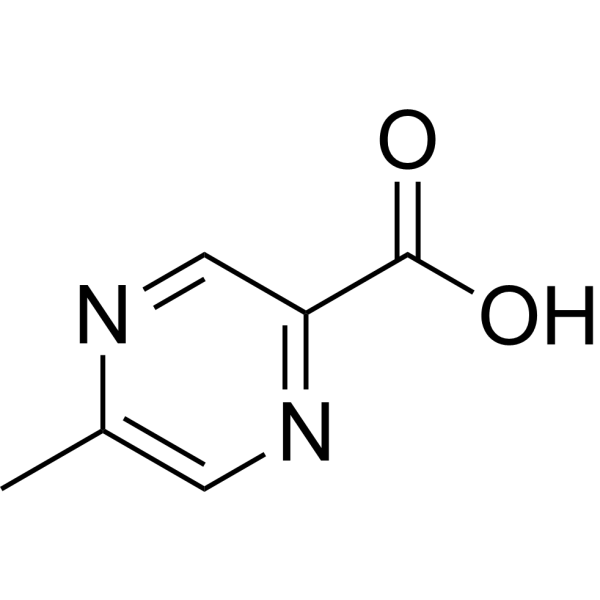
HY-32739
5-Methylpyrazine-2-carboxylic acidBiochemical Reagent


Activité biologique
Description
In Vitro
Pyrazine (sodamide; 30% H2O2/CH3COOH; 70-80 °C for H2O2/CH3COOH reaction) undergoes Chichibabin reaction with sodamide to form 2-aminopyrazine, and reacts with 30% H2O2/CH3COOH at 70-80 °C to form mono and dioxide products[1].
Pyrazine (300 °C for catalytic dehydrogenation) can be synthesized via catalytic dehydrogenation of ethanolamine (with optimal yield at 300 °C using copper catalyst) or via double condensation of a 1,2-dicarbonyl compound with equimolar 1,2-diamine followed by oxidation[1].
Pyrazine is a monobasic compound with a pKa of 0.65, protonated at N-1, and only undergoes N,N-diprotonation in very strong acidic media[1].
MedChemExpress (MCE) has not independently confirmed the accuracy of these methods. They are for reference only.


Chemical Information
-
CAS No. 290-37-9
-
Appearance Solid
-
Masse moléculaire 80.09
-
Formule C4H4N2
-
Color White to off-white
-
SMILES
C1=NC=CN=C1
-
Synonyms
1,4-Diazine
-
Livraison
Room temperature in continental US; may vary elsewhere.
-
Stockage
Store at room temperature 3 years
In solvent -80°C 2 years -20°C 1 year


Solvant et solubilité
In Vitro:
DMSO : 100 mg/mL (1248.60 mM; Need ultrasonic; Hygroscopic DMSO has a significant impact on the solubility of product, please use newly opened DMSO)
Please refer to the solubility information to select the appropriate solvent. Once prepared, please aliquot and store the solution to prevent product inactivation from repeated freeze-thaw cycles.
Storage method and period of stock solution: -80°C, 2 years; -20°C, 1 year. When stored at -80°C, please use it within 2 years. When stored at -20°C, please use it within 1 year.
Please refer to the solubility information to select the appropriate solvent. Once prepared, please aliquot and store the solution to prevent product inactivation from repeated freeze-thaw cycles.
Storage method and period of stock solution: -80°C, 2 years; -20°C, 1 year. When stored at -80°C, please use it within 2 years. When stored at -20°C, please use it within 1 year.
Concentration (start) × Volume (start) = Concentration (final) × Volume (final)


Pureté et documentation
-
Fiche technique (277 KB)
-
SDS (466 KB)
- English - EN (466 KB)
- Français - FR (466 KB)
- Deutsch - DE (466 KB)
- Norwegian - NO (466 KB)
- Español - ES (466 KB)
- Swedish - SV (466 KB)
- Italian - IT (466 KB)
- Korean - KR (466 KB)
- Portuguese - PT (466 KB)
-
Instruction de manipulation (2659 KB)
Références


Complete Stock Solution Preparation Table
Please refer to the solubility information to select the appropriate solvent. Once prepared, please aliquot and store the solution to prevent product inactivation from repeated freeze-thaw cycles.
Storage method and period of stock solution: -80°C, 2 years; -20°C, 1 year. When stored at -80°C, please use it within 2 years. When stored at -20°C, please use it within 1 year.
| Optional Solvent | Concentration Solvent Mass | 1 mg | 5 mg | 10 mg | 25 mg |
|---|---|---|---|---|---|
| DMSO | 1 mM | 12.4860 mL | 62.4298 mL | 124.8595 mL | 312.1488 mL |
| 5 mM | 2.4972 mL | 12.4860 mL | 24.9719 mL | 62.4298 mL | |
| 10 mM | 1.2486 mL | 6.2430 mL | 12.4860 mL | 31.2149 mL | |
| 15 mM | 0.8324 mL | 4.1620 mL | 8.3240 mL | 20.8099 mL | |
| 20 mM | 0.6243 mL | 3.1215 mL | 6.2430 mL | 15.6074 mL | |
| 25 mM | 0.4994 mL | 2.4972 mL | 4.9944 mL | 12.4860 mL | |
| 30 mM | 0.4162 mL | 2.0810 mL | 4.1620 mL | 10.4050 mL | |
| 40 mM | 0.3121 mL | 1.5607 mL | 3.1215 mL | 7.8037 mL | |
| 50 mM | 0.2497 mL | 1.2486 mL | 2.4972 mL | 6.2430 mL | |
| 60 mM | 0.2081 mL | 1.0405 mL | 2.0810 mL | 5.2025 mL | |
| 80 mM | 0.1561 mL | 0.7804 mL | 1.5607 mL | 3.9019 mL | |
| 100 mM | 0.1249 mL | 0.6243 mL | 1.2486 mL | 3.1215 mL |


Pyrazine Related Classifications
HY-W013040 Related Classifications
 Powered by Bioz