



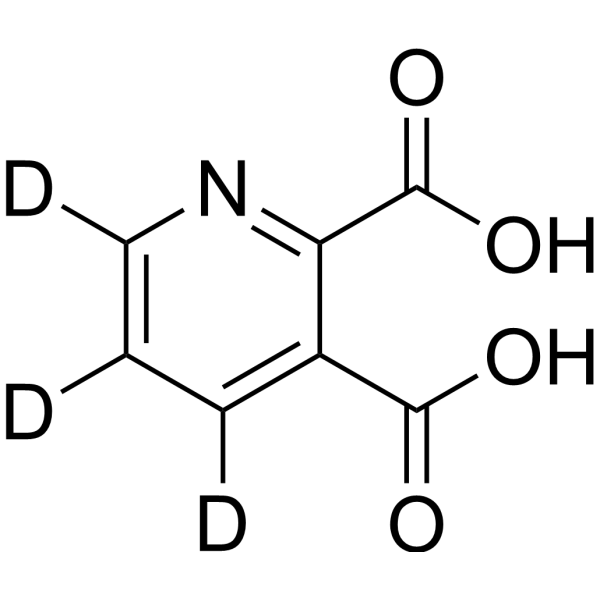
Quinolinic acid-d3
Based on 4 publication(s) in Google Scholar
Quinolinic acid-d3 is the deuterium labeled Quinolinic acid. Quinolinic acid, an endogenous metabolite of tryptophan, is a N-methyl-D-aspartate receptor (NMDA receptor) agonist. Quinolinic acid increases glutamate efflux, induces the generation of ROS, activates nitric oxide synthase, produces excessive NO, leading to calcium ion influx and neuronal apoptosis.
For research use only. We do not sell to patients.
- Purity : 99.85%
- CAS No.: 138946-42-6
- Formula: C7H2D3NO4
- Molecular Weight:170.14
-
Storage:Powder -20°C, 3 years , 4°C, 2 years ; In solvent -80°C, 6 months , -20°C, 1 month

To place orders, for customer services and technical support, please contact: MedChemExpress USA
Tel: 609-228-6898 E-mail: [email protected] [email protected]


-
 Biological Activity
-
Chemical Information
-
Solvent & Solubility
- Protocols
- Purity & Documentation
-
 Help & FAQs


-
HY-100806S
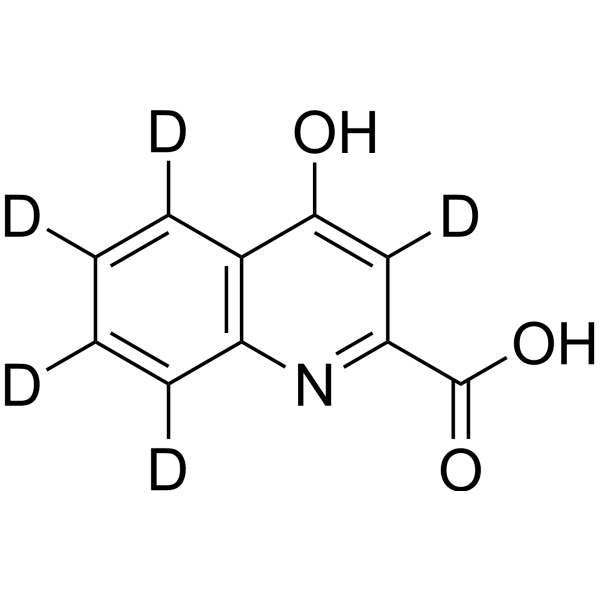
Kynurenic acid-d5Stable Isotope -
HY-100807
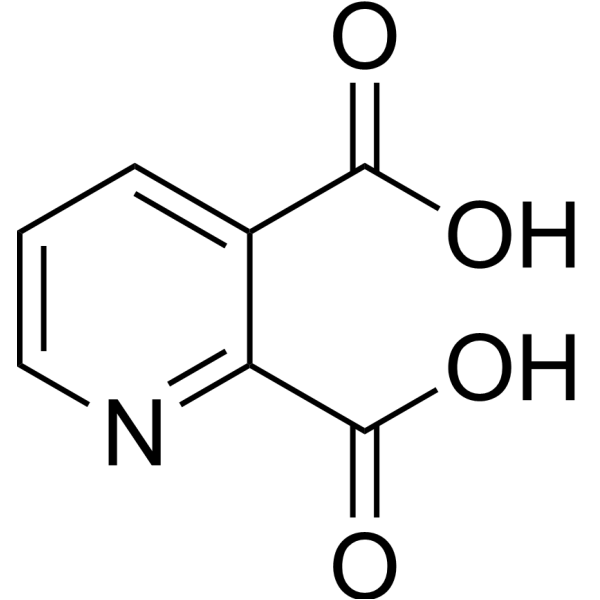
Quinolinic acidNMDA Receptor Agonist -
HY-104026S
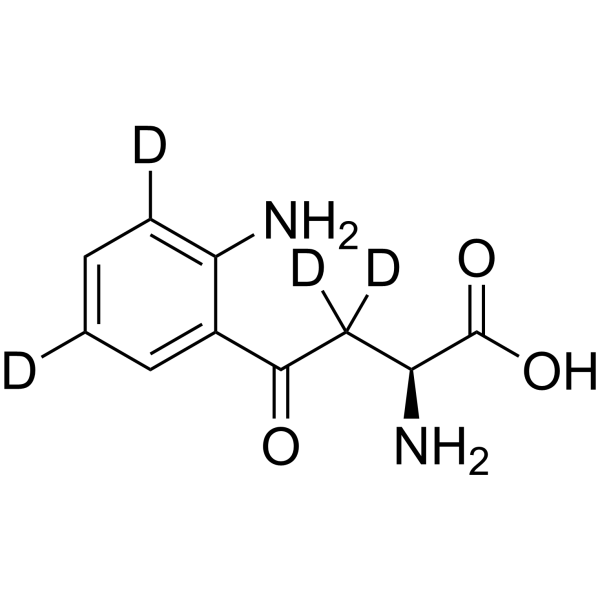
L-Kynurenine-d4Stable Isotope -
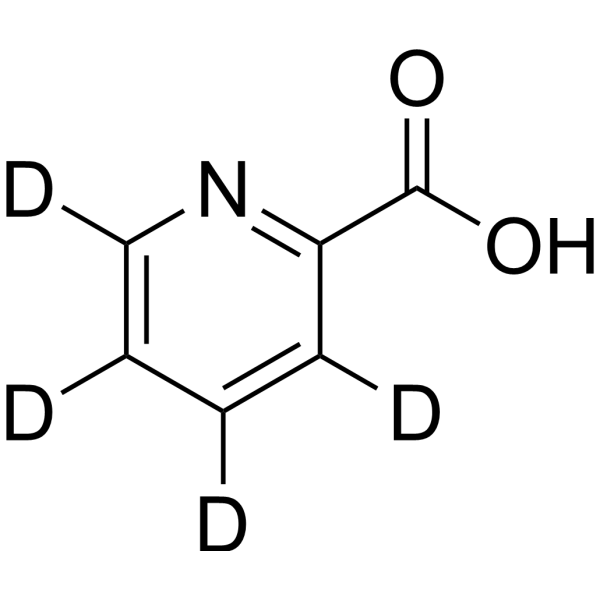
HY-W259489S
Picolinic acid-d4Stable Isotope -
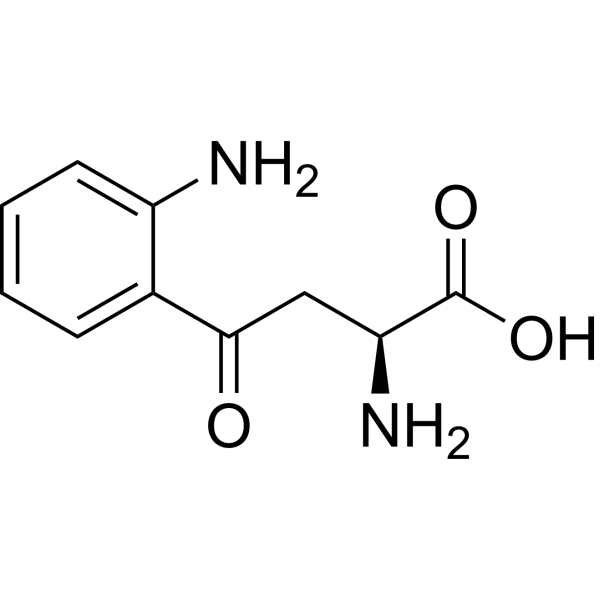
HY-104026
L-KynurenineAryl Hydrocarbon Receptor Agonist -
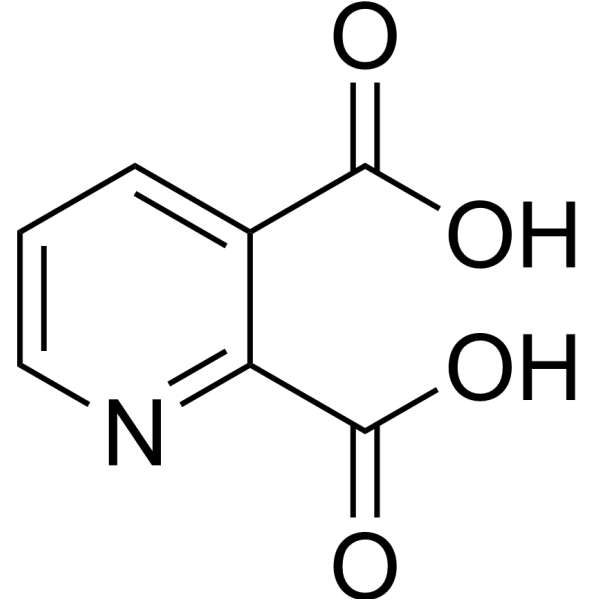
HY-100807R
Quinolinic acid (Standard)Standard of Quinolinic acid -
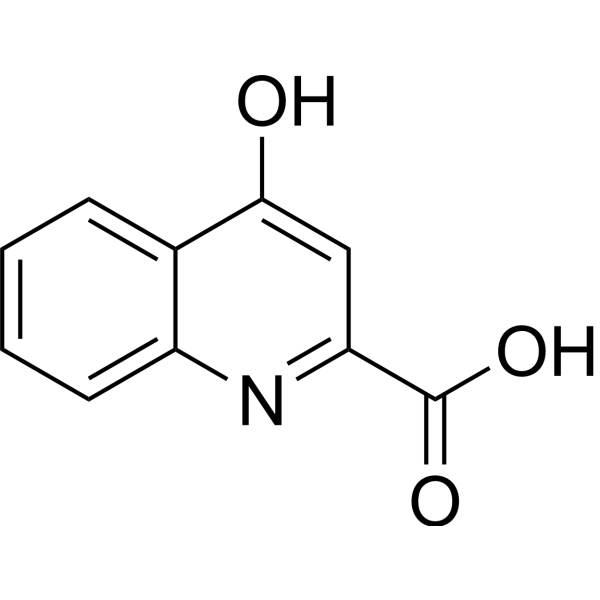
HY-100806R
Kynurenic acid (Standard)iGluR/α7 nAChR Antagonist -
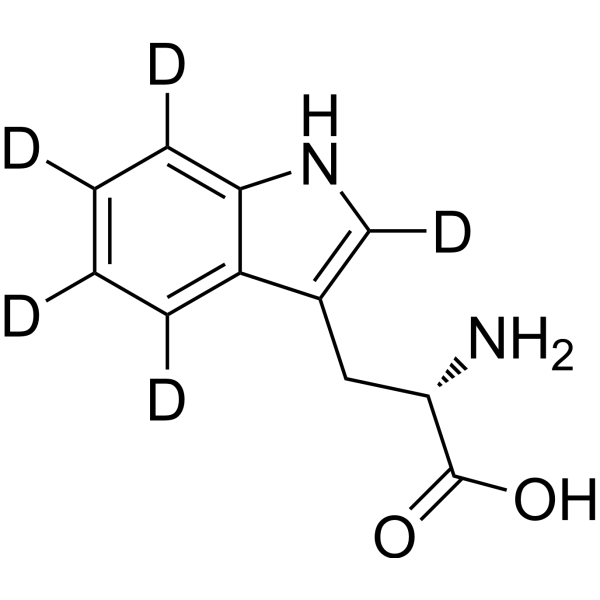
HY-N0623S
L-Tryptophan-d5Stable Isotope -

HY-N0623R
L-Tryptophan (standard)Essential Amino Acid -
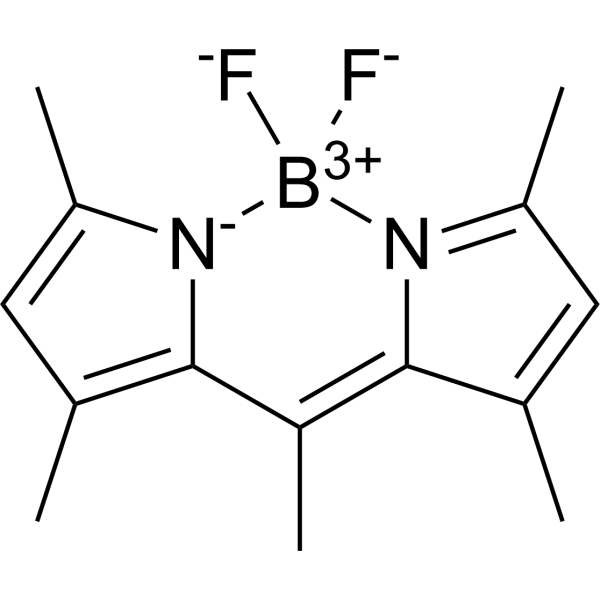
HY-W090090
BODIPY 493/503Neutral Lipid Dye -
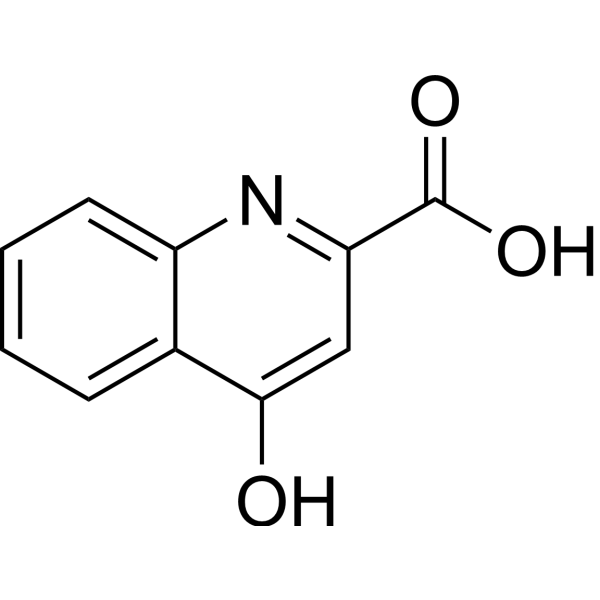
HY-100806
Kynurenic acidiGluR/α7 nAChR Antagonist -
HY-W014666
Xanthurenic acid
Publications Citing Use of MedChemExpress (MCE) Quinolinic acid-d3
MoreAll iGluR Isoforms
MoreAll Endogenous Metabolite Isoforms
More

Biological Activity
Description
IC50 & Target
|
NMDA Receptor |
In Vitro
Stable heavy isotopes of hydrogen, carbon, and other elements have been incorporated into drug molecules, largely as tracers for quantitation during the drug development process. Deuteration has gained attention because of its potential to affect the pharmacokinetic and metabolic profiles of drugs[1].
MedChemExpress (MCE) has not independently confirmed the accuracy of these methods. They are for reference only. Further protocols information, click here.
Application
1. This compound can be used as a tracer
2. This compound can be used as an internal standard for quantitative analysis by NMR, GC-MS, or LC-MS.


Chemical Information
-
CAS No. 138946-42-6
-
Unlabeled CAS 89-00-9
-
Appearance Solid
-
Molecular Weight 170.14
-
Formula C7H2D3NO4
-
Color White to off-white
-
SMILES
[2H]C1=C([2H])C([2H])=C(C(O)=O)C(C(O)=O)=N1
-
Shipping
Room temperature in continental US; may vary elsewhere.
-
Storage
Powder -20°C 3 years 4°C 2 years In solvent -80°C 6 months -20°C 1 month


Publications (4)
-
Journal Impact Factor
-
Most Recent
-
Redox Biol
Reprogramming of the kynurenine pathway impairs NAD+ homeostasis and mediates doxorubicin-induced cardiotoxicity in mice. [Abstract]2026 Feb:89:103957. PMID: 41389767 -
Metabolites
LC-MS/MS Detection of Tryptophan, Kynurenine, Kynurenic Acid, and Quinolinic Acid in Urine Samples from Drug-Positive and Illicit Drug-Negative Patients with a Known History of Substance Use Disorder. [Abstract]2025 Nov 18;15(11):749. PMID: 41295333 -
-


Solvent & Solubility
In Vitro:
DMSO : 33.33 mg/mL (195.90 mM; Need ultrasonic; Hygroscopic DMSO has a significant impact on the solubility of product, please use newly opened DMSO)
H2O : 3.33 mg/mL (19.57 mM; Need ultrasonic)
Please refer to the solubility information to select the appropriate solvent. Once prepared, please aliquot and store the solution to prevent product inactivation from repeated freeze-thaw cycles.
Storage method and period of stock solution: -80°C, 6 months; -20°C, 1 month. When stored at -80°C, please use it within 6 months. When stored at -20°C, please use it within 1 month.
* Note: If you choose water as the stock solution, please dilute it to the working solution, then filter and sterilize it with a 0.22 μm filter before use.
Please refer to the solubility information to select the appropriate solvent. Once prepared, please aliquot and store the solution to prevent product inactivation from repeated freeze-thaw cycles.
Storage method and period of stock solution: -80°C, 6 months; -20°C, 1 month. When stored at -80°C, please use it within 6 months. When stored at -20°C, please use it within 1 month.
* Note: If you choose water as the stock solution, please dilute it to the working solution, then filter and sterilize it with a 0.22 μm filter before use.
Concentration (start) × Volume (start) = Concentration (final) × Volume (final)

Protocols
-
Apoptosis
Apoptosis, also called programmed cell death, is generally characterized by distinct morphological characteristics.
-
TUNEL staining for apoptotic DNA fragmentation
TUNEL staining detects DNA strand breaks by using terminal deoxynucleotidyl transferase to add labeled nucleotides to exposed 3′-OH DNA termini, generating either microscopic staining in fixed cells or tissue sections, or fluorescence/cytometric signal in cell suspensions. TUNEL positivity reflects DNA fragmentation but should not be interpreted alone as definitive apoptosis, because TUNEL can also label necrotic, autolytic, mechanically damaged, or DNA-repair-associated DNA breaks.
-
Annexin V plus membrane-impermeant dye apoptosis staining
Annexin V-based apoptosis assays rely on the detection of phosphatidylserine (PS) externalization from the inner leaflet of the plasma membrane to the outer leaflet, an early biochemical hallmark of apoptosis. Fluorescently labeled Annexin V binds PS in a calcium-dependent manner, enabling identification of early apoptotic cells by flow cytometry or fluorescence microscopy. When combined with a membrane-impermeant DNA-binding dye (e. g. , propidium iodide), this approach allows discrimination between viable (Annexin V−/dye−), early apoptotic (Annexin V+/dye−), and late apoptotic or necrotic (Annexin V+/dye+) cell populations by assessing membrane integrity and PS exposure.
-
ROS/oxidative-stress fluorescent staining
ROS/oxidative-stress fluorescent staining uses cell-permeant fluorogenic probes that become fluorescent after oxidation inside cells or tissues; commonly used examples include DCFH-DA/DCFDA for broad cellular oxidant detection, DHE for superoxide-related signal detection, MitoSOX for mitochondrial superoxide-related signal detection, and CellROX probes for oxidative-stress-associated fluorescence readouts. The assay detects probe oxidation rather than a single ROS species unless the probe and analysis method have been chemically validated for that species. DCFH-DA enters cells, is deacetylated by intracellular esterases to DCFH, and produces fluorescent DCF after oxidation, so the readout is used as an operational measure of total cellular oxidative stress rather than a species-specific ROS measurement. DHE and MitoSOX can report superoxide-related oxidation, but red fluorescence alone can include non-specific ethidium-like oxidation products; HPLC or optimized spectral approaches are
-
Apoptosis Solutions
Apoptosis is a regulated, generally non-lytic cell-death pathway that removes unwanted, damaged, infected, or abnormal cells through coordinated morphological changes, caspase activation, DNA fragmentation, and membrane remodeling. The intrinsic apoptosis pathway is controlled mainly by mitochondrial outer membrane permeabilization, BCL-2 family proteins, cytochrome c release, apoptosome formation, caspase-9 activation, and downstream executioner caspase-3/7 activation. The extrinsic apoptosis pathway is initiated by death receptors such as Fas, TNFR, and TRAIL receptors, which recruit adaptor proteins and activate caspase-8 before engaging executioner caspases or mitochondrial amplification through BID cleavage. Apoptosis is linked to many phenotypes, including cancer cell killing, tissue homeostasis, immune regulation, neurodegeneration, infection response, and treatment-induced cytotoxicity; unresolved questions include how apoptosis interacts with necroptosis, pyroptosis, ferroptos


Purity & Documentation
-
Data Sheet (252 KB)
-
SDS (252 KB)
- English - EN (252 KB)
- Français - FR (252 KB)
- Deutsch - DE (252 KB)
- Norwegian - NO (252 KB)
- Español - ES (252 KB)
- Swedish - SV (252 KB)
- Italian - IT (252 KB)
- Korean - KR (252 KB)
- Portuguese - PT (252 KB)
-
Handling Instructions (2659 KB)


Complete Stock Solution Preparation Table
Please refer to the solubility information to select the appropriate solvent. Once prepared, please aliquot and store the solution to prevent product inactivation from repeated freeze-thaw cycles.
Storage method and period of stock solution: -80°C, 6 months; -20°C, 1 month. When stored at -80°C, please use it within 6 months. When stored at -20°C, please use it within 1 month.
| Optional Solvent | Concentration Solvent Mass | 1 mg | 5 mg | 10 mg | 25 mg |
|---|---|---|---|---|---|
| H2O / DMSO | 1 mM | 5.8775 mL | 29.3876 mL | 58.7751 mL | 146.9378 mL |
| 5 mM | 1.1755 mL | 5.8775 mL | 11.7550 mL | 29.3876 mL | |
| 10 mM | 0.5878 mL | 2.9388 mL | 5.8775 mL | 14.6938 mL | |
| 15 mM | 0.3918 mL | 1.9592 mL | 3.9183 mL | 9.7959 mL | |
| DMSO | 20 mM | 0.2939 mL | 1.4694 mL | 2.9388 mL | 7.3469 mL |
| 25 mM | 0.2351 mL | 1.1755 mL | 2.3510 mL | 5.8775 mL | |
| 30 mM | 0.1959 mL | 0.9796 mL | 1.9592 mL | 4.8979 mL | |
| 40 mM | 0.1469 mL | 0.7347 mL | 1.4694 mL | 3.6734 mL | |
| 50 mM | 0.1176 mL | 0.5878 mL | 1.1755 mL | 2.9388 mL | |
| 60 mM | 0.0980 mL | 0.4898 mL | 0.9796 mL | 2.4490 mL | |
| 80 mM | 0.0735 mL | 0.3673 mL | 0.7347 mL | 1.8367 mL | |
| 100 mM | 0.0588 mL | 0.2939 mL | 0.5878 mL | 1.4694 mL |
* Note: If you choose water as the stock solution, please dilute it to the working solution, then filter and sterilize it with a 0.22 μm filter before use.


Quinolinic acid-d3 Related Classifications
HY-100807S Related Classifications
 Powered by Bioz