



(Rac)-Beraprost sodium

Based on 1 Customer Validation
(Rac)-Beraprost ((Rac)-ML 1129) sodium is a racemic isomer of Beraprost sodium (HY-13569A). Beraprost sodium is an orally active prostacyclin analog that inhibits the release of Ca2+ from intracellular storage sites by binding to prostacyclin membrane receptors (Prostaglandin Receptor), leading to relaxation of smooth muscle cells and vasodilation. Beraprost sodium has vasodilatory, antiplatelet, and cytoprotective effects, making it promising for research in the field of cardiovascular diseases, such as thromboangiitis obliterans and atherosclerosis.
For research use only. We do not sell to patients.
- Purity : 99.0%
- CAS No.: 88475-69-8
- Formula: C24H29NaO5
- Molecular Weight:420.47
-
Storage:
-20°C, sealed storage, away from moisture
* In solvent : -80°C, 6 months; -20°C, 1 month (sealed storage, away from moisture)


To place orders, for customer services and technical support, please contact: MedChemExpress USA
Tel: 609-228-6898 E-mail: [email protected] [email protected]


-
 Biological Activity
-
Chemical Information
- Protocols
- Purity & Documentation
- References
-
 Help & FAQs


-
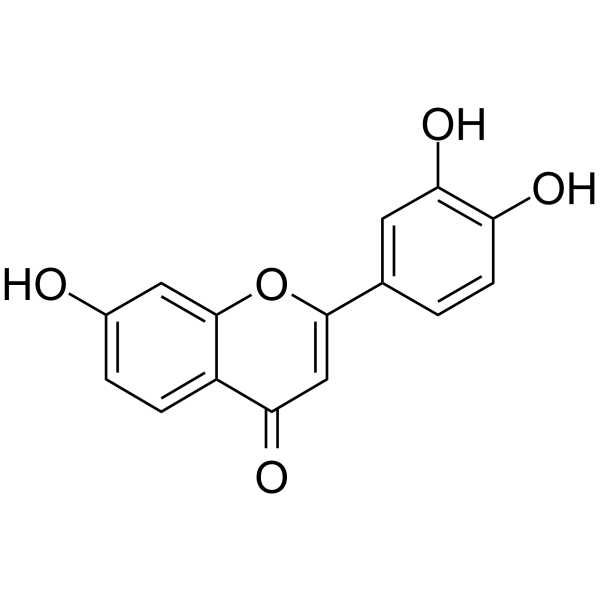
HY-N2736
3′,4′,7-Trihydroxyflavoneflavonoid aglycon compound -
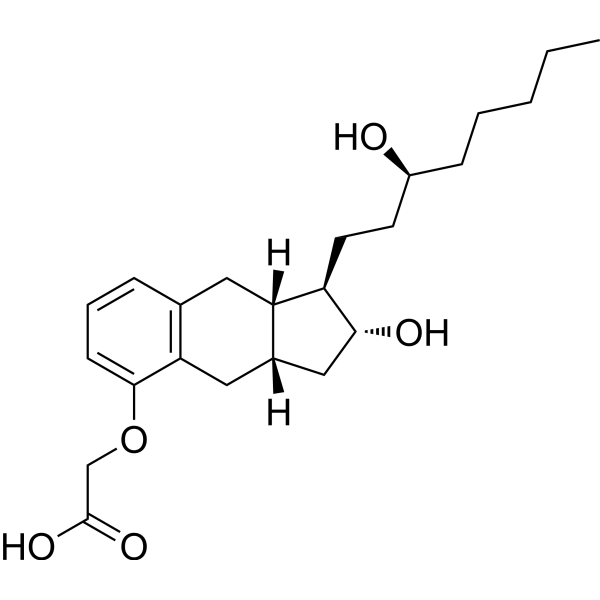
HY-100441
TreprostinilDP1/EP2 Agonist -

HY-W738639
18-Hydroxy-11-deoxy corticosteroneMineralocorticoid -
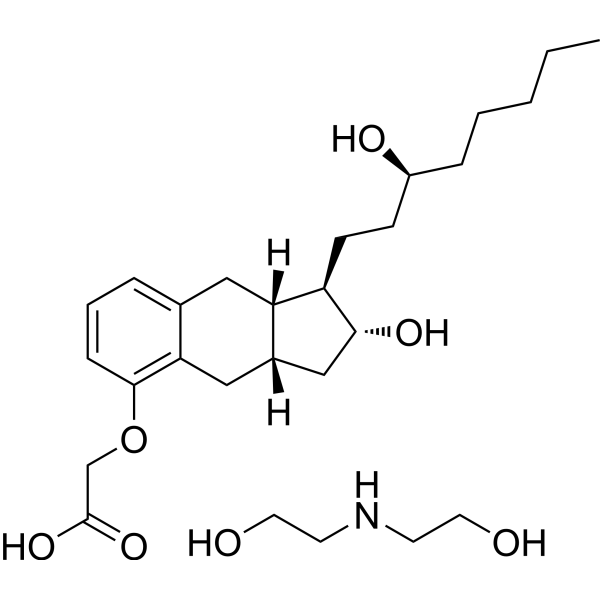
HY-B0813
Treprostinil diethanolamineEP2/DP1/IP Agonist -

HY-113254
13,14-Dihydro-15-keto-PGE25-HT Modulator -

HY-B1108S
Labetalol hydrochloride-d5Stable Isotope -
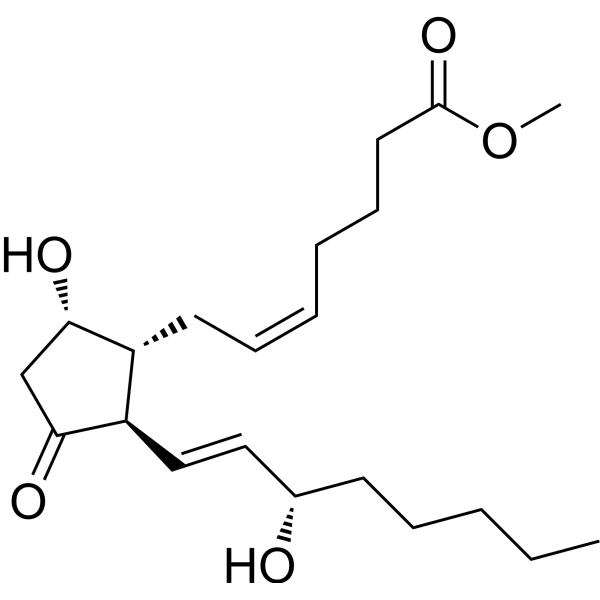
HY-114623
Prostaglandin D2 methyl esterDP Receptor Inhibitor -
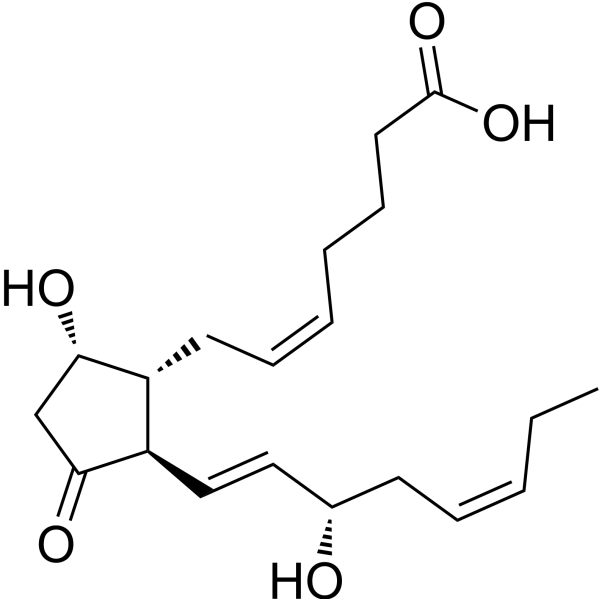
HY-113444
Prostaglandin D3Platelet Inhibitor -
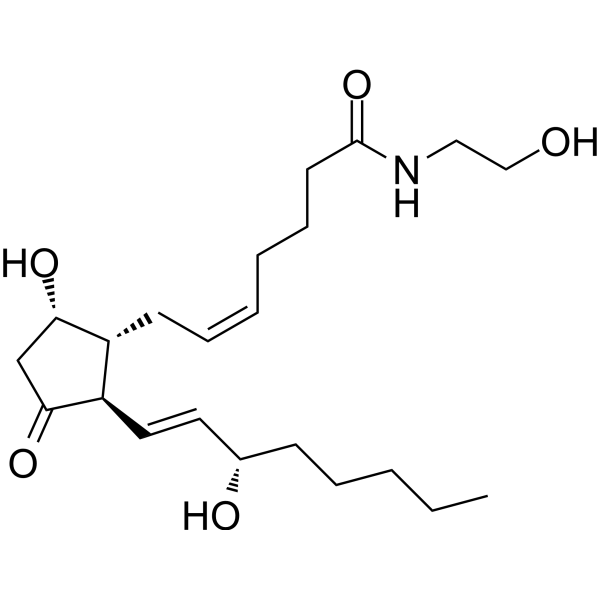
HY-113264
PGD2 ethanolamideAnandamide Metabolite -
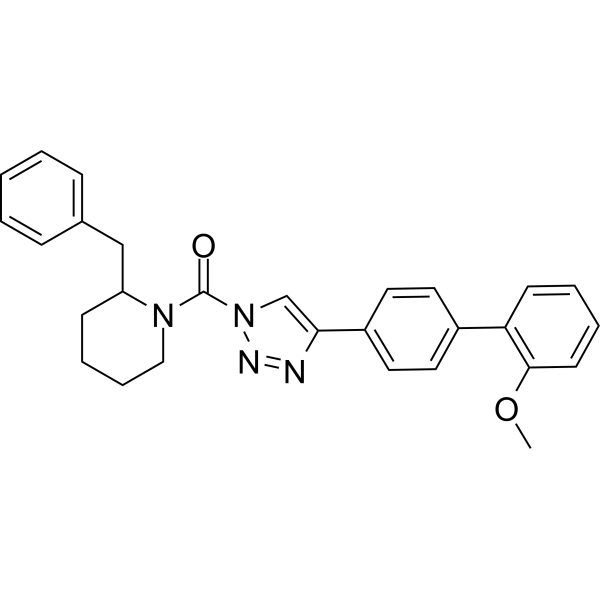
HY-18541
KT172DAGLβ Inhibitor -

HY-100441R
Treprostinil (Standard)DP1/EP2 Agonist -
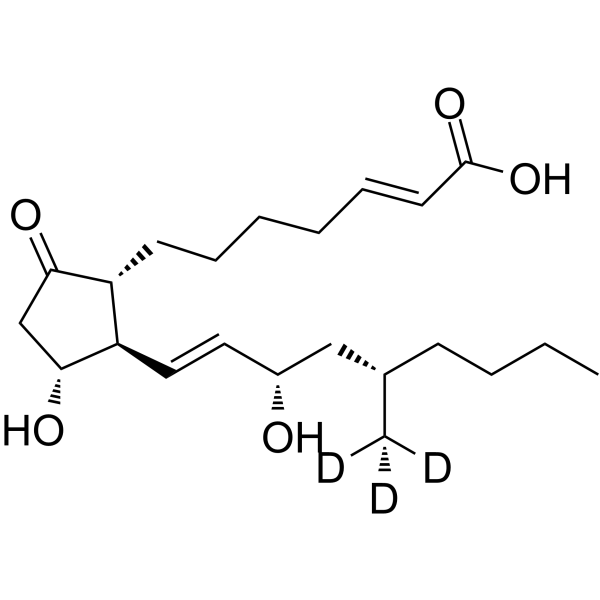
HY-B0683S
Limaprost-d3Stable Isotope


Biological Activity
Description


Chemical Information
-
CAS No. 88475-69-8
-
Appearance Solid
-
Molecular Weight 420.47
-
Formula C24H29NaO5
-
Color White to off-white
-
SMILES
O=C(CCCC1=CC=CC2=C1OC3CC(C(C23)/C=C/C(C(CC#CC)C)O)O)O[Na]
-
Synonyms
(Rac)-TRK-100; (Rac)-ML 1129 sodium
-
Shipping
Room temperature in continental US; may vary elsewhere.
-
Storage
-20°C, sealed storage, away from moisture
* In solvent : -80°C, 6 months; -20°C, 1 month (sealed storage, away from moisture)

Protocols
-
Research Protocol for Cardiovascular Diseases
Cardiovascular disease can be modeled as maladaptive cardiac remodeling, where ischemic injury or pressure overload activates inflammatory signaling, fibroblast activation, extracellular-matrix deposition, cardiomyocyte hypertrophy, vascular remodeling, and progressive ventricular dysfunction. The TGF-β/SMAD axis is a central profibrotic pathway after myocardial injury and pressure overload, while innate immune and cytokine pathways regulate leukocyte recruitment, scar formation, and adverse remodeling. Key unresolved questions include which inflammatory signals are reparative versus harmful, when fibrosis is protective versus maladaptive, and whether pathway inhibition improves function without weakening necessary infarct healing or compensatory remodeling.
-
Ca2+ Staining Technique
Ca2+ staining is an experimental technique that utilizes specific fluorescent probes (such as Fluo-4 AM, Fura-2, etc.) to qualitatively or quantitatively detect dynamic changes in intracellular Ca2+ concentrations; this is achieved by monitoring the changes in fluorescent signals generated when these probes bind to free intracellular calcium ions. The underlying principle relies primarily on the presence of chelating groups within the probe's molecular structure that possess high affinity for calcium ions.


Purity & Documentation
-
Data Sheet (269 KB)
-
SDS (393 KB)
- English - EN (393 KB)
- Français - FR (393 KB)
- Deutsch - DE (393 KB)
- Norwegian - NO (393 KB)
- Español - ES (393 KB)
- Swedish - SV (393 KB)
- Italian - IT (393 KB)
- Korean - KR (393 KB)
- Portuguese - PT (393 KB)
-
Handling Instructions (2659 KB)
References
[1]. Li S, et al. Beraprost sodium mitigates renal interstitial fibrosis through repairing renal microvessels. J Mol Med (Berl). 2019 Jun;97(6):777-791. [Content Brief]
[2]. Yan P, et al. Clinical efficacy and safety of beraprost sodium in the treatment of nephrotic syndrome: A meta-analysis. Medicine (Baltimore). 2023 Oct 20;102(42):e34958. [Content Brief]

Calculators
Concentration (start) × Volume (start) = Concentration (final) × Volume (final)


(Rac)-Beraprost sodium Related Classifications
HY-Z7721 Related Classifications
 Powered by Bioz