



(±)-Coriolic acid

Based on 1 Customer Validation
(±)-Coriolic acid ((±)-13-HODE) is one of the two racemic monohydroxy fatty acids produced by non-enzymatic oxidation of linoleic acid. (±)-Coriolic acid induces TNF production in macrophages and upregulates Scavenger Receptor, thereby promoting the uptake of oxidized low-density lipoprotein. (±)-Coriolic acid induces the expression of cell adhesion molecules in endothelial cells. (±)-Coriolic acid can be used in research on psoriasis, atherosclerosis, and triple-negative breast cancer.
For research use only. We do not sell to patients.
- Purity : 98.02%
- CAS No.: 18104-45-5
- Formula: C18H32O3
- Molecular Weight:296.44
-
Storage:
Solution, -20°C, 2 years


To place orders, for customer services and technical support, please contact: MedChemExpress USA
Tel: 609-228-6898 E-mail: [email protected] [email protected]


-
 Biological Activity
-
Chemical Information
- Protocols
- Purity & Documentation
- References
-
 Help & FAQs


-
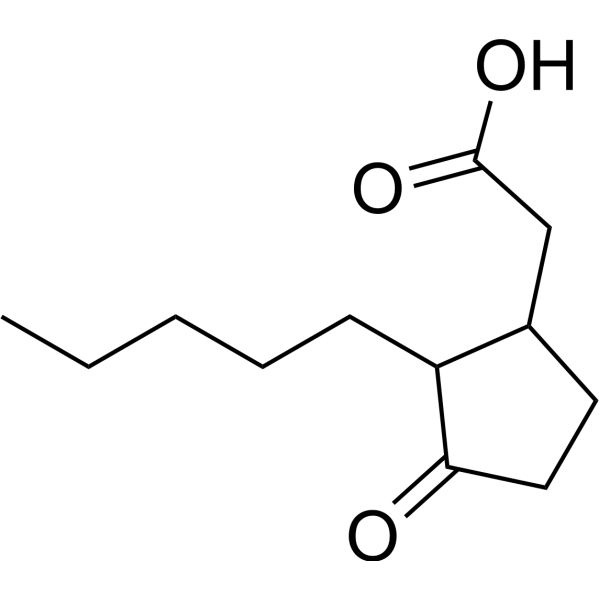
HY-131116
Dihydrojasmonic acidPlant Growth Regulator -

HY-124355
4-Hydroxy hexenalLipid Peroxidation Product -
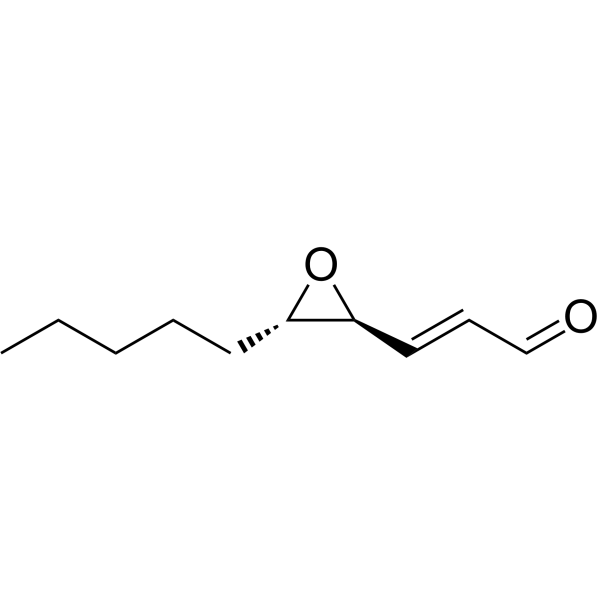
HY-120893
trans-4,5-Epoxy-(E)-2-decenalα,β-unsaturated aldehyde -

HY-131116R
Dihydrojasmonic acid (Standard)Reference Standard -

HY-W746984
(±)-Tuberonic Acid -

HY-117044A
(±)12-HEPE -

HY-N7801
(±)5-HEPE -

HY-136410
4-hydroxy Nonenal Mercapturic AcidUnsaturated Fatty Acid -

HY-126108
(±)8-HEPE -
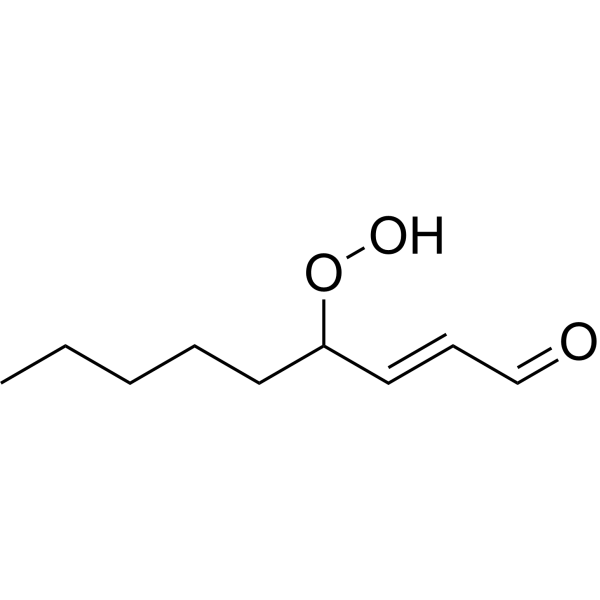
HY-116722
(2E)-4-Hydroperoxy-2-nonenalLipid Peroxidation -
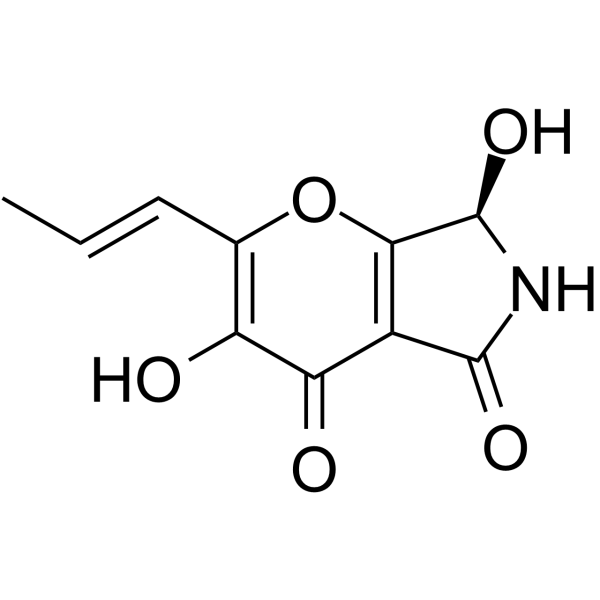
HY-126604
Pyranonigrin AAnti-infection Agent
All Endogenous Metabolite Isoforms
More

Biological Activity
Description
In Vitro
(±)-Coriolic acid (20 µM; 24 h) acts additively with TNFα and IL-1 to induce ICAM-1 expression in HUVEC[2].
In HUVEC, pretreatment with (±)-Coriolic acid (50 µM; 1 h) does not inhibit subsequent cytokine-induced ICAM-1 expression but slightly enhances IL-1-induced ICAM-1 expression[2].
Co-treatment with (±)-13-HODE (25 nM; 72 h) attenuates linoleic acid-induced cell death in FABP7-overexpressing MDA-MB-231 cells[3].
MedChemExpress (MCE) has not independently confirmed the accuracy of these methods. They are for reference only. Further protocols information, click here.
-
Cell Line:231-FABP7 and 231-RFP TNBC cells
-
Concentration:25 nM co-treated with 12.5 µM Linoleic acid
-
Incubation Time:72 h
-
Result:Attenuated the cell death induced by Linoleic acid.
In Vivo
(±)-Coriolic acid (8 mg; p.o.; 5 days per week; 11 weeks) decreases plasma triglyceride concentrations in LDL receptor knockout mouse models fed a non-purified diet[4].
(±)-Coriolic acid (8 mg; p.o.; 5 days per week; 13 weeks) increases aortic atherosclerotic lesion area in LDL receptor knockout mouse models fed a medium-fat and low-fat diet[4].
MedChemExpress (MCE) has not independently confirmed the accuracy of these methods. They are for reference only.
-
Animal Model:LDL receptor knockout male mice (4-6 wk of age; high fat diet TD88137)[4]
-
Dosage:8 mg
-
Administration:p.o.; 5 d/wk; 11 wk
-
Result:Increased aortic lesion area by 100%.
Increased plasma LDL cholesterol (10.90 mM vs. 8.65 mM).
Increased the TC:HDL cholesterol ratio (4.89 vs. 4.15).
Elevated plasma autoantibody levels to oxidatively modified proteins (1.19 OD vs. 0.88 OD).
Did not affect plasma ApoA1 levels.
-
Animal Model:LDL receptor knockout male mice (4-6 wk of age; medium fat diet TD01073)[4]
-
Dosage:8 mg
-
Administration:p.o.; 5 d/wk; 13 wk
-
Result:Increased aortic lesion area compared with untreated controls.
Did not affect plasma total or LDL cholesterol levels.
-
Animal Model:LDL receptor knockout male mice (4-6 wk of age; low fat diet TD01074)[4]
-
Dosage:8 mg
-
Administration:p.o.; 5 d/wk; 13 wk
-
Result:Increased aortic lesion area compared with untreated controls.
Reduced plasma HDL cholesterol (2.43 mM vs. 2.72 mM).
Increased the TC:HDL cholesterol ratio.
Did not affect plasma total or LDL cholesterol levels.
-
Animal Model:LDL receptor knockout male mice (4-6 wk of age; nonpurified diet LabDiet 5001)[4]
-
Dosage:8 mg
-
Administration:p.o.; 5 d/wk; 11 wk
-
Result:Did not cause lesion formation.
Decreased plasma triglyceride concentration (1.55 mM vs. 2.02 mM).
Did not affect total, HDL, or LDL cholesterol concentrations.
Plasma autoantibody levels to oxidatively modified proteins did not differ between treated and untreated mice.


Chemical Information
-
CAS No. 18104-45-5
-
Appearance Liquid
-
Molecular Weight 296.44
-
Formula C18H32O3
-
Color Colorless to light yellow
-
SMILES
CCCCCC(O)/C=C/C=C\CCCCCCCC(O)=O
-
Synonyms
(±)-13-HODE
-
Shipping
Room temperature in continental US; may vary elsewhere.
-
Storage
Solution, -20°C, 2 years

Protocols
-
RNA extraction experimental
By lysing cells, releasing RNA, and removing impurities such as proteins and DNA, high-purity RNA products are finally obtained. The commonly used traditional method is the guanidine isothiocyanate/phenol/chloroform method (Trizol), which is suitable for a variety of animal materials including animal tissues, microorganisms, cultured cells, etc., and most plant materials.
-
Imiquimod-Induced Psoriasiform Dermatitis
Imiquimod (IMQ)-induced psoriasiform dermatitis is a widely used murine model in which topical application of IMQ, a Toll-like receptor 7 (TLR7) agonist, triggers innate immune activation in the skin and induces a psoriasis-like inflammatory cascade characterized by epidermal hyperplasia, immune cell infiltration, and cytokine production dominated by the IL-23/IL-17 axis. This inflammatory response is mediated through activation of dendritic cells and downstream induction of IL-23, IL-17A, IL-22, and related pro-inflammatory mediators, recapitulating key features of human plaque psoriasis and enabling mechanistic and therapeutic studies. The model is commonly induced using Aldara (5% IMQ cream) applied topically to murine skin, resulting in rapid onset of erythema, scaling, and thickening that can be quantified as disease severity indices and validated histologically.
-
Endothelial Tube Formation Assay
Endothelial tube formation assay evaluates the ability of endothelial cells to attach, migrate, align, and organize into capillary-like networks when cultured on gelled basement membrane extract or Matrigel; the readout is the morphology and quantity of tube-like networks, which reflects an in vitro endothelial morphogenesis step related to angiogenesis. Basement membrane extract/Matrigel provides laminin-rich extracellular matrix cues that support endothelial differentiation into capillary-like structures, but it can contain biologically active growth factors, so growth-factor-reduced matrix is preferred when testing defined angiogenic stimulators or inhibitors.
-
Research Protocol for Cardiovascular Diseases
Cardiovascular disease can be modeled as maladaptive cardiac remodeling, where ischemic injury or pressure overload activates inflammatory signaling, fibroblast activation, extracellular-matrix deposition, cardiomyocyte hypertrophy, vascular remodeling, and progressive ventricular dysfunction. The TGF-β/SMAD axis is a central profibrotic pathway after myocardial injury and pressure overload, while innate immune and cytokine pathways regulate leukocyte recruitment, scar formation, and adverse remodeling. Key unresolved questions include which inflammatory signals are reparative versus harmful, when fibrosis is protective versus maladaptive, and whether pathway inhibition improves function without weakening necessary infarct healing or compensatory remodeling.
-
Breast Cancer Modeling
Breast cancer is a heterogeneous cancer, and it has been distinguished into four subtypes: luminal A, luminal B, HER2-positive and basal-like. Molecular mutations, epigenetic alterations, hormone exposure and immune microenvironment are related to the progression of breast cancer.


Purity & Documentation
-
Data Sheet (274 KB)
-
SDS (251 KB)
- English - EN (251 KB)
- Français - FR (251 KB)
- Deutsch - DE (251 KB)
- Norwegian - NO (251 KB)
- Español - ES (251 KB)
- Swedish - SV (251 KB)
- Italian - IT (251 KB)
- Korean - KR (251 KB)
- Portuguese - PT (251 KB)
-
Handling Instructions (2659 KB)
References
[4]. Khan-Merchant N, et al. Oxidized fatty acids promote atherosclerosis only in the presence of dietary cholesterol in low-density lipoprotein receptor knockout mice. The Journal of nutrition. 2002 Nov;132(11):3256-62. [Content Brief]
[5]. Nishizuka Y, et al. Intracellular signaling by hydrolysis of phospholipids and activation of protein kinase C. Science (New York, N.Y.). 1992 Oct 23;258(5082):607-14. [Content Brief]

Calculators
Concentration (start) × Volume (start) = Concentration (final) × Volume (final)


(±)-Coriolic acid Related Classifications
HY-113884A Related Classifications
 Powered by Bioz