



EGF Protein, Mouse (HEK293)
Based on 1 publication(s) in Google Scholar
EGF Protein, a growth factor, is essential for cell growth, proliferation, and differentiation. It binds to the EGF receptor, activating signaling pathways that regulate cell survival and tissue repair. EGF Protein has therapeutic potential in promoting wound healing, tissue regeneration, and cancer treatment. Its role in cellular processes makes it a subject of interest in biomedical research. EGF Protein, Mouse (HEK293) is the recombinant mouse-derived EGF protein, expressed by HEK293 , with tag free.
- Species: Mouse
- Source: HEK293
-
Storage:Stored at -20°C for 2 years from date of receipt. After reconstitution, it is stable at 4°C for 1 week or -20°C for longer (with carrier protein). It is recommended to freeze aliquots at -20°C or -80°C for extended storage.


To place orders, for customer services and technical support, please contact: MedChemExpress USA
Tel: 609-228-6898 E-mail: [email protected] [email protected]


-
 Biological Activity
-
Technical Parameters
-
Product Properties
- Documentation
- Help & FAQs


-

HY-P7066
FGF-2 Protein, Mouse (145a.a) -
HY-15141
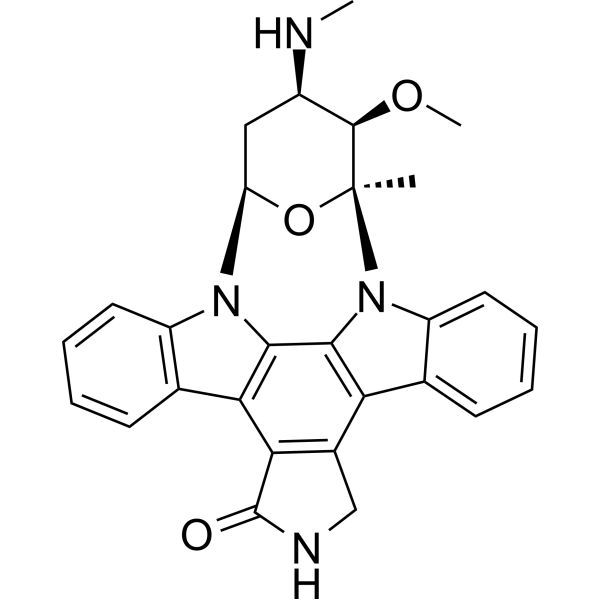
Staurosporine -
HY-N0390
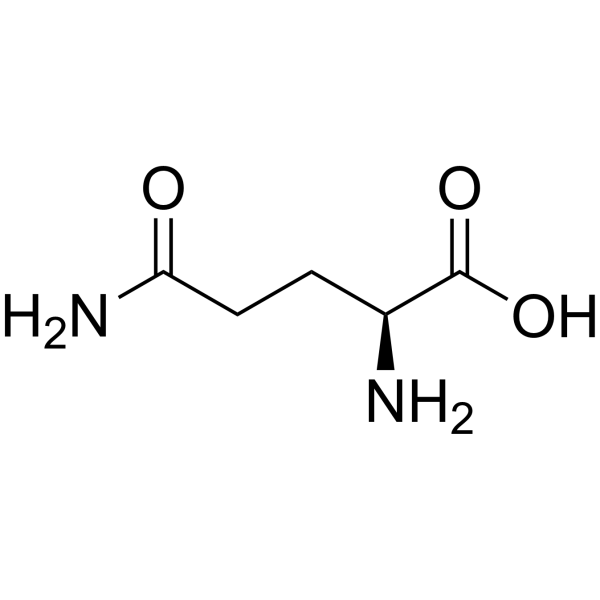
L-Glutamine -
HY-B0215
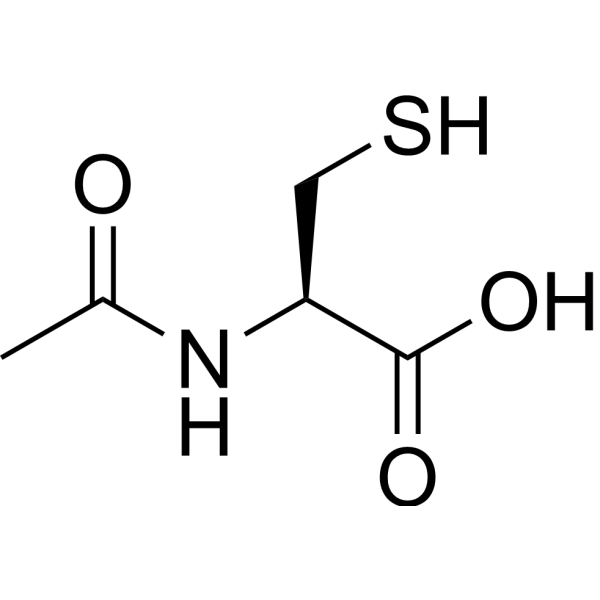
Acetylcysteine -
HY-N0583
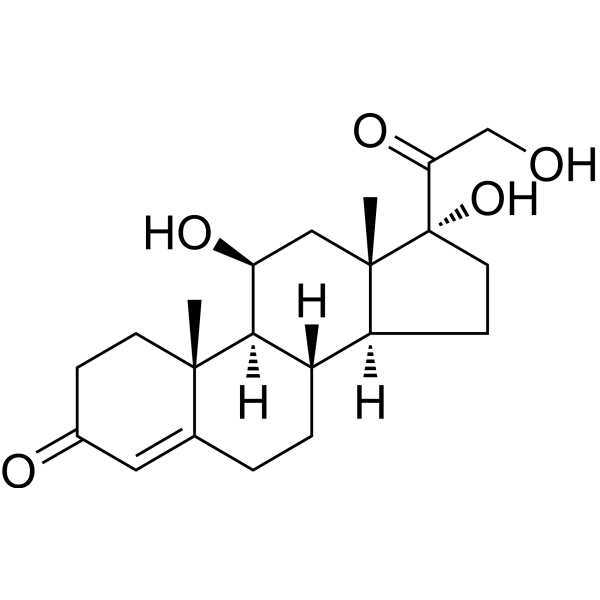
Hydrocortisone -
HY-10583
Y-27632 dihydrochloride -
HY-P7063
IL-6 Protein, Mouse -
HY-P7086
Noggin Protein, Mouse (CHO) -
HY-P73928
HGF Protein, Mouse (HEK293) -
HY-P73243
Insulin Protein, Human (P.pastoris) -
HY-P76012
RSPO1/R-spondin-1 Protein, Mouse (CHO, His)


Biological Activity
Description
EGF Protein, a growth factor, is essential for cell growth, proliferation, and differentiation. It binds to the EGF receptor, activating signaling pathways that regulate cell survival and tissue repair. EGF Protein has therapeutic potential in promoting wound healing, tissue regeneration, and cancer treatment. Its role in cellular processes makes it a subject of interest in biomedical research. EGF Protein, Mouse (HEK293) is the recombinant mouse-derived EGF protein, expressed by HEK293 , with tag free.
Background
EGF is a potent growth factor that promotes the proliferation of various epidermal and epithelial tissues both in vivo and in vitro, as well as certain fibroblasts in cell culture. It acts as a magnesiotropic hormone by stimulating the reabsorption of magnesium in the renal distal convoluted tubule through the activation of EGFR and the magnesium channel TRPM6. EGF also interacts with EGFR, facilitating EGFR dimerization, and forms interactions with RHBDF1 and RHBDF2, potentially regulating its intracellular localization and degradation.
Verified Bioactivity
Measured in a cell proliferation assay using Balb/3T3 mouse embryonic fibroblast cells. The ED50 for this effect is <100 pg/mL, corresponding to a specific activity is ≤2.36×10⁷ units/mg.
MCE Validation Data
-
Purity - SDS-PAGE
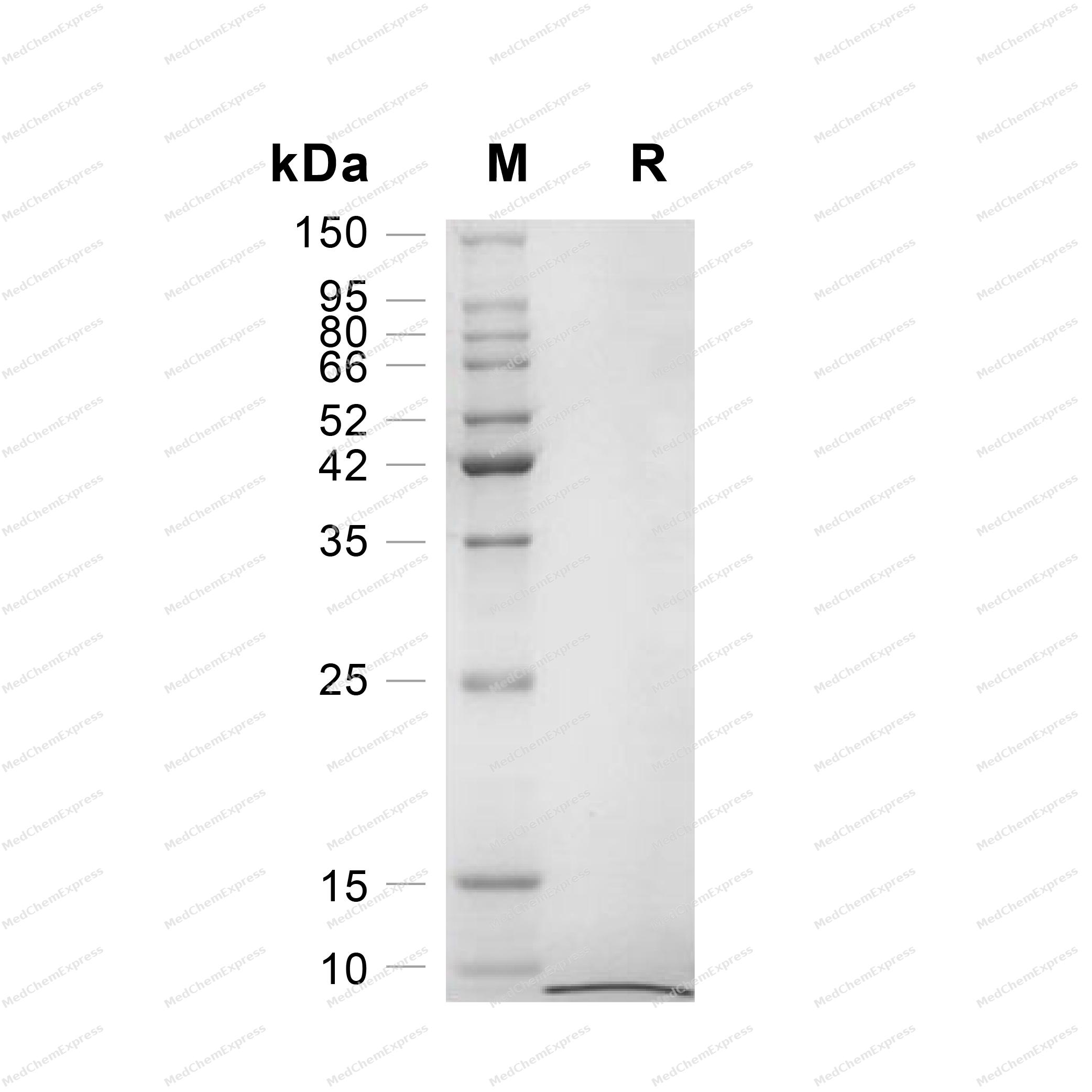
Purity - SDS-PAGE
-
Bioactivity - Cell-Based Assay
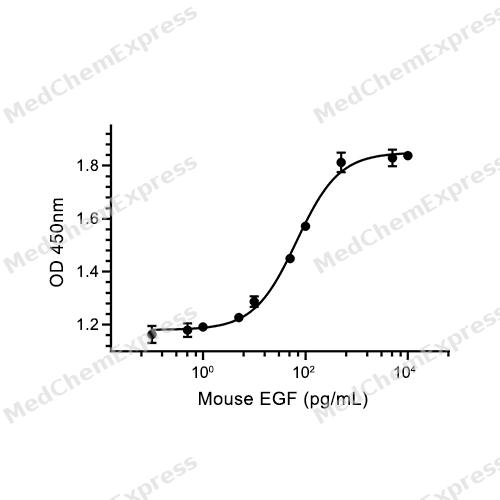
Bioactivity - Cell-Based Assay


Publications (1)
-
Journal Impact Factor
-
Most Recent


Technical Parameters
-
Species Mouse
-
Source HEK293
-
Tag Tag Free
-
Accession
P01132 (N977-R1029)
-
Molecular Construction
-
N-term
-
EGF (N977-R1029)
Accession # P01132 -
C-term
-
-
Protein Length
Full Length of EGF
-
Synonyms
EGF; Alternative Protein EGF; Epidermal Growth Factor; Beta-Urogastrone; Pro-Epidermal Growth Factor; HOMG4; Epidermal Growth Factor (Beta-Urogastrone); URG
-
AA Sequence
NSYPGCPSSYDGYCLNGGVCMHIESLDSYTCNCVIGYSGDRCQTRDLRWWELR
-
Predicted Molecular Mass
6 kDa
-
Molecular Weight
Approximately 11-14 kDa, based on SDS-PAGE under reducing conditions.
-
Purity
≥ 95%, as determined by reducing SDS-PAGE.


Product Properties
Lyophilized powder
Lyophilized from a 0.2 μm filtered solution of PBS, pH 7.4, 8% trehalose.
<1 EU/μg, determined by LAL method.
It is not recommended to reconstitute to a concentration less than 100 μg/mL in ddH2O. For long term storage it is recommended to add a carrier protein (0.1% BSA, 5% HSA, 10% FBS or 5% Trehalose).
Stored at -20°C for 2 years from date of receipt. After reconstitution, it is stable at 4°C for 1 week or -20°C for longer (with carrier protein). It is recommended to freeze aliquots at -20°C or -80°C for extended storage.
Room temperature in continental US; may vary elsewhere.


Documentation
-
Data Sheet (235 KB)
-
SDS (252 KB)
- English - EN (252 KB)
- Français - FR (252 KB)
- Deutsch - DE (252 KB)
- Norwegian - NO (252 KB)
- Español - ES (252 KB)
- Swedish - SV (252 KB)
- Italian - IT (252 KB)
- Korean - KR (252 KB)
- Portuguese - PT (252 KB)
-
Handling Instructions (2659 KB)

Calculators
Concentration (start) × Volume (start) = Concentration (final) × Volume (final)


 Powered by Bioz

