



EGF Protein, Mouse (His)
Based on 3 publication(s) in Google Scholar
EGF is a polypeptide. EGF is originally isolated and purified from the submandibular gland of adult male mice. EGF binds to the epidermal growth factor receptor (EGFR) on the cell surface and activates a series of signal transduction pathways such as the c-Src/STAT3 signaling pathway, thereby stimulating cell proliferation. EGF has activities such as inducing cell morphological changes and activating protein kinases. EGF Protein, Mouse (His) is a recombinant EGF protein expressed by E. coli with a C-6*His tag.
- Species: Mouse
- Source: E. coli
-
Storage:Stored at -20°C for 2 years from date of receipt. After reconstitution, it is stable at 4°C for 1 week or -20°C for longer (with carrier protein). It is recommended to freeze aliquots at -20°C or -80°C for extended storage.

To place orders, for customer services and technical support, please contact: MedChemExpress USA
Tel: 609-228-6898 E-mail: [email protected] [email protected]


-
 Biological Activity
-
Technical Parameters
-
Product Properties
- Documentation
- References
- Help & FAQs


-

HY-P7170
KGF-2/FGF-10 Protein, Mouse -
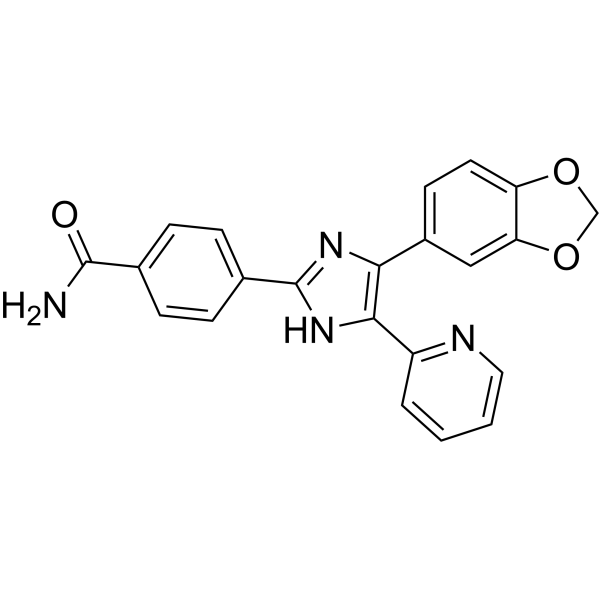
HY-10431
SB-431542TGF-β Receptor Kinase Inhibitor -
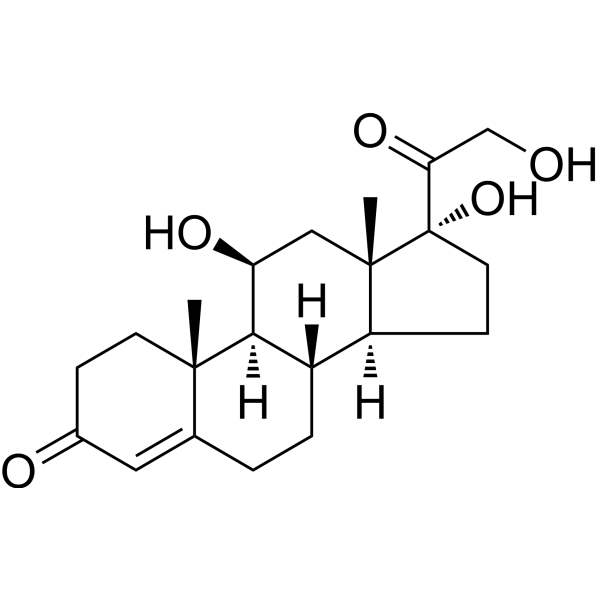
HY-N0583
HydrocortisoneGlucocorticoid Receptor Agonist -
HY-P7066
FGF-2 Protein, Mouse (145a.a) -
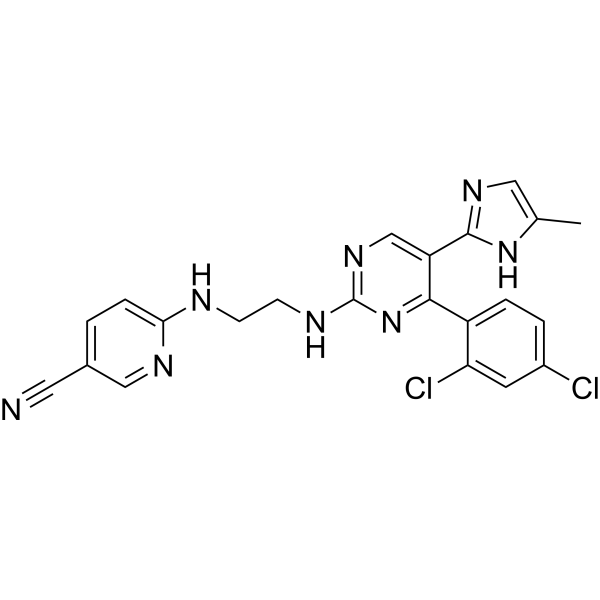
HY-10182
LaduviglusibGSK-3 Inhibitor -
HY-P73052
FGF-2 Protein, Mouse (His) -
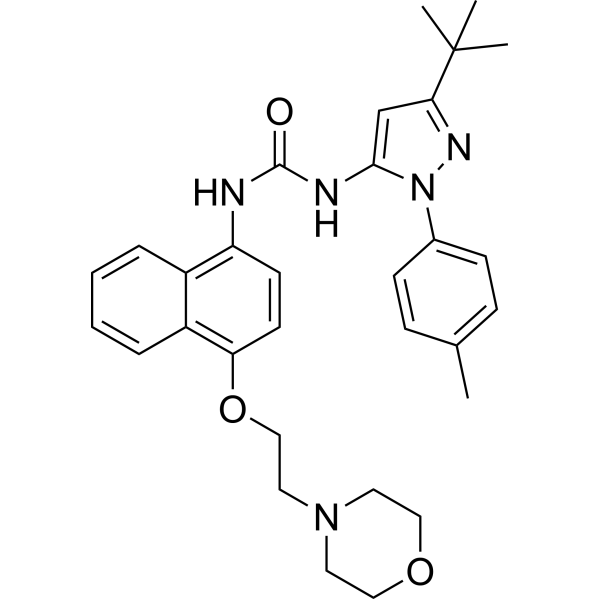
HY-10320
Doramapimodp38 MAPK Inhibitor -
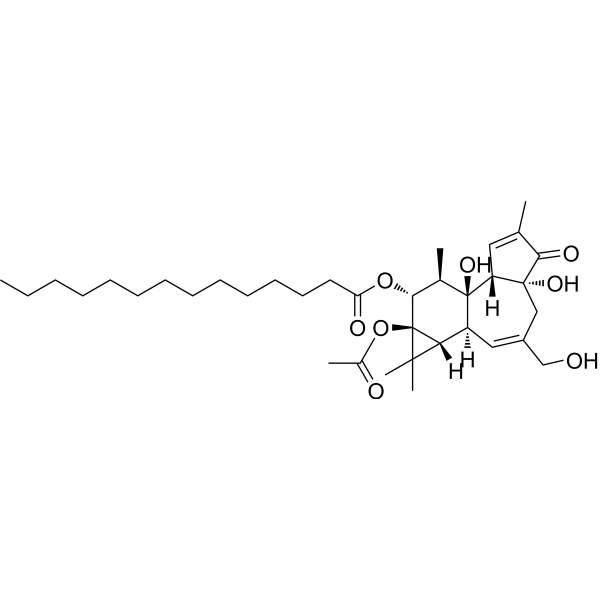
HY-18739
Phorbol 12-myristate 13-acetatePKC Activator -
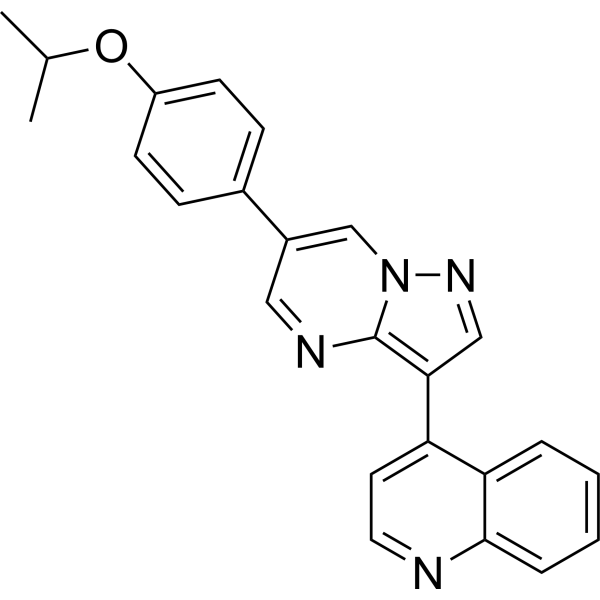
HY-12273
DMH-1BMP Inhibitor -
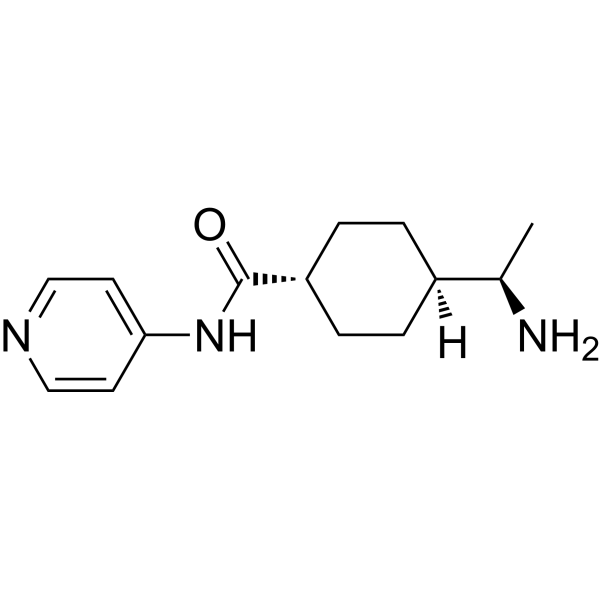
HY-10071
Y-27632ROCK Inhibitor -
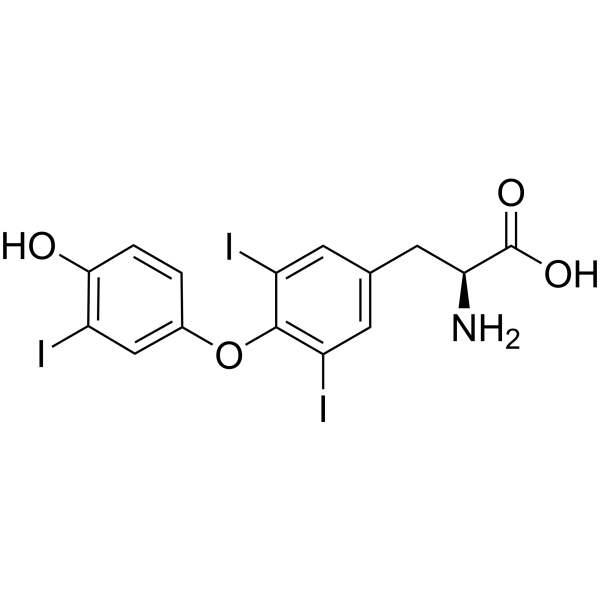
HY-A0070A
LiothyronineTIGIT/PVR Blocker -
HY-P7086
Noggin Protein, Mouse (CHO)


Biological Activity
Description
EGF is a polypeptide. EGF is originally isolated and purified from the submandibular gland of adult male mice. EGF binds to the epidermal growth factor receptor (EGFR) on the cell surface and activates a series of signal transduction pathways such as the c-Src/STAT3 signaling pathway, thereby stimulating cell proliferation. EGF has activities such as inducing cell morphological changes and activating protein kinases. EGF Protein, Mouse (His) is a recombinant EGF protein expressed by E. coli with a C-6*His tag.
Background
EGF Protein belongs to the epidermal growth factor family. EGF is a polypeptide that was originally isolated and purified from the submandibular gland of adult male mice[1]. EGF binds to the epidermal growth factor receptor (EGFR) on the cell surface and activates a series of signal transduction pathways such as the c-Src/STAT3 signaling pathway, thereby stimulating cell proliferation[1]. EGF has activities such as inducing cell morphological changes and activating protein kinases[5]. EGF is expressed in a variety of tissues, including testis, breast, ovary, etc[1][2][4]. Mouse EGF is highly similar to EGF from other species such as human in terms of amino acid sequence[5]. Mouse EGF is a single-chain polypeptide with 53 amino acid residues and a molecular weight of approximately 6045 Da[5].
Verified Bioactivity
Measured by its ability to inhibits the proliferation of human epithelial A431 cells. The ED50 for this effect is 2-20 ng/mL.


Publications (3)
-
Journal Impact Factor
-
Most Recent
-
Cell Rep
Mitigation of non-alcoholic steatohepatitis via recombinant Orosomucoid 2, an acute phase protein modulating the Erk1/2-PPARγ-Cd36 pathway. [Abstract]2023 Jun 24;42(7):112697. PMID: 37355990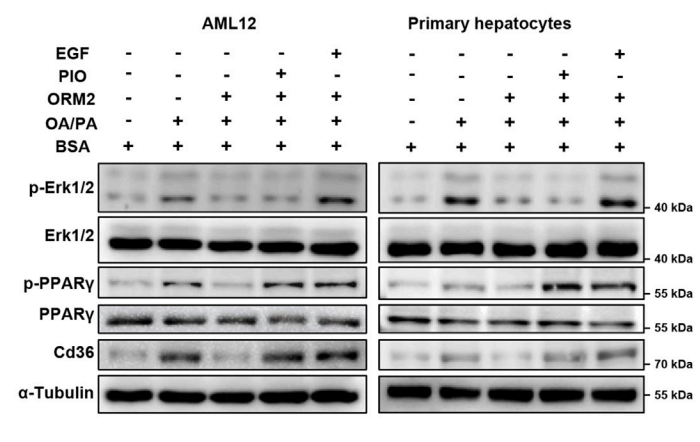
EGF Protein, Mouse (His) purchased from MedChemExpress. Usage Cited in: Cell Rep. 2023 Jun 24;42(7):112697. [Abstract]
We used EGF (10 μM), the agonist of Erk1/2, and found that Erk1/2 and PPARγ were activated, while pioglitazone, the agonist of PPARγ, did not affect the expression of Erk1/2.
-
Sci Rep
Metformin inhibits the growth of SCLC cells by inducing autophagy and apoptosis via the suppression of EGFR and AKT signalling. [Abstract]2025 Feb 19;15(1):6081. PMID: 39971923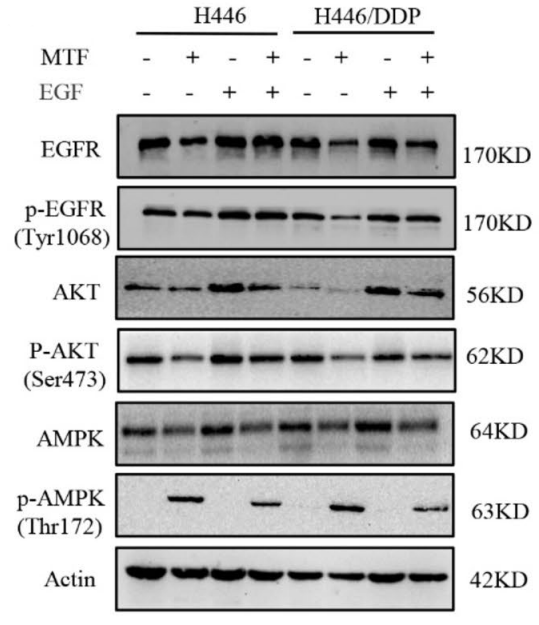
EGF Protein, Mouse (His) purchased from MedChemExpress. Usage Cited in: Sci Rep. 2025 Feb 19;15(1):6081. [Abstract]
The protein levels of EGFR, p-EGFR, AKT, p-AKT, AMPK, and p-AMPK were measured via western blotting in H446 and H446/DDP cells treated with metformin (10 mM), EGF (50 µg/ml), or metformin + EGF for 48 h.
-
Oncol Lett
Targeting transient receptor potential canonical 1 reduces non‑small cell lung cancer chemoresistance and stemness via inhibition of PI3K/AKT signaling. [Abstract]2023 Apr 13;25(6):224. PMID: 37153044


Technical Parameters
-
Species Mouse
-
Source E. coli
-
Tag C-6*His
-
Accession
P01132 (N977-R1029)
-
Molecular Construction
-
N-term
-
EGF (N977-R1029)
Accession # P01132 -
6*His
-
C-term
-
-
Protein Length
Full Length of EGF
-
Synonyms
EGF; Alternative Protein EGF; Epidermal Growth Factor; Beta-Urogastrone; Pro-Epidermal Growth Factor; HOMG4; Epidermal Growth Factor (Beta-Urogastrone); URG
-
AA Sequence
NSYPGCPSSYDGYCLNGGVCMHIESLDSYTCNCVIGYSGDRCQTRDLRWWELR
-
Predicted Molecular Mass
7.2 kDa
-
Molecular Weight
Approximately 9-14 kDa, based on SDS-PAGE under reducing conditions.
-
Purity
≥ 95%, as determined by reducing SDS-PAGE.


Product Properties
Lyophilized powder.
Lyophilized from a 0.22 μm filtered solution of 20 mM Tris-HCl, 150 mM NaCl, pH 8.0.
Note: For SPR assay, please replace the buffer. Primary amine components (e.g., Tris, imidazole) can affect protein-coupled chips.
<1 EU/μg, determined by LAL method.
It is not recommended to reconstitute to a concentration less than 100 μg/mL in ddH2O. For long term storage it is recommended to add a carrier protein (0.1% BSA, 5% HSA, 10% FBS or 5% Trehalose).
Stored at -20°C for 2 years from date of receipt. After reconstitution, it is stable at 4°C for 1 week or -20°C for longer (with carrier protein). It is recommended to freeze aliquots at -20°C or -80°C for extended storage.
Room temperature in continental US; may vary elsewhere.


Documentation
-
Data Sheet (262 KB)
-
SDS (252 KB)
- English - EN (252 KB)
- Français - FR (252 KB)
- Deutsch - DE (252 KB)
- Norwegian - NO (252 KB)
- Español - ES (252 KB)
- Swedish - SV (252 KB)
- Italian - IT (252 KB)
- Korean - KR (252 KB)
- Portuguese - PT (252 KB)
-
Handling Instructions (2659 KB)


References
[1]. Chen JX, et al. Involvement of c-Src/STAT3 signal in EGF-induced proliferation of rat spermatogonial stem cells. Mol Cell Biochem. 2011 Dec;358(1-2):67-73. [Content Brief]
[2]. Guo Y, et al. Correlations among ERCC1, XPB, UBE2I, EGF, TAL2 and ILF3 revealed by gene signatures of histological subtypes of patients with epithelial ovarian cancer. Oncol Rep. 2012 Jan;27(1):286-92. [Content Brief]
[3]. Kim S, et al. Smad7 acts as a negative regulator of the epidermal growth factor (EGF) signaling pathway in breast cancer cells. Cancer Lett. 2012 Jan 28;314(2):147-54. [Content Brief]
[4]. Chatterton RT Jr, et al. Breast ductal lavage for assessment of breast cancer biomarkers. Horm Cancer. 2010 Aug;1(4):197-204. [Content Brief]
[5]. Schlessinger J, et al. Regulation of cell proliferation by epidermal growth factor. CRC Crit Rev Biochem. 1983;14(2):93-111. [Content Brief]

Calculators
Concentration (start) × Volume (start) = Concentration (final) × Volume (final)


 Powered by Bioz

