



IFN-beta Protein, Human (HEK293, Fc)
Based on 2 publication(s) in Google Scholar
IFN-β (interferon-β) is a key type I interferon cytokine that coordinates the innate immune response to infection, tumors, and inflammation. IFN-β binds to high-affinity (IFNAR2) and low-affinity (IFNAR1) heterodimeric receptors, activates Jak-STAT signaling, and modulates interferon-regulated genes. IFN-beta Protein, Human (HEK293, Fc) is the recombinant human-derived IFN-beta protein, expressed by HEK293 , with C-hFc labeled tag.
- Species: Human
- Source: HEK293
-
Storage:Stored at -80°C for 1 year from date of receipt. It is stable at -20°C for 3 months after opening. It is recommended to freeze aliquots at -80°C for extended storage. Avoid repeated freeze-thaw cycles.

To place orders, for customer services and technical support, please contact: MedChemExpress USA
Tel: 609-228-6898 E-mail: [email protected] [email protected]


-
 Biological Activity
-
Technical Parameters
-
Product Properties
- Documentation
- Help & FAQs


-

HY-P7025
IFN-gamma Protein, Human -
HY-P7023
IFN-alpha 2b/IFNA2 Protein, Human -
HY-P7022
IFN-alpha 2a/IFNA2 Protein, Human (R46K) -
HY-P7058
TNF-alpha/TNFSF2 Protein, Human -
HY-P7044
IL-6 Protein, Human -
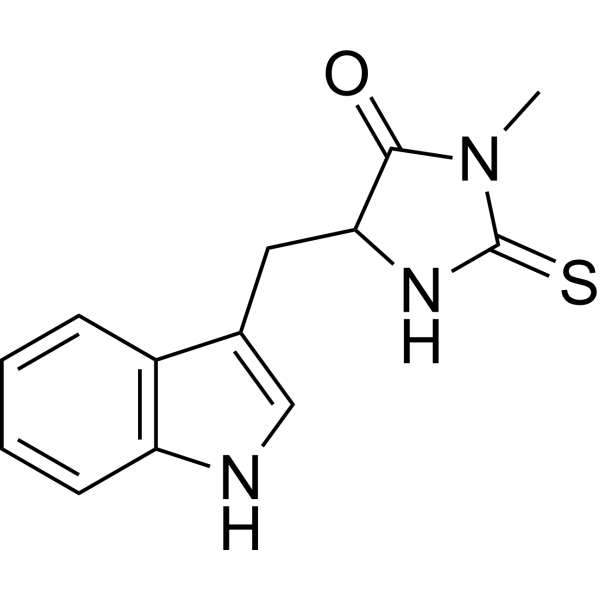
HY-15760
Necrostatin-1RIPK1 Inhibitor -
HY-P70610
IFN-gamma Protein, Human (HEK293) -
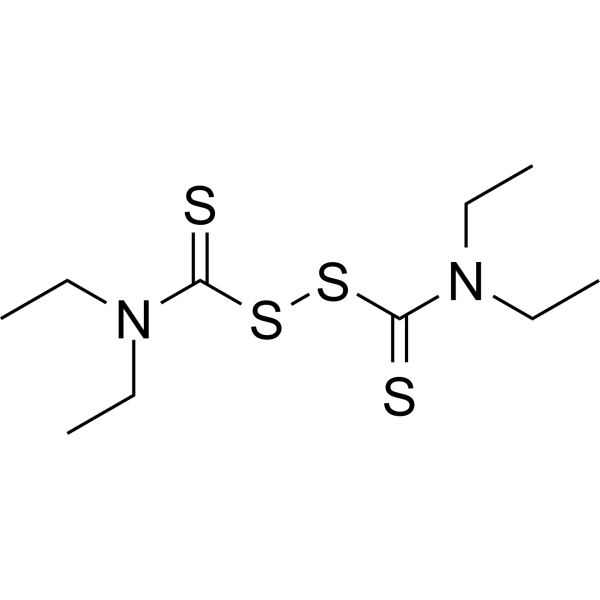
HY-B0240
DisulfiramALDH1 Inhibitor -
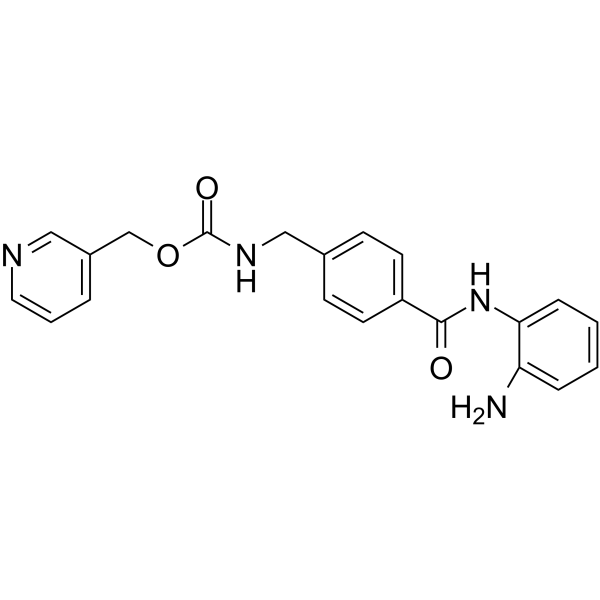
HY-12163
EntinostatHDAC Class I Inhibitor -
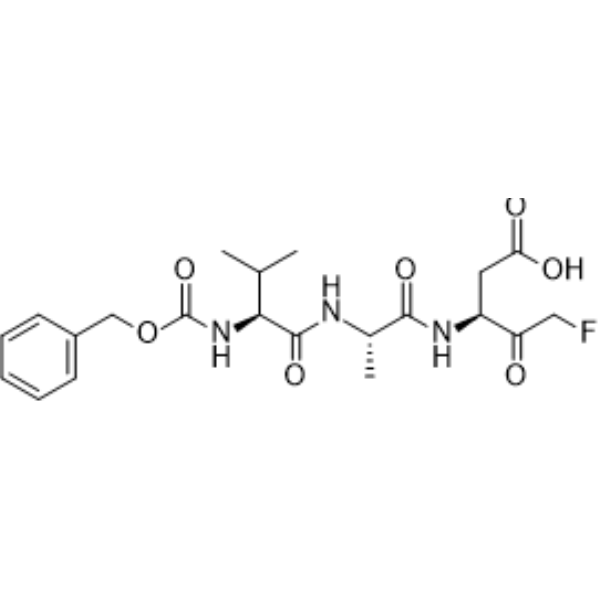
HY-16658B
Z-VAD-FMKPan-Caspase Inhibitor -
HY-13259
MG-132Proteasome Inhibitor -
HY-50856
RuxolitinibJAK1/2 Inhibitor


Biological Activity
Description
IFN-β (interferon-β) is a key type I interferon cytokine that coordinates the innate immune response to infection, tumors, and inflammation. IFN-β binds to high-affinity (IFNAR2) and low-affinity (IFNAR1) heterodimeric receptors, activates Jak-STAT signaling, and modulates interferon-regulated genes. IFN-beta Protein, Human (HEK293, Fc) is the recombinant human-derived IFN-beta protein, expressed by HEK293 , with C-hFc labeled tag.
Background
IFN-beta (Interferon-beta), a pivotal type I interferon cytokine, assumes a critical role in orchestrating the innate immune response to various challenges, including infections, tumor development, and inflammatory stimuli. Acting through a high-affinity (IFNAR2) and low-affinity (IFNAR1) heterodimeric receptor, IFN-beta triggers the canonical Jak-STAT signaling pathway, leading to the transcriptional activation or repression of interferon-regulated genes. These genes, in turn, encode effectors crucial for the interferon response, encompassing antiviral proteins, regulators of cell proliferation and differentiation, and immunoregulatory proteins. While primarily signaling through the IFNAR1-IFNAR2 heterodimeric receptor, IFN-beta also demonstrates versatility by functioning with IFNAR1 alone and operating independently of Jak-STAT pathways. Its multifaceted effects span antiviral and antibacterial activities, modulation of B-cell development, myelopoiesis, and lipopolysaccharide-inducible production of tumor necrosis factor. In the realm of neuronal homeostasis, IFN-beta emerges as a guardian, regulating dopamine turnover and safeguarding dopaminergic neurons through the promotion of neuronal autophagy and alpha-synuclein clearance, thereby averting dopaminergic neuron loss. Notably, IFN-beta surpasses interferon-alpha (IFN-alpha) in potency, particularly in inducing apoptotic and antiproliferative pathways crucial for controlling tumor cell growth. Presenting as a monomer, IFN-beta embodies a versatile and potent player in diverse physiological responses and immune regulation.
Verified Bioactivity
Measured in antiviral assays using WISH human amnion cells infected with vesicular stomatitis virus (VSV) and the ED50 is 0.08-0.8 ng/mL.


Publications (2)
-
Journal Impact Factor
-
Most Recent
-
Immunity
Membrane integrity changes upon viral infection activate sphingomyelinase SMPDL3B to restrict cGAS-STING signaling via cGAMP degradation. [Abstract]2025 Nov 11;58(11):2670-2684.e10. PMID: 41175872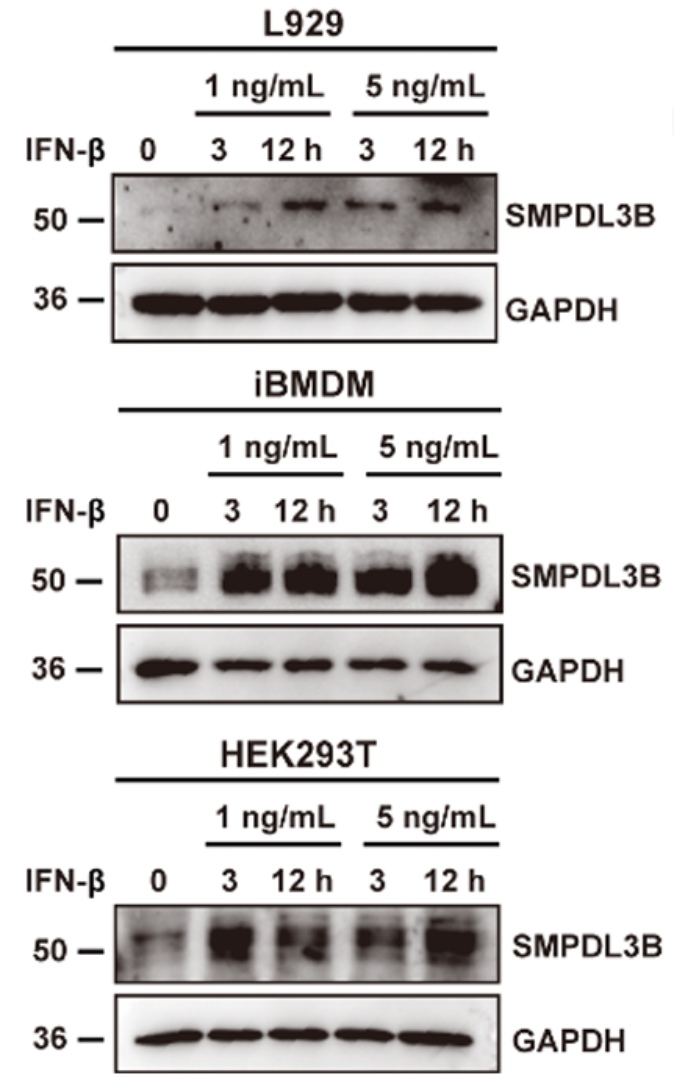
IFN-beta Protein, Human (HEK293, Fc) purchased from MedChemExpress. Usage Cited in: Immunity. 2025 Nov 11;58(11):2670-2684.e10. [Abstract]
L929 cells, iBMDM cells, and HEK293T cells were stimulated with IFN-β (1-5 ng/mL; 3-12 h) for the indicated time points. The expression levels of SMPDL3B were detected by immunoblotting.
-
Cell Rep
Destruction of self-derived PAMP via T3SS2 effector VopY to subvert PAMP-triggered immunity mediates Vibrio parahaemolyticus pathogenicity. [Abstract]2023 Oct 16;42(10):113261. PMID: 37847589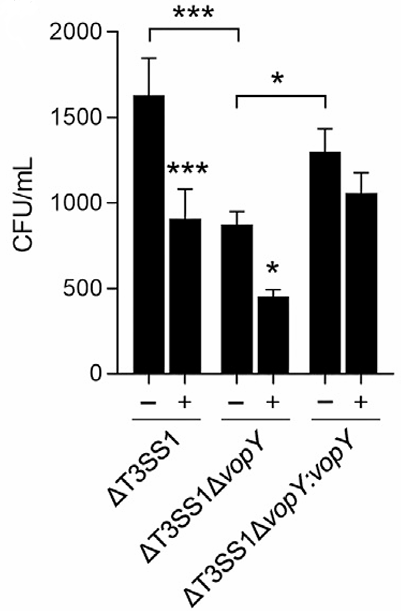
IFN-beta Protein, Human (HEK293, Fc) purchased from MedChemExpress. Usage Cited in: Cell Rep. 2023 Oct 16;42(10):113261. [Abstract]
Inhibition of V. parahaemolyticus invasion in the presence of IFN-β. Caco-2 cells were pretreated with or without IFN-β (100 U/mL) for 24 h and then were infected with indicated strains at an MOI of 50 for 2 h. The intracellular bacteria were counted by spreading the cell lysates on agar plates to determine the bacterial invasion.


Technical Parameters
-
Species Human
-
Source HEK293
-
Tag C-hFc
-
Accession
P01574 (M22-N187)
-
Molecular Construction
-
N-term
-
IFN-beta (M22-N187)
Accession # P01574 -
hFc
-
C-term
-
-
Protein Length
Full Length of Mature Protein
-
Synonyms
IFNB1; IFF; Prev. IFNB; Fibroblast Interferon; IFB; IFN-Beta; Interferon Beta; Interferon-Beta; Interferon Beta 1; Interferon, Beta 1, Fibroblast
-
AA Sequence
MSYNLLGFLQRSSNFQCQKLLWQLNGRLEYCLKDRMNFDIPEEIKQLQQFQKEDAALTIYEMLQNIFAIFRQDSSSTGWNETIVENLLANVYHQINHLKTVLEEKLEKEDFTRGKLMSSLHLKRYYGRILHYLKAKEYSHCAWTIVRVEILRNFYFINRLTGYLRN
-
Predicted Molecular Mass
46.7 kDa
-
Molecular Weight
Approximately 52 kDa, based on SDS-PAGE under reducing conditions, due to the glycosylation.
-
Glycosylation
Yes
-
Purity
≥ 95%, as determined by reducing SDS-PAGE.


Product Properties
Solution
Supplied as a 0.22 μm filtered solution of 50 mM Tris, 100 mM NaCl, 10% trehalose, 0.02% Tween 80, pH 8.5.
Note: For SPR assay, please replace the buffer. Primary amine components (e.g., Tris, imidazole) can affect protein-coupled chips.
<1 EU/μg, determined by LAL method.
Stored at -80°C for 1 year from date of receipt. It is stable at -20°C for 3 months after opening. It is recommended to freeze aliquots at -80°C for extended storage. Avoid repeated freeze-thaw cycles.
Shipping with dry ice.


Documentation
-
Data Sheet (237 KB)
-
SDS (252 KB)
- English - EN (252 KB)
- Français - FR (252 KB)
- Deutsch - DE (252 KB)
- Norwegian - NO (252 KB)
- Español - ES (252 KB)
- Swedish - SV (252 KB)
- Italian - IT (252 KB)
- Korean - KR (252 KB)
- Portuguese - PT (252 KB)
-
Handling Instructions (2659 KB)

Calculators
Concentration (start) × Volume (start) = Concentration (final) × Volume (final)


 Powered by Bioz

