195 Results for "

imaging agent

" in MedChemExpress (MCE) Product Catalog:
Products (195)

195 Results for "imaging agent" in MCE Product Catalog:

Cat. No.: HY-P11887
CAS No.: 1174559-81-9
VHPKQHR is a peptide-based delivery enhancer that binds to VCAM-1. VHPKQHR enables intracellular internalization of relevant nanomaterials and facilitates the targeted delivery of miRNA inhibitors to inflamed endothelial cells and endothelial cells activated by disturbed flow. When conjugated with magnetic mesoporous silica nanoparticles, VHPKQHR achieves targeted accumulation at atherosclerotic plaque sites. When displayed on the surface of polyelectrolyte complex micelles, VHPKQHR enhances the relevant effects of anti-miR-92a in Apoe -/- mice. When conjugated with ultrasmall superparamagnetic iron oxide nanoparticles, VHPKQHR forms a contrast agent for T1-weighted magnetic resonance imaging. VHPKQHR can be used in research related to atherosclerosis, stenosis and rheumatoid arthritis .
loading...
    loading...
Cat. No.: HY-P992449
Synonyms: PRLR ADC antibody

Target:  

ADC Antibodies

Research Areas:  

Cancer

REGN2878 (PRLR ADC antibody) is a monoclonal antibody targeting the prolactin receptor (PRLR) and can block prolactin‑mediated activation of PRLR. REGN2878 exhibits an equilibrium dissociation constant (KD) of 1.05 nM and an IC50 of 0.344 nM for human PRLR. REGN2878 can be rapidly internalized and degraded in lysosomes by PRLR‑positive tumor cells, showing antigen‑specific binding and targeted enrichment properties. REGN2878 derivatives can be used as an immunoPET agent for antigen‑specific imaging of PRLR‑related tumors, and can also serve as a component of ADCs to exert anti‑tumor activity in breast cancer xenograft models. REGN2878 can be used in the research of breast cancer and prostate cancer. Isotype Comparison HY-P99001 .
loading...
    loading...
Cat. No.: HY-Y1091
CAS No.: 923-27-3
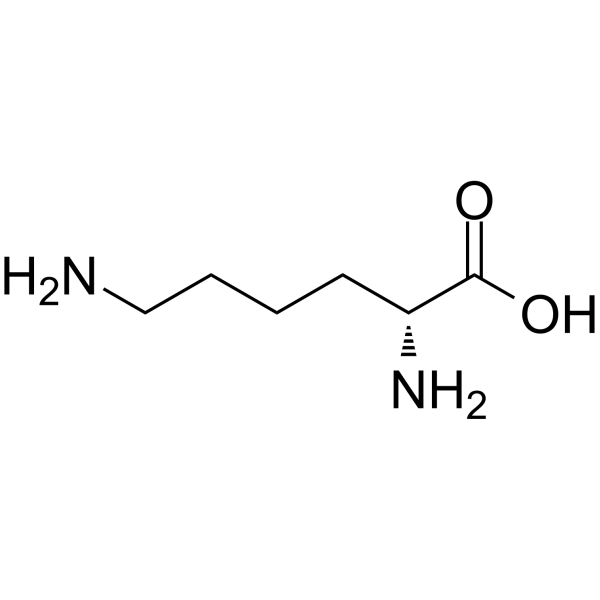
D-Lysine is the D-enantiomer of L-Lysine (HY-N0469). D-Lysine is metabolically inert and not utilized for protein synthesis by mammalian ribosomes. D-Lysine blocks renal uptake of 111In/ 90Y-Octreotide (HY-P0036)-based probes without inhibiting uptake by tumor/receptor tissues, and thus acts as a renoprotective agent in diagnostic imaging and peptide receptor radionuclide therapy (PRRT). D-Lysine specifically inhibits the early steps of non-enzymatic glycation by competing with glucose via its free amino group, theoretically, it can serve as a glycation competitor that "does not interfere with protein synthesis" under chronic hyperglycemia in diabetes. D-Lysine can be used in research related to cancer and diabetes .
loading...
    loading...
Cat. No.: HY-Y1804
CAS No.: 7274-88-6
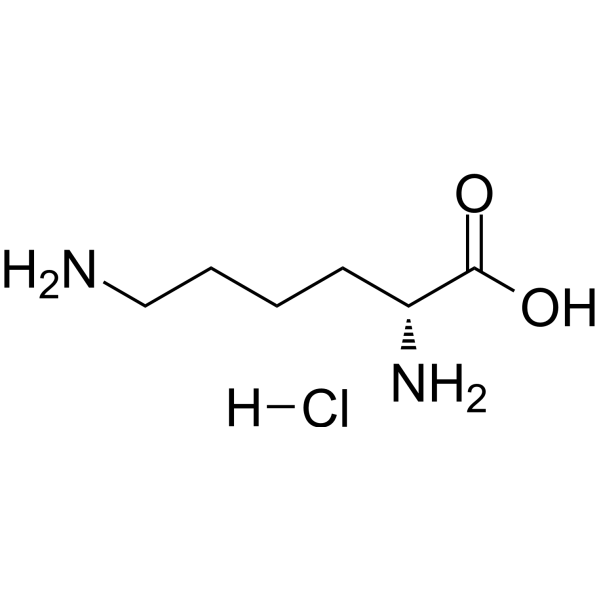
D-Lysine monohydrochloride is the D-enantiomer of L-Lysine (HY-N0469). D-Lysine monohydrochloride is metabolically inert and not utilized for protein synthesis by mammalian ribosomes. D-Lysine monohydrochloride blocks renal uptake of 111In/ 90Y-Octreotide (HY-P0036)-based probes without inhibiting uptake by tumor/receptor tissues, and thus acts as a renoprotective agent in diagnostic imaging and peptide receptor radionuclide therapy (PRRT). D-Lysine monohydrochloride specifically inhibits the early steps of non-enzymatic glycation by competing with glucose via its free amino group, theoretically, it can serve as a glycation competitor that "does not interfere with protein synthesis" under chronic hyperglycemia in diabetes. D-Lysine monohydrochloride can be used in research related to cancer and diabetes .
loading...
    loading...
Cat. No.: HY-L105S
867 compounds

Peptides, composed of amino acids, serve as crucial building blocks for proteins and have gained significant attention in drug development over the past decade. The advancements in production, modification, and analytical technologies have led to a surge in the potential applications of peptides in medicine. Peptides offer a number of advantages over small molecule drugs, including: greater target specificity and efficacy, more predictable metabolic profiles, easier delivery to where they are needed in the body, and fewer side effects. Peptides are increasingly appearing in all branches of medicine as components of innovative drugs, imaging agents, diagnostic agents, and other complex drugs such as peptide-drug conjugates. To date, more than 80 peptide drugs have been approved to treat a variety of diseases, including microbial infections, obesity, anti-diabetes, and cancer, as well as to develop cell targeting platforms and improve cell penetration properties.

MCE designs a unique collection of 867 peptide compounds. HY-L105S is a peptide compound library that can be provided with solution form based on HY-L105, and can be applied to peptides-based drug development.

Cat. No.: HY-170779
CAS No.: 3078291-78-5
Target:  

FAP

Research Areas:  

Cancer

DOTA-NI-FAPI-04 is a FAP inhibitor (IC50 = 7.44 nM). By integrating FAP targeting with hypoxia-sensitive groups (nitroimidazole), DOTA-NI-FAPI-04 significantly enhances tumor uptake and retention capabilities. DOTA-NI-FAPI-04 chelates metallic isotopes (such as 68Ga and 177Lu) through DOTA to produce radioactive probes ([68Ga]Ga/DOTA-NI-FAPI-04 and [177Lu]Lu/DOTA-NI-FAPI-04), which can be used for research in tumor diagnostics and therapeutic agents. DOTA-NI-FAPI-04 holds dual targeting potential in the fields of cancer imaging, tumor microenvironment analysis, and radionuclide therapy, particularly suitable for scenarios where the tumor stroma and hypoxic regions synergistically interact .
loading...
    loading...
Cat. No.: HY-184626
Thiol-modified magnetite nanoparticles are prepared via high-temperature pyrolysis and surface-modified with thiol functional groups. Magnetite is widely used in magnetic resonance imaging, magnetic separation, targeted drug delivery, tumor hyperthermia, cell labeling and separation, as a contrast agent, and in retinal detachment repair surgery due to its stable properties, good biocompatibility, high strength, and lack of toxicity. It is also used as a catalyst carrier, microwave absorbing material, and magnetic recording material. Xianfeng has developed numerous derivatives of magnetite, including oleic acid-modified magnetite, magnetite with different PEG ends, DMSA-modified magnetite, polylysine-modified magnetite, carboxylated dextran-modified magnetite nanoparticles, streptavidin-modified magnetite particles, thiol-modified magnetite magnetic nanoparticles, and polyethyleneimine (PEI)-modified magnetic magnetite nanoparticles, among others.
loading...
    loading...
Cat. No.: HY-D3377
CAS No.: 1616953-95-7
Synonyms: LysoRhoNox
Target:  

Fluorescent Dye

Research Areas:  

Others

HMRhoNox-M (LysoRhoNox) is a selective fluorescent probe for detecting Fe 2+ (ferrous iron ions), with excitation/emission wavelengths of Ex/Em = 550/575 nm. HMRhoNox-M exists in a non-fluorescent spirocyclic closed conformation under physiological pH conditions. Fe 2+ triggers the deoxidation of its N-oxide group, shifting the equilibrium toward the fluorescent quinone-type (TMHMR) open conformation. HMRhoNox-M shows selectivity for Fe 2+ over other metal ions, as well as biologically relevant reactive oxygen species, reactive sulfur species, reactive nitrogen species and reducing agents. HMRhoNox-M can penetrate cell membranes and localize to lysosomes, enabling the imaging of intracellular Fe 2+ fluctuations, transferrin-mediated labile iron accumulation, and lysosomal Fe 2+ changes associated with ferroptosis .
loading...
    loading...
Cat. No.: HY-W244412
CAS No.: 133081-27-3
Research Areas:  

Cancer

2,5-Dioxopyrrolidin-1-yl 6-hydrazinylnicotinate hydrochloride is an intermediate of a radionuclide molecular probe targeting the CD4 receptor. 2,5-Dioxopyrrolidin-1-yl 6-hydrazinylnicotinate hydrochloride serves as an imaging agent for heart transplant rejection. This CD4 probe is prepared by mixing leukocyte differentiation antigen 4 monoclonal antibody with a solution of 6-hydrazinylnicotinoyl succinimide ester hydrochloride, followed by extraction and reaction to obtain 6-hydrazinylnicotinate-leukocyte differentiation antigen 4 monoclonal antibody; this antibody is then mixed with N-tris (hydroxymethyl) glycine, stannous chloride and technetium for an oscillatory reaction. This CD4 probe exhibits high affinity for CD4 + T lymphocytes, along with the characteristics of high sensitivity and high specificity, enabling early diagnosis of acute rejection .
loading...
    loading...
Cat. No.: HY-181494
CAS No.: 3056070-96-0
Target:  

FAP

Research Areas:  

Cancer

FAPI-X5 is a fibroblast activation protein (FAP) inhibitor. FAPI-X5 binds to the FAP catalytic domain, forming hydrogen bonds with key active residues and engaging in π-π stacking to drive functional inhibition. FAPI-X5 exhibits albumin binding activity to prolong systemic circulation half-life. FAPI-X5 induces cytostatic effects on glioblastoma tumors, slowing tumor growth without regression. FAPI-X5, when labeled with 68Ga, acts as a PET tracer with rapid tumor uptake and high-contrast imaging in glioblastoma tumor-bearing mice. FAPI-X5, when labeled with 177Lu or 47Sc, functions as a targeted radionuclide agent with prolonged tumor retention. FAPI-X5 can be used for the research of glioblastoma .
loading...
    loading...
Cat. No.: HY-W035399S
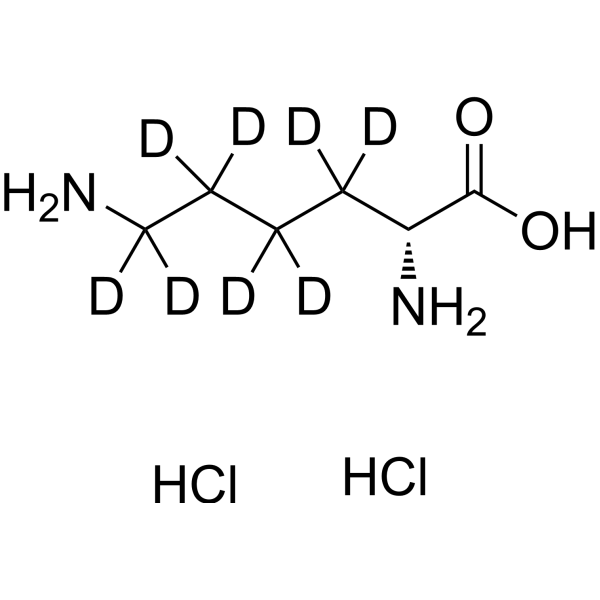
D-Lysine-d8 dihydrochloride is the d8-labeled D-Lysine (HY-Y1091). D-Lysine is the D-enantiomer of L-Lysine (HY-N0469). D-Lysine is metabolically inert and not utilized for protein synthesis by mammalian ribosomes. D-Lysine blocks renal uptake of 111In/ 90Y-Octreotide (HY-P0036)-based probes without inhibiting uptake by tumor/receptor tissues, and thus acts as a renoprotective agent in diagnostic imaging and peptide receptor radionuclide therapy (PRRT). D-Lysine specifically inhibits the early steps of non-enzymatic glycation by competing with glucose via its free amino group, theoretically, it can serve as a glycation competitor that "does not interfere with protein synthesis" under chronic hyperglycemia in diabetes. D-Lysine can be used in research related to cancer and diabetes .
loading...
    loading...
Cat. No.: HY-W035399S1
CAS No.: 2708340-91-2
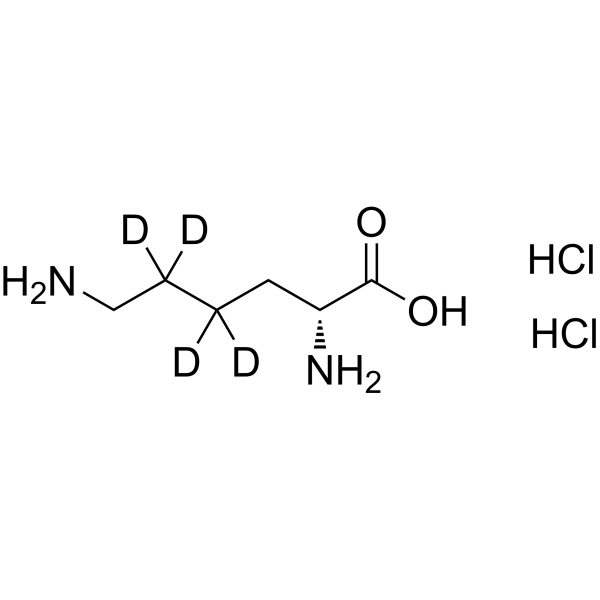
D-Lysine-d4 dihydrochloride is the d4-labeled D-Lysine (HY-Y1091). D-Lysine is the D-enantiomer of L-Lysine (HY-N0469). D-Lysine is metabolically inert and not utilized for protein synthesis by mammalian ribosomes. D-Lysine blocks renal uptake of 111In/ 90Y-Octreotide (HY-P0036)-based probes without inhibiting uptake by tumor/receptor tissues, and thus acts as a renoprotective agent in diagnostic imaging and peptide receptor radionuclide therapy (PRRT). D-Lysine specifically inhibits the early steps of non-enzymatic glycation by competing with glucose via its free amino group, theoretically, it can serve as a glycation competitor that "does not interfere with protein synthesis" under chronic hyperglycemia in diabetes. D-Lysine can be used in research related to cancer and diabetes .
loading...
    loading...
Cat. No.: HY-Y1804S
CAS No.: 2714413-18-8
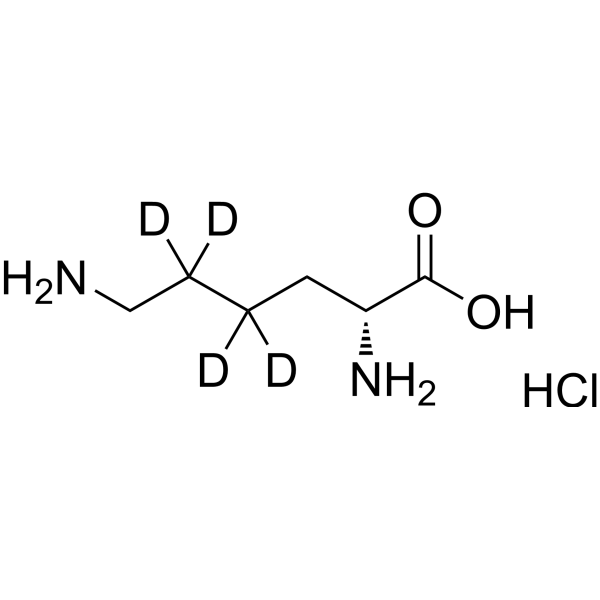
D-Lysine-d4 monohydrochloride is the d4 D-Lysine monohydrochloride (HY-Y1804). D-Lysine monohydrochloride is the D-enantiomer of L-Lysine (HY-N0469). D-Lysine monohydrochloride is metabolically inert and not utilized for protein synthesis by mammalian ribosomes. D-Lysine monohydrochloride blocks renal uptake of 111In/ 90Y-Octreotide (HY-P0036)-based probes without inhibiting uptake by tumor/receptor tissues, and thus acts as a renoprotective agent in diagnostic imaging and peptide receptor radionuclide therapy (PRRT). D-Lysine monohydrochloride specifically inhibits the early steps of non-enzymatic glycation by competing with glucose via its free amino group, theoretically, it can serve as a glycation competitor that "does not interfere with protein synthesis" under chronic hyperglycemia in diabetes. D-Lysine monohydrochloride can be used in research related to cancer and diabetes .
loading...
    loading...
Cat. No.: HY-D0077
CAS No.: 195136-58-4
Synonyms: Oregon green 488
Target:  

Fluorescent Dye

Research Areas:  

Others

2',7'-Difluorofluorescein (Oregon green 488) is a fluorescein derivative and a pH-sensitive fluorescent probe (pKa ~4.7). Upon excitation at 488 nm, 2',7'-Difluorofluorescein exhibits pH-sensitive fluorescence intensity through the formation of dianions, while its pH sensitivity decreases under excitation at 450 nm, allowing its use in ratiometric pH analysis. 2',7'-Difluorofluorescein can be used for the quantitative analysis of pH values in the range of 2-7 in submicron aerosol particles. 2',7'-Difluorofluorescein undergoes buffer-mediated and buffer-free excited-state proton transfer between different protonated forms, and its cationic form undergoes rapid excited-state deprotonation. 2',7'-Difluorofluorescein is resistant to photodegradation, maintains stable absorption and fluorescence properties within the physiological pH range, and serves as a fluorescent protein label, a component of Ca 2+ indicators, a fluorescent imaging agent, and an anisotropy probe .
loading...
    loading...
Cat. No.: HY-Y1804R
CAS No.: 7274-88-6
D-Lysine monohydrochloride (Standard) is the analytical standard of D-Lysine monohydrochloride (HY-Y1804). This product is intended for research and analytical applications. D-Lysine monohydrochloride is the D-enantiomer of L-Lysine (HY-N0469). D-Lysine monohydrochloride is metabolically inert and not utilized for protein synthesis by mammalian ribosomes. D-Lysine monohydrochloride blocks renal uptake of 111In/ 90Y-Octreotide (HY-P0036)-based probes without inhibiting uptake by tumor/receptor tissues, and thus acts as a renoprotective agent in diagnostic imaging and peptide receptor radionuclide therapy (PRRT). D-Lysine monohydrochloride specifically inhibits the early steps of non-enzymatic glycation by competing with glucose via its free amino group, theoretically, it can serve as a glycation competitor that "does not interfere with protein synthesis" under chronic hyperglycemia in diabetes. D-Lysine monohydrochloride can be used in research related to cancer and diabetes .
loading...
    loading...

