224 Results for "

cholinergic eeceptor

" in MedChemExpress (MCE) Product Catalog:
Products (224)

224 Results for "cholinergic eeceptor" in MCE Product Catalog:

Cat. No.: HY-P12338
HNSS peptide is a chimeric hybrid peptide composed of the neuroprotective peptide S14G-Humanin and the mitochondria-targeted antioxidant peptide SS31. HNSS peptide is readily cleared in vivo and can be combined with nanocarriers to improve its stability. HNSS can be delivered via the FGFR1-targeting nanocarrier FGL-NP (Cit), ameliorating mitochondrial dysfunction, Aβ deposition, tau hyperphosphorylation, and cholinergic neuronal damage, and alleviating memory deficits in Alzheimer's disease mice. HNSS peptide is applicable for Alzheimer's disease-related research .
loading...
    loading...
Cat. No.: HY-106698
CAS No.: 57475-17-9
Brovincamine is an orally active slow Ca 2+ channel blocker and vasodilator. Brovincamine reduces Ca 2+ influx across the plasma membrane by blocking Ca 2+ channels. Brovincamine inhibits catecholamine secretion, cholinergic function, autonomic parasympathetic nervous system activity, cerebrovascular resistance, and nerve stimulation-induced convulsive responses. Brovincamine induces cerebrovascular, coronary, and intracranial vasodilation, improves cerebral cortical microcirculation, enhances cerebral metabolic activity, and increases capillary clearance efficiency. Brovincamine can be used in research related to cerebral ischemic diseases, cardiac ischemic diseases, and normal-tension glaucoma .
loading...
    loading...
Cat. No.: HY-118275
CAS No.: 133920-70-4
Target:  

Cholinesterase (ChE)

Research Areas:  

Neurological Disease

FK960 is a potential anti-dementia agent that reverses the reduction in cerebral blood flow (rCBF) caused by sensory stimulation by enhancing cholinergic neurotransmission. In macaque experiments, physostigmine (AChE inhibitor; HY-N6608) was able to completely eliminate the rCBF in the sensory cortex increased by vibrotactile stimulation. FK960 (1-1000 μg/kg) can restore the eliminated rCBF response, and the action time can last for 1 hour. However, FK960 cannot restore the rCBF response eliminated by HA-966 (NMDA modulator; HY-100822), indicating that its function is not dependent on non-glutamatergic neurotransmission.
loading...
    loading...
Cat. No.: HY-B1693R
CAS No.: 60-99-1
Synonyms: Methotrimeprazine (Standard)
Levomepromazine (Standard) is the analytical standard of Levomepromazine. This product is intended for research and analytical applications. Levomepromazine (Methotrimeprazine) is an orally active antipsychotic compound and Ca 2+ release inducer. Levomepromazine inhibits SERCA pump and induces an increase in cytoplasmic Ca 2+ levels. Levomepromazine has antagonistic effects on a variety of neurotransmitter receptors, including dopamine, cholinergic, serotonin, and histamine receptors. Levomepromazine can induce adaptive ER stress and autophagy. In addition, Levomepromazine has antiviral, anti-inflammatory, neuroprotective and analgesic, sedative and anti-injurious activities. Levomepromazine can be used in the study psychiatric disorders and relieving nausea and vomiting .
loading...
    loading...
Cat. No.: HY-129591
CAS No.: 77392-58-6
Synonyms: PNU-97333
Target:  

Parasite nAChR

Research Areas:  

Infection

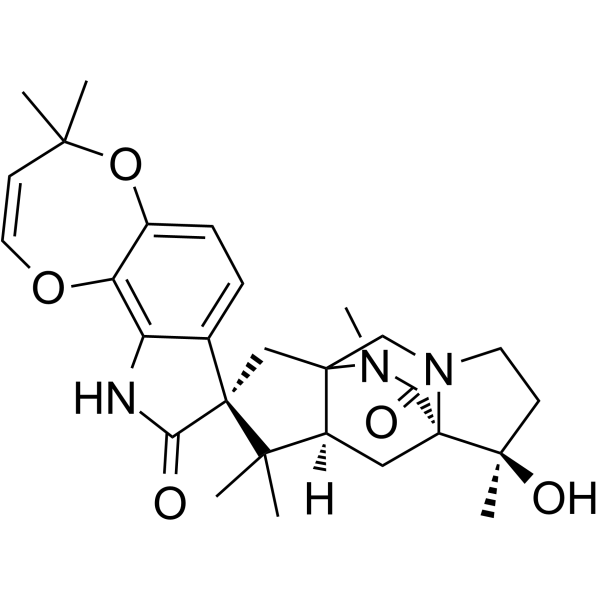
Paraherquamide A (PNU-97333) is an anthelmintic and nicotinic acetylcholine receptor (nAChR) antagonist, with pIC50 values ranging from 6.87 to 7.58 for L-type nAChR and from 4.84 to 5.54 for N-type nAChR. Paraherquamide A acts as a competitive antagonist against multiple nematode nAChR subtypes, as well as a mixed competitive-noncompetitive antagonist against nematode N-type nAChR. Paraherquamide A induces flaccid paralysis in parasitic nematodes without altering ATP levels, inhibits nematode motility, and antagonizes cholinergic agonist-induced muscle contraction in nematodes. Paraherquamide A can be used in studies related to nematode parasitic infections .
loading...
    loading...
Cat. No.: HY-159829
CAS No.: 1803346-98-6
Synonyms: NBI-1117568; HTL-0016878
Target:  

mAChR

Research Areas:  

Neurological Disease

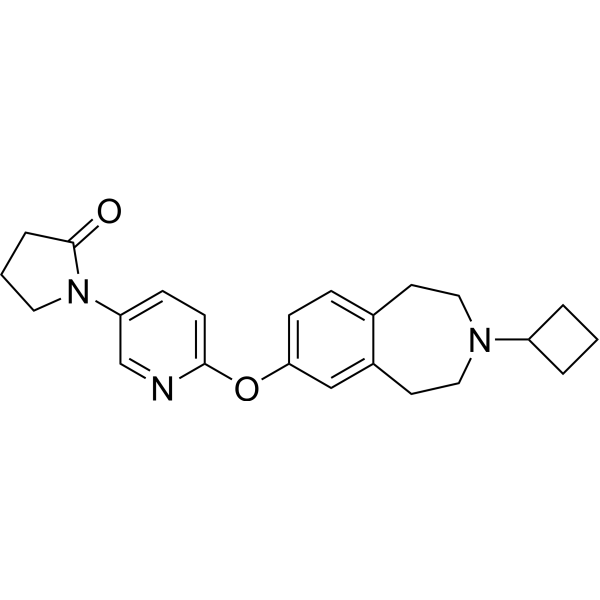
Direclidine (NBI-1117568, HTL-0016878) is a selective orthosteric agonist targeting the muscarinic acetylcholine M4 receptor, exhibiting very low affinity for M1, M2, M3, and M5 receptors. It binds to the orthosteric site of the M4 receptor in a non-covalent, competitive manner. Direclidine specifically activates the M4 receptor, inhibiting the release of acetylcholine from striatal cholinergic interneurons, thereby regulating the balance of the dopaminergic system and reducing psychiatric symptoms associated with excessive dopamine release. Direclidine can improve symptoms associated with neuropsychiatric disorders and is used in research on schizophrenia and other neuropsychiatric disorders .
loading...
    loading...
Cat. No.: HY-166562S
Synonyms: Methotrimeprazine-d6 hydrochloride
Levomepromazine-d6 hydrochloride (Methotrimeprazine-d6 hydrochloride) is the deuterium labeled Levomepromazine hydrochloride. Levomepromazine (Methotrimeprazine) hydrochloride is an orally active antipsychotic compound and Ca 2+ release inducer. Levomepromazine inhibits SERCA pump and induces an increase in cytoplasmic Ca 2+ levels. Levomepromazine hydrochloride has antagonistic effects on a variety of neurotransmitter receptors, including dopamine, cholinergic, serotonin, and histamine receptors. Levomepromazine hydrochloride can induce adaptive ER stress and autophagy. In addition, Levomepromazine hydrochloride has antiviral, anti-inflammatory, neuroprotective and analgesic, sedative and anti-injurious activities. Levomepromazine hydrochloride can be used in the study psychiatric disorders and relieving nausea and vomiting .
loading...
    loading...
Cat. No.: HY-P0242
CAS No.: 86933-75-7
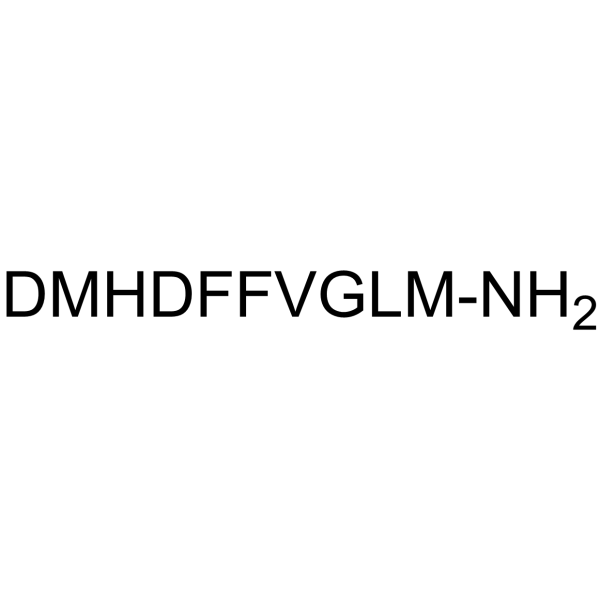
Neurokinin B is a tachykinin family peptide that preferentially binds to and activates NK3R over other tachykinin receptors. Neurokinin B preferentially binds to the substance P receptor (SP-N receptor) and mediates acetylcholine release from cholinergic neurons. Neurokinin B regulates the pulsatile release of Kisspeptin and GnRH, stimulates or inhibits the secretion of luteinizing hormone (HY-P2293), regulates reproductive function via metabolic signals, and drives the onset of puberty. Neurokinin B exerts vasoactive effects and induces contraction of isolated guinea pig ileum. Neurokinin B can be used in studies related to hypogonadotropic hypogonadism .
loading...
    loading...
Cat. No.: HY-116153
CAS No.: 1393102-59-4
Target:  

Cholinesterase (ChE)

Research Areas:  

Neurological Disease

HUHS2002 is a free fatty acid derivative with the ability to enhance α7 cholinergic receptor activity. HUHS2002 enhances whole-cell membrane currents of α7 ACh receptors expressed in Xenopus oocytes in a concentration-dependent manner. The effects of HUHS2002 were blocked in the presence of the Ca2 /calmodulin-dependent protein kinase II (CaMKII) inhibitor KN-93. HUHS2002 activated CaMKII in cultured rodent hippocampal neurons, and this activation was abolished by KN-93. HUHS2002 also partially inhibited the activity of protein phosphatase 1 (PP1) in a cell-free PP1 activity assay .
loading...
    loading...
Cat. No.: HY-159829A
CAS No.: 3028447-14-2
Synonyms: NBI-1117568 citrate; HTL-0016878 citrate
Target:  

mAChR

Research Areas:  

Neurological Disease

Direclidine (NBI-1117568, HTL-0016878) citrate is a selective orthosteric agonist targeting the muscarinic acetylcholine M4 receptor, exhibiting very low affinity for M1, M2, M3, and M5 receptors. Direclidine citrate binds to the orthosteric site of the M4 receptor in a non-covalent, competitive manner. Direclidine citrate specifically activates the M4 receptor, inhibiting the release of acetylcholine from striatal cholinergic interneurons, thereby regulating the balance of the dopaminergic system and reducing psychiatric symptoms associated with excessive dopamine release. Direclidine citrate can improve symptoms associated with neuropsychiatric disorders and is used in research on schizophrenia and other neuropsychiatric disorders .
loading...
    loading...
Cat. No.: HY-110155R
CAS No.: 1243259-19-9
LM11A-31 dihydrochloride (Standard) is the analytical standard of LM11A-31 (dihydrochloride) (HY-110155). This product is intended for research and analytical applications. LM11A-31 dihydrochloride, a non-peptide p75NTR (neurotrophin receptor p75) modulator, is an orally active and potent proNGF (nerve growth factor) antagonist. LM11A-31 dihydrochloride is an amino acid derivative with high blood-brain barrier permeability and blocks p75-mediated cell death. LM11A-31 dihydrochloride reverses cholinergic neurite dystrophy in Alzheimer's disease mouse models with mid- to late-stage disease progression .
loading...
    loading...
Cat. No.: HY-P0242A
CAS No.: 101536-55-4
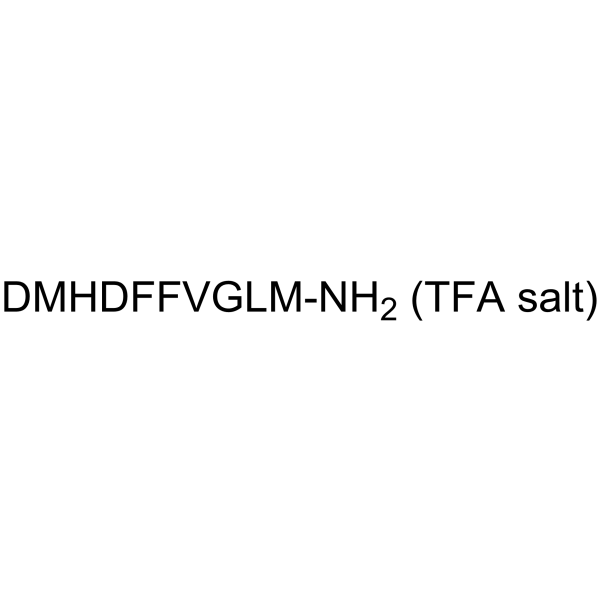
Neurokinin B TFA is a tachykinin family peptide that preferentially binds to and activates NK3R over other tachykinin receptors. Neurokinin B TFA preferentially binds to the substance P receptor (SP-N receptor) and mediates acetylcholine release from cholinergic neurons. Neurokinin B TFA regulates the pulsatile release of Kisspeptin and GnRH, stimulates or inhibits the secretion of luteinizing hormone (HY-P2293), regulates reproductive function via metabolic signals, and drives the onset of puberty. Neurokinin B TFA exerts vasoactive effects and induces contraction of isolated guinea pig ileum. Neurokinin B TFA can be used in studies related to hypogonadotropic hypogonadism .
loading...
    loading...
Cat. No.: HY-W278867R
CAS No.: 21956-56-9
Synonyms: trans-Pinosylvin dimethyl ether (Standard)
trans-3,5-Dimethoxystilbene (Standard) is the analytical standard of trans-3,5-Dimethoxystilbene (HY-W278867). This product is intended for research and analytical applications. trans-3,5-Dimethoxystilbene (trans-Pinosylvin dimethyl ether) is a natural stilbenoid metabolite. trans-3,5-Dimethoxystilbene acts as an acetylcholinesterase inhibitor with a IC50 of 9 μM against Electrophorus electricus acetylcholinesterase. trans-3,5-Dimethoxystilbene binds to acetylcholinesterase and blocks acetylcholine hydrolysis, thereby increasing acetylcholine levels in the cholinergic synaptic cleft. trans-,5-Dimethoxystilbene can be used in the research of neurodegenerative diseases such as Alzheimer's disease .
loading...
    loading...
Cat. No.: HY-106000
CAS No.: 720691-69-0
Purity:  99.09%
Target:  

Histamine Receptor

Research Areas:  

Neurological Disease

GSK239512 is a blood-brain barrier-permeable, orally active H3 receptor antagonist, with a human pKi ranging from <5.5 to 9.92 and a murine pKi ranging from 9.44 to 9.83. GSK239512 modulates cholinergic and monoaminergic neurotransmission, blocks the inhibitory feedback of H3 receptors, and increases the release of pro-cognitive neurotransmitters. GSK239512 induces oligodendrocyte precursor cell differentiation and restores myelin gene expression at the cellular level. GSK239512 reverses Scopolamine (HY-N0296)-induced memory deficits and improves recognition memory in animal models. GSK239512 can be used in research related to Alzheimer's disease, chronic traumatic encephalopathy, relapsing-remitting multiple sclerosis, and schizophrenia .
loading...
    loading...
Cat. No.: HY-107650
CAS No.: 139886-04-7
Synonyms: CI 979 hydrochloride; RU 35926 hydrochloride
Target:  

mAChR

Research Areas:  

Neurological Disease

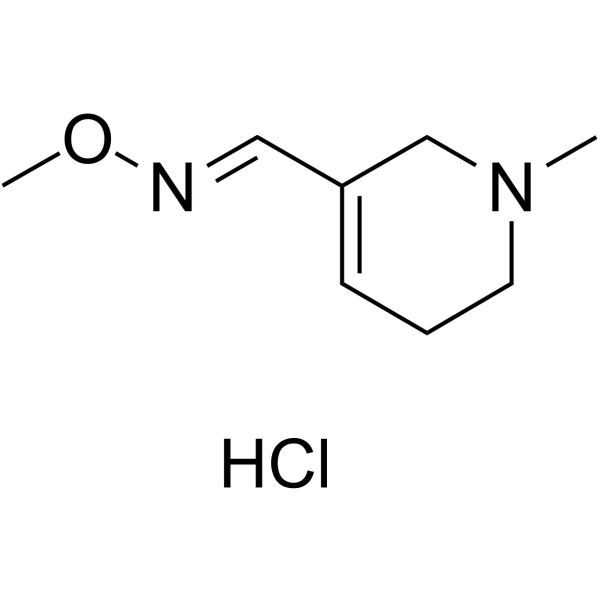
Milameline (CI 979; RU35926) hydrochloride is a nonselective, partical and orally active muscarinic receptor agonist that improves cognition. Milameline hydrochloride has equal affinity for different subtypes of human muscarinic receptors with IC50 of 1.3 µM for M1-, 1.1 µM for M2-, 1.5 µM for M3-, and 1.9 µM for M4-muscarinic receptors. Milameline hydrochloride has a higher affinity for sites [ 3H]CMD (IC50 = 20 nM), than [ 3H]QNB, (IC50 = 3059 nM). Milameline hydrochloride produces both central and peripheral cholinergic effects and reverses the cognitive deficits induced by Scopolamine (HY-N0296). Milameline hydrochloride can be used for the study of Alzheimer’s Disease .
loading...
    loading...
Cat. No.: HY-107650A
Purity:  96.25%
Synonyms: CI 979 hydroiodide; RU 35926 hydroiodide
Target:  

mAChR

Research Areas:  

Neurological Disease

Milameline (CI 979; RU35926) hydroiodide is a nonselective, partical and orally active muscarinic receptor agonist that improves cognition. Milameline hydroiodide has equal affinity for different subtypes of human muscarinic receptors with IC50 of 1.3 µM for M1-, 1.1 µM for M2-, 1.5 µM for M3-, and 1.9 µM for M4-muscarinic receptors. Milameline hydroiodide has a higher affinity for sites [ 3H]CMD (IC50 = 20 nM), than [ 3H]QNB, (IC50 = 3059 nM). Milameline hydroiodide produces both central and peripheral cholinergic effects and reverses the cognitive deficits induced by Scopolamine (HY-N0296). Milameline hydroiodide can be used for the study of Alzheimer’s Disease .
loading...
    loading...
Cat. No.: HY-123320
CAS No.: 69409-94-5
Research Areas:  

Infection Neurological Disease

Fluvalinate is an orally active acaricide classified as a sodium channel inhibitor. Fluvalinate delays sodium channel closure, prolongs cell membrane depolarization, inhibits the excitability of honeybee brain neurons, and exerts a central nervous system inhibitory effect. Fluvalinate negatively affects the learning ability, memory ability, sucrose responsiveness, and survival of honeybees. Fluvalinate potentiates pentobarbital-induced hypnosis, reduces spontaneous activity in mice, and decreases the total white blood cell count and absolute lymphocyte count in mice. Fluvalinate induces acute toxic symptoms in rats, acts as a cholinergic stimulant, and induces the production of hepatic enzymes in rats. Fluvalinate causes the death of Varroa jacobsoni sensitive to τ-Fluvalinate (HY-B2021). Fluvalinate can be used in studies related to mite pest control .
loading...
    loading...
Cat. No.: HY-135460
CAS No.: 139886-32-1
Synonyms: CI-979; RU35926
Target:  

mAChR

Research Areas:  

Neurological Disease

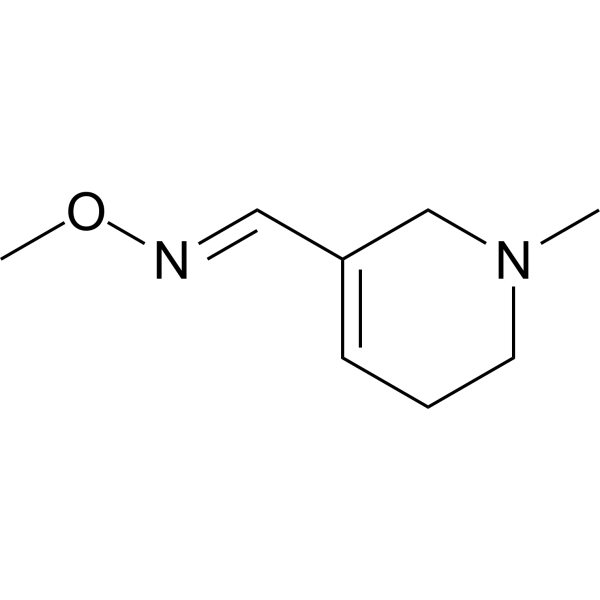
Milameline (CI-979; RU35926) is a nonselective, partical and orally active muscarinic receptor agonist that improves cognition. Milameline has equal affinity for different subtypes of human muscarinic receptors with IC50 of 1.3 µM for M1-, 1.1 µM for M2-, 1.5 µM for M3-, and 1.9 µM for M4-muscarinic receptors. Milameline has a higher affinity for sites [ 3H]CMD (IC50 = 20 nM), than [ 3H]QNB, (IC50 = 3059 nM). Milameline produces both central and peripheral cholinergic effects and reverses the cognitive deficits induced by Scopolamine (HY-N0296). Milameline can be used for the study of Alzheimer’s Disease .
loading...
    loading...
Cat. No.: HY-W747310
CAS No.: 79262-46-7
Synonyms: Cipazoxapine; CGP 19486A
Research Areas:  

Neurological Disease

Savoxepine (Cipazoxapine; CGP 19486A) is a dopamine antagonist with antipsychotic activity. Savoxepine preferentially blocks hippocampal dopamine D2 receptors and also inhibits dopamine-stimulated adenylate cyclase activity. Savoxepine shows strong interactions with α-adrenergic receptors, serotonin 5-HT2 receptors and histamine H1 receptors, and moderate interactions with α2-adrenergic receptors, histamine H2 receptors, serotonin 5-HT1 receptors and cholinergic muscarinic receptors. Savoxepine inhibits dopamine agonist-induced stereotyped behaviors in animals, induces catalepsy in animals, and antagonizes Apomorphine (HY-12723)-induced climbing behavior in mice. Savoxepine can be used in schizophrenia-related research .
loading...
    loading...
Cat. No.: HY-123320S
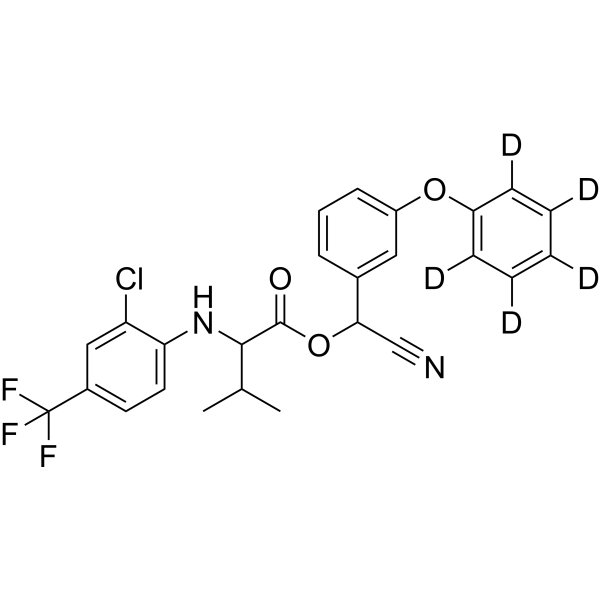
Fluvalinate-d5 is the deuterated-labeled Fluvalinate (HY-123320). Fluvalinate is an orally active acaricide classified as a sodium channel inhibitor. Fluvalinate delays sodium channel closure, prolongs cell membrane depolarization, inhibits the excitability of honeybee brain neurons, and exerts a central nervous system inhibitory effect. Fluvalinate negatively affects the learning ability, memory ability, sucrose responsiveness, and survival of honeybees. Fluvalinate potentiates pentobarbital-induced hypnosis, reduces spontaneous activity in mice, and decreases the total white blood cell count and absolute lymphocyte count in mice. Fluvalinate induces acute toxic symptoms in rats, acts as a cholinergic stimulant, and induces the production of hepatic enzymes in rats. Fluvalinate causes the death of Varroa jacobsoni sensitive to τ-Fluvalinate (HY-B2021). Fluvalinate can be used in studies related to mite pest control .
loading...
    loading...

