224 Results for "

cholinergic eeceptor

" in MedChemExpress (MCE) Product Catalog:
Products (224)

224 Results for "cholinergic eeceptor" in MCE Product Catalog:

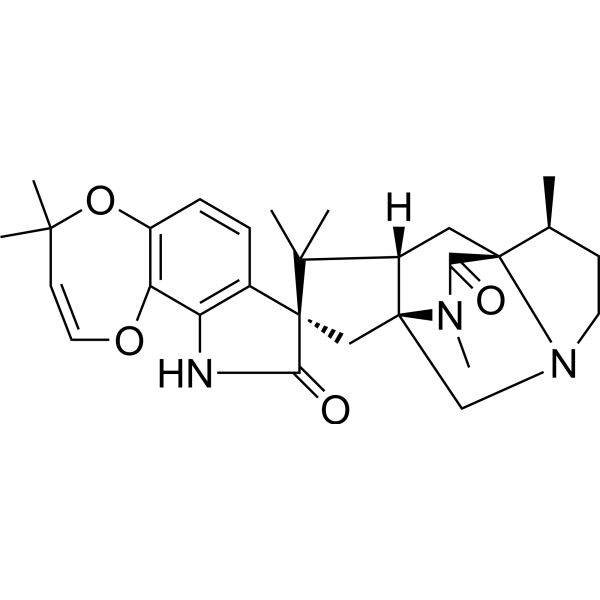
Cat. No.: HY-N10220
CAS No.: 125600-53-5
Paraherquamide E is a paraherquamide alkaloid and 14C-deshydroxy paraherquamide analog found in Aspergillus aculeatus GC-147‑5 and Penicillium charlesii, with insecticidal and reproductive toxicant activity, high selectivity, and negligible toxicity to nontarget ladybugs .Paraherquamide E disrupts fatty acid synthesis, inhibits vitellogenin production, alters metabolic homeostasis, induces ovarian abnormalities, and causes Asian citrus psyllid mortality, while remaining inactive against Asian citrus psyllid cholinergic systems .
loading...
    loading...
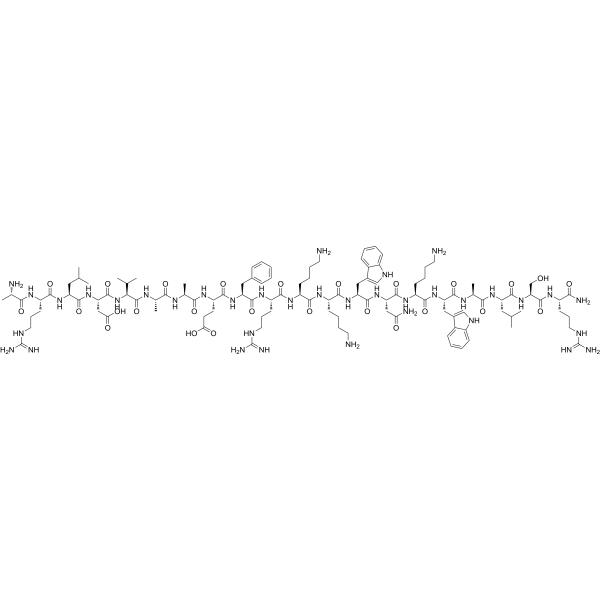
Cat. No.: HY-P5876
CAS No.: 154095-31-5
Synonyms: ProADM N20(bovine, porcine); PAMP-20(bovine, porcine)
Target:  

nAChR

Research Areas:  

Neurological Disease

Proadrenomedullin (N-20) (ProADM N20) (bovine, porcine) is a potent and noncompetitive hypotensive and catecholamine release-inhibitory peptide released from chromaffin cells. Proadrenomedullin (N-20) (bovine, porcine) inhibits catecholamine secretion with an IC50 of 350 nM in PC12 pheochromocytoma cells. Proadrenomedullin (N-20) (bovine, porcine) also blocks (EC50≈270 nM) nicotinic cholinergic agonist desensitization of catecholamine release, as well as desensitization of nicotinic signal transduction ( 22Na + uptake) .
loading...
    loading...
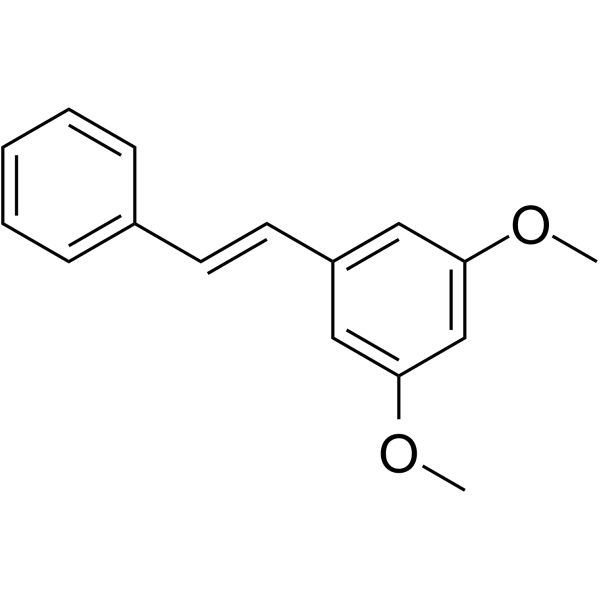
Cat. No.: HY-W278867
CAS No.: 21956-56-9
Synonyms: trans-Pinosylvin dimethyl ether
trans-3,5-Dimethoxystilbene (trans-Pinosylvin dimethyl ether) is a natural stilbenoid metabolite. trans-3,5-Dimethoxystilbene acts as an acetylcholinesterase inhibitor with a IC50 of 9 μM against Electrophorus electricus acetylcholinesterase. trans-3,5-Dimethoxystilbene binds to acetylcholinesterase and blocks acetylcholine hydrolysis, thereby increasing acetylcholine levels in the cholinergic synaptic cleft. trans-3,5-Dimethoxystilbene can be used in the research of neurodegenerative diseases such as Alzheimer's disease .
loading...
    loading...
Cat. No.: HY-P83668
Synonyms: 7nAChR,CHRFAM7A,CHRNA7 (cholinergic receptor; nicotinic; alpha 7; exons 5-10) and FAM7A (family with sequence similarity 7A; exons A-E) fusion; D-10; CHRNA7; CHRNA7-DR1

Host:  

Mouse

Application:  

IHC-P, FC, ELISA

Reactivity:  

Human

loading...
    loading...
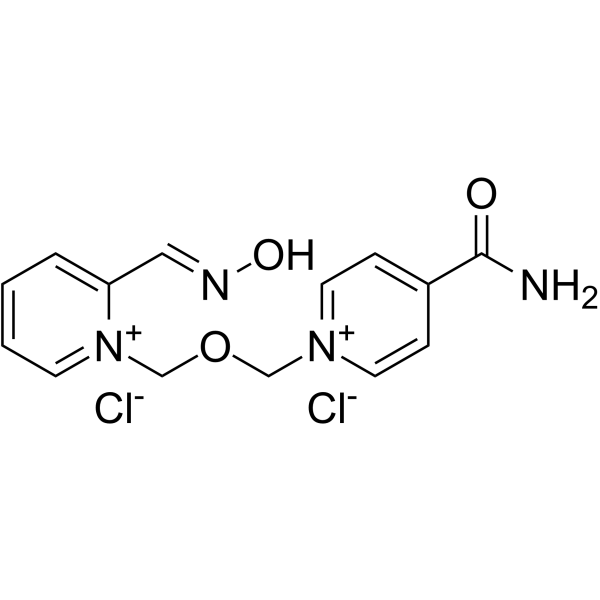
Cat. No.: HY-106901A
CAS No.: 34433-31-3
Purity:  98.47%
Synonyms: HI-6
Research Areas:  

Neurological Disease

Asoxime dichloride (HI-6) is an orally active thiosemicarbazone-based antidote. Asoxime dichloride is a reversible inhibitor of AChE, and its core mechanism of action is to re-activate AChE inhibited by nerve toxins, thereby restoring the cholinergic nerve function. Asoxime dichloride significantly restores the function of poisoned muscles without reactivating AChE. Asoxime dichloride is an antagonist of acetylcholine receptors (AChRs), including nicotinic receptor and α7 nAChR. Asoxime dichloride can serve as an effective immunomodulator, improving the immune effect of the nervous system .
loading...
    loading...
Cat. No.: HY-106901B
CAS No.: 144252-71-1
Synonyms: HI-6 dimesylate
Research Areas:  

Neurological Disease

Asoxime dimesylate (HI-6 dimesylate) is an orally active thiosemicarbazone-based antidote. Asoxime dimesylate is a reversible inhibitor of AChE, and its core mechanism of action is to re-activate AChE inhibited by nerve toxins, thereby restoring the cholinergic nerve function. Asoxime dimesylate significantly restores the function of poisoned muscles without reactivating AChE. Asoxime dimesylate is an antagonist of acetylcholine receptors (AChRs), including nicotinic receptor and α7 nAChR. Asoxime dimesylate can serve as an effective immunomodulator, improving the immune effect of the nervous system .
loading...
    loading...
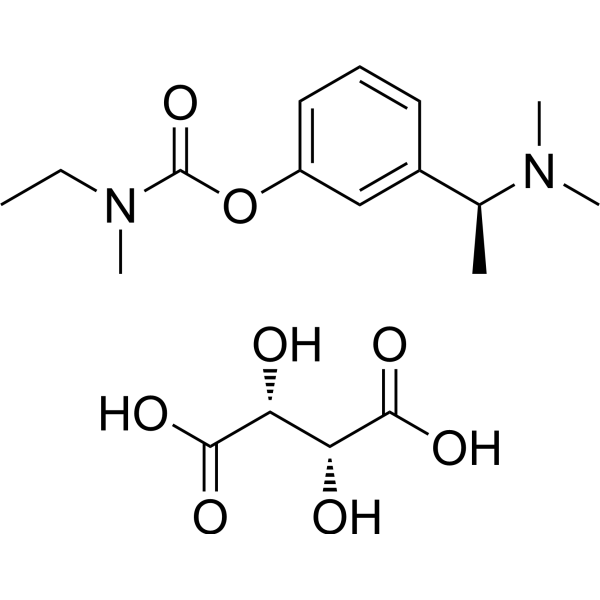
Cat. No.: HY-11017R
CAS No.: 129101-54-8
Synonyms: ENA 713 (Standard); SDZ-ENA 713 (Standard)
Rivastigmine (tartrate) (Standard) is the analytical standard of Rivastigmine (tartrate). This product is intended for research and analytical applications. Rivastigmine tartrate (ENA 713; SDZ-ENA 713) is an orally active and potent cholinesterase (ChE) inhibitor and inhibits butyrylcholinesterase (BChE) and acetylcholinesteras (AChE) with IC50s of 0.037 μM, 4.15 μM, respectively. Rivastigmine tartrate can pass the blood brain barrier (BBB). Rivastigmine tartrate is a parasympathomimetic or cholinergic agent used for the research of mild to moderate dementia of the Alzheimer's type and dementia due to Parkinson's disease .
loading...
    loading...
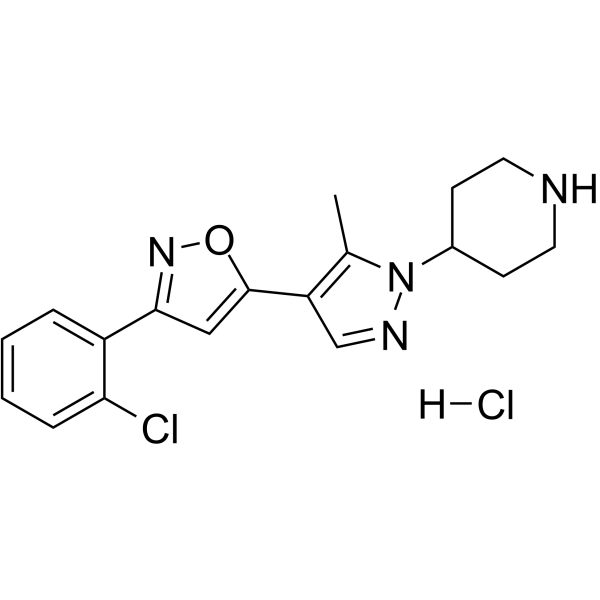
Cat. No.: HY-136258
CAS No.: 2250025-94-4
Target:  

nAChR

Research Areas:  

Neurological Disease

nAChR agonist CMPI hydrochloride is a potent and selective positive allosteric modulator (PAM) of nAChR containing a α4:α4 subunit interface. nAChR agonist CMPI hydrochloride enhances the response of (α4)3(β2)2 nAChR to ACh (10 µM) with an EC50 of 0.26 µM. nAChR agonist CMPI hydrochloride has potential for the research of nicotine dependence and many neuropsychiatric conditions associated with decreased brain cholinergic activity .
loading...
    loading...
Cat. No.: HY-147859
CAS No.: 2653349-78-9
Target:  

Amyloid-β

Research Areas:  

Neurological Disease

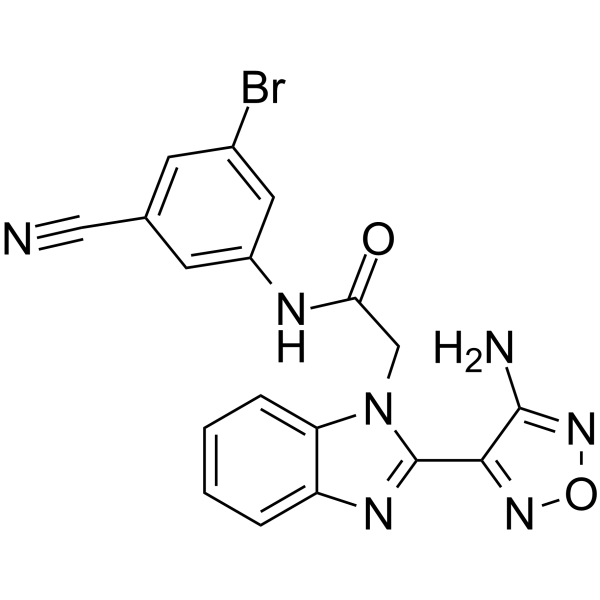
BChE-IN-8 (compound 20) is an orally active, potent and BBB-penetrated BChE (butyrylcholinesterase) inhibitor, with IC50 values of 0.15 nM (eqBChE, equine serum BChE) and 45.2 nM (hBChE), respectively. High stability of BChE-IN-8 contributes to significantly improved blood concentration and tissue exposure. BChE-IN-8 can exert neuro-protecting and cognition improving properties through multiple modulations, including cholinergic system, Aβ aggregation, neuropeptide levels. BChE-IN-8 can be used for Alzheimer's disease (AD) research .
loading...
    loading...
Cat. No.: HY-183927
CAS No.: 125141-02-8
Target:  

Dopamine Receptor

Research Areas:  

Neurological Disease

Spectramide is a blood-brain barrier-permeable, reversible, and selective dopamine D2 receptor ligand. Spectramide shows no strong interactions with dopamine D1 receptors, dopamine uptake sites, adrenergic receptor systems, cholinergic receptor systems, or 5-HTR systems. Spectramide can be labeled with 11C or 123I isotopes for use in PET or SPECT. Spectramide preferentially accumulates in the striatum with low uptake in other brain regions, and its accumulation can be blocked by pre-administration of Haloperidol (HY-14538) .
loading...
    loading...
Cat. No.: HY-187664
CAS No.: 470-94-0
Target:  

Cholinesterase (ChE)

Research Areas:  

Neurological Disease

N-Demethyl amiton oxalic is an irreversible cholinesterase (ChE) inhibitor. N-Demethyl amiton oxalic elicits low-level postganglionic neuronal firing in cat vesical parasympathetic ganglia by preventing the breakdown of endogenously released ChE. N-Demethyl amiton oxalic inhibits ChE activity in squid optic ganglia and induces hyperactivity, ink ejection, pigment changes, and death, with a rate of enzymatic detoxification much lower than that of DFP. N-Demethyl amiton oxalic can be used in studies related to the mechanisms of cholinergic transmission in parasympathetic ganglia and neurotoxicology .
loading...
    loading...
Cat. No.: HY-B1277AS
Trihexyphenidyl-d5 is deuterium labeled Trihexyphenidyl (HY-B1277A). Trihexyphenidyl is a selective and orally active M1 muscarinic receptor antagonist with an IC50 of 3.7 nM for rat cerebral cortex M1 muscarinic receptors. Trihexyphenidyl modulates cholinergic activity, countering acetylcholine supersensitivity in neural pathways. Trihexyphenidyl improves movement disorder, inhibits McN-A-343 (HY-107648)-induced pressor responses, vagally-induced bradycardia and vasodilatation. Trihexyphenidyl can be used for the research of Parkinson's disease. .
loading...
    loading...
Cat. No.: HY-B1277S
Trihexyphenidyl-d5 hydrochloride is deuterium labeled Trihexyphenidyl hydrochloride (HY-B1277). Trihexyphenidyl hydrochloride is a selective and orally active M1 muscarinic receptor antagonist with an IC50 of 3.7 nM for rat cerebral cortex M1 muscarinic receptors. Trihexyphenidyl hydrochloride modulates cholinergic activity, countering acetylcholine supersensitivity in neural pathways. Trihexyphenidyl hydrochloride improves movement disorder, inhibits McN-A-343 (HY-107648)-induced pressor responses, vagally-induced bradycardia and vasodilatation. Trihexyphenidyl hydrochloride can be used for the research of Parkinson's disease. .
loading...
    loading...
Cat. No.: HY-B1547AR
CAS No.: 5633-14-7
Synonyms: R4929 (Standard); Dioxatrine (Standard)
Research Areas:  

Neurological Disease

Benzetimide hydrochloride (Standard) (R4929 (Standard); Dioxatrine (Standard)) is the analytical standard of Benzetimide hydrochloride (HY-B1547A). This product is intended for research and analytical applications. Benzetimide hydrochloride (R4929) is a blood-brain barrier-permeable muscarinic acetylcholine receptor antagonist. Benzetimide hydrochloride blocks cholinergic receptor sites. Benzetimide hydrochloride induces mydriasis, prevents acetylcholine-induced muscle contraction, inhibits pilocarpine (HY-B0726A)-induced parasympathomimetic effects, and exhibits antisecretory activity. Benzetimide hydrochloride can be used in research related to Parkinson's disease .
loading...
    loading...
Cat. No.: HY-B1693A
CAS No.: 1236-99-3
Synonyms: Methotrimeprazine hydrochloride
Levomepromazine (Methotrimeprazine) hydrochloride is an orally active antipsychotic compound and Ca 2+ release inducer. Levomepromazine inhibits SERCA pump and induces an increase in cytoplasmic Ca 2+ levels. Levomepromazine hydrochloride has antagonistic effects on a variety of neurotransmitter receptors, including dopamine, cholinergic, serotonin, and histamine receptors. Levomepromazine hydrochloride can induce adaptive ER stress and autophagy. In addition, Levomepromazine hydrochloride has antiviral, anti-inflammatory, neuroprotective and analgesic, sedative and anti-injurious activities. Levomepromazine hydrochloride can be used in the study psychiatric disorders and relieving nausea and vomiting .
loading...
    loading...
Cat. No.: HY-W654335
Rivastigmine-d4 (tartrate) is deuterium labeled Rivastigmine (tartrate). Rivastigmine tartrate (ENA 713; SDZ-ENA 713) is an orally active and potent cholinesterase (ChE) inhibitor and inhibits butyrylcholinesterase (BChE) and acetylcholinesteras (AChE) with IC50s of 0.037 μM, 4.15 μM, respectively. Rivastigmine tartrate can pass the blood brain barrier (BBB). Rivastigmine tartrate is a parasympathomimetic or cholinergic agent used for the research of mild to moderate dementia of the Alzheimer's type and dementia due to Parkinson's disease .
loading...
    loading...
Cat. No.: HY-101196
CAS No.: 155649-00-6
Target:  

Endogenous Metabolite

Research Areas:  

Neurological Disease

PG 9 maleate is a compound with analgesic and anti-memory loss activity. PG 9 maleate exerts analgesic effects by enhancing central cholinergic transmission. PG 9 maleate protects against memory loss caused by scopolamine or dicyclomine within a specific dose range. The affinity profile of PG 9 maleate indicates significant selectivity among the M4/M1 receptor subtypes, which may be the mechanism for its analgesic and anti-memory loss effects. PG 9 maleate can increase the release of acetylcholine, thereby improving its biological activity .
loading...
    loading...
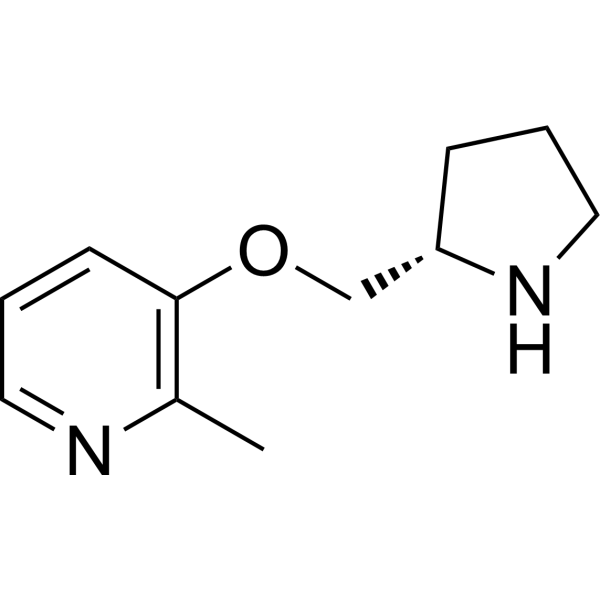
Cat. No.: HY-14565
CAS No.: 161417-03-4
Synonyms: ABT-089
Target:  

nAChR

Research Areas:  

Neurological Disease

Pozanicline (ABT-089) selectively activate neuronal nicotinic acetylcholine receptor (nAChR) subtypes, is a novel cholinergic agent that is a partial agonist at α4β2* nAChRs (Ki=16 nM) and shows high selectivity for α6β2* and α4α5β2 nAChR subtypes, the binding affinity (Ki, rat) for Pozanicline to [ 3H] cytisine sites is 16.7 nM. Pozanicline reverses nicotine withdrawal-induced cognitive deficits, may be an effective component of novel therapeutic strategies for nicotine addiction .
loading...
    loading...
Cat. No.: HY-15116
CAS No.: 117427-00-6
Research Areas:  

Neurological Disease

ONO 1603, a novel prolyl endopeptidase inhibitor investigated as a potential antidementia drug, demonstrated neuroprotective and neurotrophic effects in cerebellar granule cells similar to tetrahydroaminoacridine (THA). At a concentration of 0.03 microM, ONO 1603 promoted neuronal survival, enhanced neurite outgrowth, increased m3-muscarinic acetylcholine receptor (mAChR) mRNA levels, and stimulated mAChR-mediated signaling pathways. These findings suggest that ONO 1603 shares pharmacological similarities with THA, indicating its potential as a therapeutic agent for Alzheimer's disease by enhancing cholinergic neurotransmission and neuronal function .
loading...
    loading...
Cat. No.: HY-B1277R
CAS No.: 52-49-3
Trihexyphenidyl hydrochloride (Standard) is the analytical standard of Trihexyphenidyl hydrochloride (HY-B1277). This product is intended for research and analytical applications. Trihexyphenidyl is a selective and orally active M1 muscarinic receptor antagonist with an IC50 of 3.7 nM for rat cerebral cortex M1 muscarinic receptors. Trihexyphenidyl modulates cholinergic activity, countering acetylcholine supersensitivity in neural pathways. Trihexyphenidyl improves movement disorder, inhibits McN-A-343 (HY-107648)-induced pressor responses, vagally-induced bradycardia and vasodilatation. Trihexyphenidyl can be used for the research of Parkinson's disease. .
loading...
    loading...

