
234 Results for "

coagulation

" in MedChemExpress (MCE) Product Catalog:
Products (234)

234 Results for "coagulation" in MCE Product Catalog:

Cat. No.: HY-D3428
CAS No.: 2863678-02-6
LJ-2P is an NIR-II small-molecule fluorescent probe with fibrin/fibrinogen affinity. LJ-2P can bind coagulation-related proteins and restrict dye molecular motion, thereby enhancing local fluorescence for high-contrast imaging of bleeding and blood clots in vivo. LJ-2P can also co-precipitate with Ca 2+ to form LJ-2P nanoparticles, significantly enhancing NIR-II luminescence through the precipitation-enhanced emission (PEE) mechanism. LJ-2P can be used for research on bleeding disorders and breast cancer. LJ-2P exhibits dual-modal emission properties (Ex/Em ≈740/945 nm or 740/1066 nm) .
loading...
    loading...
Cat. No.: HY-P70095
Purity:  ≥ 95%, as determined by reducing SDS-PAGE.
Synonyms: DCBLD2; Endothelial And Smooth Muscle Cell-Derived Neuropilin-Like Protein; Discoidin, CUB And LCCL Domain Containing 2; Discoidin, CUB And LCCL Domain-Containing Protein 2; CLCP1; coagulation Factor V/VIII-Homology Domains Protein 1; ESDN; DCBLD2 Protein
Species:  
Human
Source:  
HEK293
loading...
    loading...
Cat. No.: HY-18234
CAS No.: 55123-66-5
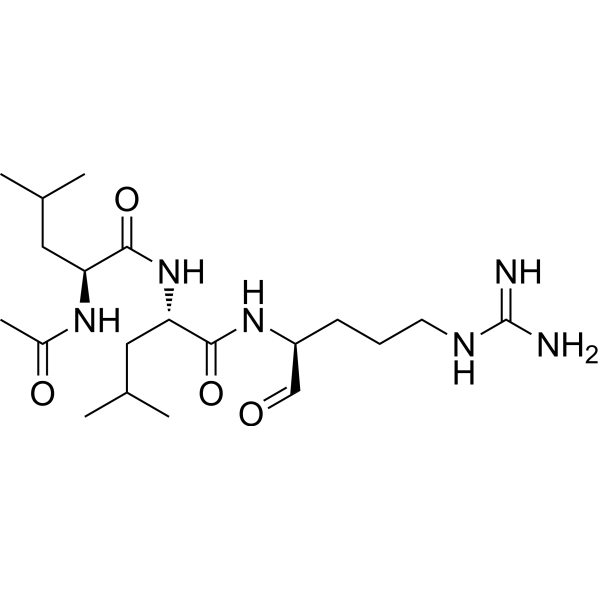
Leupeptin is a broad-spectrum protease inhibitor . By inhibiting the activation of the PTEN/PI3K/Akt/NF-κB/ERK1/2/p38 signaling pathway, Leupeptin significantly reduces LPS-induced NO and ROS production, mitochondrial membrane potential hyperpolarization, phagocytic activity, pro-inflammatory cytokine release, and M1 polarization in mouse peritoneal macrophages, and reverses autophagic flux impairment. It also decreases Concanavalin A (HY-P2149)-induced proliferation index of mouse splenic lymphocytes and the Th1/IL-10 and Th2/IL-10 cytokine ratios, thereby modulating innate and adaptive immune responses. Leupeptin inhibits blood coagulation and tumorigenesis in mouse skin. Leupeptin can be used in research on chronic inflammatory diseases and skin tumorigenesis .
loading...
    loading...
Cat. No.: HY-183478
CAS No.: 39740-82-4
Leupeptin hydrochloride is a broad-spectrum protease inhibitor . By inhibiting the activation of the PTEN/PI3K/Akt/NF-κB/ERK1/2/p38 signaling pathway, Leupeptin hydrochloride significantly reduces LPS-induced NO and ROS production, mitochondrial membrane potential hyperpolarization, phagocytic activity, pro-inflammatory cytokine release, and M1 polarization in mouse peritoneal macrophages, and reverses autophagic flux impairment. It also decreases Concanavalin A (HY-P2149)-induced proliferation index of mouse splenic lymphocytes and the Th1/IL-10 and Th2/IL-10 cytokine ratios, thereby modulating innate and adaptive immune responses. Leupeptin hydrochloride inhibits blood coagulation and tumorigenesis in mouse skin. Leupeptin hydrochloride can be used in research on chronic inflammatory diseases and skin tumorigenesis .
loading...
    loading...
Cat. No.: HY-L197
136 compounds

Vitamins are a category of trace organic compounds essential for maintaining normal physiological functions in living organisms. They are classified into fat-soluble and water-soluble vitamins. Fat-soluble vitamins play a role in maintaining vision, bone health, reproductive functions, and blood coagulation. Water-soluble vitamins are involved in energy metabolism, nervous system function, and cellular repair processes. Most vitamins cannot be synthesized by the organism and must be obtained through diet. In recent years, vitamins and their derivatives have become increasingly important in the field of drug development due to their extensive physiological activities. Additionally, vitamins and their derivatives can be used to construct research platforms for vitamin metabolism, which helps to delve into the metabolic pathways and dynamic changes of vitamins within the body and aids in identifying new biomarkers for certain diseases.

MCE included 136 vitamins and their derivatives, including Vitamin A, Vitamin B, Vitamin D, etc., which is a good tool for studying vitamin metabolism.

Cat. No.: HY-112624E
CAS No.: 9004-54-0
Synonyms: Dextran 0.8; Dextran D0.8; Dextran T0.8(MW 640-960)
Dextran T0.8 (Dextran 0.8; Dextran T0.8(MW 640-960)) is a food additive with a porous network structure that exhibits strong hydration capacity and low browning activity. Dextran T0.8 (MW 800) can improve the coagulation of dairy products and is used as a prebiotic in baked goods. Dextran T0.8 (MW 800) is non-toxic to HeLa cells at a concentration of ~500 μg/mL and has a low relative browning rate in the Maillard reaction. The Dextran series of compounds are also natural polysaccharide drug carriers that can be connected to drugs through covalent bonding methods such as ester bonds, amide bonds or click chemistry, or self-assembled to form carriers such as nanoparticles and hydrogels. Dextran is biodegradable and biocompatible, and can achieve targeted delivery and controlled release of drugs. Dextran derivatives can prolong the half-life of drugs, increase local concentrations, and reduce the activity of immune clearance .
loading...
    loading...
Cat. No.: HY-18234B
CAS No.: 24365-47-7
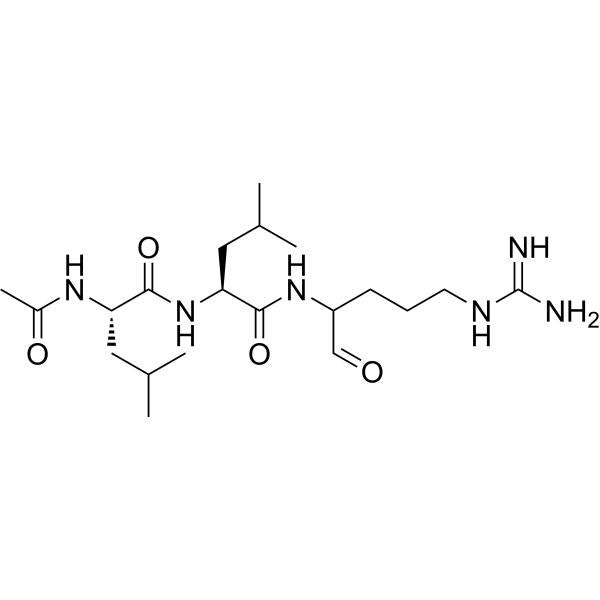
Leupeptin Ac-LL is a broad-spectrum protease inhibitor . By inhibiting the activation of the PTEN/PI3K/Akt/NF-κB/ERK1/2/p38 signaling pathway, Leupeptin Ac-LL significantly reduces LPS-induced NO and ROS production, mitochondrial membrane potential hyperpolarization, phagocytic activity, pro-inflammatory cytokine release, and M1 polarization in mouse peritoneal macrophages, and reverses autophagic flux impairment. It also decreases Concanavalin A (HY-P2149)-induced proliferation index of mouse splenic lymphocytes and the Th1/IL-10 and Th2/IL-10 cytokine ratios, thereby modulating innate and adaptive immune responses. Leupeptin Ac-LL inhibits blood coagulation and tumorigenesis in mouse skin. Leupeptin Ac-LL can be used in research on chronic inflammatory diseases and skin tumorigenesis .
loading...
    loading...
Cat. No.: HY-18234C
CAS No.: 24125-16-4
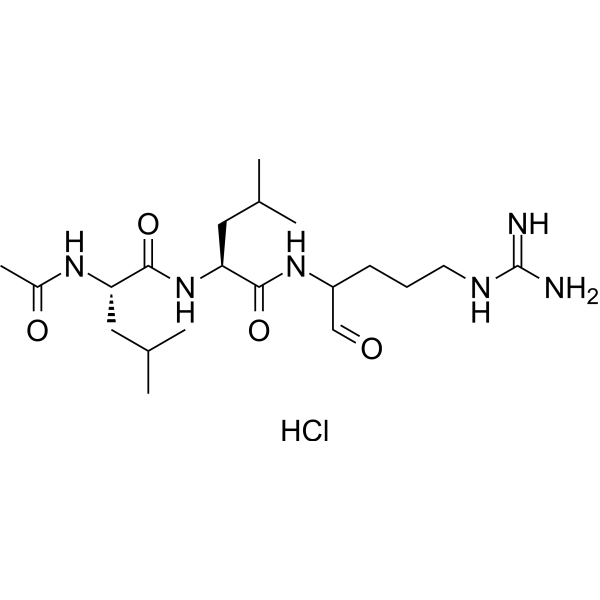
Leupeptin Ac-LL hydrochloride is a broad-spectrum protease inhibitor . By inhibiting the activation of the PTEN/PI3K/Akt/NF-κB/ERK1/2/p38 signaling pathway, Leupeptin Ac-LL hydrochloride significantly reduces LPS-induced NO and ROS production, mitochondrial membrane potential hyperpolarization, phagocytic activity, pro-inflammatory cytokine release, and M1 polarization in mouse peritoneal macrophages, and reverses autophagic flux impairment. It also decreases Concanavalin A (HY-P2149)-induced proliferation index of mouse splenic lymphocytes and the Th1/IL-10 and Th2/IL-10 cytokine ratios, thereby modulating innate and adaptive immune responses. Leupeptin Ac-LL hydrochloride inhibits blood coagulation and tumorigenesis in mouse skin. Leupeptin Ac-LL hydrochloride can be used in research on chronic inflammatory diseases and skin tumorigenesis .
loading...
    loading...
Cat. No.: HY-18234AR
CAS No.: 103476-89-7
Leupeptin hemisulfate (Standard) is the analytical standard of Leupeptin hemisulfate (HY-18234A ). This product is intended for research and analytical applications. Leupeptin hemisulfate is a broad-spectrum protease inhibitor . By inhibiting the activation of the PTEN/PI3K/Akt/NF-κB/ERK1/2/p38 signaling pathway, Leupeptin hemisulfate significantly reduces LPS-induced NO and ROS production, mitochondrial membrane potential hyperpolarization, phagocytic activity, pro-inflammatory cytokine release, and M1 polarization in mouse peritoneal macrophages, and reverses autophagic flux impairment. It also decreases Concanavalin A (HY-P2149)-induced proliferation index of mouse splenic lymphocytes and the Th1/IL-10 and Th2/IL-10 cytokine ratios, thereby modulating innate and adaptive immune responses. Leupeptin hemisulfate inhibits blood coagulation and tumorigenesis in mouse skin. Leupeptin hemisulfate can be used in research on chronic inflammatory diseases and skin tumorigenesis .
loading...
    loading...
Cat. No.: HY-P3009
CAS No.: 9002-05-5
Bovine Factor Xa is a serine protease that plays a central role in blood coagulation, with prothrombin as its physiological substrate. Bovine Factor Xa catalyzes the conversion of prothrombin to thrombin, activates factor VIII, and hydrolyzes peptide, thioester, and amide substrates. Bovine Factor Xa cleaves protease-activated receptors 1 and 2 to activate intracellular signal transduction. Bovine Factor Xa regulates multiple cellular pathways, mediates various cellular activities, tissue remodeling and cancer cell migration, and inhibits apoptosis in some cancer cells. Bovine Factor Xa protects hippocampal neurons against glutamate-induced damage. Bovine Factor Xa participates in embryonic vascular development and regulates immune hematopoiesis; its activity is inhibited by soybean trypsin inhibitor, and cannot be enhanced by phospholipids. Bovine Factor Xa regulates immune responses and macrophage polarization, and participates in fibrosis, vascular remodeling and tumor progression through non-coagulant effects. Bovine Factor Xa can be used in research related to atherosclerosis, fibrosis, asthma, cancer, thromboinflammation, sepsis, etc .
loading...
    loading...
Cat. No.: HY-P3009A
CAS No.: 9002-05-5
Canine Factor Xa is a serine protease that plays a central role in blood coagulation, with prothrombin as its physiological substrate. Canine Factor Xa catalyzes the conversion of prothrombin to thrombin, activates factor VIII, and hydrolyzes peptide, thioester, and amide substrates. Canine Factor Xa cleaves protease-activated receptors 1 and 2 to activate intracellular signal transduction. Canine Factor Xa regulates multiple cellular pathways, mediates various cellular activities, tissue remodeling and cancer cell migration, and inhibits apoptosis in some cancer cells. Canine Factor Xa protects hippocampal neurons against glutamate-induced damage. Canine Factor Xa participates in embryonic vascular development and regulates immune hematopoiesis; its activity is inhibited by soybean trypsin inhibitor, and cannot be enhanced by phospholipids. Canine Factor Xa regulates immune responses and macrophage polarization, and participates in fibrosis, vascular remodeling and tumor progression through non-coagulant effects. Canine Factor Xa can be used in research related to atherosclerosis, fibrosis, asthma, cancer, thromboinflammation, sepsis, etc .
loading...
    loading...
Cat. No.: HY-P3009B
CAS No.: 9002-05-5
Porcine Factor Xa is a serine protease that plays a central role in blood coagulation, with prothrombin as its physiological substrate. Porcine Factor Xa catalyzes the conversion of prothrombin to thrombin, activates factor VIII, and hydrolyzes peptide, thioester, and amide substrates. Porcine Factor Xa cleaves protease-activated receptors 1 and 2 to activate intracellular signal transduction. Porcine Factor Xa regulates multiple cellular pathways, mediates various cellular activities, tissue remodeling and cancer cell migration, and inhibits apoptosis in some cancer cells. Porcine Factor Xa protects hippocampal neurons against glutamate-induced damage. Porcine Factor Xa participates in embryonic vascular development and regulates immune hematopoiesis; its activity is inhibited by soybean trypsin inhibitor, and cannot be enhanced by phospholipids. Porcine Factor Xa regulates immune responses and macrophage polarization, and participates in fibrosis, vascular remodeling and tumor progression through non-coagulant effects. Porcine Factor Xa can be used in research related to atherosclerosis, fibrosis, asthma, cancer, thromboinflammation, sepsis, etc .
loading...
    loading...
Cat. No.: HY-P3009C
CAS No.: 9002-05-5
Porcine Factor Xa is a serine protease that plays a central role in blood coagulation, with prothrombin as its physiological substrate. Porcine Factor Xa catalyzes the conversion of prothrombin to thrombin, activates factor VIII, and hydrolyzes peptide, thioester, and amide substrates. Porcine Factor Xa cleaves protease-activated receptors 1 and 2 to activate intracellular signal transduction. Porcine Factor Xa regulates multiple cellular pathways, mediates various cellular activities, tissue remodeling and cancer cell migration, and inhibits apoptosis in some cancer cells. Porcine Factor Xa protects hippocampal neurons against glutamate-induced damage. Porcine Factor Xa participates in embryonic vascular development and regulates immune hematopoiesis; its activity is inhibited by soybean trypsin inhibitor, and cannot be enhanced by phospholipids. Porcine Factor Xa regulates immune responses and macrophage polarization, and participates in fibrosis, vascular remodeling and tumor progression through non-coagulant effects. Porcine Factor Xa can be used in research related to atherosclerosis, fibrosis, asthma, cancer, thromboinflammation, sepsis, etc .
loading...
    loading...
Cat. No.: HY-P3009D
CAS No.: 9002-05-5
Rat Factor Xa is a serine protease that plays a central role in blood coagulation, with prothrombin as its physiological substrate. Rat Factor Xa catalyzes the conversion of prothrombin to thrombin, activates factor VIII, and hydrolyzes peptide, thioester, and amide substrates. Rat Factor Xa cleaves protease-activated receptors 1 and 2 to activate intracellular signal transduction. Rat Factor Xa regulates multiple cellular pathways, mediates various cellular activities, tissue remodeling and cancer cell migration, and inhibits apoptosis in some cancer cells. Rat Factor Xa protects hippocampal neurons against glutamate-induced damage. Rat Factor Xa participates in embryonic vascular development and regulates immune hematopoiesis; its activity is inhibited by soybean trypsin inhibitor, and cannot be enhanced by phospholipids. Rat Factor Xa regulates immune responses and macrophage polarization, and participates in fibrosis, vascular remodeling and tumor progression through non-coagulant effects. Rat Factor Xa can be used in research related to atherosclerosis, fibrosis, asthma, cancer, thromboinflammation, sepsis, etc .
loading...
    loading...

