2876 Results for "

undergoing

" in MedChemExpress (MCE) Product Catalog:
Products (2876)

2876 Results for "undergoing" in MCE Product Catalog:

Cat. No.: HY-118411S
CAS No.: 1610530-40-9
Synonyms: EdU-13C
5-Ethynyl-2'-deoxyuridine- 13C1 (EdU- 13C1) is the 13C-labeled 5-Ethynyl-2'-deoxyuridine (HY-118411). 5-Ethynyl-2'-deoxyuridine (EdU), a thymidine analogue, is incorporated into cellular DNA during DNA replication and the subsequent reaction of EdU with a fluorescent azide in a “Click” reaction. EdU staining is a fast, sensitive and reproducible method to study cell proliferation . 5-Ethynyl-2'-deoxyuridine is an alkyl chain-based PROTAC linker that can be used in the synthesis of PROTACs . 5-Ethynyl-2'-deoxyuridine is a click chemistry reagent, it contains an Alkyne group and can undergo copper-catalyzed azide-alkyne cycloaddition (CuAAc) with molecules containing Azide groups.
loading...
    loading...
Cat. No.: HY-118411S1
CAS No.: 1610530-35-2
Synonyms: EdU-13C2
5-Ethynyl-2'-deoxyuridine- 13C2 (EdU- 13C2) is the 13C-labeled 5-Ethynyl-2'-deoxyuridine (HY-118411). 5-Ethynyl-2'-deoxyuridine (EdU), a thymidine analogue, is incorporated into cellular DNA during DNA replication and the subsequent reaction of EdU with a fluorescent azide in a “Click” reaction. EdU staining is a fast, sensitive and reproducible method to study cell proliferation . 5-Ethynyl-2'-deoxyuridine is an alkyl chain-based PROTAC linker that can be used in the synthesis of PROTACs . 5-Ethynyl-2'-deoxyuridine is a click chemistry reagent, it contains an Alkyne group and can undergo copper-catalyzed azide-alkyne cycloaddition (CuAAc) with molecules containing Azide groups.
loading...
    loading...
Cat. No.: HY-122056
CAS No.: 39036-04-9
Synonyms: L-α-Diheptanoyllecithin; 12-Diheptanoyl-sn-glycero-3-PC
Research Areas:  

Others

1,2-Diheptanoyl-SN-glycero-3-phosphocholine (L-α-Diheptanoyllecithin; 12-Diheptanoyl-sn-glycero-3-PC) is a short-chain phospholipid. 11,2-Diheptanoyl-SN-glycero-3-phosphocholine forms bimolecular micelles with long-chain phospholipids, and these micelles undergo adsorption and spontaneous fusion to generate supported lipid bilayers. 1,2-Diheptanoyl-SN-glycero-3-phosphocholine enhances the transdermal penetration of hydrophilic low-molecular-weight compounds via micellar pretreatment of the skin of hairless mice. 1,2-Diheptanoyl-SN-glycero-3-phosphocholine can be used in studies of membrane biology, structural biology and transdermal drug delivery .
loading...
    loading...
Cat. No.: HY-123450
CAS No.: 1257628-57-1
Purity:  99.60%
Target:  

Bcr-Abl Apoptosis PDGFR

Research Areas:  

Cancer

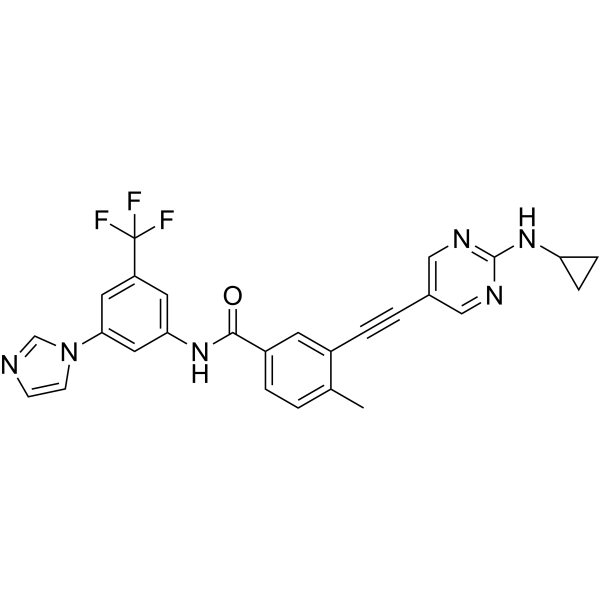
S116836, a potent, orally active BCR-ABL tyrosine kinase inhibitor, blocks both wild-type as well as T315I Bcr-Abl. S116836 arrests the cells in the G0/G1 phase of cell cycle, induces apoptosis, increases ROS production, and decreases GSH production in BaF3/WT and BaF3/T315I cells. S116836 also inhibits SRC, LYN, HCK, LCK and BLK, and receptor tyrosine kinases such as FLT3, TIE2, KIT, PDGFR-β. Antitumor activies . S116836 is a click chemistry reagent, it contains an Alkyne group and can undergo copper-catalyzed azide-alkyne cycloaddition (CuAAc) with molecules containing Azide groups.
loading...
    loading...
Cat. No.: HY-125863B
CAS No.: 9001-40-5
Synonyms: G6PD (yeast, recombinant)
Glucose 6-phosphate dehydrogenase (yeast, recombinant) (G6PD (yeast, recombinant)) is a recombinant enzyme requiring NADP + as a coenzyme. Glucose 6-phosphate dehydrogenase (yeast, recombinant) catalyzes the oxidative dehydrogenation of glucose-6-phosphate to form 6-phosphoglucono-δ-lactone, as well as the reduction of NADP + to NADPH. Glucose 6-phosphate dehydrogenase (yeast, recombinant) relies on the amino acid Arg-52 to bind NADP +. Glucose 6-phosphate dehydrogenase (yeast, recombinant) undergoes competitive inhibition by NADPH and strong inhibition by zinc ions (Zn 2+). Glucose 6-phosphate dehydrogenase (yeast, recombinant) is an enzyme in the pentose phosphate pathway, which is one of the glucose metabolic pathways. Glucose 6-phosphate dehydrogenase (yeast, recombinant) can be used for the quantitative detection of ATP, glucose and creatine kinase .
loading...
    loading...
Cat. No.: HY-147858
CAS No.: 3033297-59-2
Purity:  99.99%
Target:  

PROTACs EGFR Apoptosis

Research Areas:  

Cancer

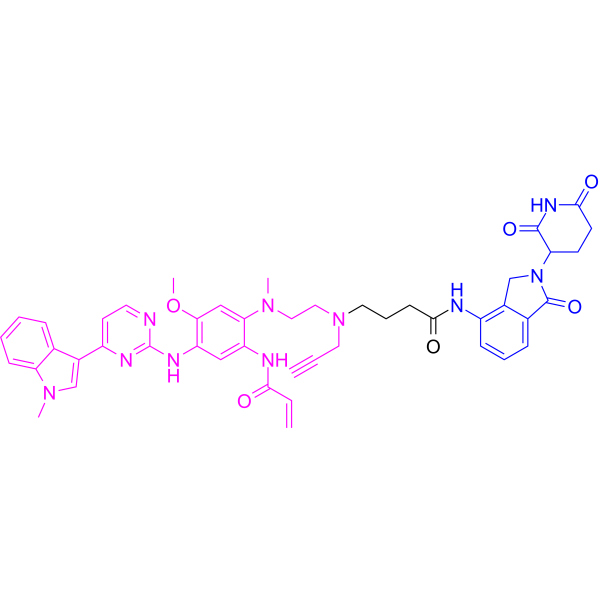
PROTAC EGFR degrader 7 (compound 13b) is a potent and selective CRBN-recruiting PROTAC EGFR L858R/T790M degrader, with a DC50 of 13.2 nM. PROTAC EGFR degrader 7 inhibits NCI–H1975 cells proliferation, with an IC50 of 46.82 nM. PROTAC EGFR degrader 7 significantly induces apoptosis and G2/M phase arrest in NCI–H1975 cell. PROTAC EGFR degrader 7 shows antitumor activity, and can be used for non-small cell lung cancer (NSCLC) research . PROTAC EGFR degrader 7 is a click chemistry reagent, it contains an Alkyne group and can undergo copper-catalyzed azide-alkyne cycloaddition (CuAAc) with molecules containing Azide groups.
loading...
    loading...
Cat. No.: HY-152263
CAS No.: 2821803-61-4
Purity:  98.18%
Research Areas:  

Cancer

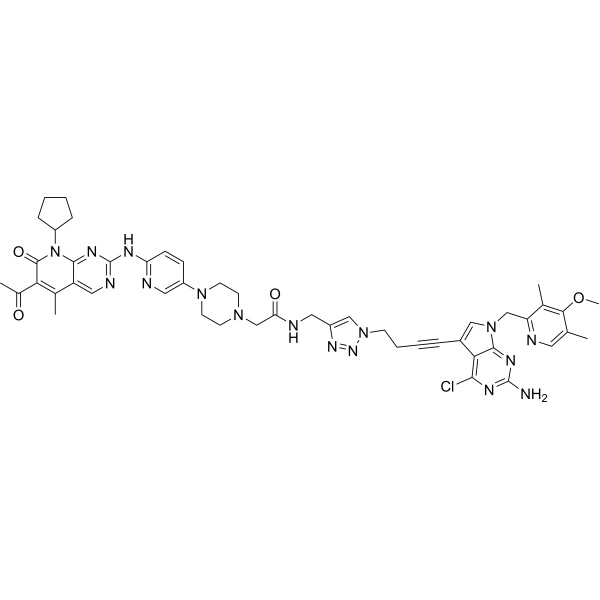
HEMTAC CDK4/6 degrader 1 is a PROTAC connected by ligands for HSP90 and CDK4/6 with a Kd value of 35.7 μM. HEMTAC CDK4/6 degrader 1 induces CDK4/6 degradation in B16F10 melanoma cells. HEMTAC CDK4/6 degrader 1 arrests cell cycle at G0/G1 phase and induces apoptosis. HEMTAC CDK4/6 degrader 1 can be used in research of cancer . HEMTAC CDK4/6 degrader 1 is a click chemistry reagent, it contains an Alkyne group and can undergo copper-catalyzed azide-alkyne cycloaddition (CuAAc) with molecules containing Azide groups.
loading...
    loading...
Cat. No.: HY-152438
Research Areas:  

Others

6-Amino-3-ethynyl-4-methoxy-1-(β-D-ribofuranosyl)-1H-pyrazolo[3,4-d]pyrimidine is a purine nucleoside analogue. Purine nucleoside analogs have broad antitumor activity targeting indolent lymphoid malignancies. Anticancer mechanisms in this process rely on inhibition of DNA synthesis, induction of apoptosis, etc . 6-Amino-3-ethynyl-4-methoxy-1-(β-D-ribofuranosyl)-1H-pyrazolo[3,4-d]pyrimidine is a click chemistry reagent, it contains an Alkyne group and can undergo copper-catalyzed azide-alkyne cycloaddition (CuAAc) with molecules containing Azide groups.
loading...
    loading...
Cat. No.: HY-154425
CAS No.: 2389988-75-2
Research Areas:  

Others

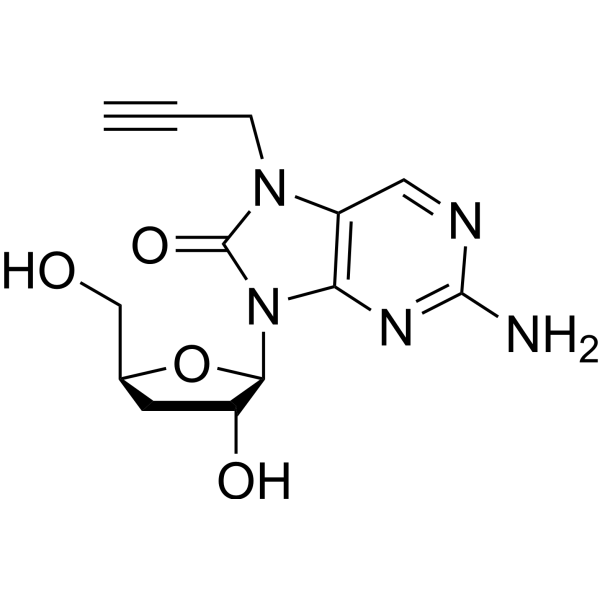
2-Amino-7-propargyl-7,8-dihydro-8-oxo-9-(beta-D-3-deoxy-ribofuranosyl)purine is a purine nucleoside analog. Purine nucleoside analogs have broad antitumor activity targeting indolent lymphoid malignancies. Anticancer mechanisms in this process rely on inhibition of DNA synthesis, induction of apoptosis, etc . 2-Amino-7-propargyl-7,8-dihydro-8-oxo-9-(beta-D-3-deoxy-ribofuranosyl)purine is a click chemistry reagent, it contains an Alkyne group and can undergo copper-catalyzed azide-alkyne cycloaddition (CuAAc) with molecules containing Azide groups.
loading...
    loading...
Cat. No.: HY-156249
CAS No.: 1466546-45-1
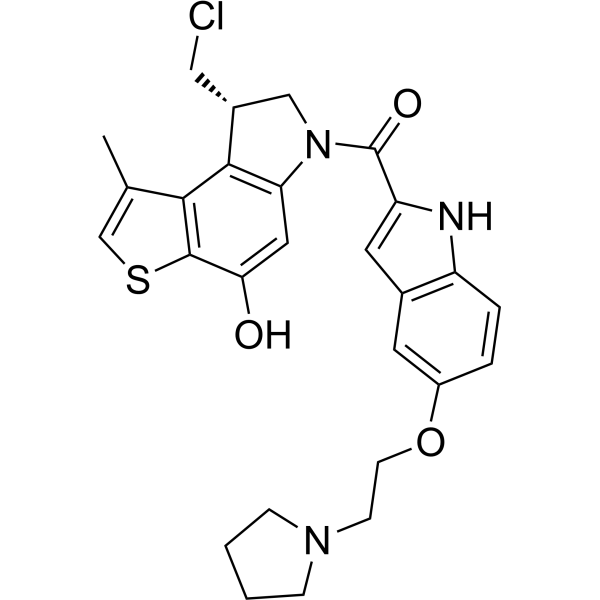
NMS-P528 is a DNA minor groove alkylating agent and ADC payload. NMS-P528 undergoes intramolecular cyclization to form reactive electrophilic derivatives, which in turn induce DNA damage, cell cycle arrest, and Apoptosis. NMS-P528 shows no significant anti-tumor activity as a free payload in a HER2-negative Raji lymphoma mouse xenograft model. NMS-P528 serves as the cytotoxic payload for the antibody-drug conjugate EV20/NMS-P945. NMS-P528 can be used in research related to breast cancer, gastric cancer, colon adenocarcinoma, Burkitt's lymphoma, neuroblastoma, pancreatic cancer, prostate cancer, head and neck cancer, ovarian cancer, and melanoma .
loading...
    loading...
Cat. No.: HY-184965
CAS No.: 2020058-38-0
Target:  

Calcium Channel

Research Areas:  

Inflammation/Immunology

S-Y048 is an orally active OXE receptor-selective antagonist with picomolar-level IC50 values (0.02-30 nM) and pIC50 values of (10.47-10.81) against human receptors. S-Y048 selectively blocks the 5-oxo-ETE signaling pathway, inhibits actin polymerization, calcium mobilization, leukocyte migration, as well as allergen-induced leukocyte infiltration in skin and lung tissues, and reduces mucin-producing bronchial epithelial cells. S-Y048 undergoes benzyl, N-methyl and α-hydroxylation reactions to form metabolites in monkeys. S-Y048 can be used in research related to asthma, allergic asthma, allergic eosinophilic diseases, atopic dermatitis and allergic rhinitis .
loading...
    loading...
Cat. No.: HY-187120
CAS No.: 1422528-30-0
Target:  

Cytochrome P450

Research Areas:  

Cancer

PAIB-SOs-12 is a CYP1A1-activated antimitotic prodrug with affinity for human CYP1A1, with a Ki value of 1.2 μM. PAIB-SOs-12 exhibits nanomolar antiproliferative activity in cancer cells expressing CYP1A1, with a selectivity ratio of over 100 against cancer cells that do not express CYP1A1. PAIB-SOs-12 undergoes CYP1A1-mediated N-dealkylation to form the active metabolite PIB-SO, which induces G2/M cell cycle arrest and microtubule disruption, and shows significantly improved stability in rodent liver microsomes compared to its n-butyl analog. PAIB-SOs-12 can be used in breast cancer-related research .
loading...
    loading...
Cat. No.: HY-B1247R
CAS No.: 553-12-8
Synonyms: PPIX (Standard)
Protoporphyrin IX (Standard) is the analytical standard of Protoporphyrin IX. This product is intended for research and analytical applications. Protoporphyrin IX is a final intermediate in the heme biosynthetic pathway, which acts as a radiation sensitizer enhancing ROS generation even in a hypoxic state and inducing DNA damage. Protoporphyrin IX also acts as a photo sensitizer undergoing photobleaching that occurs through direct degradation by light irradiation. Protoporphyrin IX is formed and accumulated following 5-aminolevulinic acid (5-ALA) (HY-W000450) administration in the tumor cells of rats. Protoporphyrin IX causes selective improvement of basal cell carcinoma when activated red fluorescence of a peak wavelength at 405 nm. Protoporphyrin IX is promising for research of sonodynamic and photodynamic agents for a wide range of cancers, such as bladder cancer and nodular basal cell carcinoma .
loading...
    loading...
Cat. No.: HY-D1320
CAS No.: 1267539-32-1
Target:  

Fluorescent Dye

Research Areas:  

Others

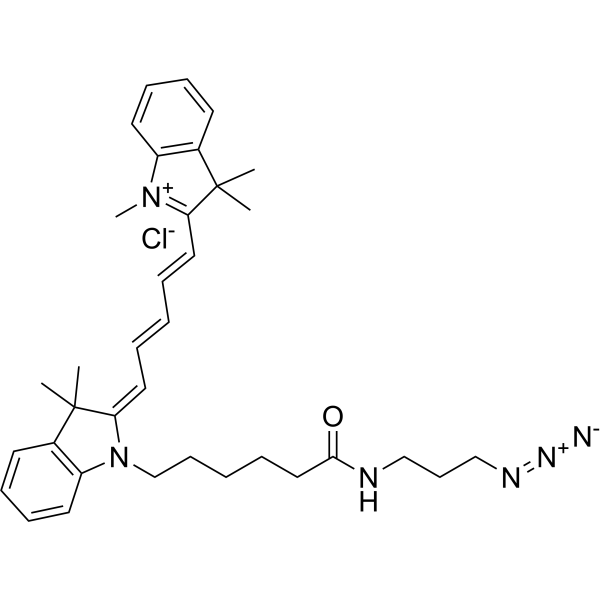
Cyanine5 azide chloride is a Fluorescent probe for cell-selective bacterial protein labeling, as well as a fluorescent dye for single-molecule imaging and dynamic tracking of intracellular organelles. Cyanine5 azide chloride can conjugate with the alkynyl side chain of propargylglycine incorporated into bacterial proteins by the engineered methionyl-tRNA synthetase variant PraRS via copper (I)-catalyzed azide-alkyne [3+2] cycloaddition reaction, thereby enabling in-gel fluorescent visualization of labeled proteins. Cyanine5 azide chloride can diffuse across cell membranes and undergo copper-free click reaction with DBCO-functionalized scAVD pre-bound to DBCO-functionalized biotin, forming fluorescent nanoprobes with enhanced brightness, photostability and localization accuracy, and exhibiting discrete photobleaching steps. The excitation wavelength of Cyanine5 azide chloride is Ex = 633 nm .
loading...
    loading...
Cat. No.: HY-D3067
Target:  

Fluorescent Dye

Research Areas:  

Metabolic Disease Cancer

ASSI-Leu is a novel AIE fluorescent probe based on an asymmetric tetraaryl imidazole skeleton, which can be used for ratiometric imaging detection of endogenous leucine aminopeptidase. ASSI-Leu contains an L-leucine-based recognition group that blocks the excited-state intramolecular proton transfer (ESIPT) in its 2-(2'-hydroxyphenyl) benzothiazole (HBT) skeleton, thereby generating an enol-form emission signal at Ex/Em = 365/417 nm. ASSI-Leu undergoes cleavage of the L-leucine group mediated by LAP to form ASSI-OH, which further activates aggregation-induced emission (AIE) and ESIPT, generating a keto-form emission signal at Ex/Em = 365/554 nm and producing a ratiometric fluorescent signal. ASSI-Leu enables real-time tracking of LAP in cancer cells and zebrafish models .\n
loading...
    loading...
Cat. No.: HY-D3391
RMR-Tre is a fluorescent probe targeting the mycobacterial acyltransferase Ag85. Under the catalysis of Ag85, RMR-Tre undergoes 6-position mycoloylation and anchors to the mycobacterial membrane, while achieving fluorescence activation by inhibiting the intramolecular twisted charge transfer state transition. RMR-Tre can distinguish live mycobacteria from dead ones through metabolism-driven labeling, enabling rapid, wash-free, low-background detection of viable bacteria. RMR-Tre reports the drug resistance of Mycobacterium tuberculosis via the trehalose catalytic shift activity readout associated with TreS. In addition, RMR-Tre can be combined with flow cytometry or high-content imaging techniques to visualize and quantitatively analyze the metabolic heterogeneity of Mycobacterium tuberculosis related to persistence and drug resistance. RMR-Tre is widely used in tuberculosis-related research .
loading...
    loading...
Cat. No.: HY-P4551
CAS No.: 31373-65-6
Synonyms: N-Benzoyl-Gly-His-Leu
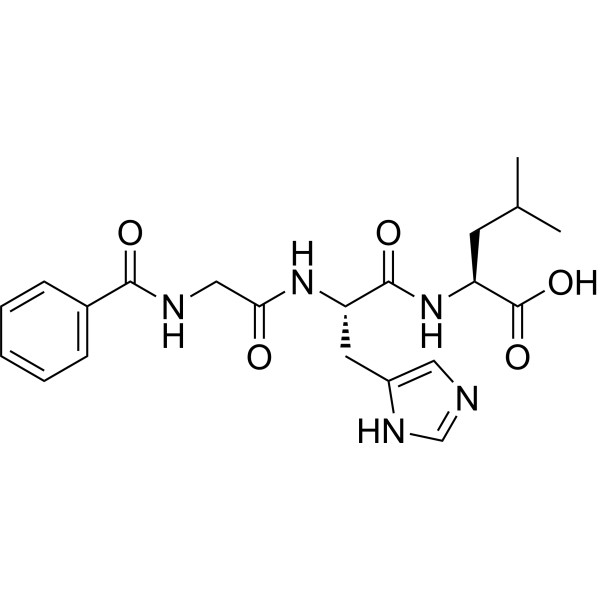
Hippuryl-His-Leu-OH (N-Benzoyl-Gly-His-Leu) is a specific substrate for angiotensin-converting enzyme (ACE I) and a molecular tool used for ACE activity detection in in vitro experiments. Hippuryl-His-Leu-OH is hydrolyzed by ACE through competitive binding. Under ACE catalysis, Hippuryl-His-Leu-OH undergoes hydrolysis to produce hippuric acid (HA). The amount of HA produced can be used to quantitatively assess ACE activity or screen for ACE inhibitors. The released His-Leu can also react with o-phthalaldehyde or Fluorescamine (HY-D0715) for fluorescence detection. Hippuryl-His-Leu-OH can be applied to the in vitro screening of ACE inhibitors for hypertension and cardiovascular diseases, and is also used in the study of ACE activity changes in physiological and pathological processes such as renal compensatory hypertrophy .
loading...
    loading...
Cat. No.: HY-P5423
CAS No.: 107658-43-5
Target:  

Exosomes Liposome

Research Areas:  

Cancer

GALA is a pH-responsive amphipathic peptide consisting of 30 amino acids, which acts as a lung endothelium-targeting ligand. GALA undergoes a conformational transition from random coil to α-helix in an acidic environment at pH 5.0, thereby inducing endosomal membrane destabilization and fusion. GALA-modified liposomes traverse lung endothelial cells via clathrin-dependent endocytosis and transcytosis, and specifically accumulate in the lungs after intravenous injection. GALA significantly promotes the cytosolic release of cargos carried by exosomes, plasmids and liposomes, effectively enhances gene transfection efficiency, and drives gene knockdown of functional macromolecules (such as siRNA) in alveolar epithelial cells (with no significant cytotoxicity at effective concentrations). GALA serves as a critical tool for studies on lung cancer metastasis (e.g., melanoma lung metastasis) and lung-targeted drug delivery systems .
loading...
    loading...
Cat. No.: HY-W014394R
CAS No.: 82654-98-6
Protoporphyrin IX (Standard) is the analytical standard of Protoporphyrin IX. This product is intended for research and analytical applications. Protoporphyrin IX is a final intermediate in the heme biosynthetic pathway, which acts as a radiation sensitizer enhancing ROS generation even in a hypoxic state and inducing DNA damage. Protoporphyrin IX also acts as a photo sensitizer undergoing photobleaching that occurs through direct degradation by light irradiation. Protoporphyrin IX is formed and accumulated following 5-aminolevulinic acid (5-ALA) (HY-W000450) administration in the tumor cells of rats. Protoporphyrin IX causes selective improvement of basal cell carcinoma when activated red fluorescence of a peak wavelength at 405 nm. Protoporphyrin IX is promising for research of sonodynamic and photodynamic agents for a wide range of cancers, such as bladder cancer and nodular basal cell carcinoma .
loading...
    loading...
Cat. No.: HY-W018475
CAS No.: 144034-80-0
Synonyms: MK 462 free base
Target:  

5-HT Receptor

Research Areas:  

Neurological Disease

Rizatriptan (MK 462 free base) is an orally active 5-HT1B/5-HT1D receptor agonist, with BBB permeability. Rizatriptan exerts significant anti-migraine effects by constricting intracranial and extracranial blood vessels and inhibiting neuropeptide release. Rizatriptan exhibits species- and tissue-specific metabolic characteristics; for example, it undergoes oxidative deamination mainly by MAO-A in the liver of brown rats, so co-administration with MAO-A inhibitors is prohibited. Rizatriptan may also exacerbate nitroglycerin-induced cutaneous allodynia, prolong the duration of central sensitization, and increase anxiety-like behavior and active drug-seeking behavior in mice. Rizatriptan has been widely used in studies related to migraine and medication-overuse headache .
loading...
    loading...