2954 Results for "

D3

" in MedChemExpress (MCE) Product Catalog:
Products (2954)

2954 Results for "D3" in MCE Product Catalog:

Cat. No.: HY-W1133231
CAS No.: 1879038-73-9
CE-103 is a selective, blood-brain barrier-permeable dopamine transporter (DAT) inhibitor with an IC50 of 14.73 μM. CE-103 blocks DAT-mediated dopamine reuptake and exhibits antagonistic activity against 5-HT1A. CE-103 reduces working memory errors in the radial arm maze test of rats, decreases the levels of complexes containing phosphorylated DAT (pDAT) and D1R in the hippocampus of rats, and increases the levels of complexes containing D2R and D3R simultaneously. CE-103 can be used in studies related to dopaminergic neurotransmission, working memory and cognitive function .
loading...
    loading...
Cat. No.: HY-P701217
Purity:  ≥ 90%, as determined by reducing SDS-PAGE.
Synonyms: PTGR1; ZADH3; Prev. LTB4DH; D3T-Inducible Gene 1 Protein; Leukotriene B4 12-Hydroxydehydrogenase; DIG-1; NAD(P)H-Dependent Alkenal/One Oxidoreductase; PRG-1; Dithiolethione-Inducible Gene 1 Protein; NADP-Dependent Leukotriene B4 12-Hydroxydehydrogenase; 1
Species:  
Human
Source:  
HEK293
loading...
    loading...
Cat. No.: HY-182937
CAS No.: 3100242-36-9
Research Areas:  

Cancer

FLC-8 is an orally active FLT3 inhibitor with IC50 values of 10.2 nM, 11.6 nM and 24.10 nM against human FLT3-WT, FLT3-G697R and FLT3-N676D, respectively. FLC-8 inhibits FLT3 autophosphorylation and downstream STAT5, AKT and ERK signaling pathways, and induces apoptosis in acute myeloid leukemia (AML) cells. FLC-8 exhibits potent antitumor activity in the MV4-11 xenograft model. FLC-8 can be used for the research of acute myeloid leukemia .
loading...
    loading...
Cat. No.: HY-P704083
Purity:  ≥ 90%, as determined by reducing SDS-PAGE.
Synonyms: UBE2V2; Ubiquitin Conjugating Enzyme E2 V2; Ubiquitin-Conjugating Enzyme E2 Variant 2; EDPF-1; EDAF-1; MMS2; UEV2; DDVit-1; DDVIT1; UEV-2; EDPF1; Enterocyte Differentiation-Associated Factor 1; Enterocyte Differentiation-Promoting Factor 1; Vitamin D3-Inducible Protein; MMS2 Homolog; DDVit 1; CDNA,FLJ93989,Homo Sapiens Ubiquitin-Conjugating Enzyme E2 Variant 2 (UBE2V2),MRNA; Methyl Methanesulfonate Sensitive 2,S.Cerevisiae,Homolog Of; Ubiquitin-Conjugating Enzyme E2 Variant 2,Isoform CRA_a; Enterocyte Differentiation-Associated Factor EDAF-1; Enterocyte Differentiation Promoting Factor 1 Alpha,25-Dihydroxyvitamin D3-Inducible
Species:  
Human
Source:  
E. coli
loading...
    loading...
Cat. No.: HY-P704084
Purity:  ≥ 90%, as determined by reducing SDS-PAGE.
Synonyms: UBE2V2; Ubiquitin Conjugating Enzyme E2 V2; Ubiquitin-Conjugating Enzyme E2 Variant 2; EDPF-1; EDAF-1; MMS2; UEV2; DDVit-1; DDVIT1; UEV-2; EDPF1; Enterocyte Differentiation-Associated Factor 1; Enterocyte Differentiation-Promoting Factor 1; Vitamin D3-Inducible Protein; MMS2 Homolog; DDVit 1; CDNA,FLJ93989,Homo Sapiens Ubiquitin-Conjugating Enzyme E2 Variant 2 (UBE2V2),MRNA; Methyl Methanesulfonate Sensitive 2,S.Cerevisiae,Homolog Of; Ubiquitin-Conjugating Enzyme E2 Variant 2,Isoform CRA_a; Enterocyte Differentiation-Associated Factor EDAF-1; Enterocyte Differentiation Promoting Factor 1 Alpha,25-Dihydroxyvitamin D3-Inducible
Species:  
Human
Source:  
Sf9 insect cells
loading...
    loading...
Cat. No.: HY-P71411
Purity:  ≥ 95%, as determined by reducing SDS-PAGE.
Synonyms: UBE2V2; Ubiquitin Conjugating Enzyme E2 V2; Ubiquitin-Conjugating Enzyme E2 Variant 2; EDPF-1; EDAF-1; MMS2; UEV2; DDVit-1; DDVIT1; UEV-2; EDPF1; Enterocyte Differentiation-Associated Factor 1; Enterocyte Differentiation-Promoting Factor 1; Vitamin D3-Ind
Species:  
Human
Source:  
E. coli
loading...
    loading...
Cat. No.: HY-P704082
Purity:  ≥ 90%, as determined by reducing SDS-PAGE.
Synonyms: UBE2V2; Ubiquitin Conjugating Enzyme E2 V2; Ubiquitin-Conjugating Enzyme E2 Variant 2; EDPF-1; EDAF-1; MMS2; UEV2; DDVit-1; DDVIT1; UEV-2; EDPF1; Enterocyte Differentiation-Associated Factor 1; Enterocyte Differentiation-Promoting Factor 1; Vitamin D3-Inducible Protein; MMS2 Homolog; DDVit 1; CDNA,FLJ93989,Homo Sapiens Ubiquitin-Conjugating Enzyme E2 Variant 2 (UBE2V2),MRNA; Methyl Methanesulfonate Sensitive 2,S.Cerevisiae,Homolog Of; Ubiquitin-Conjugating Enzyme E2 Variant 2,Isoform CRA_a; Enterocyte Differentiation-Associated Factor EDAF-1; Enterocyte Differentiation Promoting Factor 1 Alpha,25-Dihydroxyvitamin D3-Inducible
Species:  
Human
Source:  
Sf9 insect cells
loading...
    loading...
Cat. No.: HY-159591
CAS No.: 3060515-08-1
Target:  

Ras Akt ERK

Research Areas:  

Cancer

YK-8S is a dual-targeted K-Ras (G12D/G12C) covalent inhibitor. YK-8S shows no significant binding to wild-type K-Ras and other mutants (G12R, G13D, Q61R/K). YK-8S exhibits anti-proliferative activity against H358 (G12C) and AGS (G12D) cells. YK-8S inhibits the phosphorylation of p-AKT/p-ERK in BaF3/G12D and G12C cells. YK-8S can be used for pancreatic cancer, colorectal cancer and other tumors with high incidence of G12D .
loading...
    loading...
Cat. No.: HY-175532
CAS No.: 3062458-27-6
Target:  

mAChR

Research Areas:  

Neurological Disease

M4 mAChR Modulator-2 is an orally active, selective, brain-penetrant positive allosteric modulator (PAM) of the M4 muscarinic acetylcholine receptor (M4 mAChR) (EC50 = 513 nM). M4 mAChR Modulator-2 exhibits high target selectivity, showing negligible affinity and low inhibition rates for non-target receptors (D1R/D2R/D3R, 5-HT subtypes, κ/δ/μ opioid receptors, H1, M1/M2) while specifically binding to M4 mAChR with a Ki of 377 nM and an inhibition rate of 62.8%. M4 mAChR Modulator-2 reverses Dizocilpine (MK-801) (HY-15084B)-induced hyperlocomotion in mice. M4 mAChR Modulator-2 can be used for the study of schizophrenia
loading...
    loading...
Cat. No.: HY-N0113BR
CAS No.: 6027-23-2
Synonyms: Ordenina hydrochloride (Standard); Peyocactine hydrochloride (Standard)
Hordenine hydrochloride (Standard) (Ordenina hydrochloride (Standard); Peyocactine hydrochloride (Standard)) is the analytical standard of Hordenine hydrochloride (HY-N0113B). This product is intended for research and analytical applications. Hordenine hydrochloride (Ordenina hydrochloride; Peyocactine hydrochloride) is a multifunctional alkaloid with oral activity and blood-brain barrier penetration. Hordenine hydrochloride inhibits LPS-induced phosphorylation of p38, JNK, ERK1/2, p65, IκB, and AKT, prevents p65 nuclear translocation, and suppresses inflammatory cytokines and mediators. Hordenine hydrochloride inhibits melanin synthesis in melanocytes and reconstructed epidermis. Hordenine hydrochloride activates the Wnt/β-catenin signaling pathway. Hordenine hydrochloride activates DRD2, acts as a D3R partial agonist, α2A-AR full agonist, and 5-HT2A-R antagonist, and inhibits SERT and DAT. Hordenine hydrochloride inhibits α-synuclein accumulation and ameliorates motor deficits in Parkinson's disease models. Hordenine hydrochloride limits alcohol intake, reduces relapse drinking behavior. Hordenine hydrochloride can be used for research on mastitis, skin pigmentation, acute lung injury, foodborne diseases, hair loss, Parkinson's disease, bacterial infections, and alcohol use disorder [3] .
loading...
    loading...
Cat. No.: HY-N0113BS
Synonyms: Ordenina-d6 hydrochloride; Peyocactine-d6 hydrochloride
Hordenine-d6 hydrochloride (Ordenina-d6 hydrochloride; Peyocactine-d6 hydrochloride) is the deuterated-labeled Hordenine hydrochloride (HY-N0113B). Hordenine hydrochloride (Ordenina hydrochloride; Peyocactine hydrochloride) is a multifunctional alkaloid with oral activity and blood-brain barrier penetration. Hordenine hydrochloride inhibits LPS-induced phosphorylation of p38, JNK, ERK1/2, p65, IκB, and AKT, prevents p65 nuclear translocation, and suppresses inflammatory cytokines and mediators. Hordenine hydrochloride inhibits melanin synthesis in melanocytes and reconstructed epidermis. Hordenine hydrochloride activates the Wnt/β-catenin signaling pathway. Hordenine hydrochloride activates DRD2, acts as a D3R partial agonist, α2A-AR full agonist, and 5-HT2A-R antagonist, and inhibits SERT and DAT. Hordenine hydrochloride inhibits α-synuclein accumulation and ameliorates motor deficits in Parkinson's disease models. Hordenine hydrochloride limits alcohol intake, reduces relapse drinking behavior. Hordenine hydrochloride can be used for research on mastitis, skin pigmentation, acute lung injury, foodborne diseases, hair loss, Parkinson's disease, bacterial infections, and alcohol use disorder [3] .
loading...
    loading...
Cat. No.: HY-N0113A
CAS No.: 62493-39-4
Synonyms: Ordenina sulfate; Peyocactine sulfate
Hordenine sulfate (Ordenina sulfate; Peyocactine sulfate) is a multifunctional alkaloid with oral activity and blood-brain barrier penetration. Hordenine sulfate inhibits LPS-induced phosphorylation of p38, JNK, ERK1/2, p65, IκB, and AKT, prevents p65 nuclear translocation, and suppresses inflammatory cytokines and mediators. Hordenine sulfate promotes M2 macrophage polarization, restores blood-milk barrier integrity, alleviates oxidative stress by reducing ROS and MDA, and attenuates LPS-induced lung injury and pulmonary edema. Hordenine sulfate inhibits cAMP production, CREB phosphorylation, and MITF expression, thereby suppressing melanin synthesis in melanocytes and reconstructed epidermis. Hordenine sulfate activates the Wnt/β-catenin signaling pathway, promotes dermal papilla cell proliferation and hair shaft elongation, and accelerates hair regeneration. Hordenine sulfate activates DRD2, acts as a D3R partial agonist, α2A-AR full agonist, and 5-HT2A-R antagonist, and inhibits SERT and DAT. Hordenine sulfate inhibits α-synuclein accumulation and ameliorates motor deficits in Parkinson's disease models. Hordenine sulfate limits alcohol intake, reduces relapse drinking behavior, and modulates alcohol-induced conditioned place preference. Hordenine sulfate can be used for research on mastitis, skin pigmentation, acute lung injury, foodborne diseases, hair loss, Parkinson's disease, bacterial infections, and alcohol use disorder [3] .
loading...
    loading...
Cat. No.: HY-N0113R
CAS No.: 539-15-1
Synonyms: Ordenina (Standard); Peyocactine (Standard)
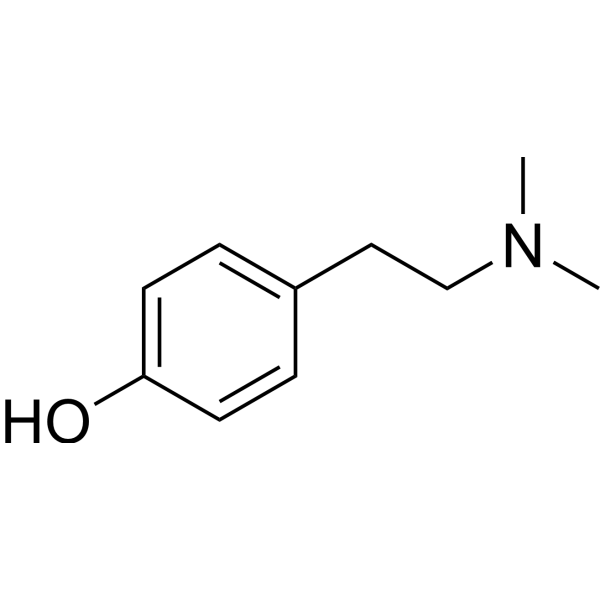
Hordenine (Standard) (Ordenina (Standard); Peyocactine (Standard)) is the analytical standard of Hordenine (HY-N0113). This product is intended for research and analytical applications. Hordenine (Ordenina; Peyocactine) is a multifunctional alkaloid with oral activity and blood-brain barrier penetration. Hordenine inhibits LPS-induced phosphorylation of p38, JNK, ERK1/2, p65, IκB, and AKT, prevents p65 nuclear translocation, and suppresses inflammatory cytokines and mediators. Hordenine promotes M2 macrophage polarization, restores blood-milk barrier integrity, alleviates oxidative stress by reducing ROS and MDA, and attenuates LPS-induced lung injury and pulmonary edema. Hordenine inhibits cAMP production, CREB phosphorylation, and MITF expression, thereby suppressing melanin synthesis in melanocytes and reconstructed epidermis. Hordenine activates the Wnt/β-catenin signaling pathway, promotes dermal papilla cell proliferation and hair shaft elongation, and accelerates hair regeneration. Hordenine activates DRD2, acts as a D3R partial agonist, α2A-AR full agonist, and 5-HT2A-R antagonist, and inhibits SERT and DAT. Hordenine inhibits α-synuclein accumulation and ameliorates motor deficits in Parkinson's disease models. Hordenine limits alcohol intake, reduces relapse drinking behavior, and modulates alcohol-induced conditioned place preference. Hordenine can be used for research on mastitis, skin pigmentation, acute lung injury, foodborne diseases, hair loss, Parkinson's disease, bacterial infections, and alcohol use disorder [3] .
loading...
    loading...
Cat. No.: HY-N0113S
CAS No.: 1346598-66-0
Synonyms: Ordenina-d6; Peyocactine-d6
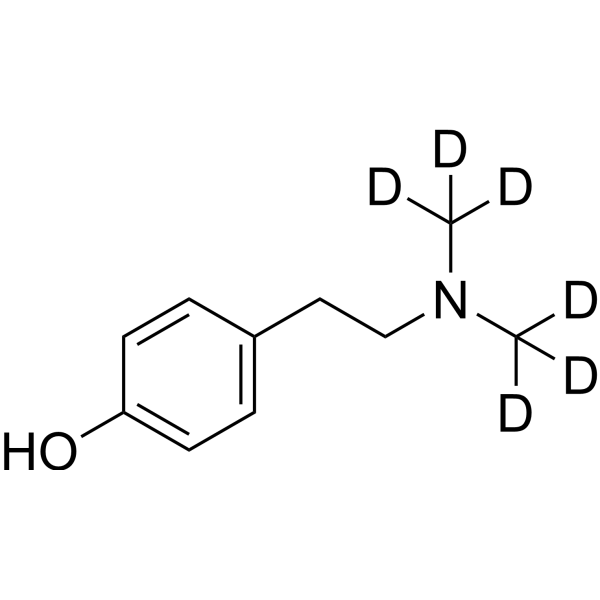
Hordenine-d6 (Ordenina-d6; Peyocactine-d6) is the deuterated-labeled Hordenine (HY-N0113). Hordenine (Ordenina; Peyocactine) is a multifunctional alkaloid with oral activity and blood-brain barrier penetration. Hordenine inhibits LPS-induced phosphorylation of p38, JNK, ERK1/2, p65, IκB, and AKT, prevents p65 nuclear translocation, and suppresses inflammatory cytokines and mediators. Hordenine promotes M2 macrophage polarization, restores blood-milk barrier integrity, alleviates oxidative stress by reducing ROS and MDA, and attenuates LPS-induced lung injury and pulmonary edema. Hordenine inhibits cAMP production, CREB phosphorylation, and MITF expression, thereby suppressing melanin synthesis in melanocytes and reconstructed epidermis. Hordenine activates the Wnt/β-catenin signaling pathway, promotes dermal papilla cell proliferation and hair shaft elongation, and accelerates hair regeneration. Hordenine activates DRD2, acts as a D3R partial agonist, α2A-AR full agonist, and 5-HT2A-R antagonist, and inhibits SERT and DAT. Hordenine inhibits α-synuclein accumulation and ameliorates motor deficits in Parkinson's disease models. Hordenine limits alcohol intake, reduces relapse drinking behavior, and modulates alcohol-induced conditioned place preference. Hordenine can be used for research on mastitis, skin pigmentation, acute lung injury, foodborne diseases, hair loss, Parkinson's disease, bacterial infections, and alcohol use disorder [3] .
loading...
    loading...

